
The complete guide
How To Choose A Solar Robot Kit (And Get It Actually Used)
The toy that gets opened and then ignored
Every parent knows the pattern. A box arrives, there is ten minutes of noise, and by Thursday it is under the bed. The toys that survive are the ones that give a child something to do rather than something to watch.
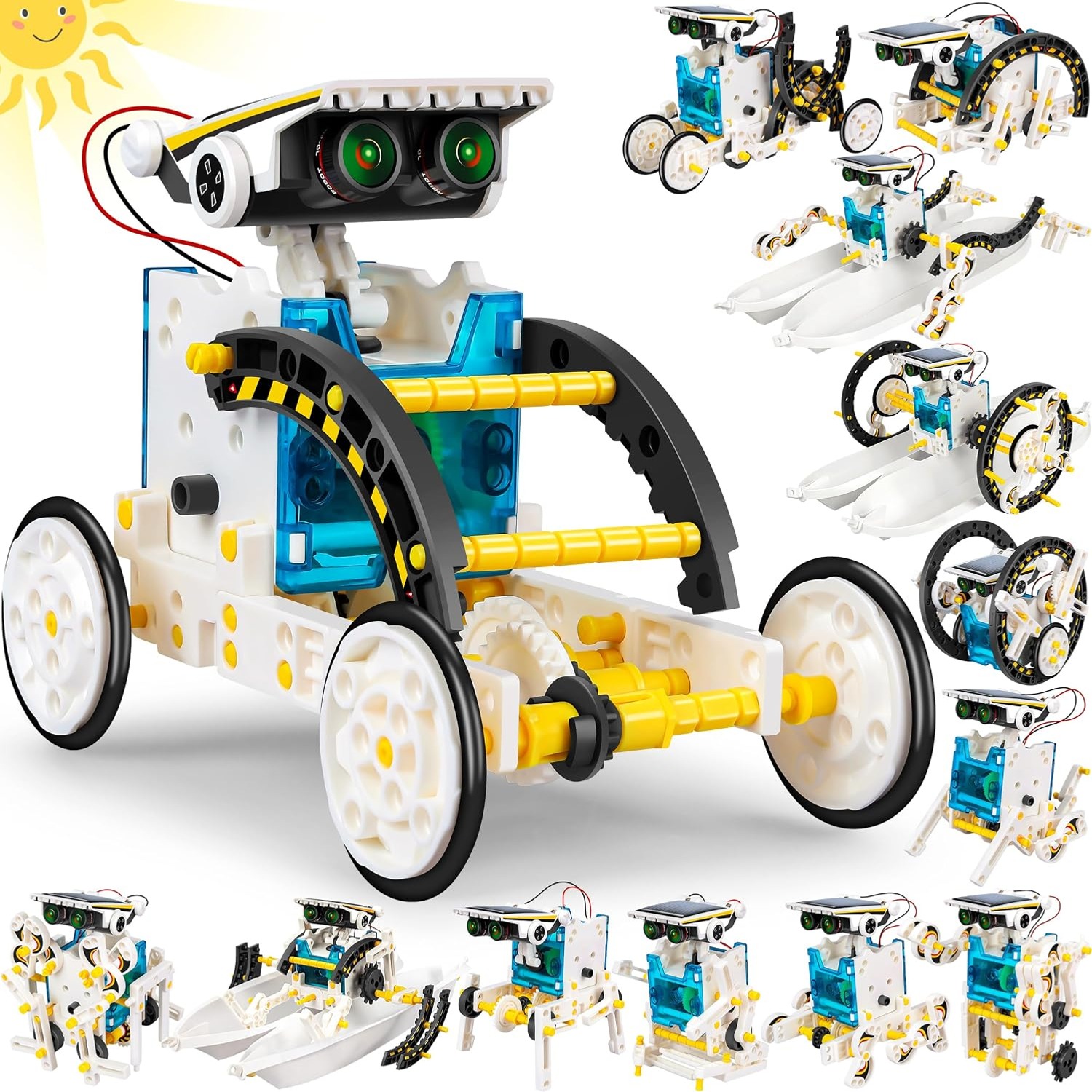
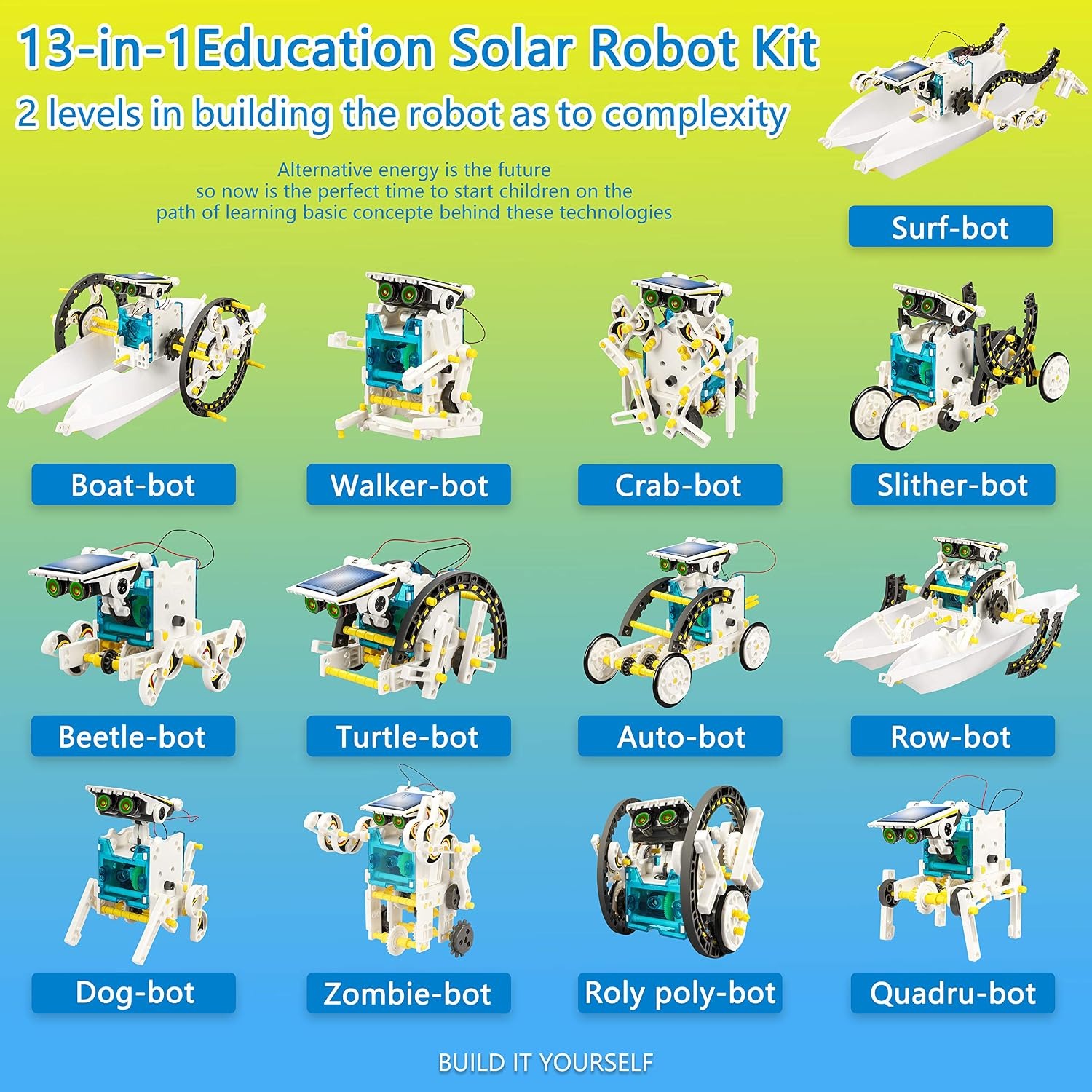
That is the gap a build-it-yourself robot kit fills. The child is not the audience, they are the person making the thing work. And because this particular set rebuilds into 13 different models from one parts collection, finishing is not the end. It is just the point where you pull it apart and try the next one.
How a solar robot kit actually works
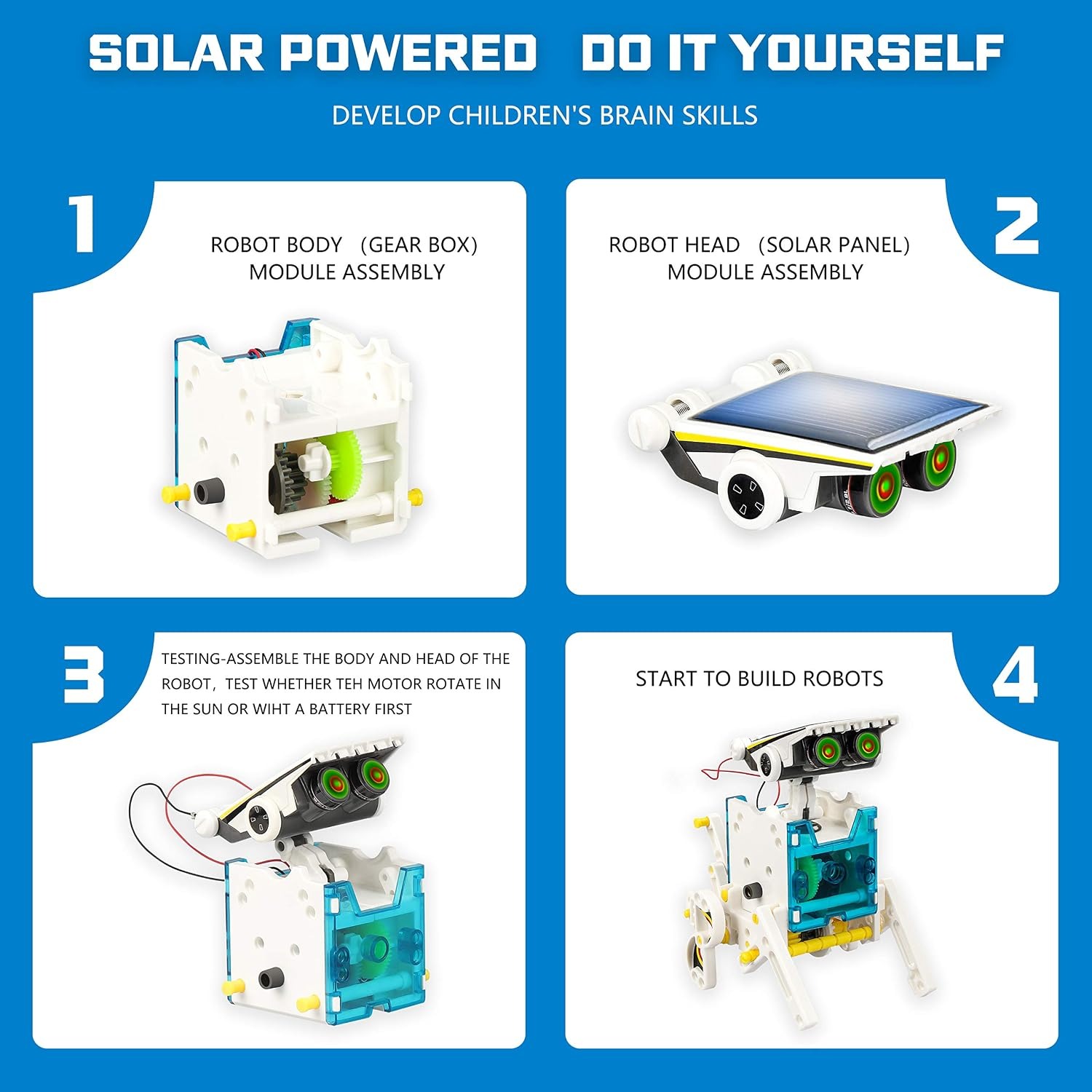
The idea is simple. You get one set of plastic components, gears, plates, tires and shafts, plus a small solar power unit. The printed manual shows 13 different ways to arrange those components. Follow the steps, fit the drive train, clip in the solar unit, and take the finished model outside.
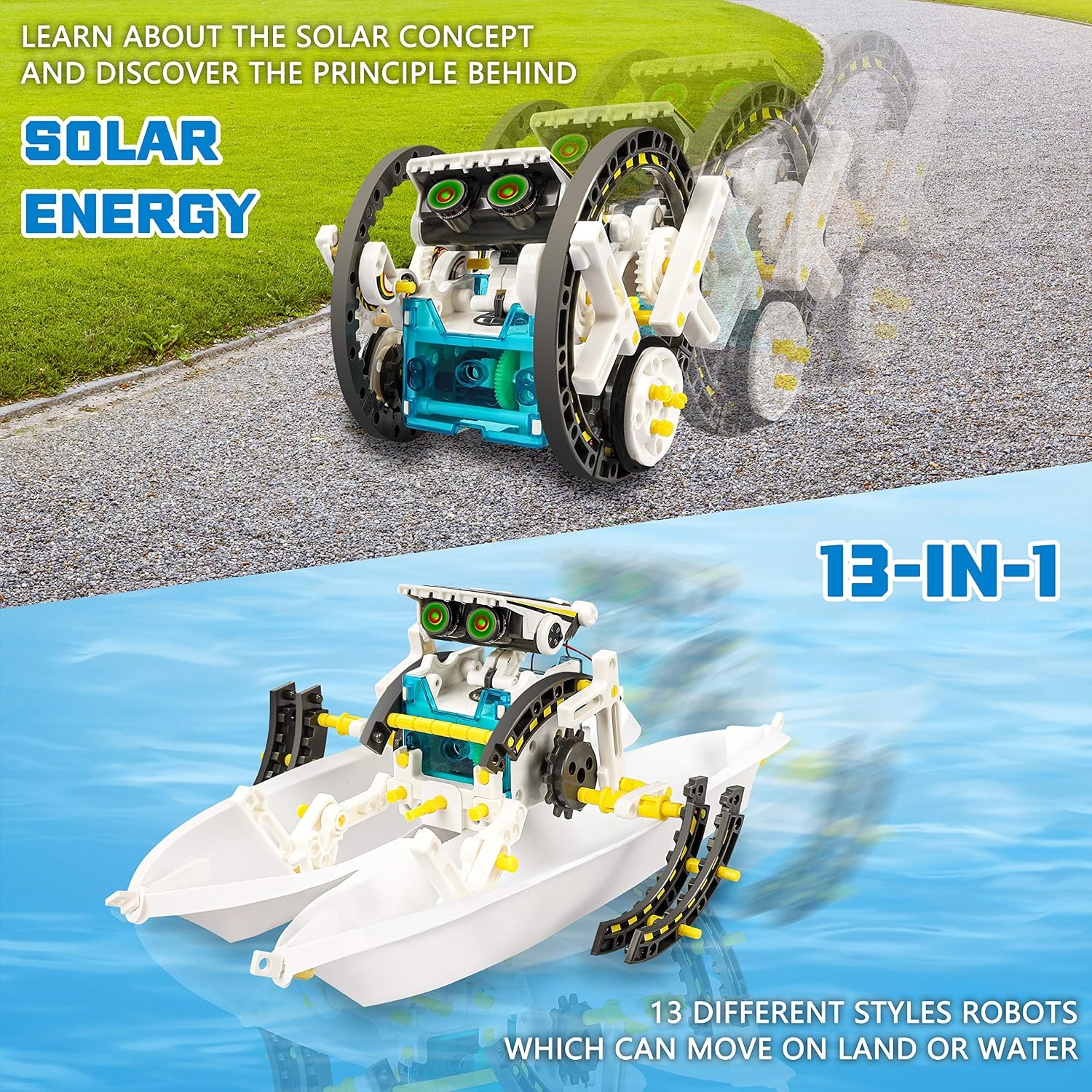
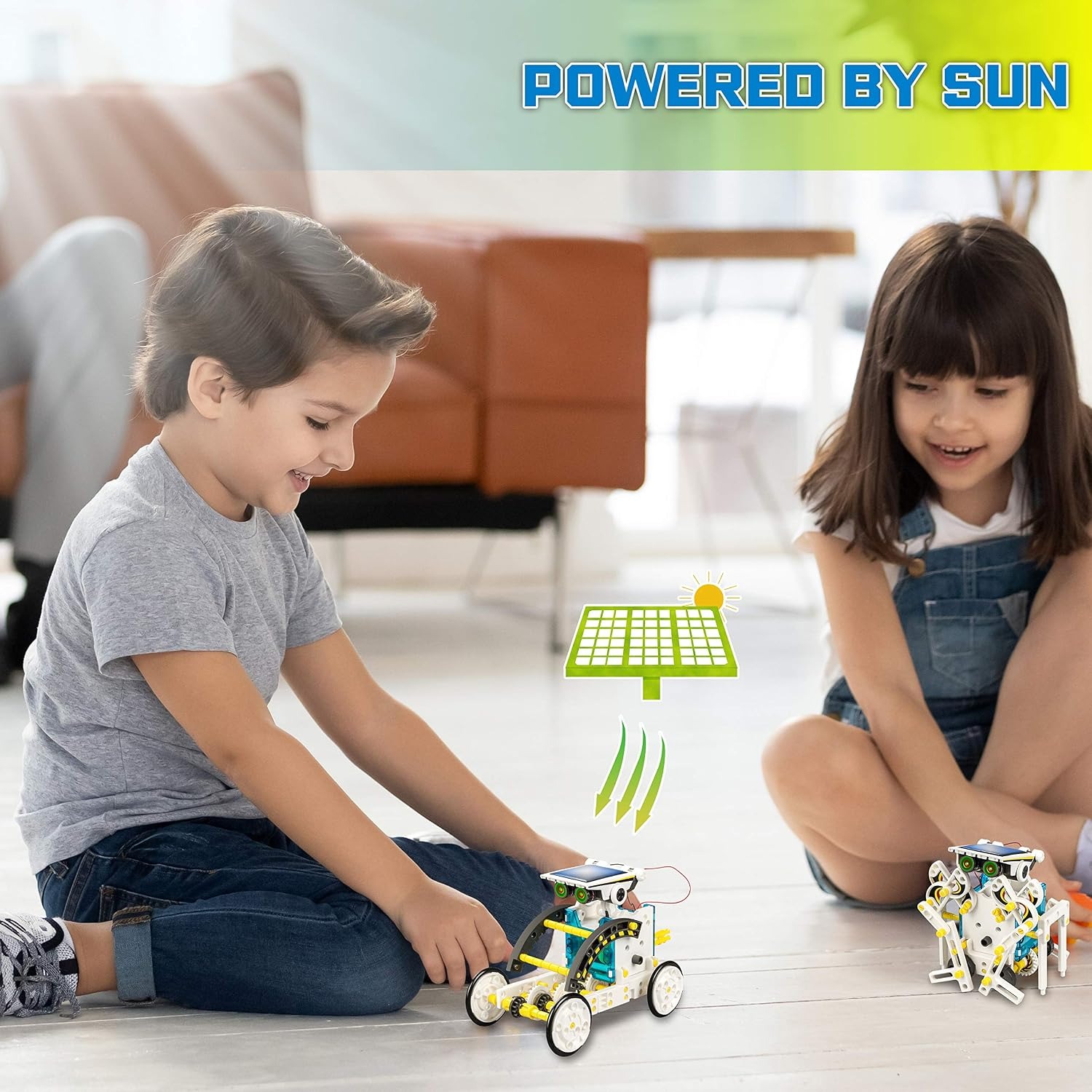
Sunlight hits the panel, the panel runs the motor, the motor turns the gears, the gears turn the wheels. There is no battery compartment and no charging cable. Some of the builds are designed to travel on land and some can move on water.
That direct chain of cause and effect is the whole educational point. A child does not need a lecture about renewable energy when they can carry the robot into shade and watch it stop. Move it back into the sun and it goes again. Lessons that arrive through your hands tend to stay put.
Who this suits
Bottleboom gives a recommended age of 8 to 15 years. In practice, where a particular child lands inside that range depends less on birthdays and more on temperament.
A child who likes taking apart the remote control to see inside will be happy here. So will one who enjoys instruction-led building but wants a result that does more than sit on a shelf. If your child gets frustrated quickly with fiddly steps, the kit still works, it just works better with an adult sitting alongside for the first build.
It also suits households trying to cut screen time without turning it into a fight. Nothing here connects to anything. There is no app, no pairing, no updates. That absence is the feature.
Teachers and after-school club leaders tend to like this style of set too, because a group of students can work through one model together and end with something that visibly moves. As an introduction to simple machines and solar power, it does more work in forty minutes than a worksheet does in a week.
How to choose between kits like this
If you are comparing several sets, a few things are worth checking before price.
Number of builds versus quality of builds. A high model count is only useful if the models are genuinely different. Thirteen builds that share a parts set, with some running on land and some on water, gives real variety rather than thirteen slight variations on a car.
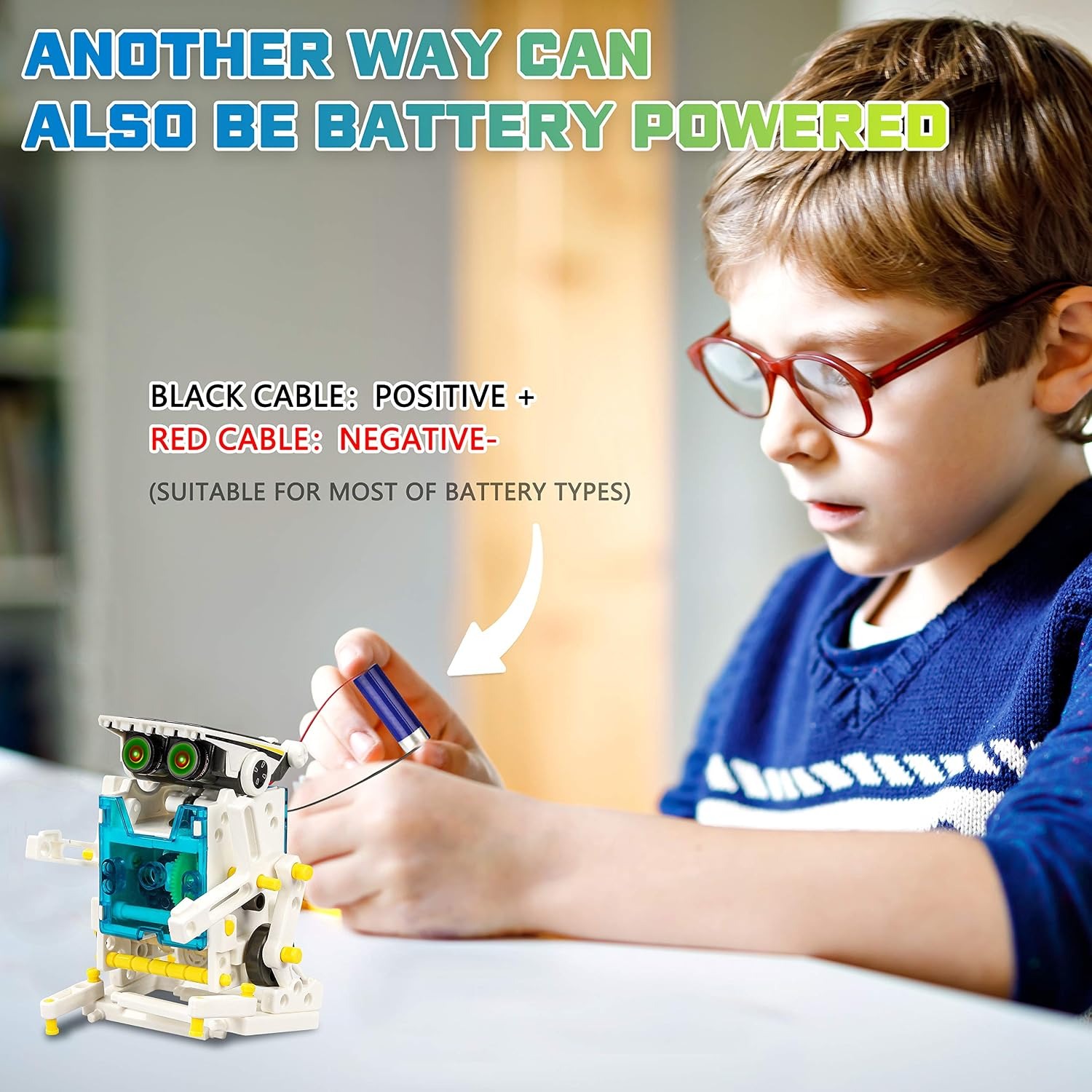
Power source. Battery kits are reliable indoors but need batteries forever. Solar kits need decent light but cost nothing to run and teach something extra along the way. Think about where your child will actually play. If you have a sunny garden or balcony, solar is the better pick. If you are in a dark flat in midwinter, set expectations accordingly.
Instructions. This is the part most buyers skip and most regret. A step-by-step manual that moves from simple to complex lets a child build confidence before hitting the harder models. Kits that drop you straight into the complicated stuff produce abandoned boxes.
Whether it comes apart cleanly. A kit that is painful to disassemble gets built once. One where parts pop apart easily gets built again and again, which is where the value actually is.
Part size. Pieces need to be small enough to make an interesting model but large enough for a child's fingers to manage. Parts in this set are designed to press together by hand, no tools required.
Getting the first build right
A little setup makes the difference between a good afternoon and a tearful one.
Start with the simplest model in the manual, not the one on the front of the box. The exciting model is usually the hardest, and starting there means a child hits a wall before they understand how the parts behave.
Build on a tray, a towel or a tablecloth. Small plastic parts have a talent for finding floor gaps. A raised edge saves a lot of crawling around.
Lay the parts out by type before you begin rather than digging through a pile for every step. It feels slow for the first two minutes and saves twenty.
Check the light before going outside. Bright, direct sun gives the best movement. A dull day or indoor lighting will usually produce a sluggish result, and a child who assumes the toy is broken loses interest fast. A sunny window sill is a decent compromise when the weather is poor.
And if a step goes wrong, nothing is ruined. The whole point of a kit that comes apart is that errors cost nothing but a moment. That is a useful thing for a child to learn in a low-stakes setting.
Looking after it
Care is not complicated. Wipe parts with a dry or barely damp cloth and let them dry fully before they go back in the box. If a model has been in water, dry it properly rather than leaving it sitting damp.
Keep the solar panel clean. Dust and fingerprints cut the light reaching the cell, and a grubby panel is the most common reason a model that worked last week seems slow this week.
Store everything together. The box the kit comes in is fine, or any lidded container will do. Keep the manual with the parts, because trying to rebuild from memory six months later is how kits end up at the charity shop.
Avoid leaving the set in a hot car, and keep it away from open flame. Plastic and heat are a poor combination.
The short version
This is a hands-on building set that turns into 13 different robots from one shared parts collection, and runs on sunlight instead of batteries. Bottleboom recommends it for ages 8 to 15. The manual works from easy builds up to harder ones, everything disassembles for the next model, and the solar engine gives a child an immediate, physical sense of how light becomes movement.
It is a good fit if you want something that keeps a curious child busy for more than one afternoon, costs nothing to run, and does not involve a screen. It is a weaker fit if you need something that works reliably indoors on gray days, or if your builder is well under the recommended age and likely to be working alone.
If you are stuck between options, tell us the child's age and how much help they usually want with instructions. We would rather point you somewhere else than sell you a box that ends up under a bed.