
The complete guide
How To Choose A Big Building Blocks Set For Young Children
The problem with most first block sets
A lot of children get their first box of bricks at two or three, play with it twice, and leave it in the closet. The usual reason is not boredom. It is that the set did not match the hands using it.
Small standard bricks need a pinch grip and real precision to line up studs. A three year old does not have that yet. They press, the brick slides, the tower falls, and after a few rounds of that the box goes away. The other common failure is quantity. Forty pieces looks like plenty on a shelf, but it runs out fast once a child builds a base. They end up tearing down one thing to build the next, which is fine occasionally and frustrating as a rule.
Large bricks solve the first problem. A set in the two hundreds solves the second. That is the whole case for a set like this one.
How large bricks actually work
The mechanism is the same as any interlocking toy building block. Studs on top, hollow tubes underneath, friction holding the two together. The difference is scale.
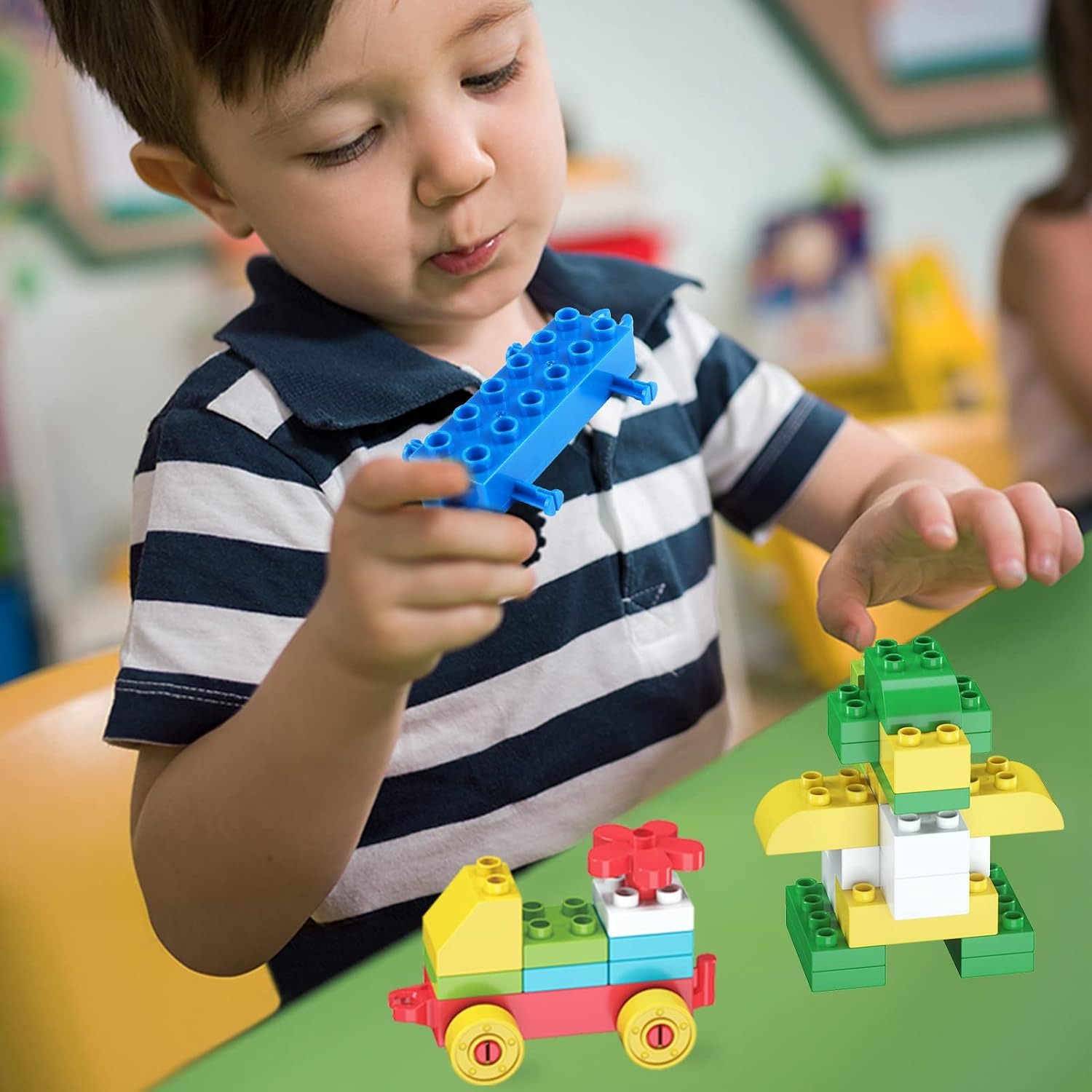
Bigger pieces give more contact area, which means a firmer hold. A tower built from chunky blocks stays standing when someone walks past the table. A small-brick tower built by the same child often does not. The larger pieces also need less accuracy to connect, so a child who is slightly off center can still press down and feel it click. That small win, repeated, is what keeps them building.
This set uses ABS plastic. It is the standard material for the category because it is rigid, holds a crisp molded edge, and does not go soft or chalky with handling. A softer plastic would lose its clutch after a few months of being pulled apart. The maker describes the material as non-toxic.
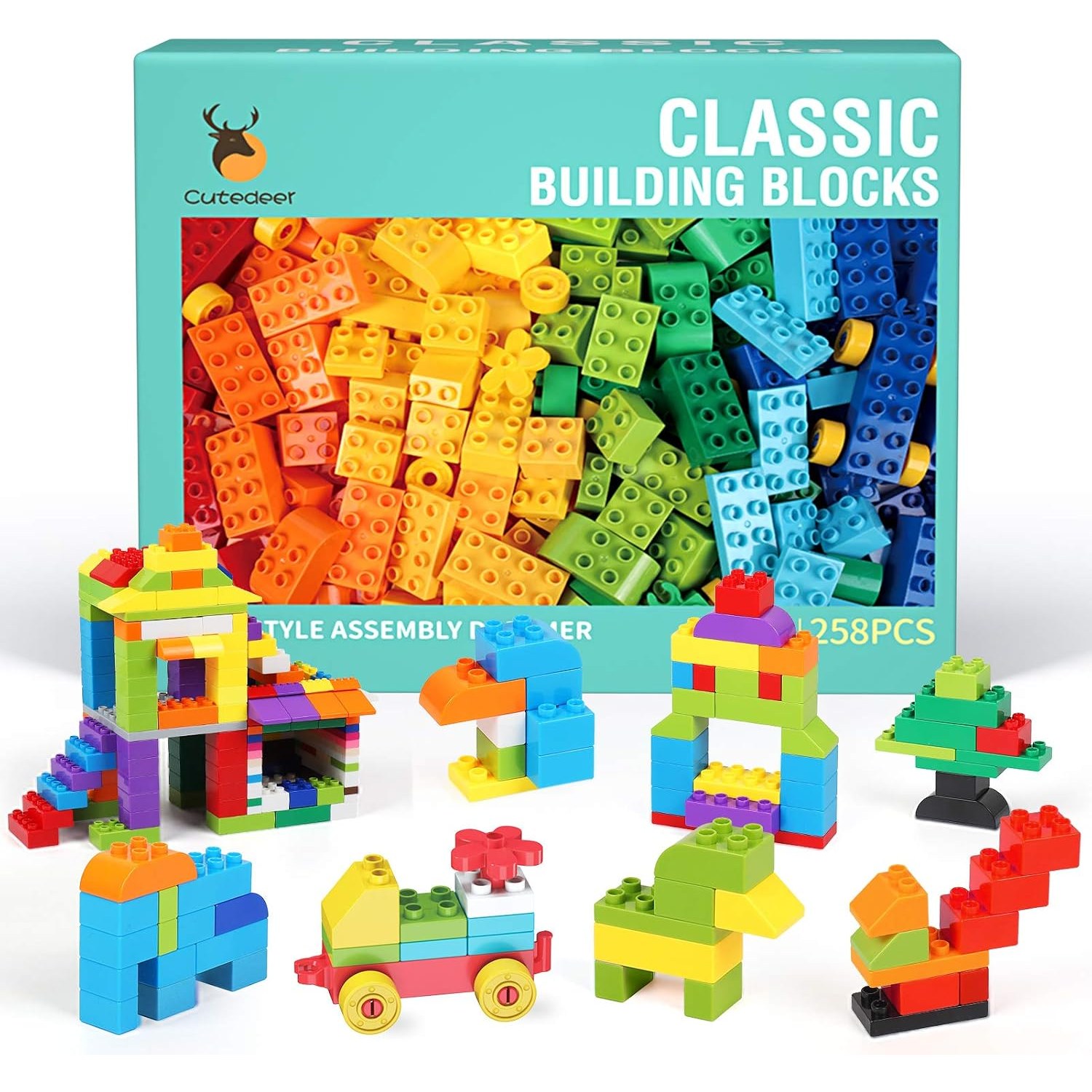
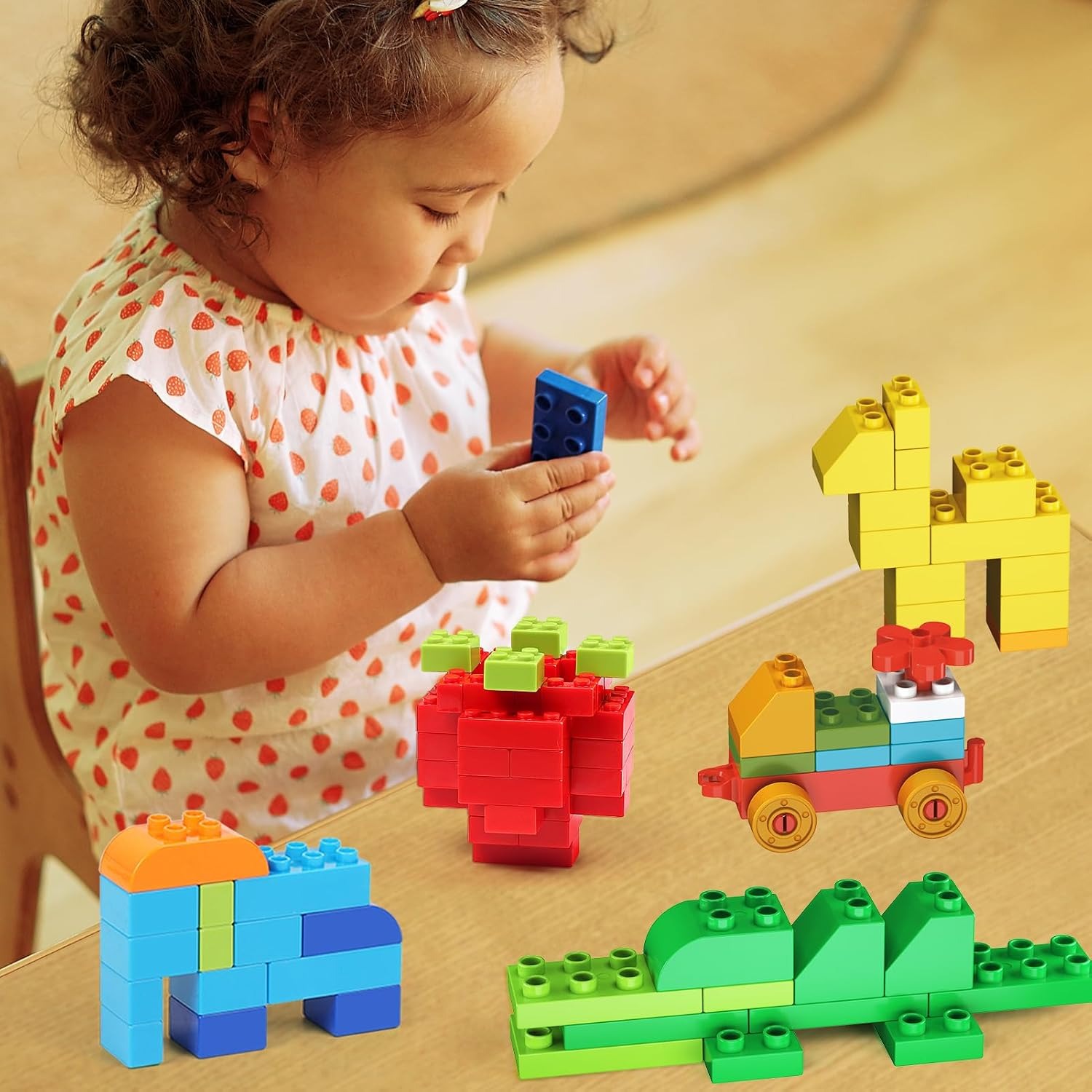
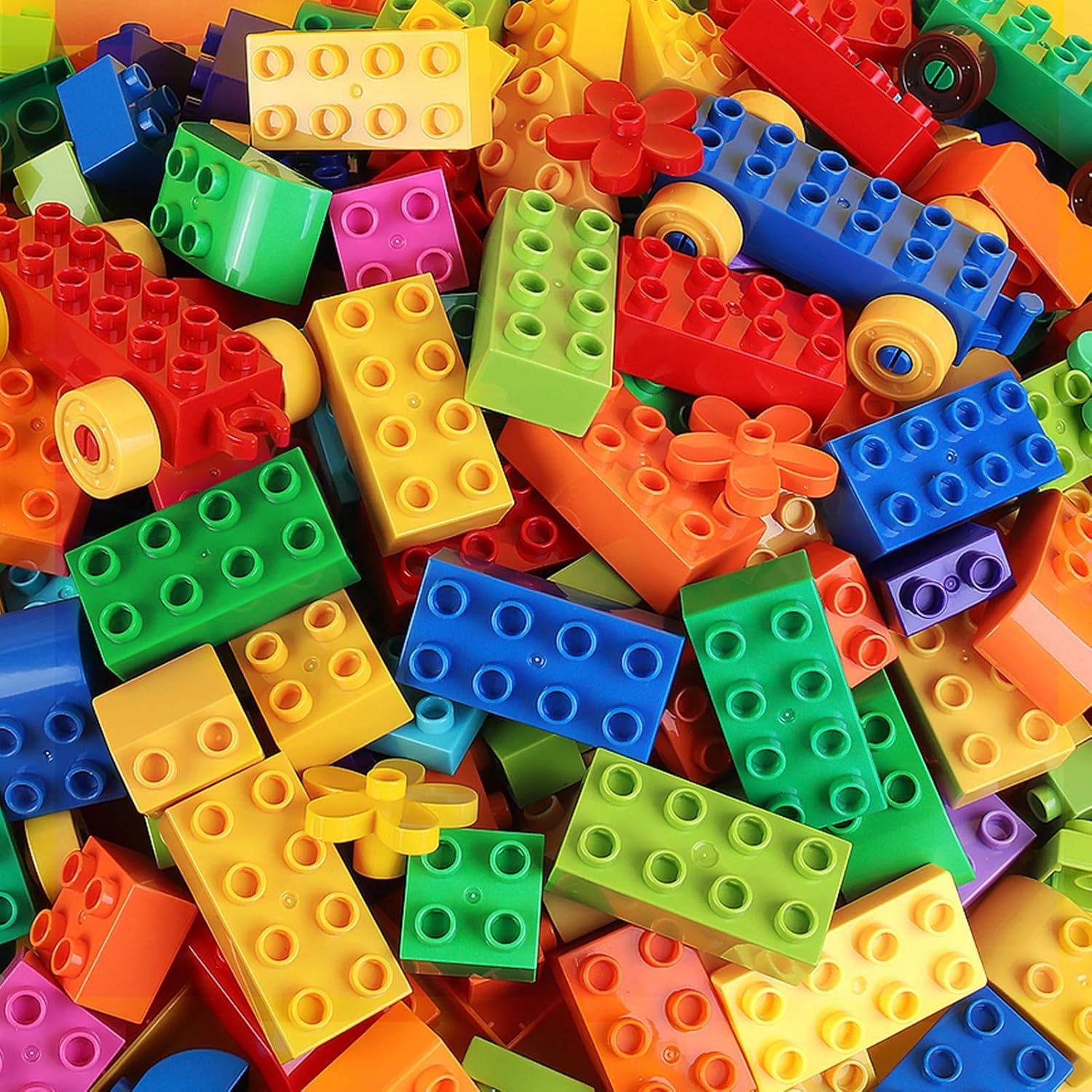
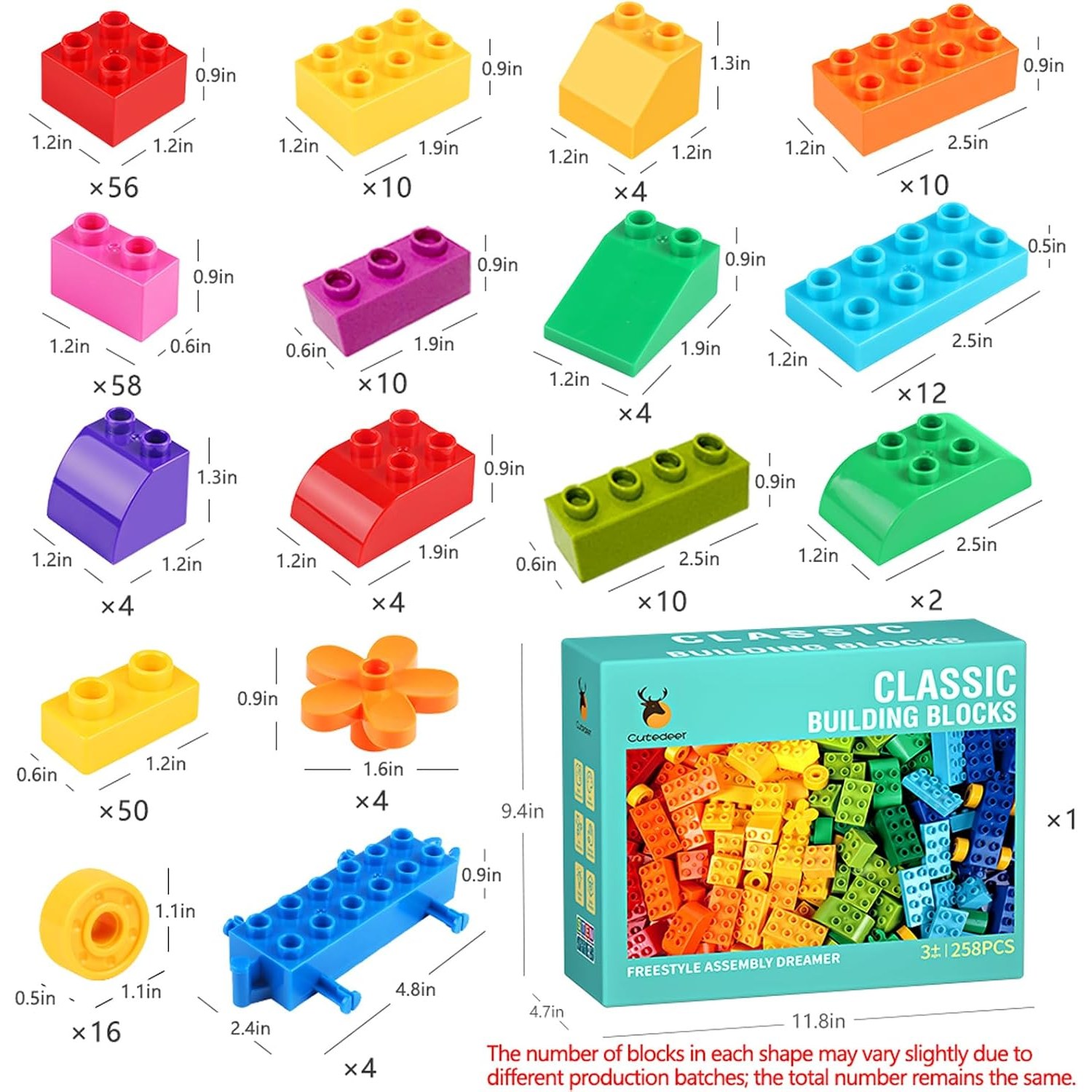
There are more than ten shapes in the 258 pieces, which matters more than the raw number. A box of nothing but 2x4 rectangles gets boring quickly. Flat bases let a child start a floor. Sloped pieces make a roof. Smaller squares add detail. The animal theme of this set means the shape mix supports building creatures as well as the usual houses and vehicles.
Who this suits
The recommended age is three years and up, and that is the sweet spot. A three or four year old gets the easy-grip advantage straight away. A five or six year old is not too old for large bricks, they just build bigger and more detailed things with them.
It works for a child who already has some chunky blocks and needs more. The set is compatible with large bricks from all major brands, so it adds to an existing tub rather than starting a rival pile. That is worth checking before you buy anything, because mixing incompatible systems is the fastest way to end a build session in tears.
It works for two children playing together. The maker notes two or more players, and 258 pieces genuinely splits between two kids without either feeling short. Sibling building is noisy and good for them.
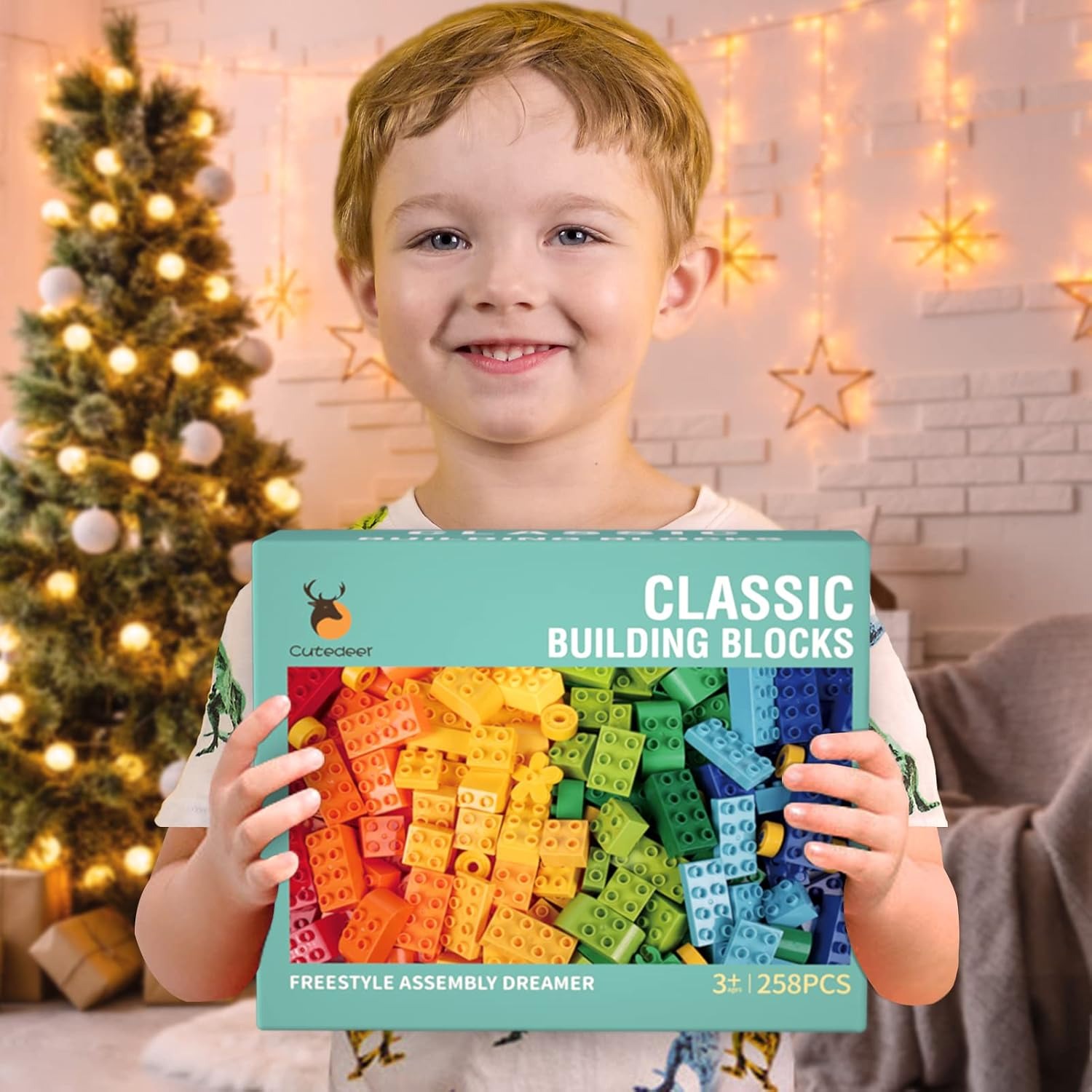
It also works as a gift when you do not know the child well. It arrives in a color gift box with an instruction manual, so there is no assembly, no batteries and no screen. Hard to get wrong.
What it does for a child
The listed educational objective is creative thinking, which is accurate but a bit vague. Here is what you actually see at the kitchen table.
Color and shape recognition comes first, usually through sorting. Children pile the red ones together before they build anything, and that is useful. Counting follows naturally, because a child who wants four wheels has to find four of something. Fine motor control builds every time they press two pieces together or prise them apart. Planning comes later, around four or five, when they start deciding what to make before they make it rather than naming it afterwards.
None of this needs you to run a lesson. Open-ended bricks do the work as long as there are enough of them and the child can actually connect them.
How to choose between sets
Four things decide it.
Brick size is the first and most important. Match it to age and hand strength, not to what looks more impressive in the photo. Under five, go large. A good chunky building blocks set for preschoolers will keep getting used for years, while small bricks bought too early tend to sit untouched until the child grows into them.
Piece count is second. Under a hundred pieces is a starter box. Two hundred and up is a proper set that supports real building. This one sits at 258, which is enough to leave a finished model standing on the shelf and still have bricks for the next idea.
Compatibility is third, and people skip it. If a set only fits itself, every future purchase has to be the same brand. Brand compatible large bricks keep your options open.
Shape variety is fourth. Count the shapes, not just the pieces. Ten or more shapes gives a child something to work with. Three shapes, however many of them there are, gets dull.
Looking after them
Block care is simple and mostly about storage.
Wipe the pieces with a damp cloth and a little mild soap when they get grubby, then let them dry fully before they go back in the box. Trapped moisture inside a hollow brick gets musty. Keep them out of the dishwasher and microwave, since heat warps ABS and a warped brick stops clutching.
Store the set in its box or a lidded tub. A clear tub works best because children can see what is inside and sort by color without tipping everything out. Loose blocks across a floor is how pieces end up under the sofa and inside the vacuum.
Check pieces occasionally. A cracked brick can develop a rough edge, so pull it out of the mix. With 258 pieces you will not miss one or two.
Indoor storage keeps the colors bright. Any plastic dulls if it sits in direct sun for months, so the windowsill is not the place for the tub.
The short version
If you are buying for a child aged three to six, large bricks beat small ones, and a set in the two hundreds beats a starter box. This one gives you 258 pieces across more than ten shapes, molded in ABS plastic, compatible with large bricks from all major brands, and packed in a gift box with an instruction manual.
It needs no batteries, no screen and no setup. You open the box, tip it out, and the child does the rest. That is about as much as you can ask from a toy.