
The complete guide
How to Choose a Bouncy Paddle Ball Game Your Family Will Actually Play
The game that keeps getting left behind
Most houses have a pile of outdoor toys that only came out twice. Usually there is a reason. Something needed pumping up. Something needed a flat lawn. Something had rules that only one person remembered. The gear works fine, but there is enough friction between "let's play" and actually playing that the moment passes and everyone drifts back inside.
A bouncy paddle ball game sidesteps most of that. Two paddles, two balls, no net, no court lines, no batteries. You hand one paddle to a kid, throw the ball, and that is the whole setup. The game starts in about four seconds, which matters more than any feature on the box, because the games that get played are the ones you can start without thinking.
What a trampoline paddle actually does
The difference between this and a wooden beach bat is the face. A wooden bat is solid, so the rebound depends almost entirely on how hard and how cleanly you swing. Miss the sweet spot and the ball dribbles two feet. For a six year old, that is a miss, and three misses in a row is usually the end of the game.
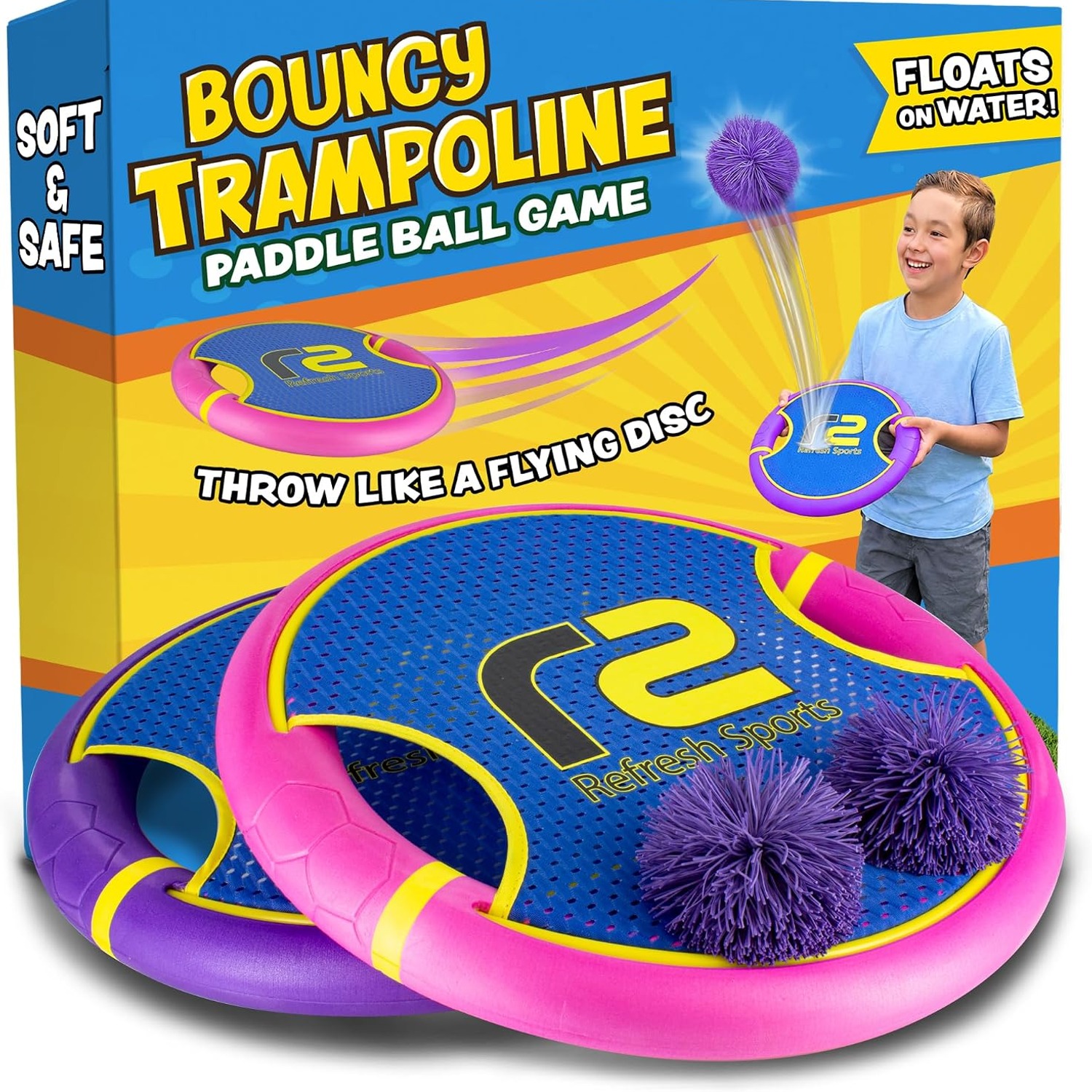
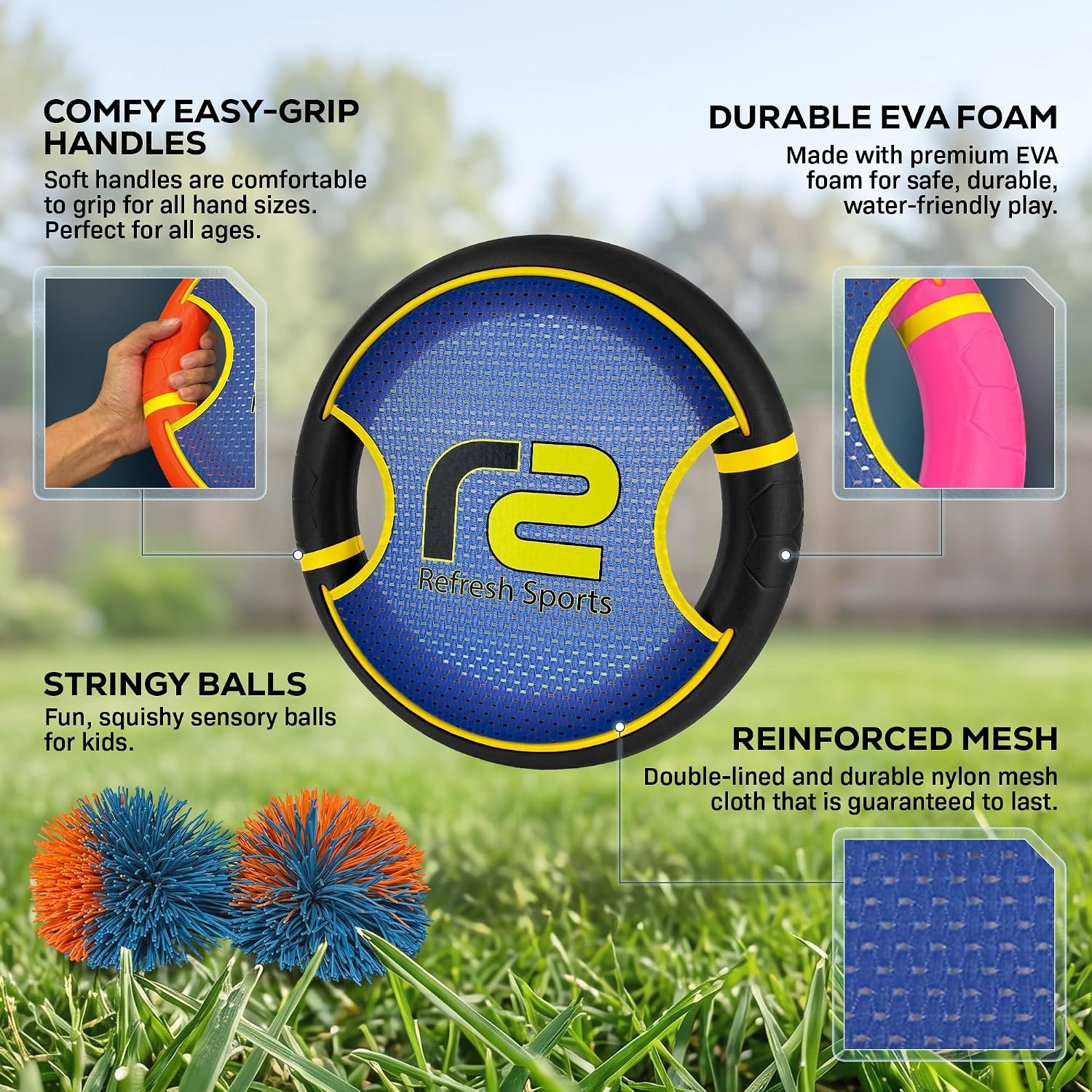
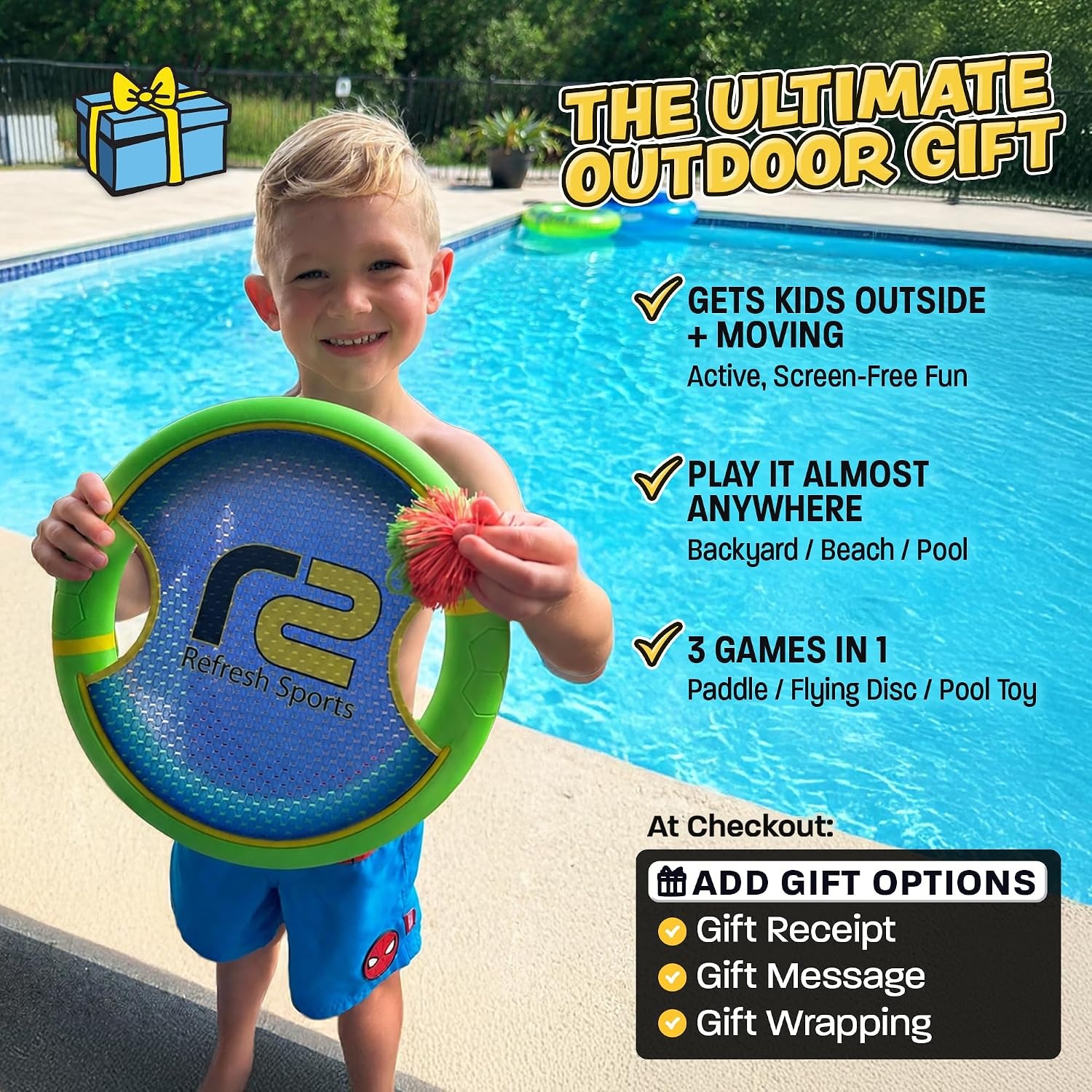
The paddle here uses a bouncy mesh face stretched across an EVA foam frame. When the ball hits, the mesh stretches and springs back, adding energy to the return. A soft, slightly mistimed swing still sends the ball a useful distance. That is why kids who have never played anything like it can keep a rally going within a few minutes.
It also changes the feel for adults. The ball comes off faster than you expect, so the first few exchanges are usually overcooked. Give it a minute and you will be dialling the swing back and trying to find how long a rally you can hold.
Why foam matters more than it sounds
EVA foam is the same closed cell material used in play mats, pool floats and camp sleeping pads. Two things make it a sensible choice here.
The first is weight. A heavy bat tires out small arms fast, and a tired child stops playing. These paddles are light enough that a young player can hold one out in front of them for a whole game without complaining.
The second is impact. Kids swing wildly. They turn around at the wrong moment, they chase a ball toward a sibling, and occasionally a paddle connects with something that is not the ball. Soft foam edges turn that from a drama into a shrug. It is also why foam sets tend to get the nod as the best foam paddle set choice for indoor play, since walls and door frames survive the learning phase.
Each paddle is 12 x 12 x 1 inches. Big enough to make contact easy, thin enough to pack flat.
Who it suits
The manufacturer lists it as suitable from 3 years and up, with an age description that runs from preschooler to adult. That range sounds broad, and in practice it works because the game scales to whoever is holding the paddle.
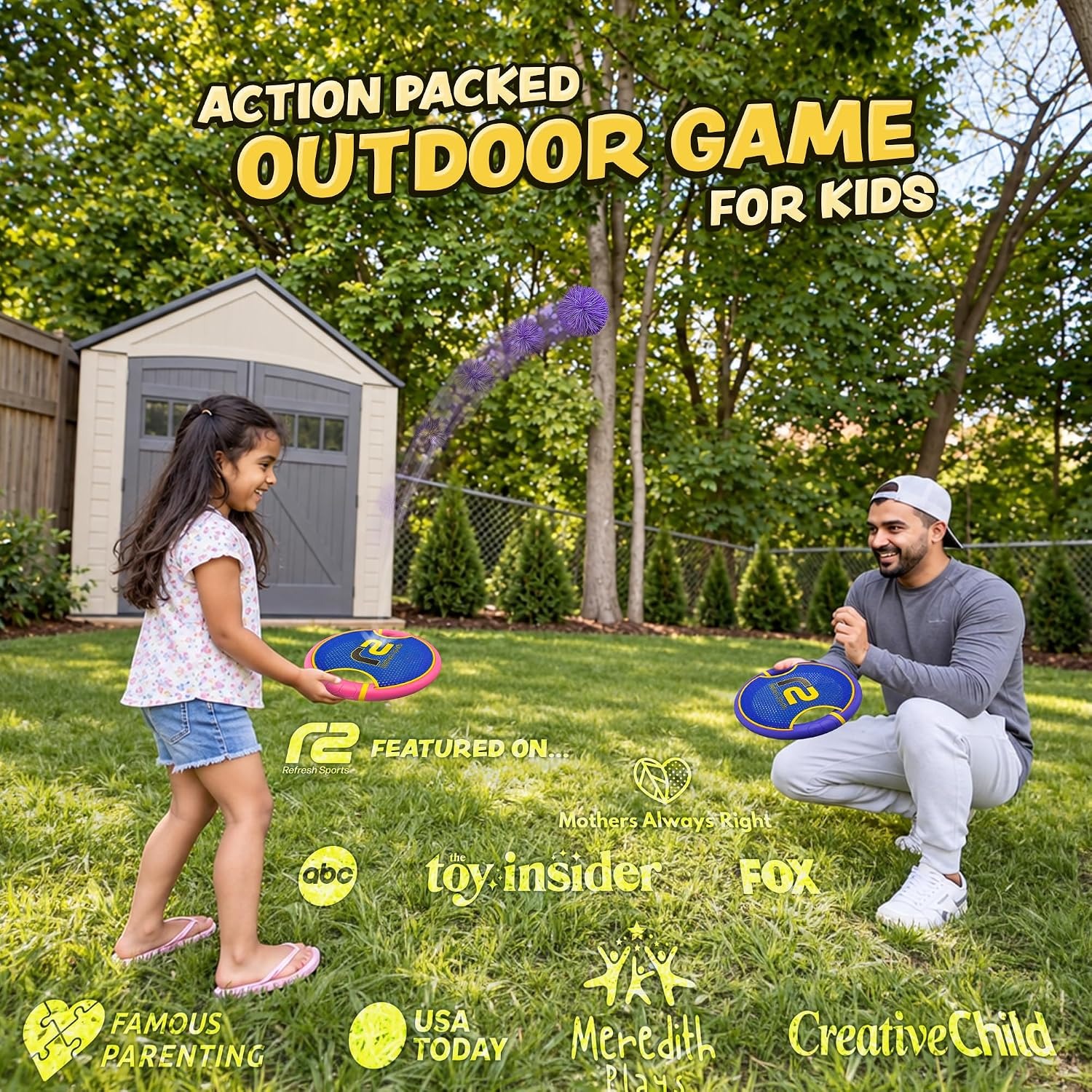
A three year old mostly plays catch. They stand a couple of meters away, you lob the ball, and they grab the strings in their hands. The paddle is more of a prop than a tool, and that is fine.
From around five or six, real rallies start. This is the sweet spot. The springy face rewards a modest swing, so children in this bracket improve fast and want to keep going. Parents looking for the best birthday gift for a 7 year old often land here for exactly that reason.
Older kids and teenagers push the distance. They will back away from each other and see how far apart they can stand and still connect. Adults tend to turn it into a counting game, which is how a five minute warm up becomes twenty minutes in the garden.
Player count is listed at 1 to 4. The solo option is genuinely useful. A wall, a fence or a garage door gives one child a game without needing a sibling or parent available, which is rarer in outdoor toys than it should be.
Where you can play
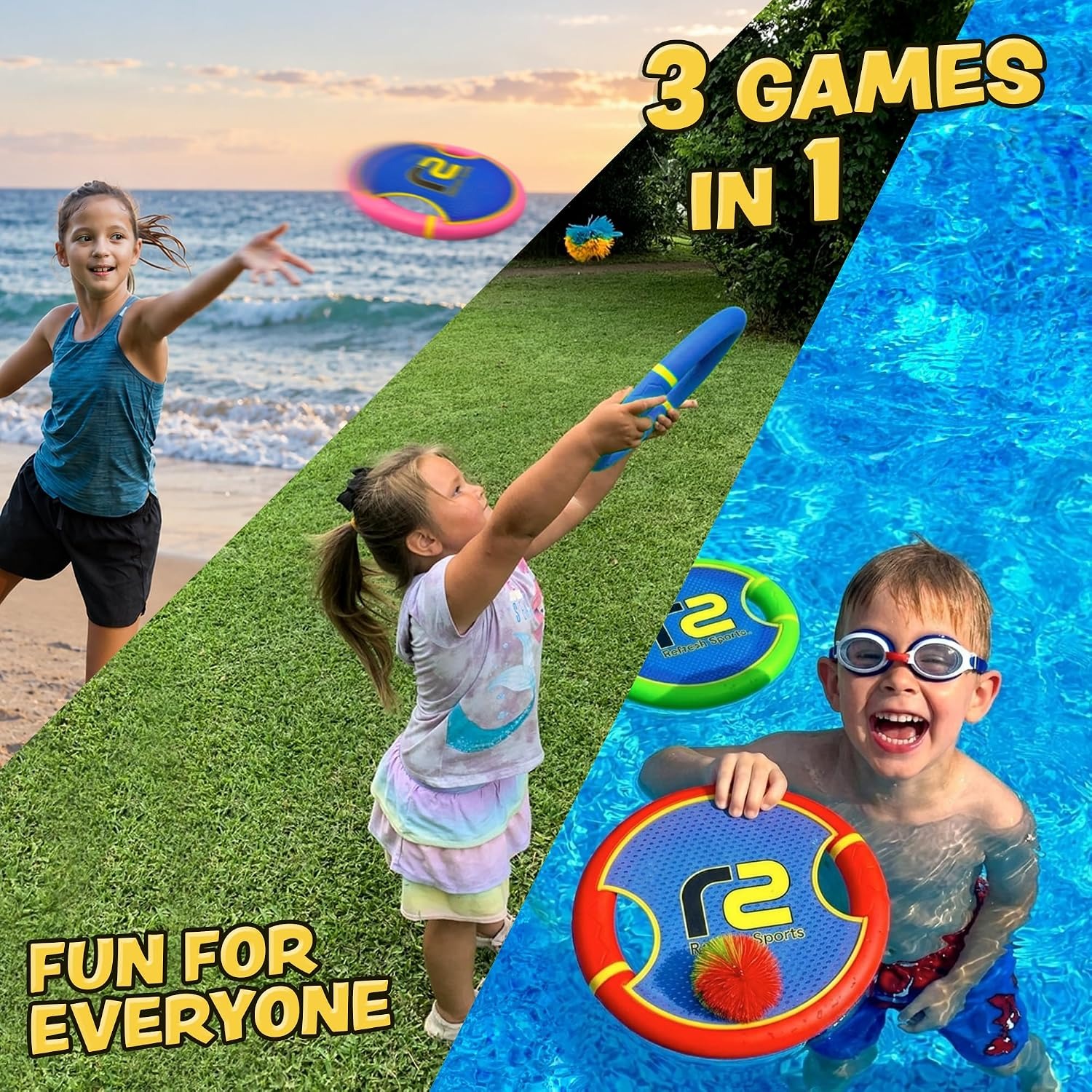
The honest answer is almost anywhere you have a few meters and no breakables. Gardens are the obvious home. Beaches work well because the set packs flat and has nothing to inflate. Parks, campsites and caravan parks all suit it, which is why it shows up on lists of the best camping games alongside more obvious picks.
Indoors is possible with sense. A hallway or a big living room with the lamps moved is fine. The paddles are foam and the balls are soft, but no ball game belongs near a glass cabinet. If the weather has locked everyone inside for three days, that trade is usually worth making.
How to choose between paddle sets
If you are comparing options, a few things separate the sets that get used from the ones that do not.
Weight comes first. Pick up the paddle and imagine a child holding it at arm's length for ten minutes. Anything heavy will be abandoned.
Then look at what you get. A two paddle set only serves two players. This one has two paddles and two balls, so a lost ball mid game is not a problem and a second person can join without waiting.
Packing size matters more than people expect. A set that lies flat gets taken on holiday. A bulky one stays in the shed. At one inch thick, these slide into a beach bag without claiming the whole thing.
Finally, consider the start up cost in effort. No batteries, no net, no pump and no assembly all mean the same thing in practice, which is that nobody has to prepare before playing. Anything you have to set up gets played less.
Looking after it
Foam is easy to maintain and easy to ruin, depending on how you treat it.
Wipe the paddles and balls down with a damp cloth and a little mild soap when they get grubby, then let them dry fully in the air. After beach or pool days, rinse the salt or chlorine off first, since both are harsh on foam and fabric over time.
Keep the set out of long stretches of direct sun. Color fades and foam softens with sustained heat, so a shaded spot or an indoor shelf is better than the dashboard of a car all summer. Store the paddles flat or hanging, not squashed at the bottom of a toy box under something heavy, so the mesh stays taut and the frames keep their shape.
Skip the washing machine and the dishwasher entirely. Both will wreck the mesh face.
A few ways to keep it interesting
The set comes with no rulebook, which is a feature. Families invent their own.
Counting rallies is the default. Pick a target, start again when you drop it, and watch competitiveness take over. Distance is the next step, where players move one pace back after every successful return until someone misses. Younger children often prefer simple catch and throw, using the paddle to launch and their hands to receive, which builds the timing they need before they start swinging properly.
Two sets open up four player games across a garden. Nobody needs to agree on scoring for it to work.
The short version
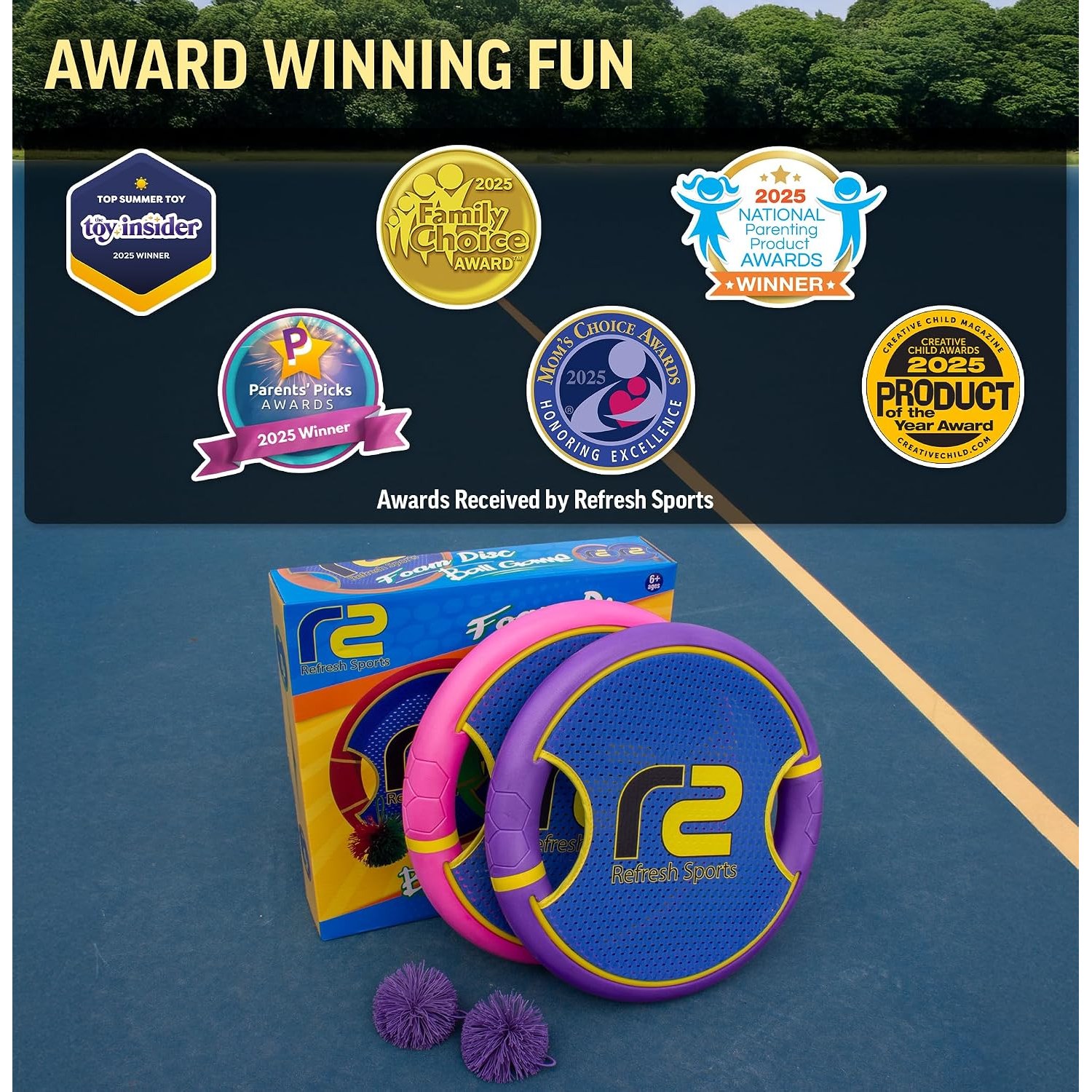
This is a four piece bouncy paddle ball game built around two EVA foam trampoline paddles and two stringy balls. It takes 1 to 4 players, suits ages 3 and up, needs no batteries and needs no setup. Each paddle is 12 x 12 x 1 inches in pink and purple, slim enough to pack flat for the beach, the park or the car.
If you want one game that works on a lawn, on sand, at a campsite and in the hallway on a wet afternoon, this is a straightforward pick. The springy face makes beginners look better than they are, the foam keeps the misses harmless, and the fact that it is ready in seconds is what gets it played again next weekend.