
The complete guide
The Honest Buyer's Guide to Kids Shopping Cart Play Sets
The problem with most toys at this age
There is a stage, usually somewhere around three, where a child stops wanting toys that do things and starts wanting toys that let them do things. The flashing, beeping stuff loses its grip. What holds their attention instead is anything that lets them copy the grown-ups. Cooking. Driving. Answering the phone. And, more than almost anything else, shopping.
That is because the supermarket is one of the few adult worlds a small child actually visits regularly. They know the script. Push the cart, pick things off the shelf, put them in, go to the checkout, pay, go home. It is a complete story with a beginning and an end, and children love a complete story.
The trouble is that a lot of what gets sold as pretend play gear does not give them enough to work with. A handful of plastic apples does not make a supermarket. Without a cart, the shopping game has no engine. Without enough items, the game is over in two minutes because the shop runs out of stock.
A kids shopping cart play set solves both problems at once. You get the thing that moves and the stuff that fills it, in one box.
What you actually get in this set
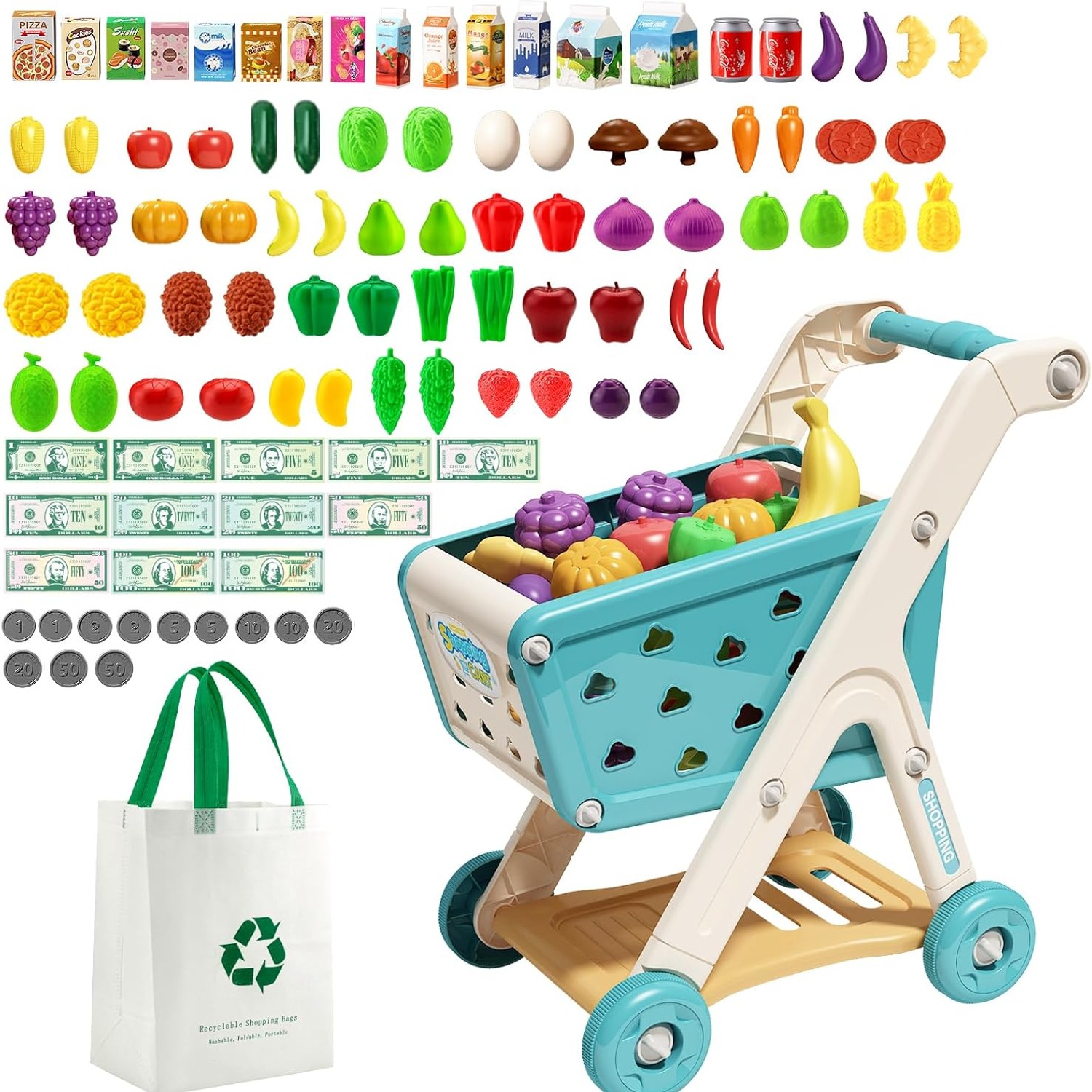
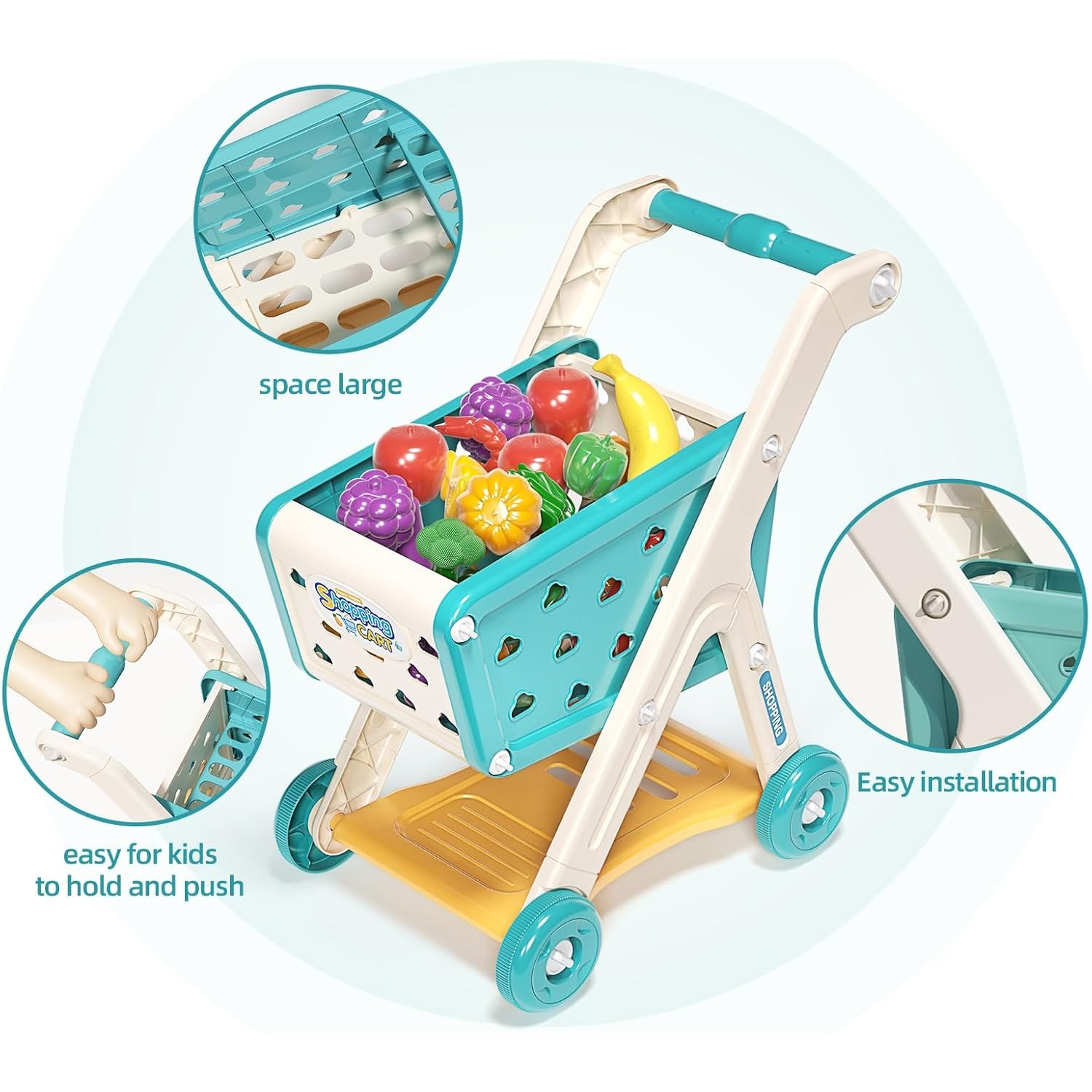
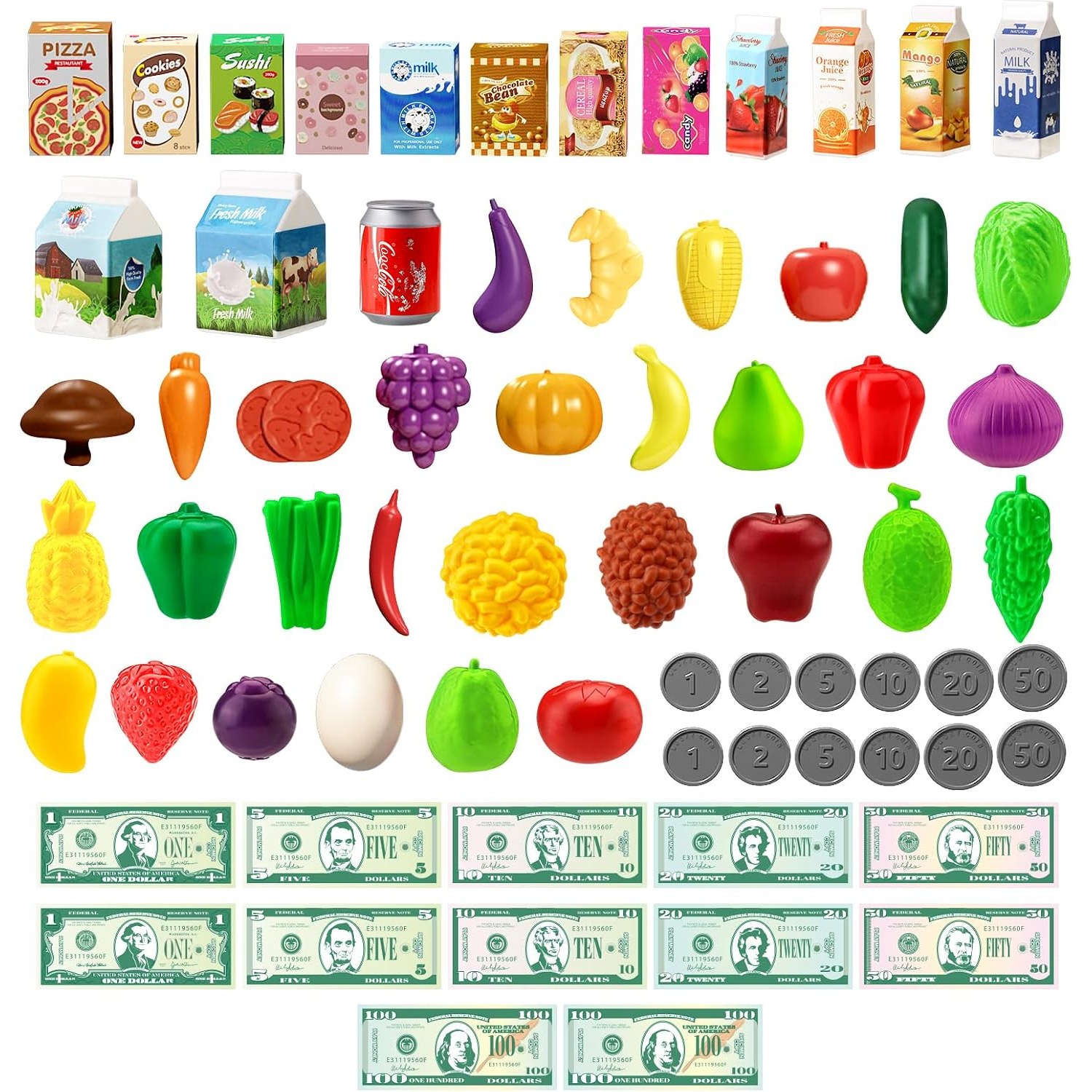
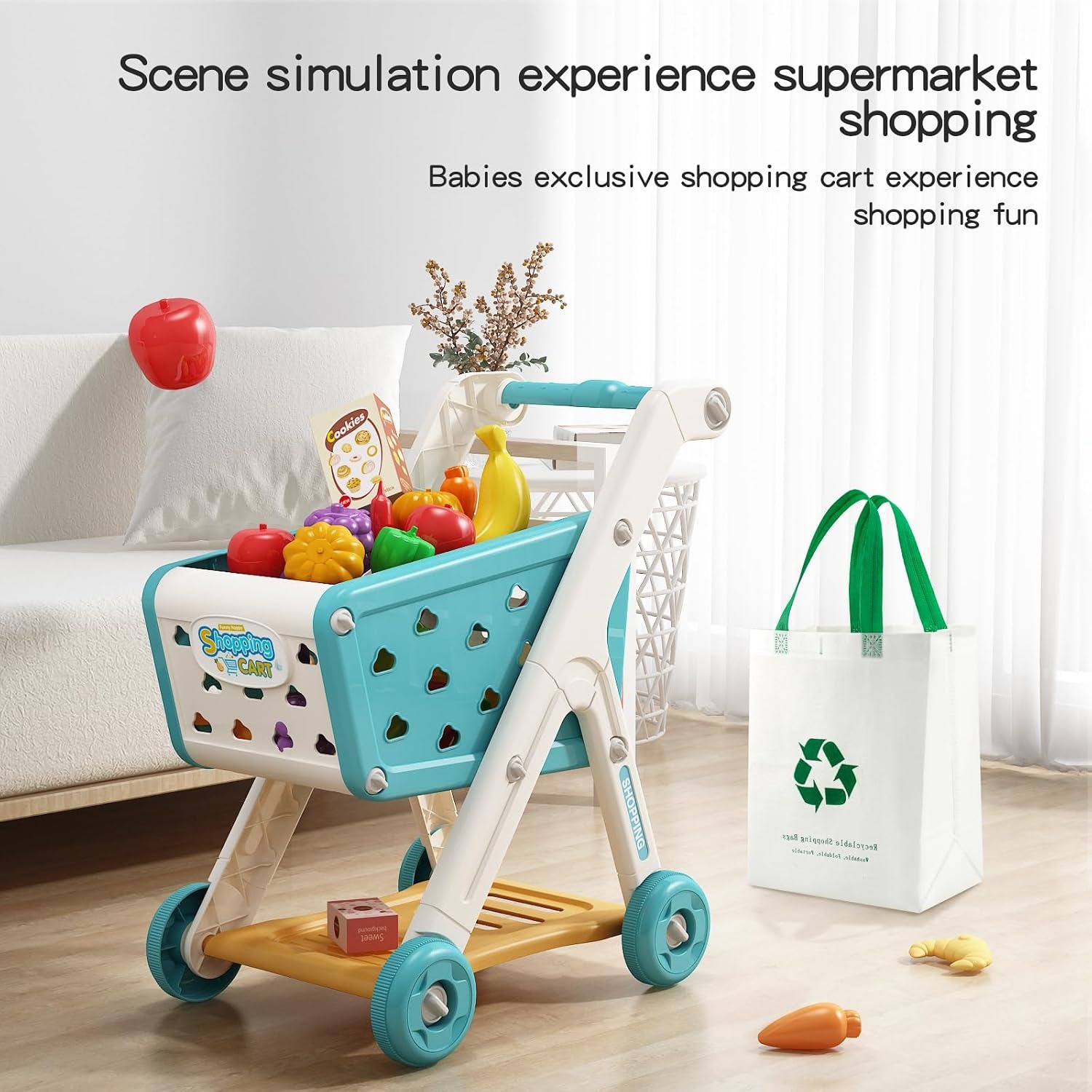
This one runs to 102 pieces. The headline item is the child-size cart, which has three levels of storage and rounded edges. Around that sit 60 pieces of pretend fruit and vegetables, 16 fast food pieces and a shopping bag.
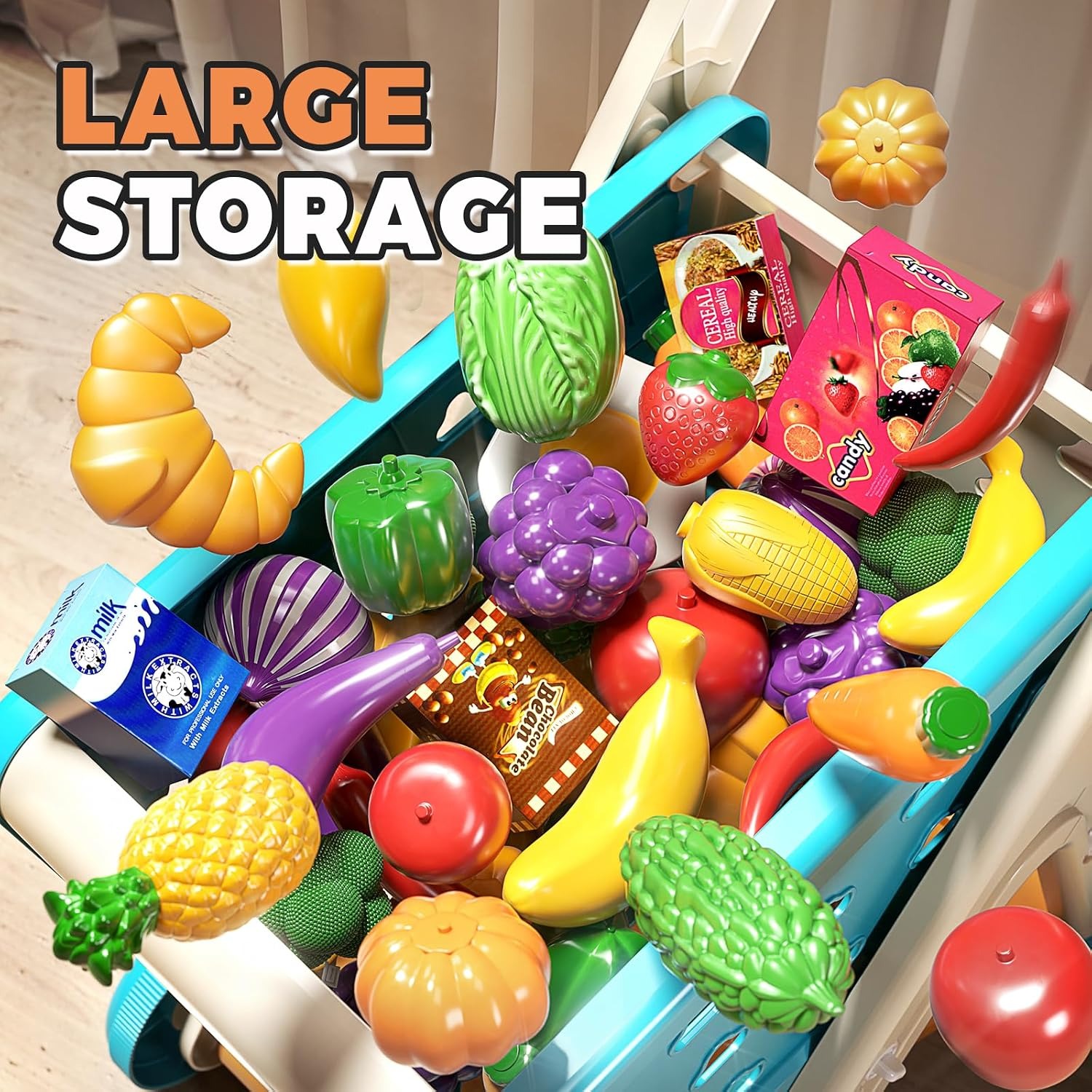
The food split matters more than it looks. Sixty produce items is a genuinely full shop. Children can load the cart, unload it, load it again, and still have things left on the shelf. The 16 fast food pieces cover the other half of how kids see food, the treat run, the party, the drive-through game. Having both means the play does not get stuck in one mode.
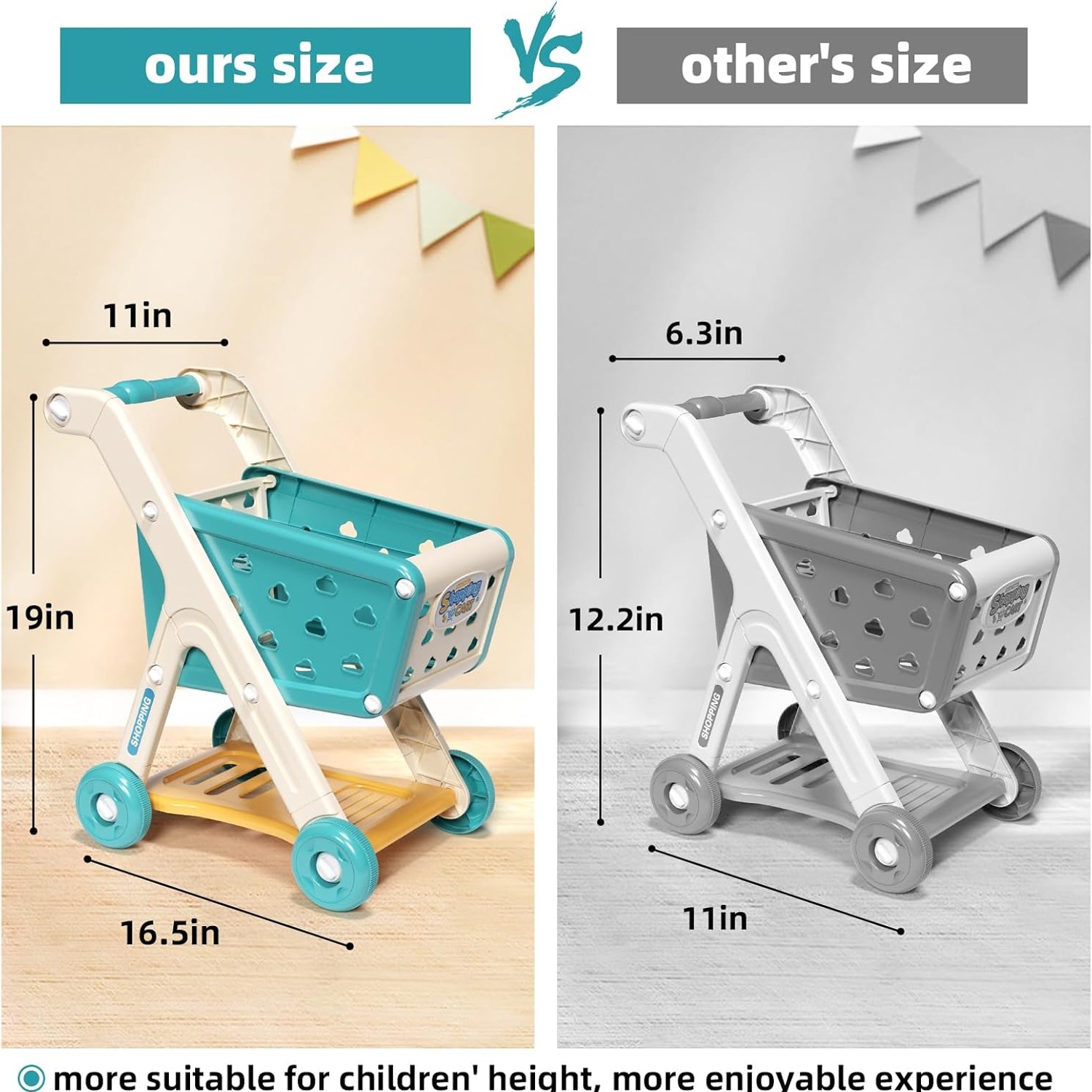
The cart measures 12.7 x 10 x 6.6 inches and the whole set weighs 1.09 kg, or 2.4 pounds. That is light. A three year old can lift the cart over a rug edge or carry it to another room without help, which matters because children relocate their games constantly.
It arrives needing simple assembly. That is a ten minute parent job with the cart, not a flat-pack ordeal. The food and bag are ready straight away.
How the play actually unfolds
If you have not watched this kind of toy in action, the pattern is fairly predictable and quite satisfying.
First comes sorting. Almost every child, before they play shop at all, tips everything out and arranges it. Fruit here, vegetables there, snacks in a pile. This is not stalling. It is early classification, the same skill that later turns into sorting data or organizing a desk. Three storage levels on the cart give them somewhere to put each group, which is why the level count is a bigger deal than it sounds.
Then comes the shop. Someone sets up a shelf, usually the edge of the sofa or a low bookcase. Someone else pushes the cart. Items get selected, discussed, rejected, put back. The negotiation that happens here is real conversation practice.
Then comes the checkout, which is where the math quietly turns up. Kids count items. They invent prices. They hand over imaginary money and work out change badly, then better. Nobody has to prompt any of this.
Finally comes the unpack, which is where a lot of families find the set connects to a play kitchen if they own one. The shopping goes home and gets cooked. The best learning toys for preschoolers tend to be the ones that link to other things the child already owns, and play food links to almost everything.
Who it suits
The age range on this set runs from 36 months up to 14 years, with the marked recommendation at ages 3 and up.
Three and four year olds are the core. At this age the game is mostly physical. Push, fill, empty, push again. The light weight and smooth wheels matter most here, because a cart that catches on carpet gets abandoned fast.
Five to seven year olds build the structure. They want a real shop with sections, prices and a till. They will rope in siblings, parents and the dog. This is where the large piece count earns its keep, because a child at this stage finds a half-empty shop embarrassing.
Eight and up tend to switch sides. They run the shop for a younger child, which is lovely to watch and genuinely useful for a parent who needs twenty minutes. The set does not become babyish for them, it just changes role.
It also works well in group settings, playgroups, daycare rooms and family gatherings, because several children can take different jobs around one cart.
How to choose between sets
If you are comparing options, a few things separate the ones that last from the ones that get shoved under a bed.
Piece count against price. More pieces genuinely extend the game, but only up to a point. Somewhere around 70 to 100 food items is the sweet spot. Below that the shop runs dry. Far above that you are mostly paying for storage problems.
Cart construction. Look for rounded edges and round wheels. Sharp corners at shin height on a toy a child pushes at speed is a bad combination. Wheels that are flat or hard-cornered will catch on carpet and the cart will be given up on.
Storage levels. One basket is a bucket on wheels. Two or three levels is a cart, and children treat it very differently. The sorting play depends on having separate spaces.
Assembly. Some carts are a genuine build. Simple assembly, as with this one, means you are not losing an evening.
Material and cleaning. Plastic is the practical choice for play food, because it wipes clean after being dropped on the floor, handled with jammy fingers and taken outside once by accident. Fabric food looks charming and is a nightmare to maintain.
When people ask about the best toy shopping cart for preschoolers, the answer is nearly always the one that balances a sturdy, light frame with enough stock to fill it. A beautiful cart with eight pieces of food fails. A pile of food with no cart fails too.
Looking after it
None of this is hard. Wipe the cart frame and the food with a damp cloth and a little mild soap, then dry before storage. Skip the dishwasher, the microwave and the oven, as heat can warp plastic.
Check the assembled joints and wheels every month or so. Toys that get pushed around daily will loosen eventually, and a quick re-tighten prevents a wobble turning into a break.
Store it inside and out of direct sunlight. Sun fades colored plastic over months, and the bright colors are part of why kids sort the food so readily.
The shopping bag is your friend for the food pieces. Getting into the habit of bagging the produce at pack-up time is the single best way to still have 60 items a year from now rather than 41.
The short version
A kids shopping cart play set works because it hands a child a game they already understand and then gives them enough equipment to play it properly. The cart supplies the movement. The 76 food pieces supply the stock. The three levels supply the sorting. The bag supplies the ending.
This particular set covers all four, weighs very little, needs only a short assembly and suits a wide age band from 3 upward. It wipes clean, it stores in a tub, and it links neatly to any play kitchen already in the house.
If you want a gift that gets used past the first week, something that lets a child run the show rather than press a button, this is a solid pick.