
The complete guide
Choosing a Wooden Puzzle Set for a 3 to 5 Year Old
The gap nobody warns you about
There is an awkward stretch between the chunky six-piece puzzle a preschooler masters at two and the proper jigsaws they can handle at six. In that gap, most of what you buy is wrong in one direction or the other.
Buy too simple and the puzzle is finished in under a minute. Your child does it twice, loses interest, and it joins the pile of things you paid for and nobody touches. Buy too hard and you get the opposite problem. Pieces that will not go, a child who is suddenly furious, and a parent quietly finishing the puzzle alone at nine at night.
Twenty-four pieces is roughly where that gap closes. It is enough to require actual scanning and sorting. It is not so much that the task stops feeling achievable. For a three to five year old, that is the sweet spot, and it is exactly where this set sits.
How a framed wooden puzzle actually works
The mechanics matter more than people expect.
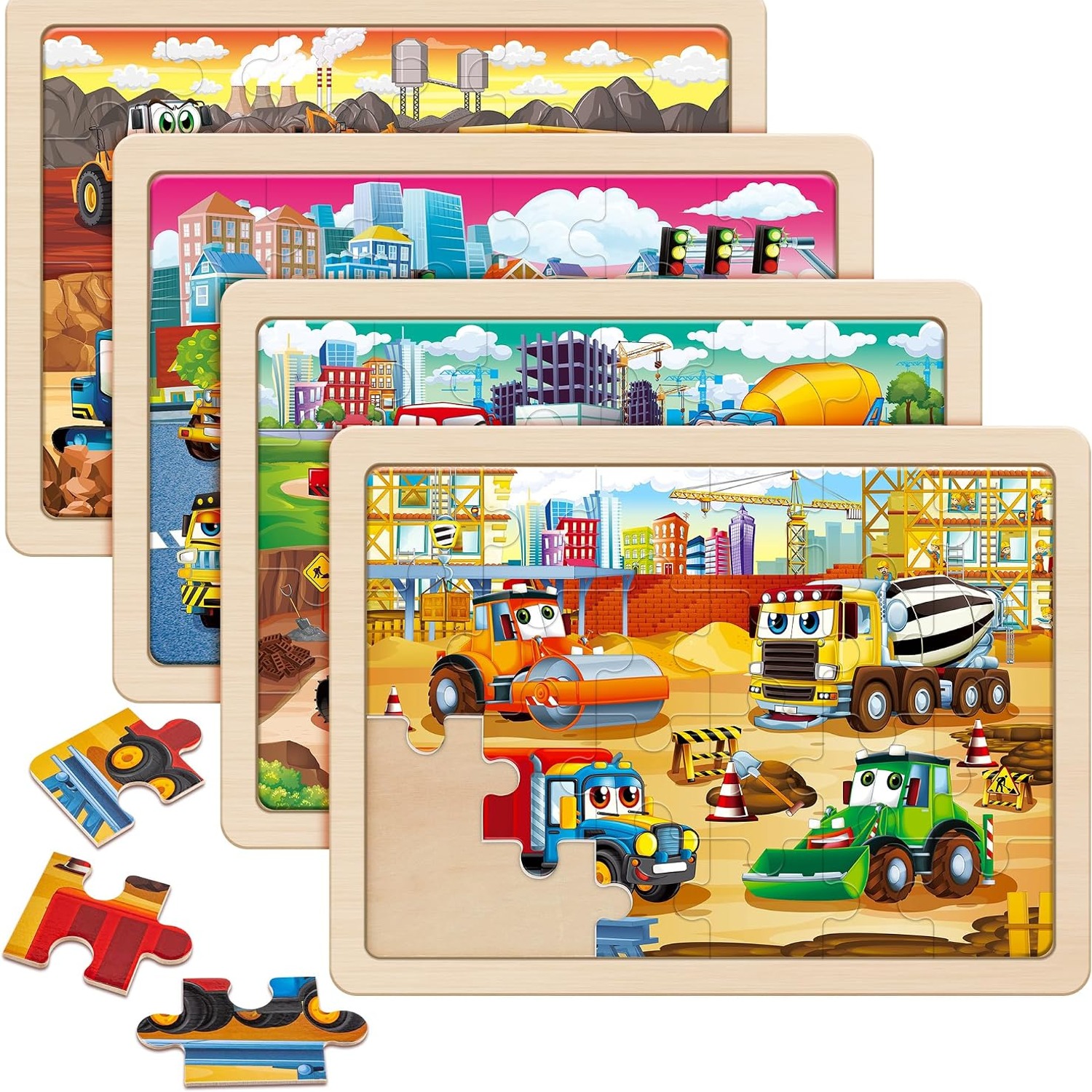
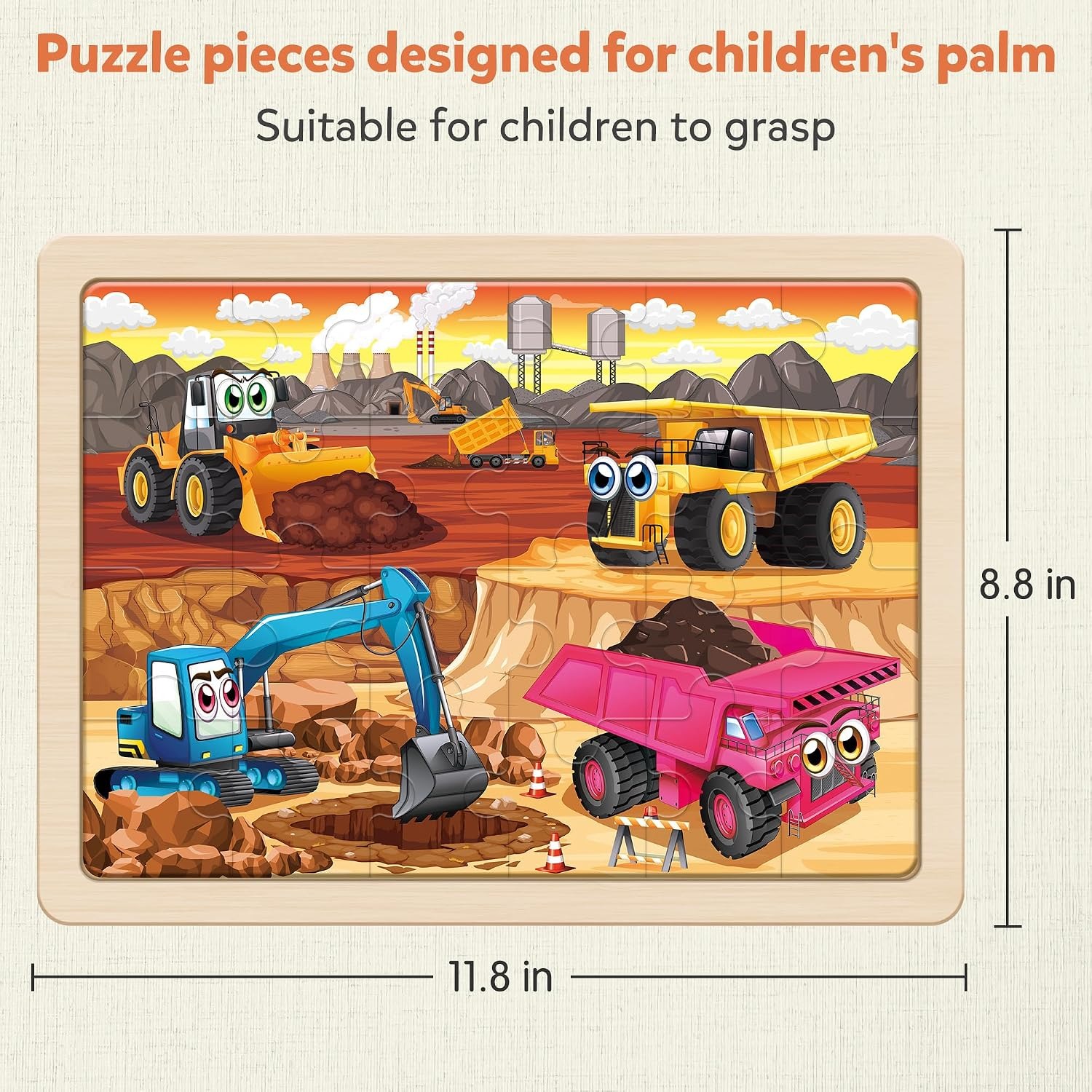
Each of the four puzzles in this set comes in its own wooden frame. The frame is a raised border the exact size of the finished picture. That does two useful things. First, it stops the finished edge drifting, so a knock to the table does not undo ten minutes of work. Second, it gives the child a defined space. Instead of a vague scatter of pieces on a big table, there is a rectangle that needs filling. Small children respond much better to a bounded task.
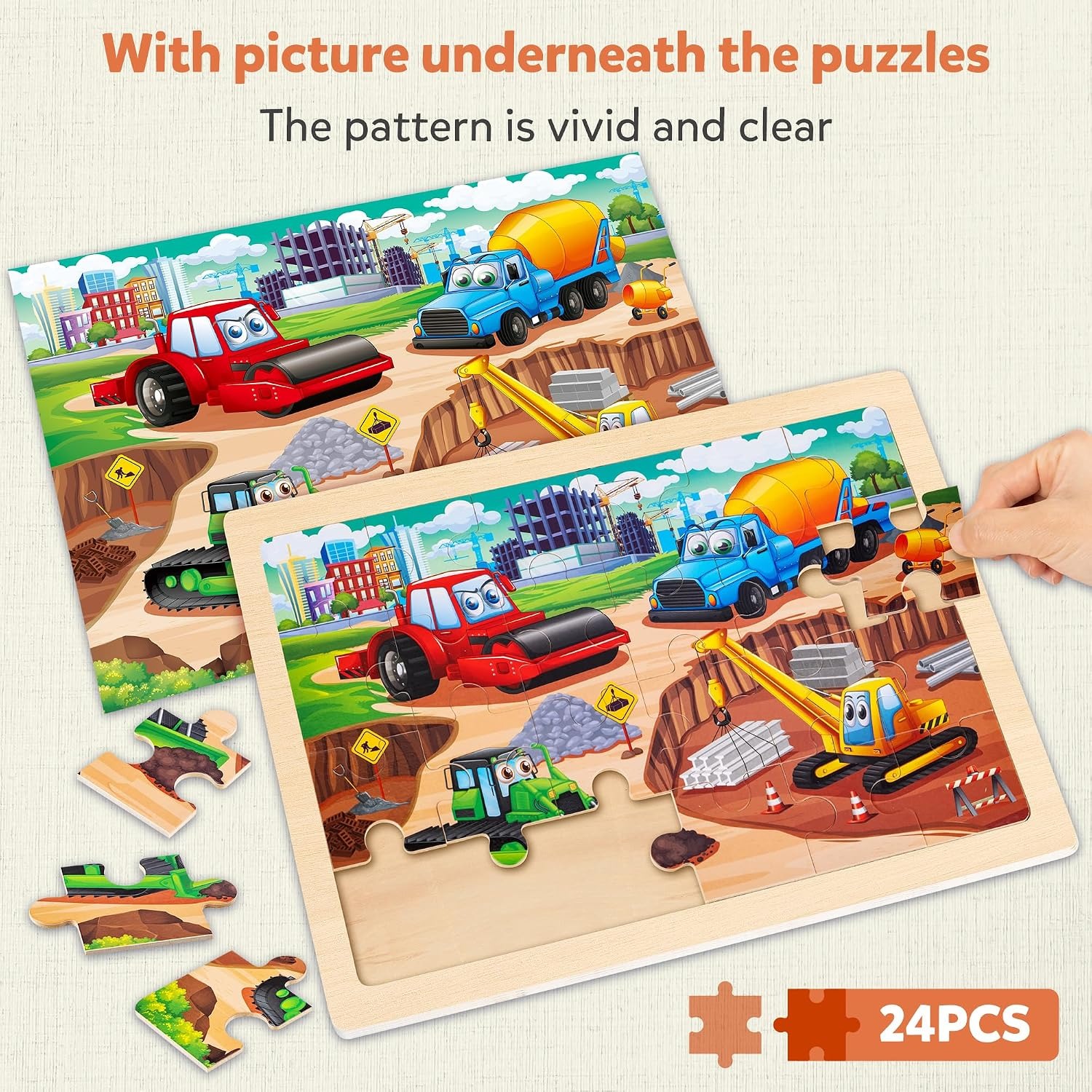
Then there is the picture underneath. Lift the pieces out and there is a removable paper illustration of the completed scene sitting in the base of the frame. This is the quiet genius of the design. A child who is stuck does not have to ask an adult. They lift a piece, look at what is printed below, and work it out. They stay in charge of their own puzzle, which is the whole reason this kind of play is good for them.
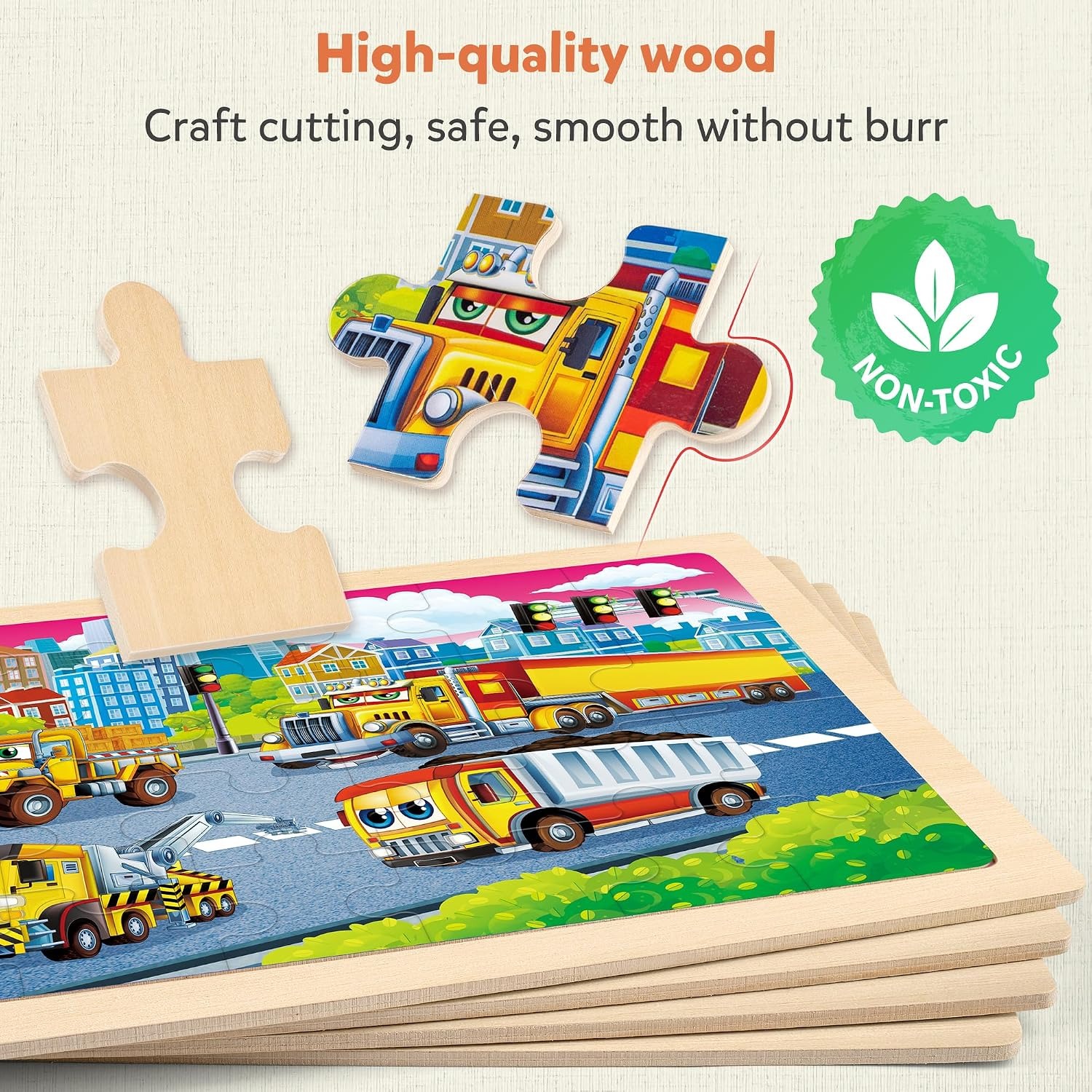
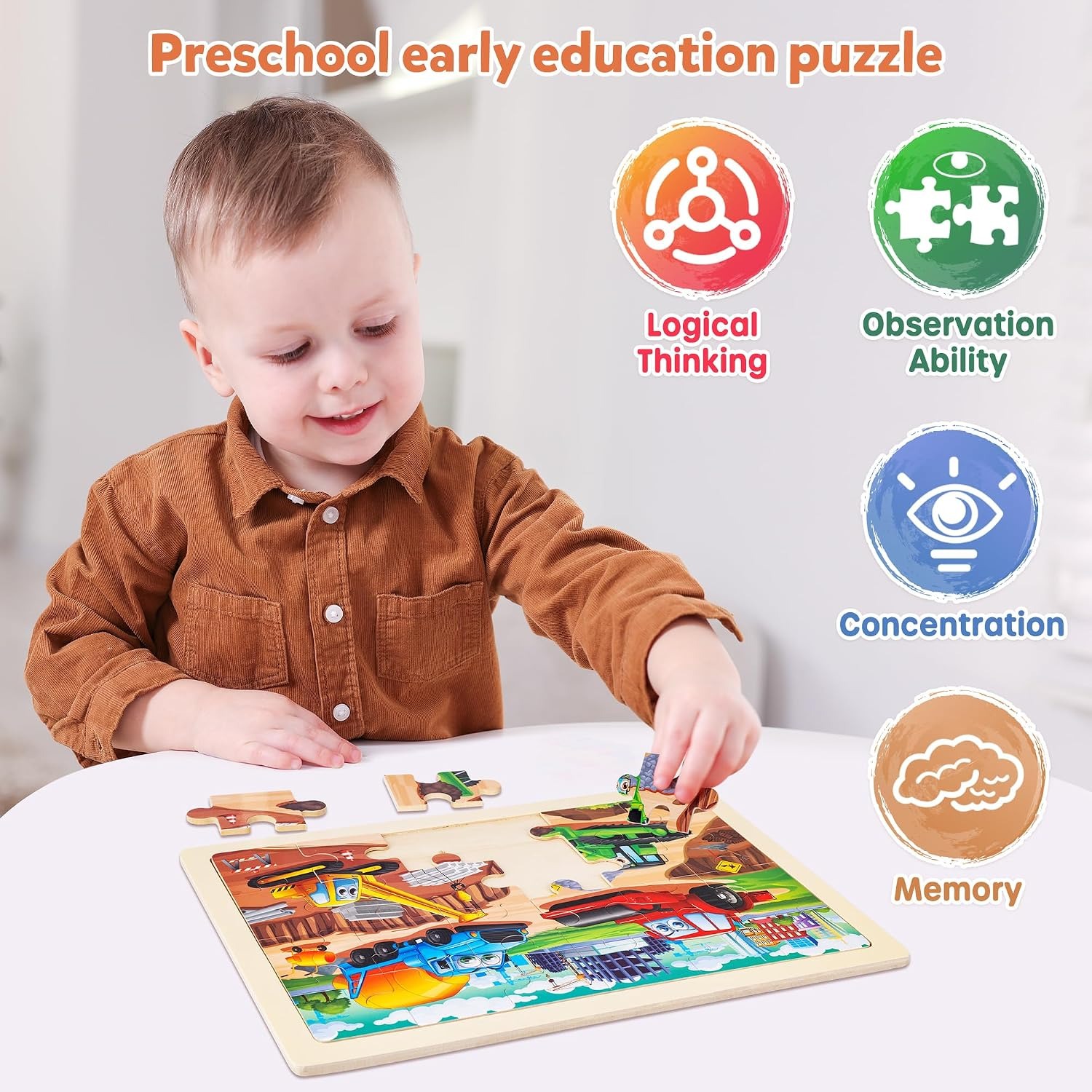
The pieces themselves are wood, cut thick and finished smooth. Thickness is not a detail. A three year old's pincer grip is still developing, and a thin cardboard piece is genuinely hard to pick up off a flat table. A thick wooden one is not. This is part of why the best wooden puzzles for young preschoolers almost always use chunky stock.
Who this suits
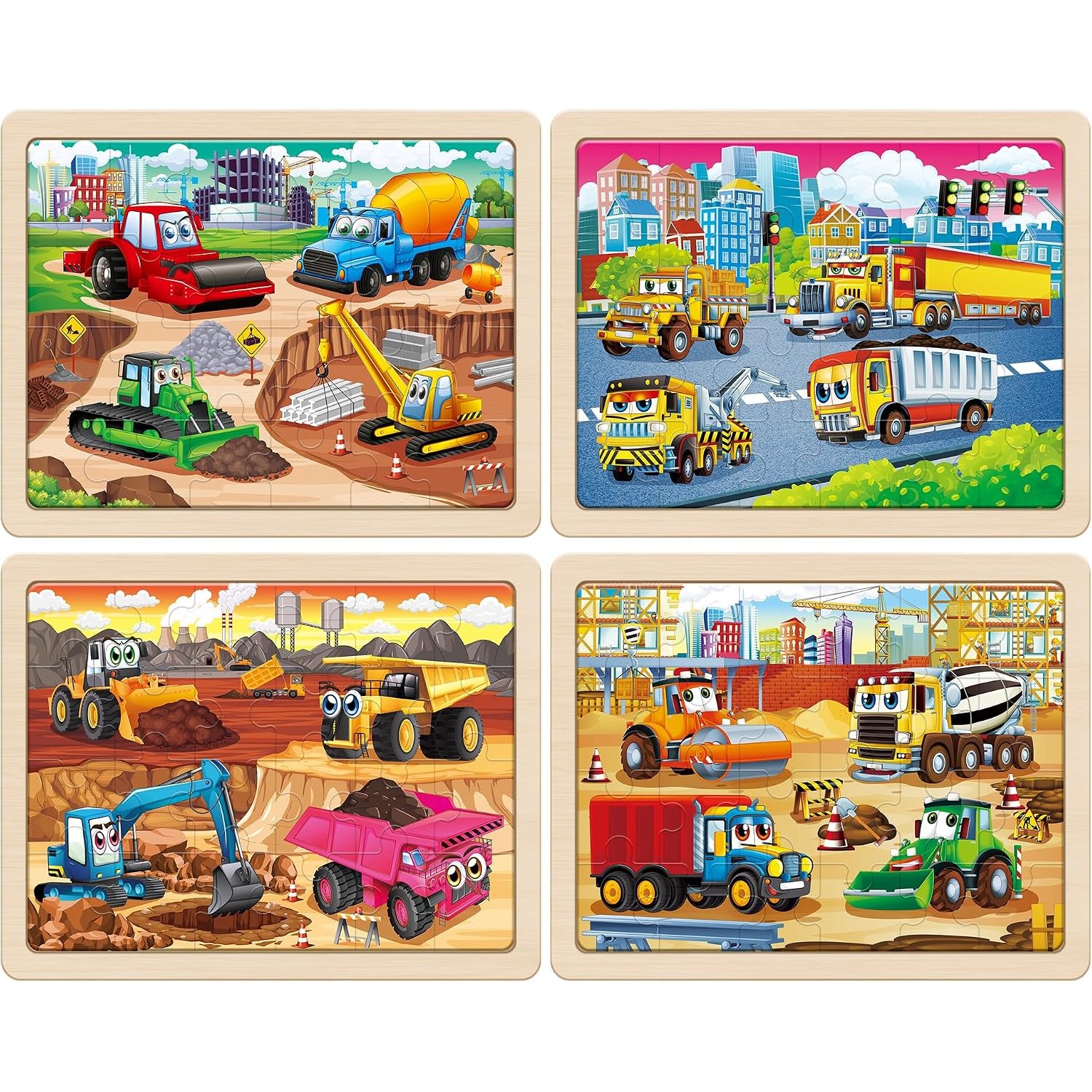
The obvious answer is the truck-obsessed child, and that is fair. All four scenes are built around construction vehicles: a construction site, urban roads, a quarry, and a homestead build. If your kid can tell an excavator from a backhoe and has opinions about it, this will land.
But it also works for a slightly different child, the one who is ready for more challenge than their current puzzles give but has not quite got the patience for 50 pieces. The beginner skill level and the picture guide underneath mean they get support without it feeling like an easy puzzle.
It suits households trying to cut screen time, too. There is nothing to charge, nothing that beeps, and no timer running out. Among the best quiet time activity for kids options, puzzles hold up well because the child sets their own pace.
Two children can share it comfortably. Four separate boards means two kids take two each and nobody argues over pieces. That is worth knowing if you have siblings eighteen months apart.
How to choose between puzzle sets
A few things actually matter when you are comparing options at this age.
Piece count versus piece size. More pieces is not automatically better. Look at how big each individual piece is. A 24-piece puzzle on a 11.8 by 8.8 inch board gives pieces that are comfortable to hold. The same 24 pieces squeezed onto a postcard would be miserable.
Whether it is framed. Loose jigsaws scatter. Framed boards do not. For anyone under five, framed is almost always the better buy, and frames are a feature of most of the best framed puzzle board sets aimed at this age.
Material. Cardboard is cheaper and lighter, but it bends, peels at the corners, and dies the first time a drink goes over. Wood survives a lot more. If the puzzle is going to be used repeatedly over a year or two, wood earns its price difference.
How many puzzles you get. One picture, however nice, gets old. Four pictures means roughly four times the novelty. Rotating them helps even more. Leave one out, keep three away, and swap weekly.
Whether there is a built-in hint. The illustration under the board is not a gimmick. It is what lets a child keep going without an adult hovering. If you are comparing two sets and one has it, that one is probably the better choice.
Getting the most out of it
Start with the easiest board and sit next to your child the first time, but keep your hands off. Narrate instead of fixing. Pointing at a gap and saying "what shape would fit in there" teaches more than placing the piece yourself.
Sort before building. Tipping all 24 pieces out and turning them picture-side up takes thirty seconds and makes the whole thing go smoother. It also teaches a habit that carries into bigger puzzles later.
Use the corners and edges first. Even at this age, kids can learn that straight-edged pieces belong at the outside. It is a concrete rule they can apply, and the frame makes it obvious when they get it right.
Count the pieces back in at the end. Make it part of the routine. One missing piece ruins a 24-piece puzzle, and the floor around a dining table is where pieces go to disappear.
Rotate the four scenes rather than leaving them all out. Interest lasts far longer when a puzzle feels slightly new.
Looking after wooden puzzles
Wood is forgiving but not waterproof. Wipe pieces with a barely damp cloth and dry them straight away. Do not soak them, run them under a tap, or put them anywhere near a dishwasher. Water swells wood and lifts printed surfaces, and there is no fixing that.
Store the set flat, in the original box, with each puzzle sitting in its own frame. Flat storage keeps the boards from warping. Standing them on edge in a toy box for six months is how you end up with a bowed board that no longer sits flush.
Keep them away from radiators, damp bathrooms, and windowsills that get hours of direct sun. Heat and humidity swings are harder on wood than ordinary play is.
The set weighs 0.72 kg in total and is listed as portable, so travel is fine. For car journeys and plane trays, take one framed board rather than the whole box, and bring a shallow lid to catch stray pieces.
The short version
This is four wooden construction vehicle puzzles in one box, 24 pieces each, framed, with a picture guide hidden underneath every board. The manufacturer recommends it for ages 3 and up and lists the skill level as beginner.
It fills the gap between preschooler puzzles that are too easy and jigsaws that are too hard. The frames keep the work from falling apart. The thick wooden pieces suit hands that are still learning. The four different scenes stop it going stale after a week.
If you have a three to five year old who likes diggers and dump trucks, or one who is simply ready for something harder than six big chunks, this is a sensible, quiet, battery-free buy that will get used more than once.