

The complete guide
A Buyer's Guide to DIY Kite Making Kits for Kids and Groups
The problem with most kids' crafts
You buy a craft kit. The children sit down. Twenty minutes later it is finished, the table needs wiping, and everyone is asking what happens next. The making was fun, but the result just sits there.
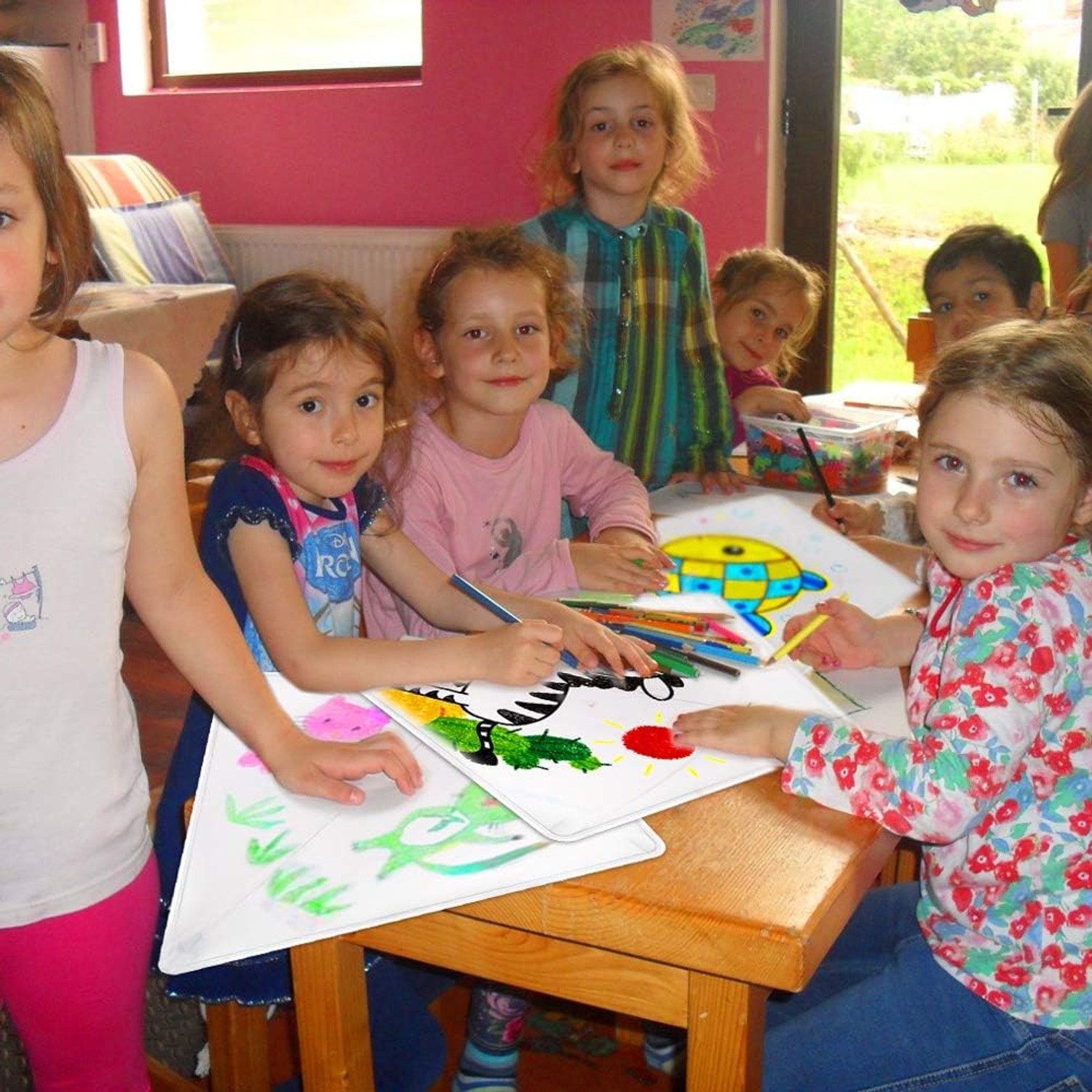
A kite fixes that, because the craft has a second half. You color it, then you take it outside and find out whether your design looks good against a blue sky. Children who normally lose interest in drawing will keep going when they know the picture is going to fly. And the part that happens outdoors burns off the energy that indoor crafts tend to build up.
The other problem is quantity. Most craft kits make one thing. If you have three children, or a class of twenty-four, one kit is not much help. A six pack solves the sharing argument before it starts.
What is actually in this kit
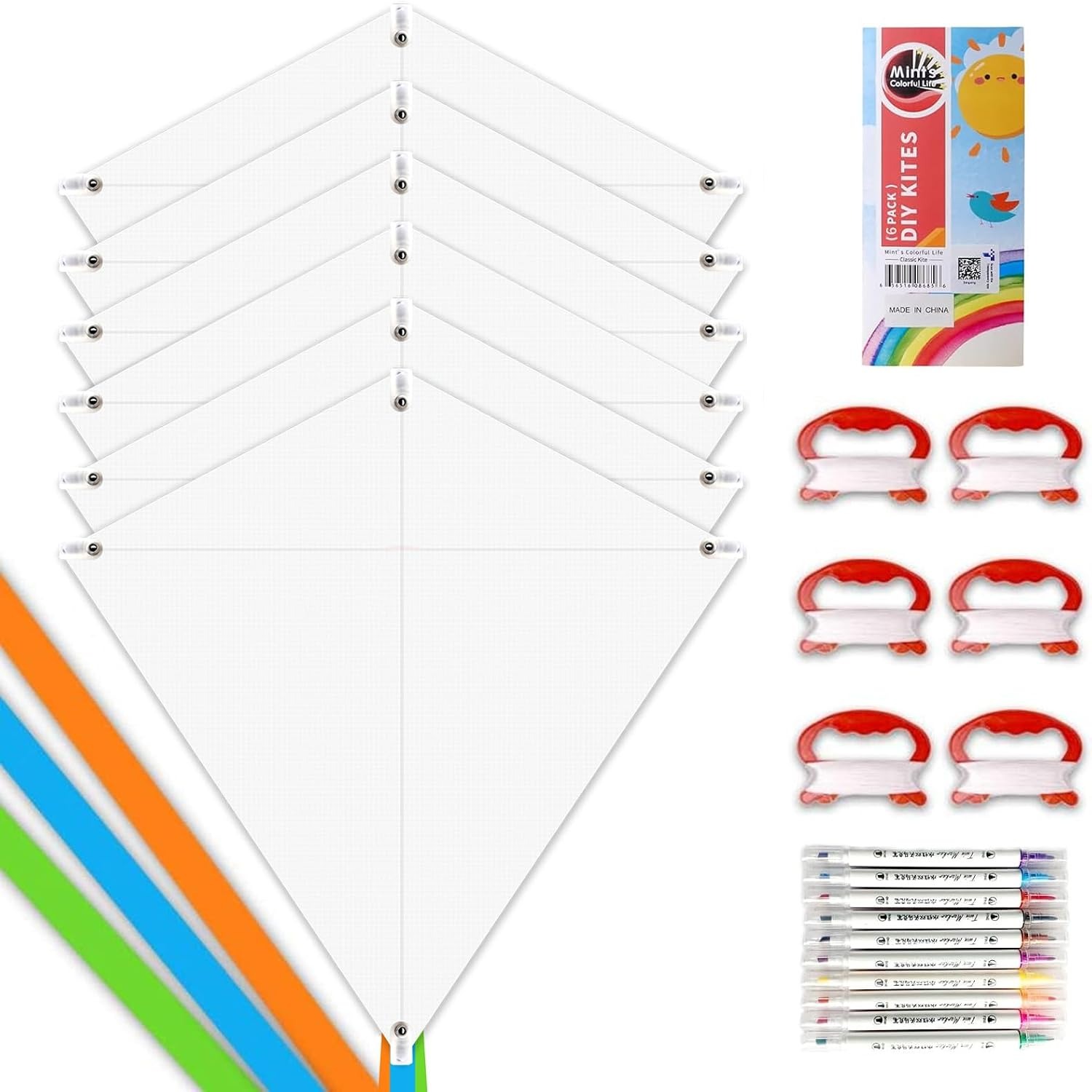
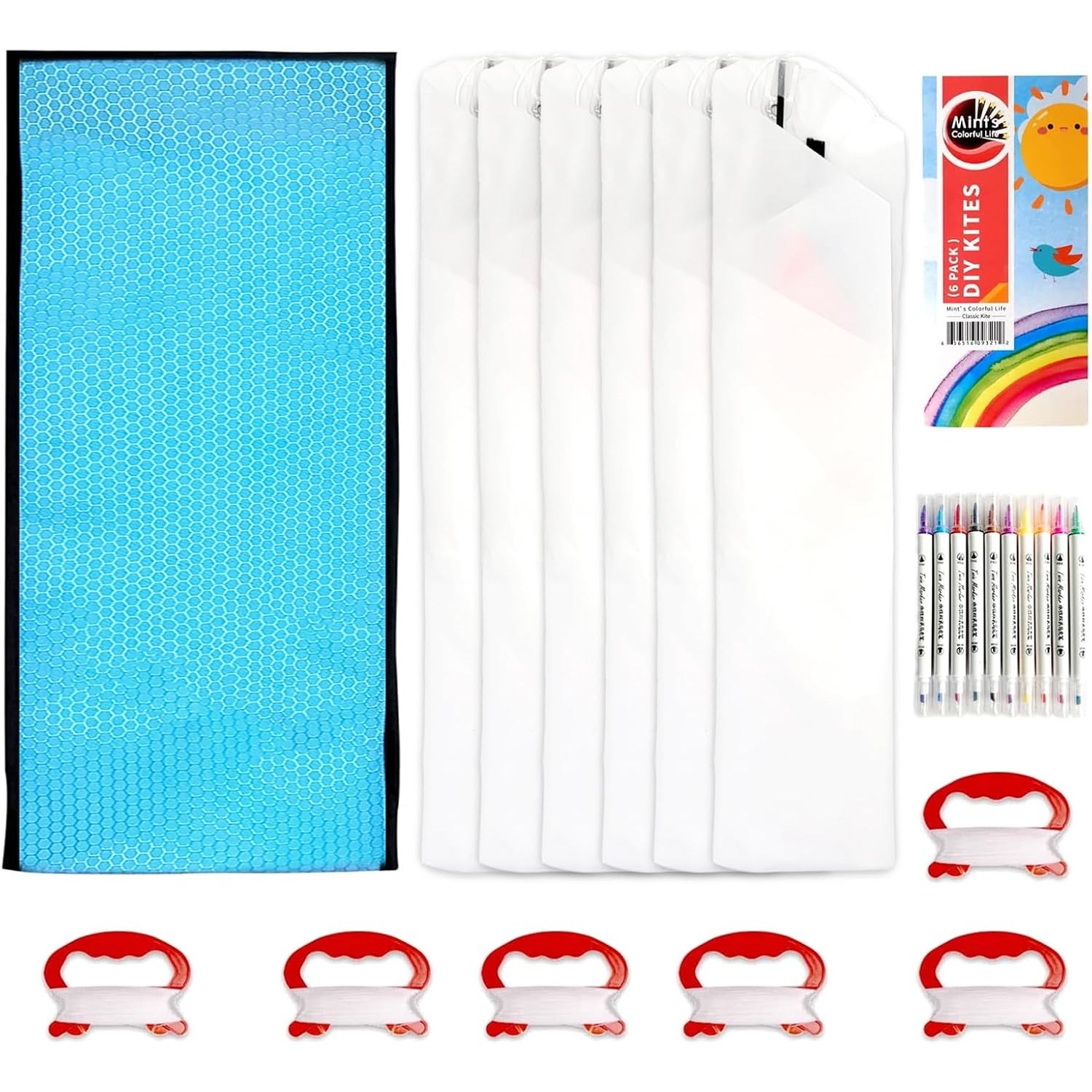
Six blank white diamond kites. Sixteen markers, supplied as two sets of eight colors. Long ribbon colorful tails. An instruction booklet.
That combination matters more than it sounds. Plenty of decorate-your-own kites arrive without pens, which means a trip to the shops before the activity can start. Plenty of cheap kites arrive without tails, which is a bigger issue than most people realize, since a tailless diamond kite tends to spin and dive. Having both in the box means you can open it on a Saturday morning and be flying by lunchtime.
The listed item dimensions are 25 x 25 x 0.1 inches and the item weight is 10.56 ounces for the set. The kites are branded Mint's Colorful Life, model name 6 Diamond Kites. The sail is white, which is the whole point, since a blank canvas gives the brightest result once children start coloring.
How a diamond kite works
A diamond kite is the shape most people picture when they hear the word kite. Two crossed rods make the frame, the sail stretches across them, and a bridle line attaches at the front so the kite tilts into the wind at the right angle.
That tilt is what creates lift. Air hits the angled sail, is pushed downward, and the kite gets pushed up in return. It is the same basic idea as an airplane wing, just simpler and much cheaper.
The tail does a separate job. Without one, a light kite rolls side to side and eventually spirals into the ground. Adding ribbon at the back creates drag that keeps the nose pointed into the wind. If a kite keeps misbehaving in flight, the first thing to try is a longer tail, not more running.
Who this suits
Families with more than one child get obvious value, because nobody has to wait a turn. Six kites also means spares, and with children and kites, spares are not a luxury.
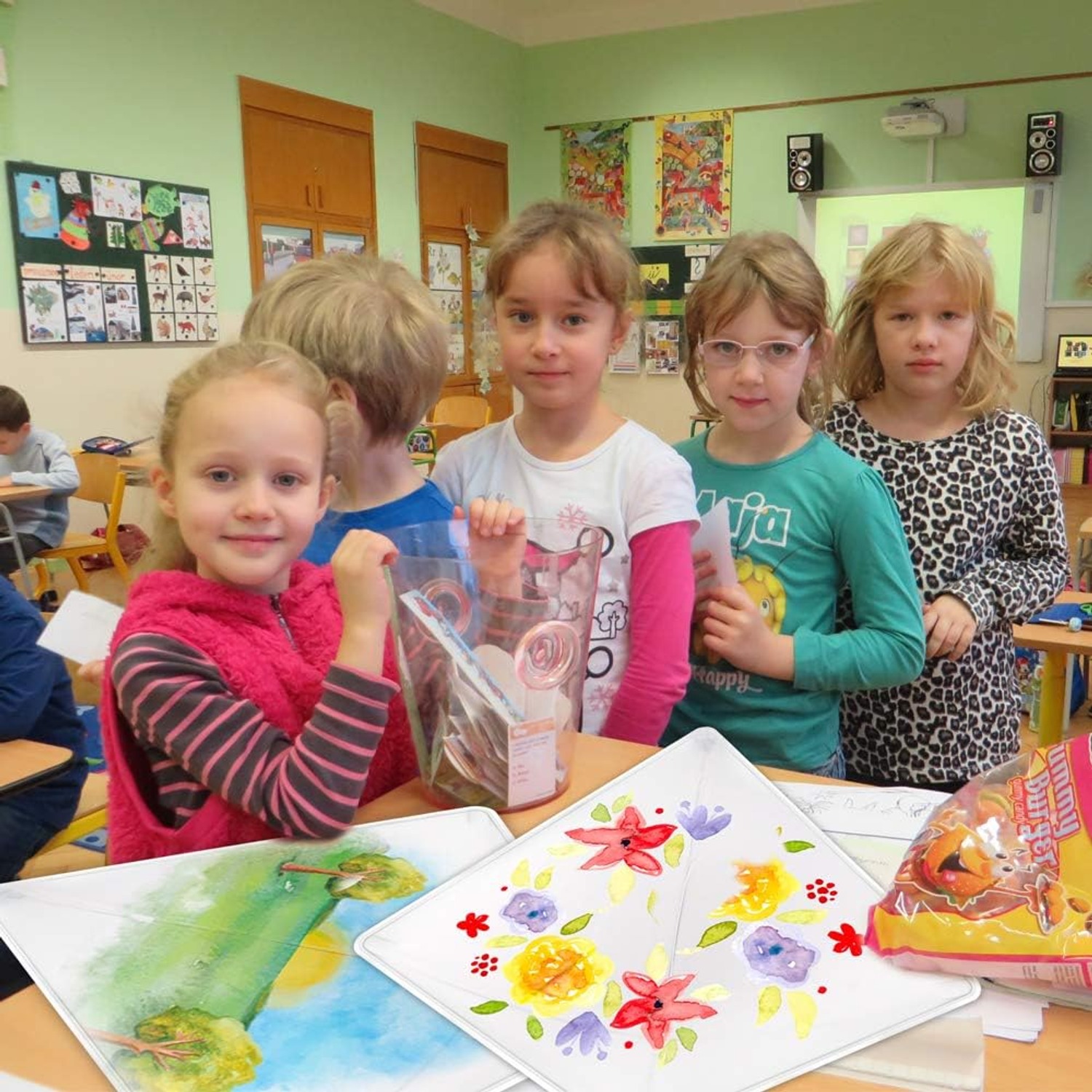
Teachers and activity leaders are a big part of who buys sets like this. A classroom craft kite set covers a table group in one purchase, and the activity links neatly to a lesson about wind and air. Holiday clubs and summer programs use them the same way, as a group craft kit for kids that ends outside rather than at a bin full of offcuts.
Party hosts find them useful because the kite is both the activity and the take-home gift. Instead of a bag of plastic that gets lost by Tuesday, each child leaves with something they made.
And then there are holidays. The set is light and flat, which is why so many people pack it. As a family beach activity kit it earns its space in the suitcase, especially on the kind of windy coast where nothing else will stay put on the sand.
Choosing between kite kits
A few things separate a kit that works from one that frustrates everybody.
Check whether pens are included. A color your own kite set that expects you to supply art materials is only half a kit, and the markers you have at home may not sit well on a kite sail anyway.
Check for tails. This is the single biggest cause of unhappy first flights. Ribbon tails included in the box save you improvising with bin bags in a field.
Look at quantity against your actual need. If you are buying for one child, a single kite is fine. For anything involving a group, buying in a pack is almost always cheaper and far less hassle than six separate orders.
Finally, think about size. A 25 inch diamond is a sensible middle ground for children. Very large kites pull hard and can be alarming for a small child holding the line. Very small ones need stronger wind to stay up.
Getting a good first flight
Pick an open space. Parks, playing fields and wide beaches work. Trees are the enemy, and power lines are not a risk worth taking with anything on a string.
Wait for a steady breeze rather than gusty conditions. You want enough wind that leaves are moving and a flag would hold out, not so much that you are leaning into it. In light wind a child can get a kite up by walking briskly with the line out behind them, but a decent breeze does most of the work.
Let the line out slowly once the kite catches. The temptation is to run and unwind everything at once, which usually ends in a crash. Short bursts of line, then pause and let it climb.
If the kite dives repeatedly in the same direction, the bridle is probably off center or the tail is too short. Both are quick fixes in the field.
Looking after them
Markers need drying time before the kites get folded or packed, otherwise colors smear. Color indoors, leave them flat for a while, then head out.
Keep them dry. Damp sails tear more easily, and wet ink runs. If you get caught in a shower, let everything dry fully before storing.
After flying, wind the line back onto the handle properly rather than bundling it up. Tangled line wastes more time on the next outing than anything else. Shake off sand or grass clippings, then store the kite flat or loosely rolled somewhere dry.
Tears are repairable. Clear tape on both sides of the sail holds fine, and a slightly bent frame rod can usually be eased straight by hand. With six kites, one bad landing does not end the afternoon.
The short version
This is a six pack of blank white diamond kites that children decorate themselves, supplied with 16 markers, ribbon tails and an instruction booklet. Listed dimensions are 25 x 25 x 0.1 inches, item weight 10.56 ounces, with a one year warranty listed. Sail material and a specific minimum age are not stated by the maker.
It is a good fit for birthdays, classrooms, holiday clubs and family trips, anywhere you need several children busy at once and would rather the activity finish outdoors than at a table. The craft takes an hour. The flying takes the rest of the afternoon.