
The complete guide
Wooden Building Blocks Buyer's Guide: Choosing a Set That Gets Used
The toy that keeps getting put away
Walk past most toy shelves and you will find the same story. The loud plastic thing with buttons was thrilling for a week. The licensed character set got played with until the show finished. Somewhere at the back sits a small bag of wooden blocks, maybe twenty of them, which never quite worked because twenty blocks only builds a tower the height of a cereal box.
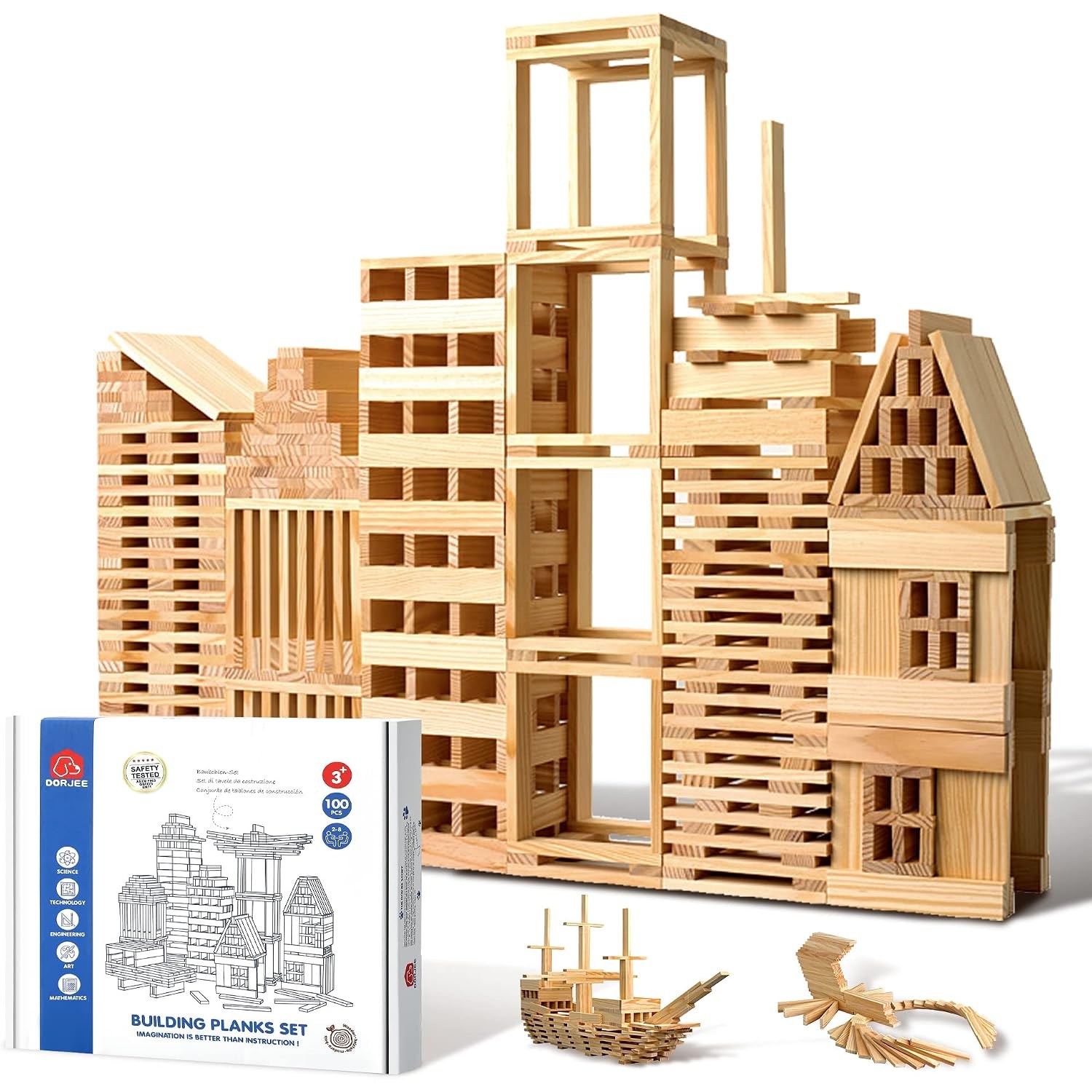
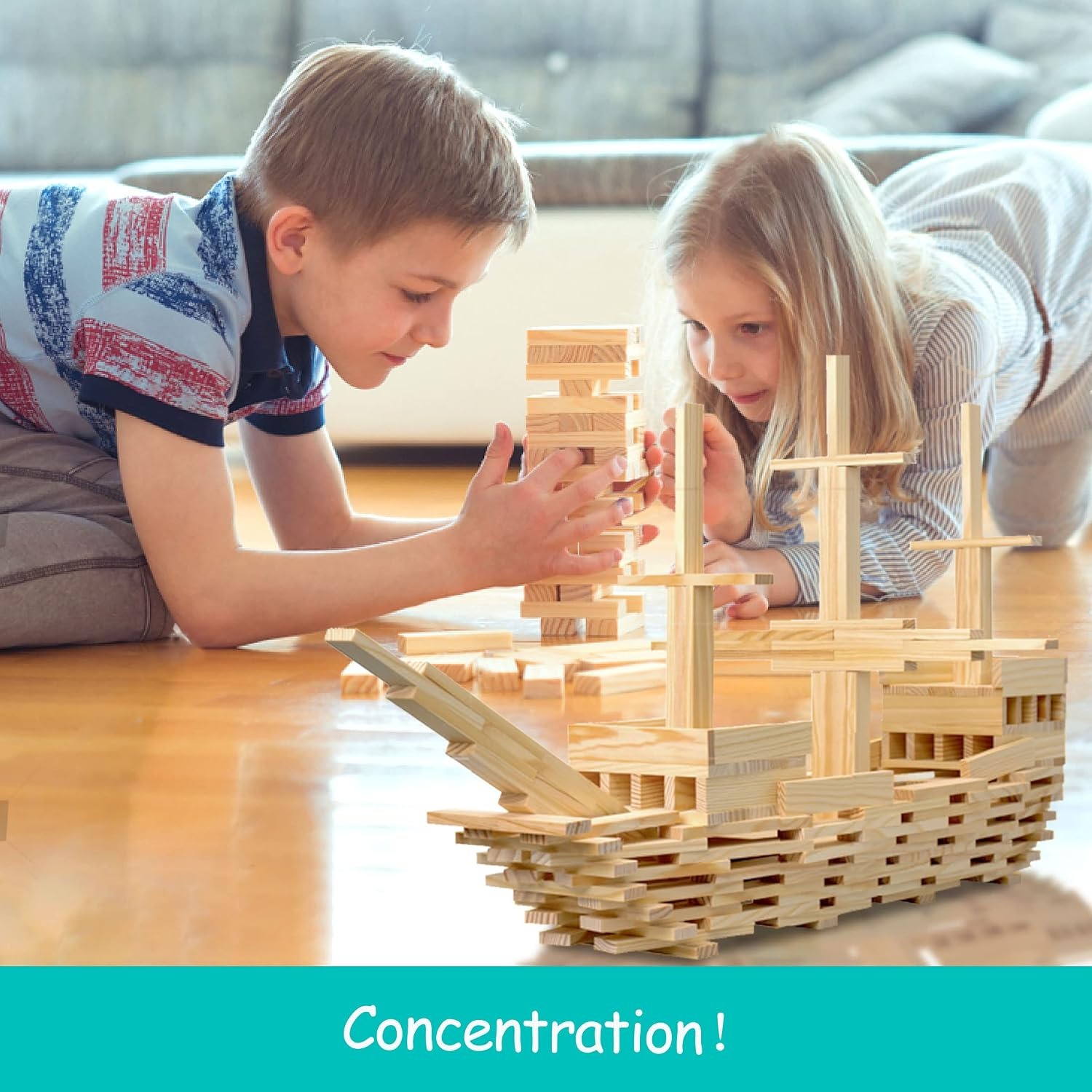
That is the real problem with blocks, and it is a quantity problem, not a concept problem. Children do not lose interest in building. They lose interest when the pile runs out before the idea does. A set of 100 identical planks fixes that, because it is enough material to build something a child can walk around and be proud of.
How a set of plain planks actually works
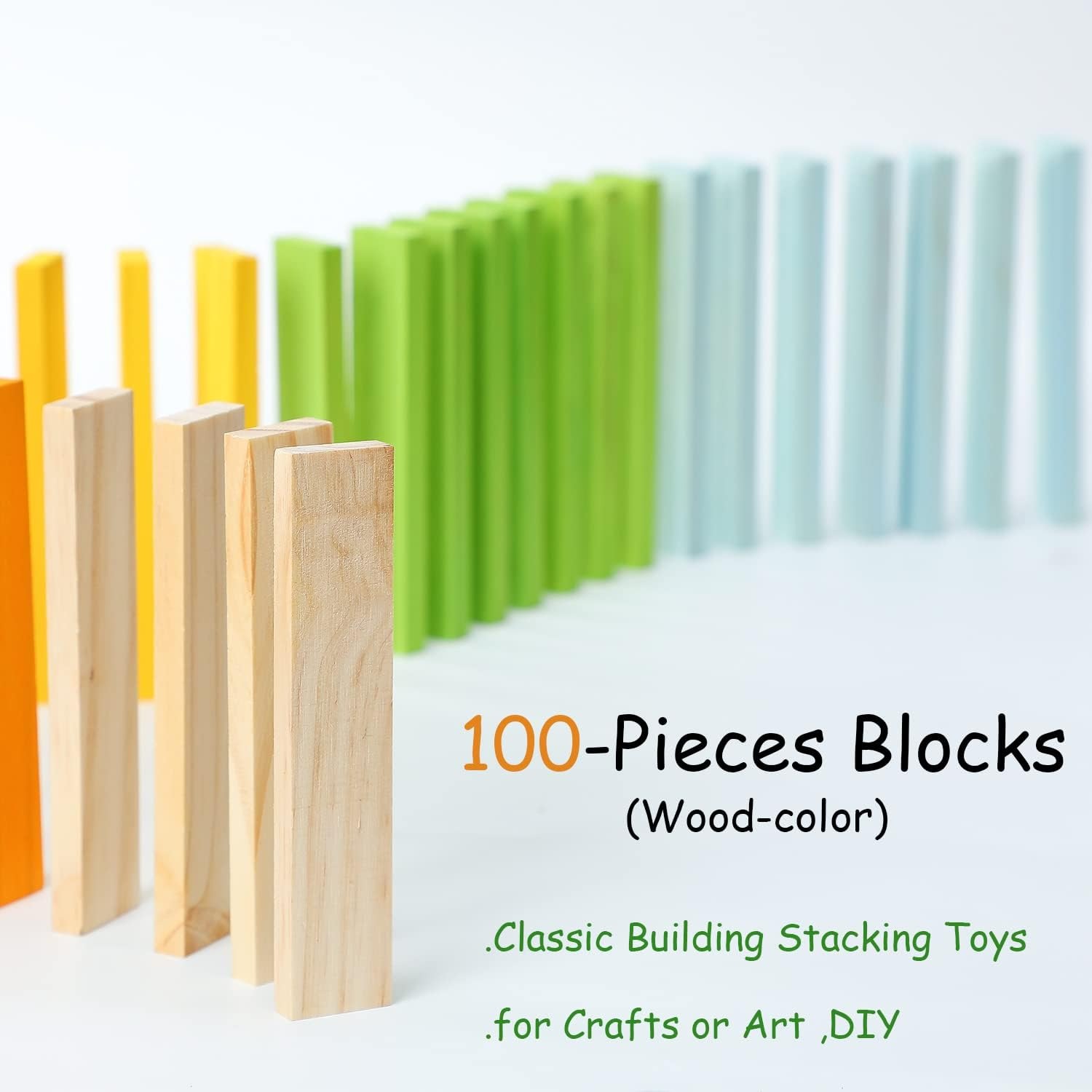
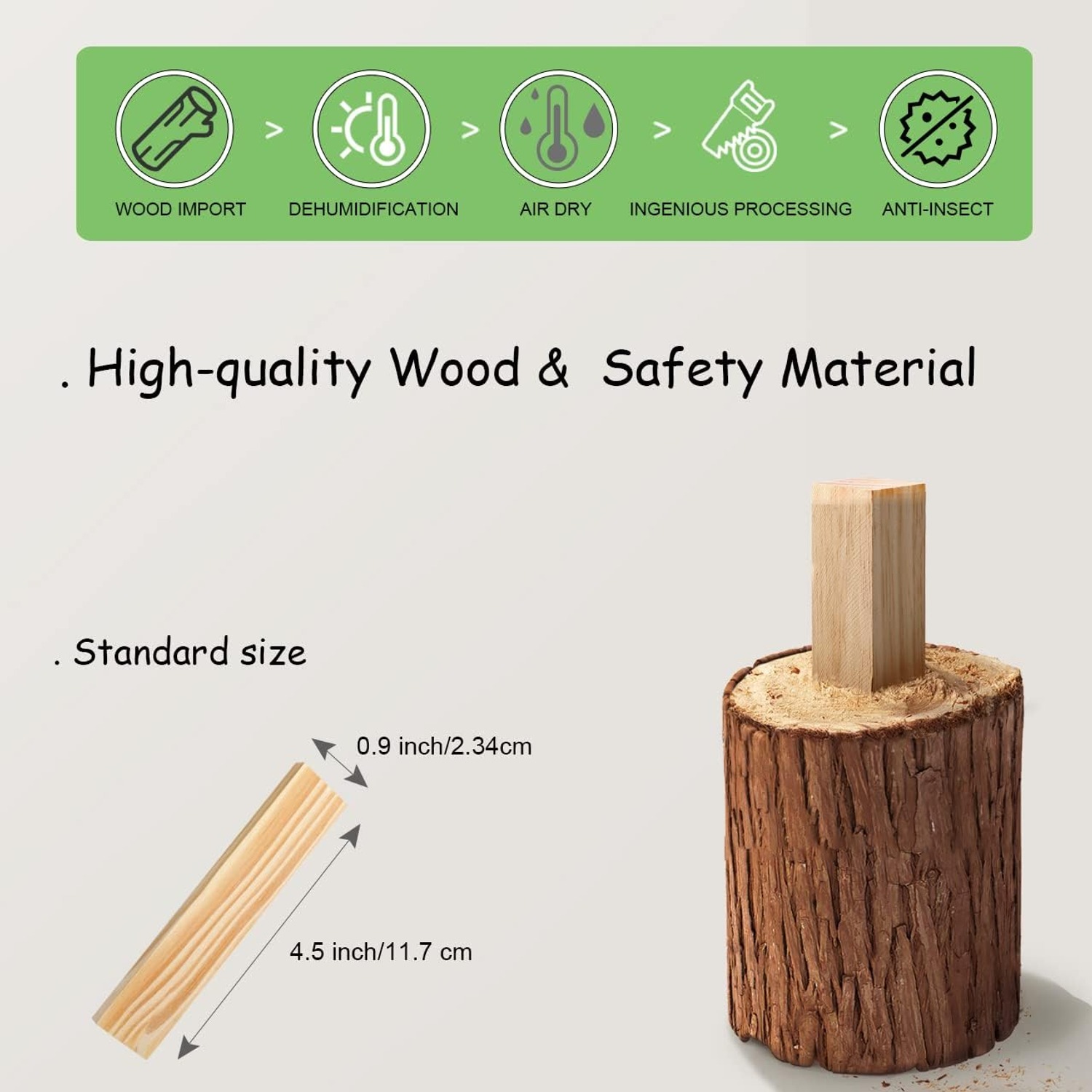
Every piece in this set is the same thin, flat plank, about 0.3 x 0.9 x 4.5 inches. There are no notches, no pegs, no glue and no magnets. Nothing clicks. Each plank stays where it is because it has been placed on a flat, reasonably grippy surface, and because the structure underneath is doing its job.
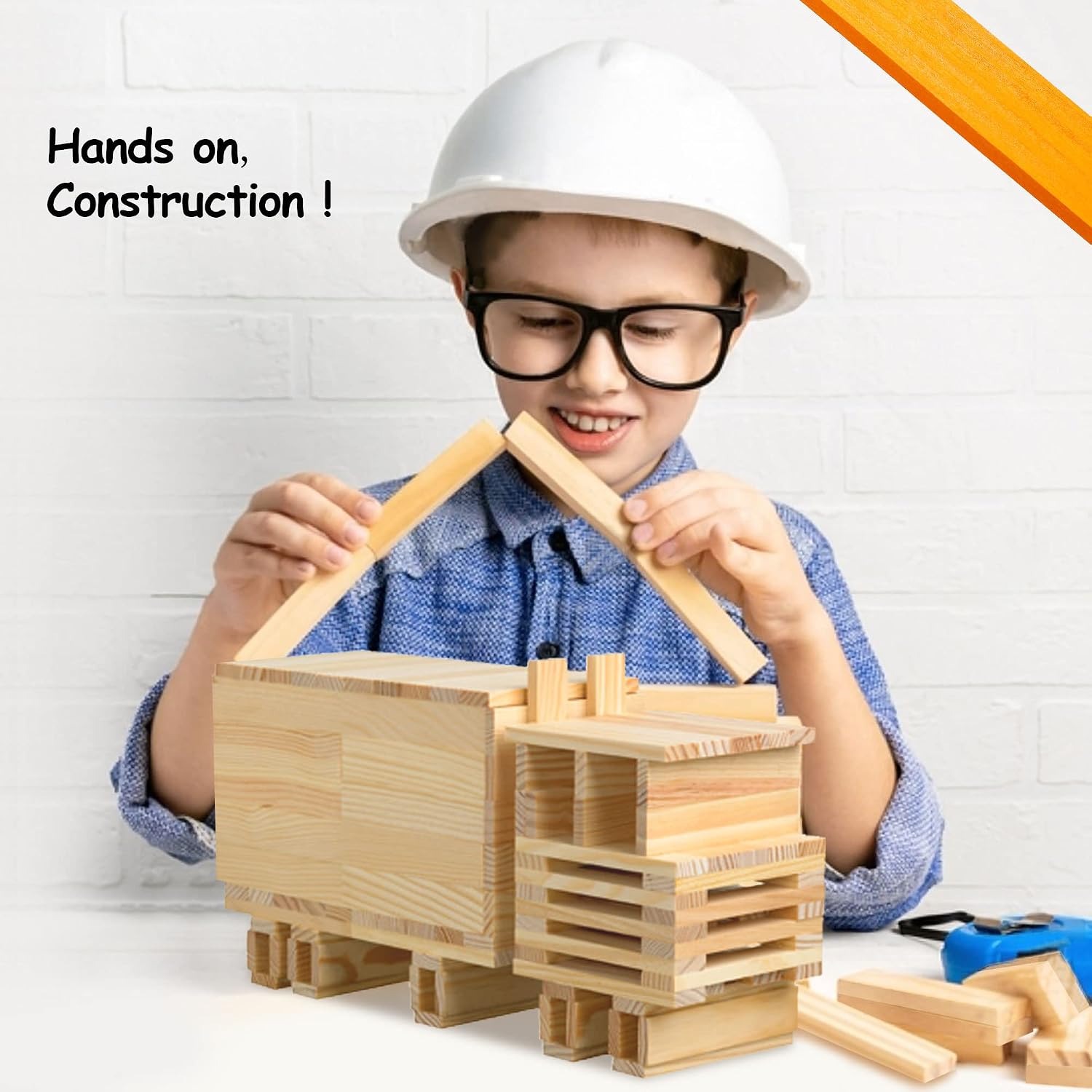
That sounds basic. It is also why the system is so flexible. With a locking brick set, the shape of the connector decides what can be built. Here, the only rules are gravity and friction. A plank lying flat is a floor. Two standing on edge with a third across the top is a doorway. Twenty laid end to end is a road. The same piece does a dozen jobs across one afternoon.
The uniform size matters more than people expect. When every plank is identical, layers sit flush and children can predict what will happen before they place a piece. Mixed-size block sets are fun, but they introduce guesswork. A single repeated unit teaches pattern and measurement almost by accident, since a child learns that three planks across equals one plank long, and starts building with that in mind.
The collapse is part of the design
Nothing in this set is held together permanently, which means every build is temporary. Parents sometimes see that as a drawback. Children almost never do.
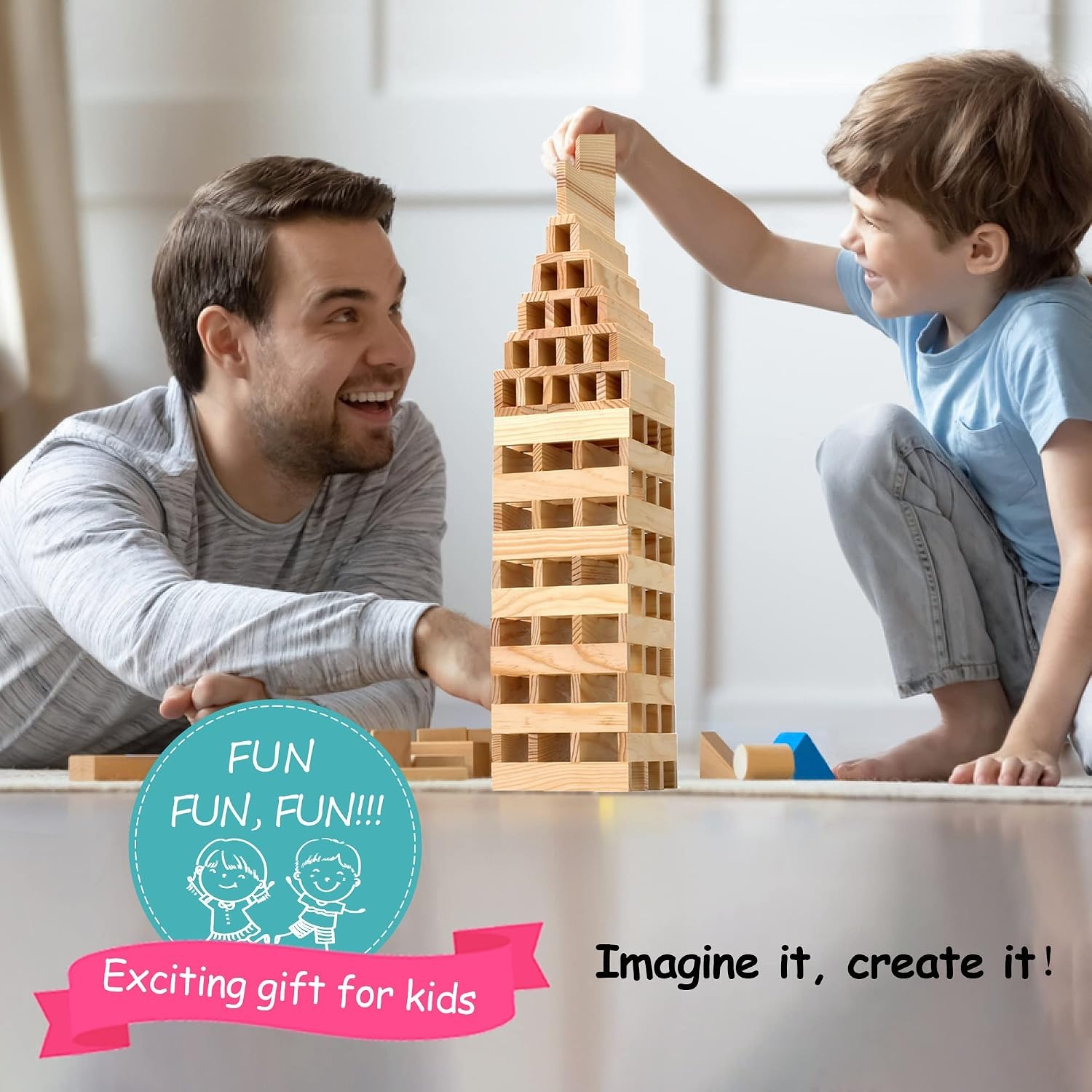
Here is what happens. A child builds a tower, it gets tall, it leans, it falls. There is a crash and usually a laugh. Then they build it again with a wider base. Nobody had to explain structural engineering. The tower did.
That cycle is the real value. There is no fear of ruining a finished model, because there is no finished model to ruin. Taking something apart costs nothing, so experimenting costs nothing either. Children who are cautious about getting things wrong tend to relax with a toy like this, and they build tolerance for small failures in a situation where failure is funny rather than serious.
Who this suits
The recommended age starts at 3 years. At that age children are mostly stacking, lining up and knocking down, and 100 pieces gives them plenty of room to do it. Fine motor control is the main gain, since placing a thin plank without wobbling the stack takes a steady hand.
Somewhere around five or six, the building gets deliberate. Children start making enclosures for animals, garages for cars, and towers with a plan behind them. By seven or eight, you see arches, bridges, cantilevers and attempts to beat yesterday's height record. This is also the age where children start laying the planks out as dominoes, which uses the whole set in one go.
It works well for groups too. Two or three children can build separate sections and then connect them, which turns into a negotiation about whose road goes where. For families looking for the best screen-free toys for kids that work for siblings of different ages, a big pile of neutral planks is hard to beat, because a three year old and an eight year old can share the same pile and both be doing something at their own level.
It suits certain rooms, too. There are no lights, no sounds and no batteries. On a day when the house is already noisy, a quiet pile of wood on a rug is a relief.
How to choose a block set
Count the pieces first. This is the single biggest factor in whether a set gets used. Under fifty pieces and children hit a ceiling quickly. One hundred is a practical sweet spot for one or two kids, and if you have three builders, buying two sets of the same plank size doubles your material with no compatibility issues.
Check whether the pieces connect. Locking sets and balance sets do different jobs. Locking sets reward following a plan. Balance sets reward experimenting. If a child already has plenty of brick sets, a plank set adds something genuinely different rather than more of the same.
Look at the finish. A moderately sanded plain surface grips better than a glossy lacquered one, which matters a lot when you are stacking twenty layers. Painted blocks look lively in photos but can become slippery, and the color sometimes narrows what a child imagines the piece to be. Plain wood stays whatever the story needs it to be.
Think about storage. A set with a box tends to survive. A set that arrives in a shrink-wrapped bundle ends up scattered across three rooms within a month, and once half the pieces are missing the set is effectively dead. The box here holds all 100 pieces, and packing them away in layers is a tidy sorting task in itself.
Be realistic about space. One hundred planks laid out will take over a decent patch of floor. That is a feature when you have a rug or a spare corner, and a nuisance in a tight room with a lot of foot traffic. Pick a spot before the box is opened.
Looking after wooden blocks
Untreated wood has one weakness, and it is water. Wipe the planks with a barely damp cloth and dry them right away. Never soak them, never put them in a dishwasher, and do not leave them out on wet grass. Moisture swells the timber and a warped plank will not stack flush with the rest.
Store the set indoors, in its box, somewhere dry. Big swings between damp and dry air are harder on wood than ordinary use is.
If a plank starts to feel rough after a few years of heavy play, run fine sandpaper along the grain and wipe off the dust. That is the entire maintenance routine. There is nothing to charge, nothing to update and nothing to replace, which is one reason the best classic wooden toys often outlast the childhood they were bought for and get handed down.
The short version
One hundred identical wooden planks, no connectors, no paint, no batteries, in a storage box. Built for ages 3 and up, with the educational focus on creative thinking and motor skills.
What you are really buying is quantity and openness. Enough pieces that a child can build something substantial, and few enough rules that what they build is entirely theirs. The structures fall down, which is the point, because the rebuilding is where the learning lives.
If a child in your life likes making things, or you want a toy that will still make sense in four years, a big set of plain stacking blocks for kids is one of the easier decisions on a toy shelf.