
The complete guide
How To Choose A Sea Animal Figure Set That Kids Actually Keep Playing With
The problem with most ocean toy purchases
Plenty of ocean toys get bought in a rush. A child mentions sharks, someone grabs the first shark thing they see, and two weeks later it is at the bottom of a box. The issue is usually not the child's interest. It is that the toy only does one thing.
A single large shark figure is nice to look at. It cannot be sorted, grouped, compared or arranged into a scene. A set changes that completely. When a child has twenty-four different ocean animals in front of them, play turns into something with structure. They line them up by size. They separate the ones that breathe air from the ones with gills. They build a reef in the corner of the rug and give every animal a job.
That is the real argument for a mini sea creature set over one big centerpiece figure. Breadth beats size when the goal is play that lasts.
What is actually in this set
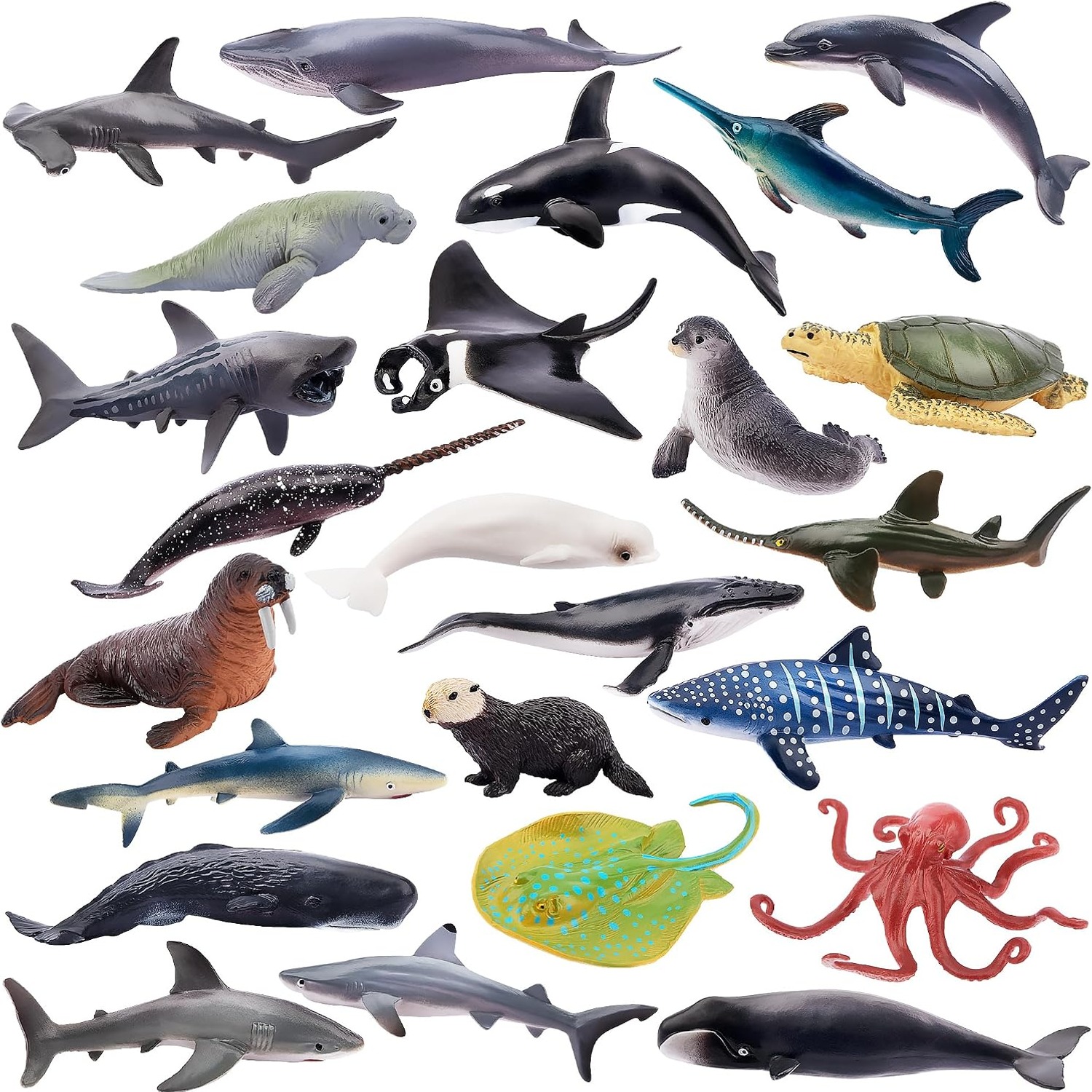
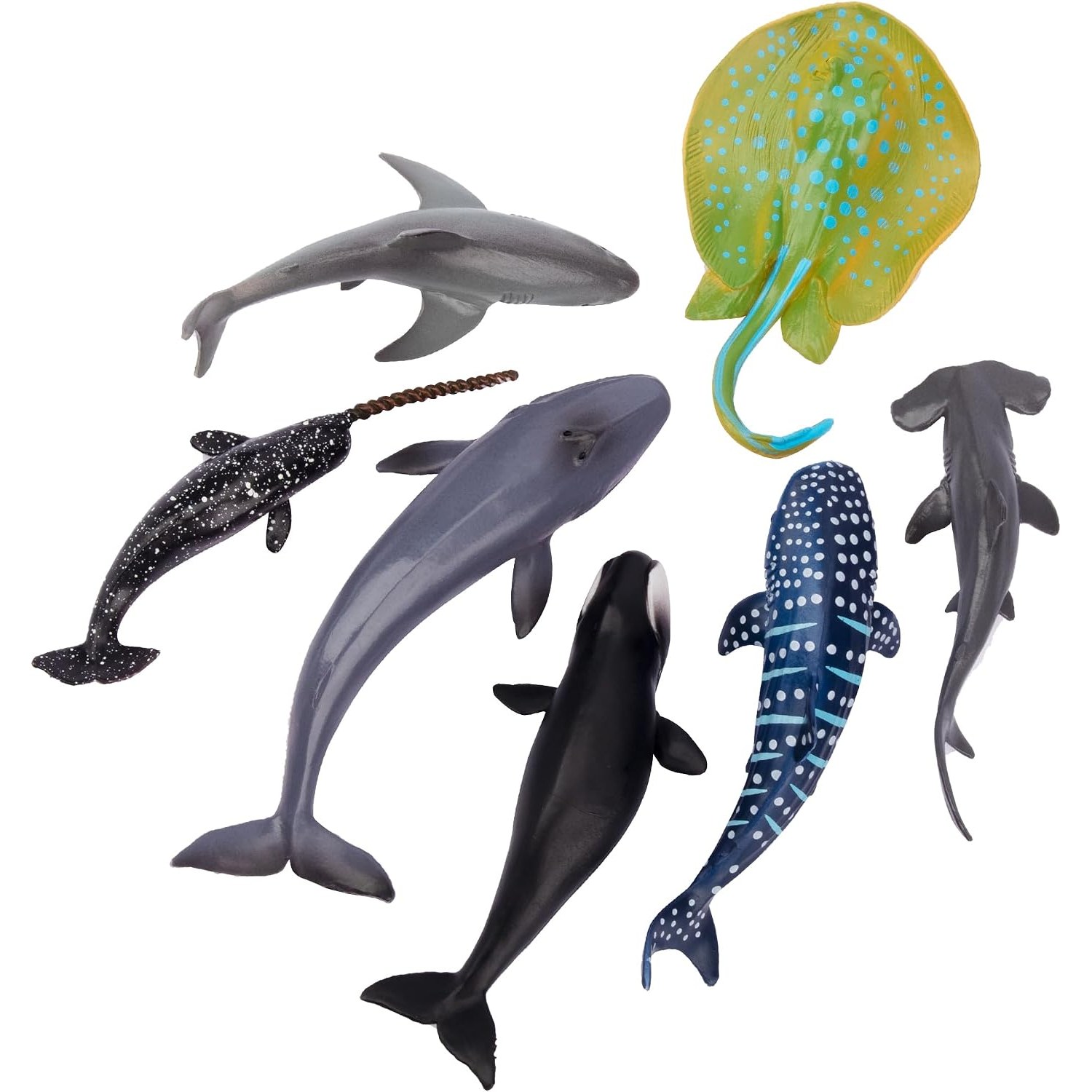
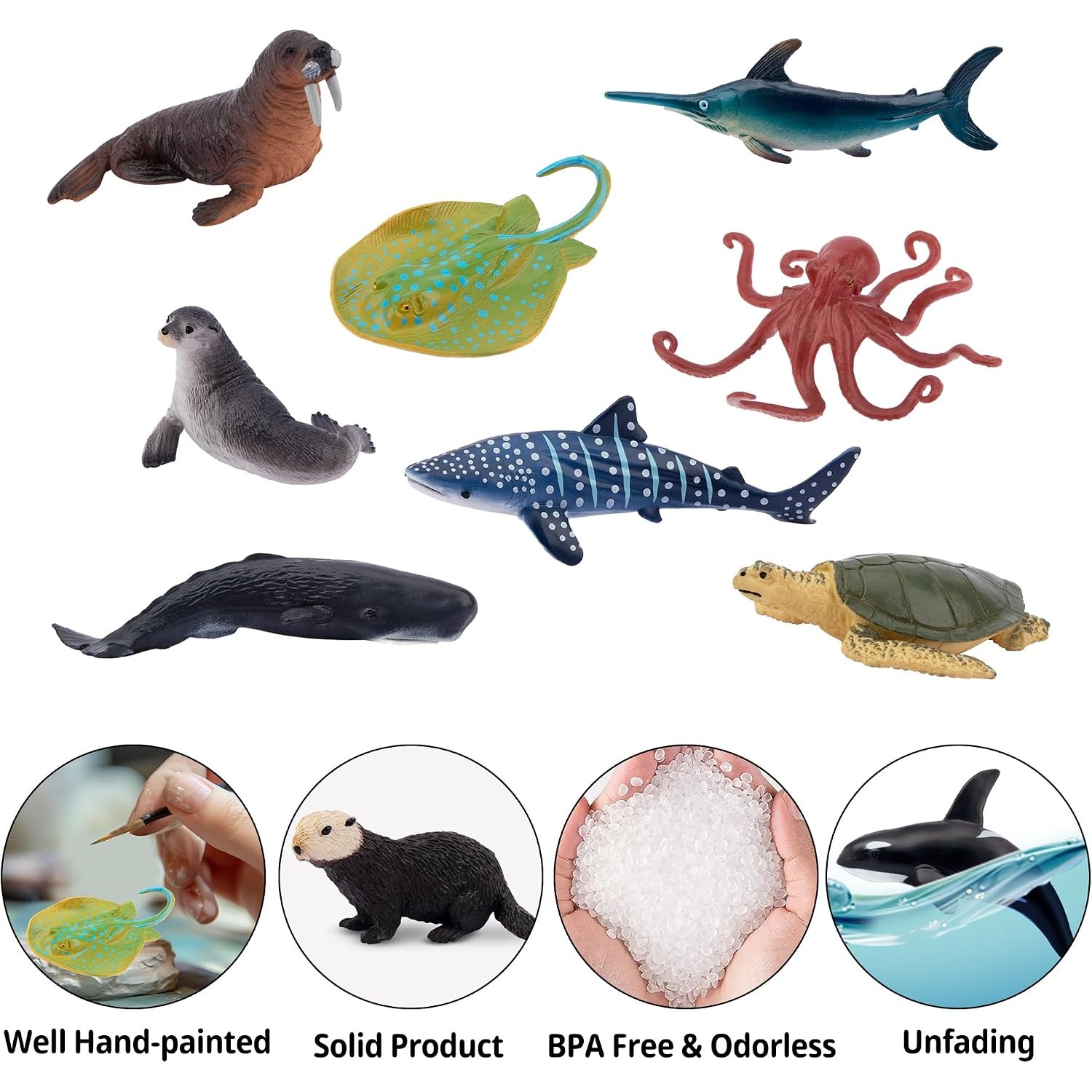
This collection holds 24 mini ocean animal figurines. The reported line-up covers six shark varieties, including a great white, whale shark, blue shark, blacktip reef shark, hammerhead and basking shark. Then come the whales, with blue, humpback, sperm, North Pacific right, killer and beluga represented, plus a narwhal.
Beyond that, there is a dolphin, a walrus, a seal, a sea otter, a sea turtle, a swordfish, a manta ray, a blue spotted ray, a sawfish, a manatee and an octopus. Twenty-four animals, all different.
The variety matters more than it might sound. A set that repeats the same body shape in three colors gives a child nothing to compare. A set where a basking shark and a great white sit side by side invites the obvious question, which is why they look so different if they are both sharks. That question is the start of actual learning.
How the figures are made
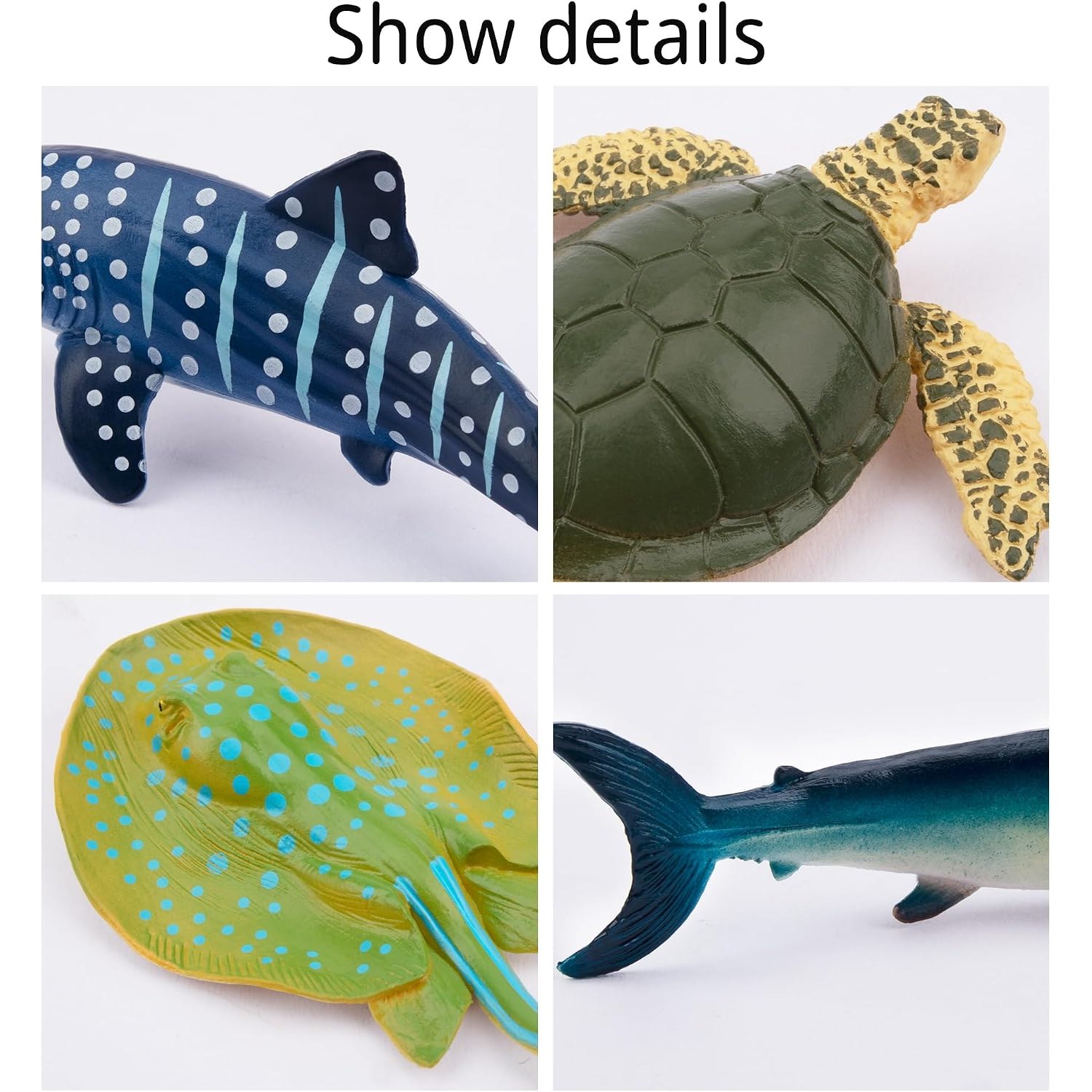
Each piece is hand-painted over a molded body. The molding carries surface texture, so a sea turtle shell has pattern and a whale has grooved markings rather than a smooth painted blank. At mini scale, that texture does a lot of work. It keeps the animal recognizable even when the paint takes some wear.
The materials are listed as plastic, with a polyvinyl chloride outer and an acrylonitrile butadiene styrene inner. The figures are described as solid rather than hollow. Solid pieces take knocks better and stand more steadily, which matters when the whole set gets tipped onto a table at once.
There are no batteries, no sounds and no moving parts. Operation is entirely manual. For parents, that is a quiet win. For teachers, it means the set never runs flat halfway through a lesson.
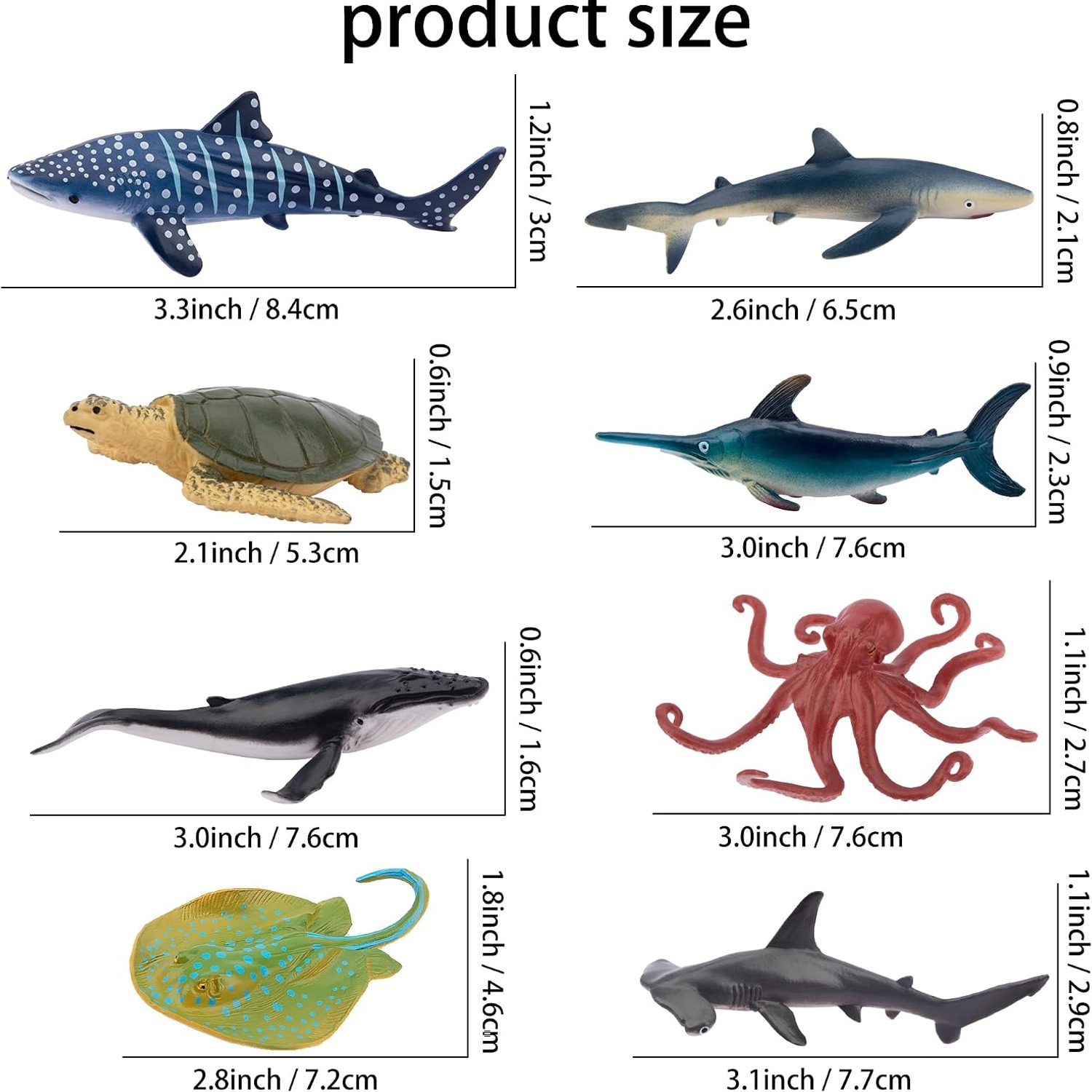
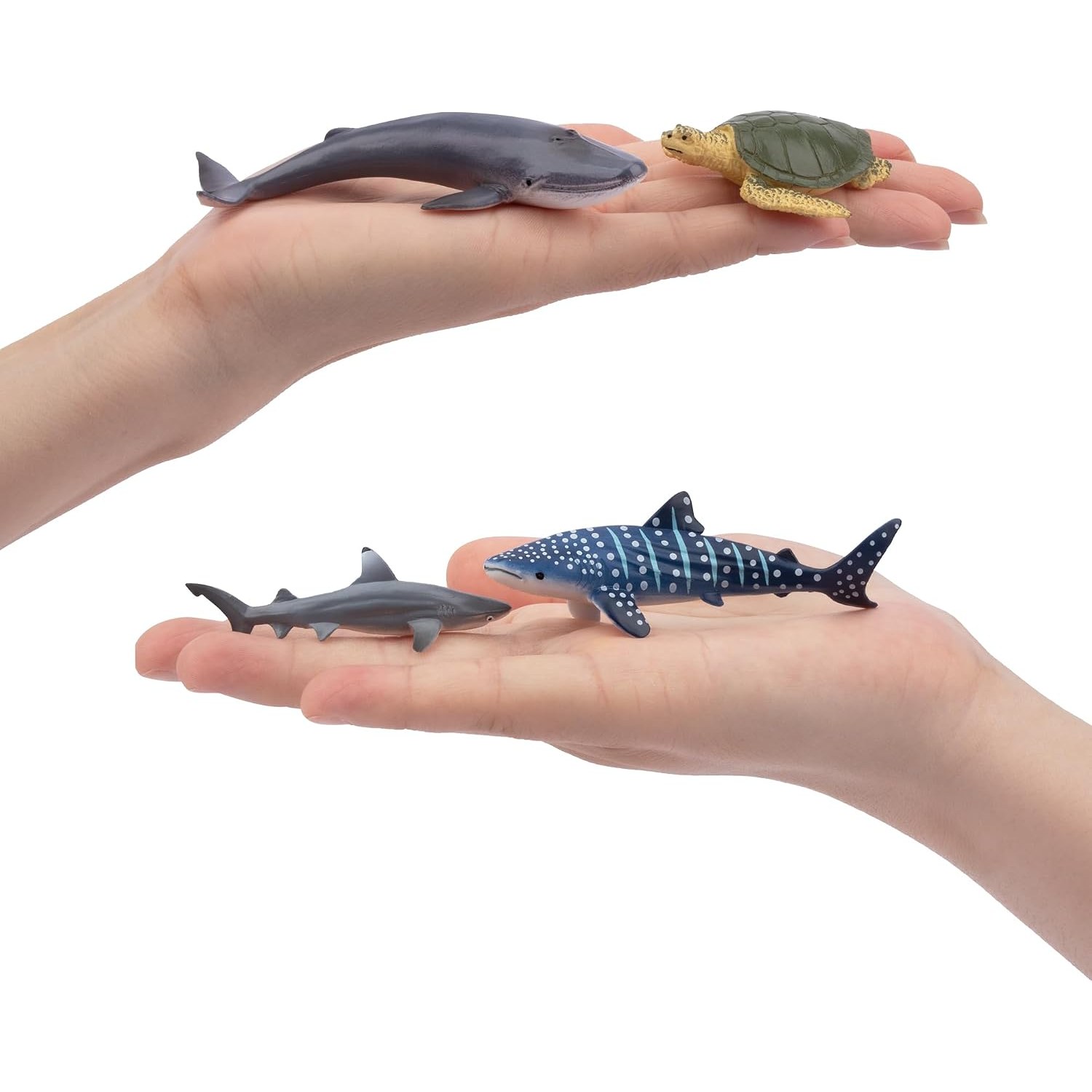
Total weight for the collection is 8.48 ounces, about 0.24 kg, and the package measures 7.87 x 5.91 x 1.97 inches. The whole ocean fits in a lunchbox.
Who this suits
The manufacturer's recommended age is 36 months to 12 years, which is a wide window and fairly honest about how differently kids use figures as they grow.
A three or four year old mostly wants to hold things, name them and move them around. Supervision matters at this age because the pieces are small. Simple games work best here, like matching an animal to a picture book page or hiding figures in rice for them to find.
Five to eight is the sweet spot. This is when sorting games, small world play and storytelling really take off. Kids this age will build an ocean floor out of a blue towel and run a full narrative for an hour. They also start asking size questions, which is where comparing a blue whale figure to a dolphin figure becomes genuinely useful.
Nine to twelve tends to shift toward projects and display. Marine animal learning toys at this age get used for school assignments, shelf collections and diorama builds rather than free play. The mini scale is helpful, since a shoebox project can hold eight or ten animals without looking crowded.
Adults use them too, for terrariums, resin pieces, model scenery and cake decorating. Nothing about the set limits it to children's hands.
How to choose between mini and large figures
The decision comes down to what you want the figures to do.
Go mini if you want quantity, storage that fits in a drawer, sorting activities, sensory bin use, party favours or school project work. Twenty-four small figures cost far less per animal and open up group games that one big figure never can.
Go large if the goal is a single display piece or a hero toy for dramatic play. A big figure has more sculpted detail and more presence on a shelf. It just will not teach a child the difference between six shark species.
Many households end up with both. The mini set does the daily work, and a larger figure sits on the shelf as the favorite.
Everyday uses worth trying
Sensory bins are the easiest starting point. Fill a tray with blue-dyed rice, water beads or plain water, bury the figures, and let a child dig. Rinse and dry everything afterwards.
Sorting cards work for slightly older kids. Write category labels such as mammal, fish, shark, air-breather and reef dweller, then let them place each figure under a heading. They will get some wrong, argue about it, then look it up. That is the point.
Ocean themed cake toppers are a popular use at birthdays. Wash and dry the figures, set them on a barrier such as baking paper or a small plate rather than directly on icing, and take them off before serving.
Party favours stretch nicely. With 24 pieces, you can give one per guest or split the set into small bags. Kids who get a figure in a bag often keep playing with it long after the party.
Storytelling is the underrated one. Give a child three animals and ask what happens next. You get stranger and better stories than any script could manage.
Care and storage
Wipe figures with a damp cloth and dry them before storing. Skip dishwashers, hot water and harsh cleaners, since heat and solvents are what lift paint from hand-painted pieces. If they have been in sand or a water bin, rinse in cool water and towel dry straight away.
Store the set together in a lidded box, a tackle tray or a zip bag. Loose figures at the bottom of a toy chest get scratched and lost. A labeled container also makes cleanup faster, because kids can see where things go.
Keep the collection out of long direct sunlight and away from heaters. Plastic and paint both prefer a cool shelf.
A note on supervision
These are small figures and some shapes have naturally pointed features, like the swordfish bill, the narwhal tusk and the sawfish rostrum. They are molded plastic, not sharpened, but children under 3 should not have access. Check pieces occasionally for damage and retire anything that has been chewed or cracked.
The short version
A 24 piece sea animal figures set gives a child breadth instead of one big object. The line-up covers sharks, whales, rays and a sensible spread of other marine animals, each hand-painted over a textured mold. The figures are solid plastic, need no batteries, weigh almost nothing together and fit on a tabletop.
If your child is somewhere between three and twelve and currently obsessed with the ocean, this is the kind of purchase that keeps earning its place. Sorting games one week, a school diorama the next, cake toppers at a birthday, then back in the sensory bin. Clean them gently, keep them in one container, and they will stay in rotation far longer than a single large figure ever would.