
The complete guide
The Buyer's Guide to Classic 2x4 Building Bricks
The problem with most brick collections
Ask any parent who has been buying building toys for a few years and you will hear the same story. The box is full. There are wheels, windscreens, a dozen tiny clips, half a pirate ship and three mini figures missing their hats. What there are not enough of is plain bricks.
It happens because themed sets are designed around a specific model. The parts list is calculated for that one build, and once it is taken apart you are left with a lot of specialist pieces and not much raw material. A child who wants to build a house of their own design quickly runs out of the ordinary rectangles that make walls, floors and roofs.
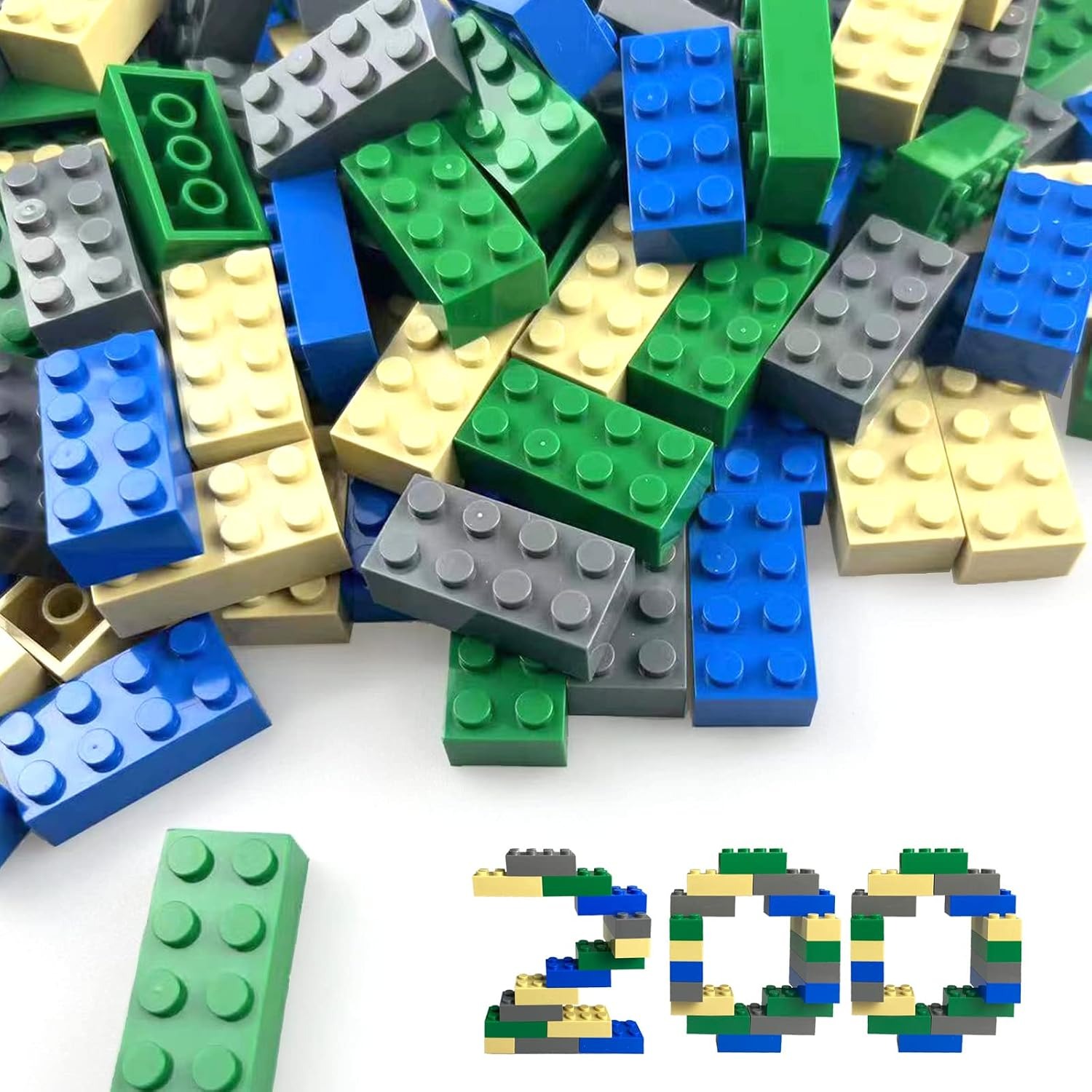
That is the gap a set like this fills. Two hundred 2x4 bricks, four colors, nothing fancy. It is the building equivalent of buying a bag of bricks rather than a flat-pack shed.
Why the 2x4 brick does so much work
If you could only own one brick shape, this would be it. The 2x4 is long enough to span a gap between two supports and short enough to turn a corner without wasting space. Stack them in staggered rows, the way a bricklayer does, and the overlap locks the wall together. That staggered pattern is genuinely strong, and children work it out for themselves within about ten minutes of trying.
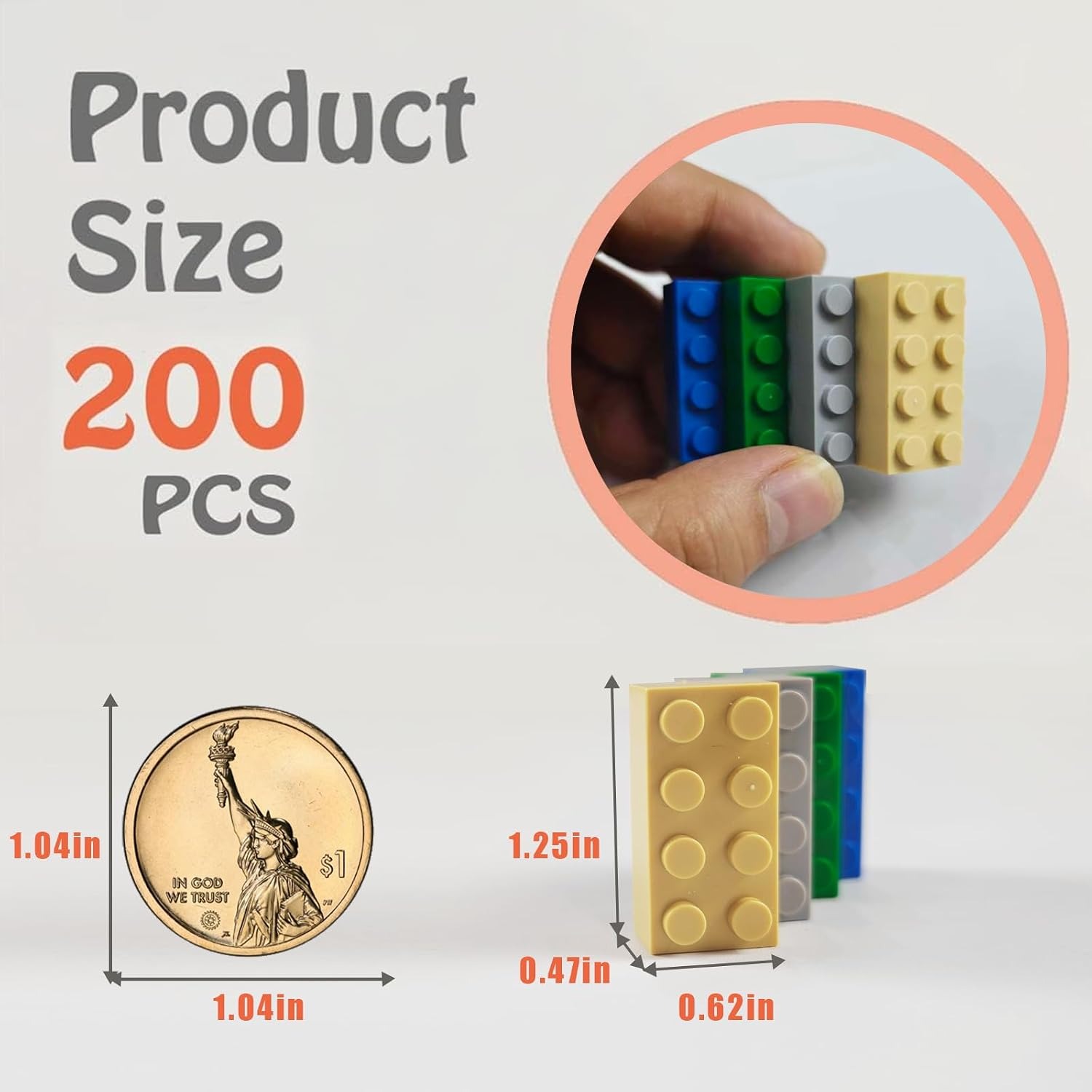
Each brick here measures 1.25 x 0.62 x 0.47 inches. That is the familiar small-brick size, not the chunky blocks sold for preschoolers. It matters for two reasons. First, it determines what the bricks will connect to. Second, it affects how far 200 pieces will stretch, because smaller bricks mean more detail per build but also more pieces needed to cover a given area.
Practically, 200 of these will give you a solid house shell with four walls and a doorway, or a tower about as tall as a child's forearm, or a long low wall with a gatehouse. If your child is the ambitious type who wants a whole street, plan on more than one box.
Compatibility, and why it is the first thing to check
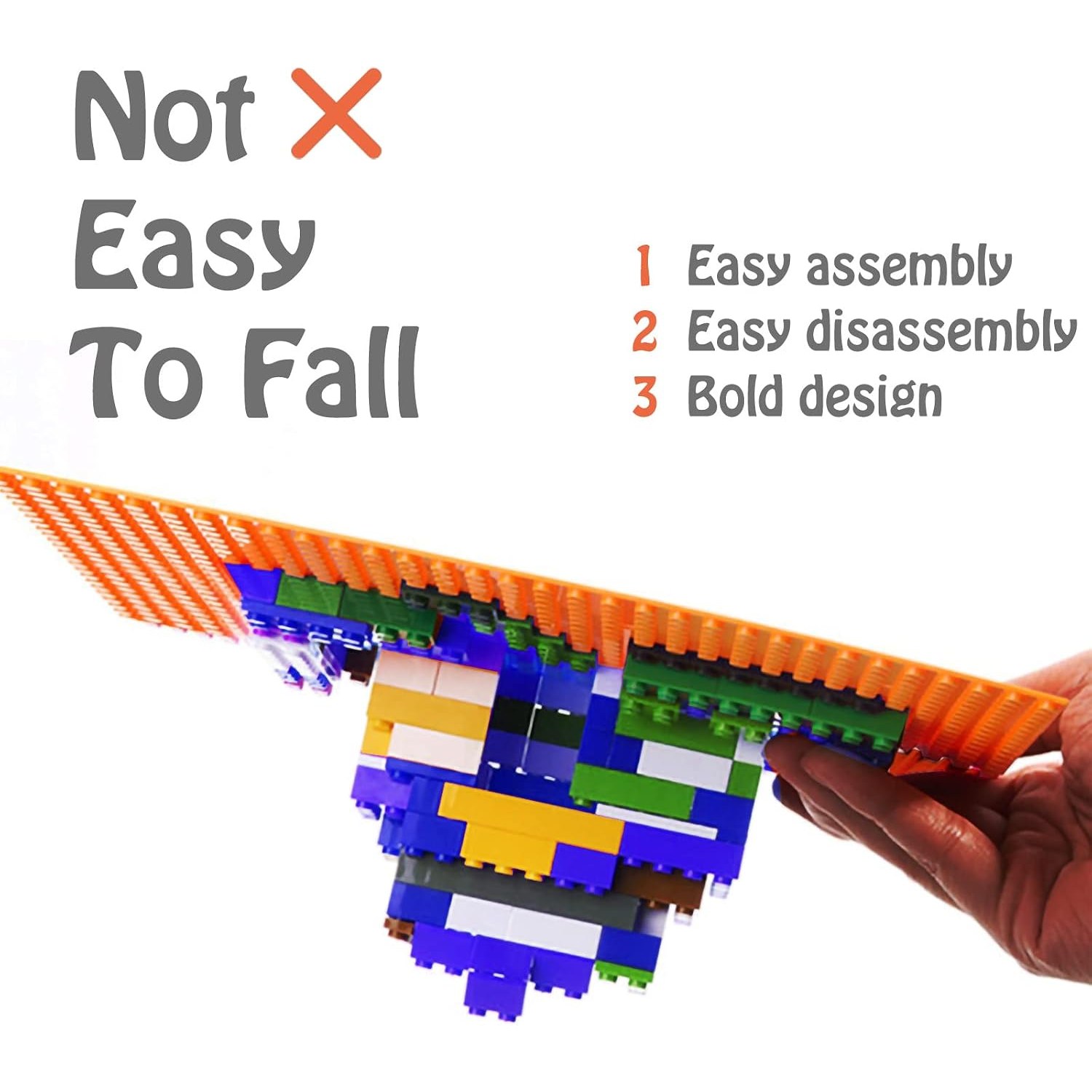
The one question worth asking about any bulk brick set is whether it fits what you already own. HUIZDQ states these are made to be compatible with all major brands and to clutch tightly to standard blocks.
Clutch is the key word. A brick that sits on top without gripping looks fine until someone lifts the model, at which point the whole thing comes apart. Children notice this immediately and stop using the loose bricks. Tight-fitting bricks get used; loose ones migrate to the bottom of the tub forever.
One thing that will not work is mixing these with the oversized preschooler blocks. Those use wider stud spacing and belong to a different system entirely. Stick to standard small bricks and everything connects.
Color, and the architecture angle
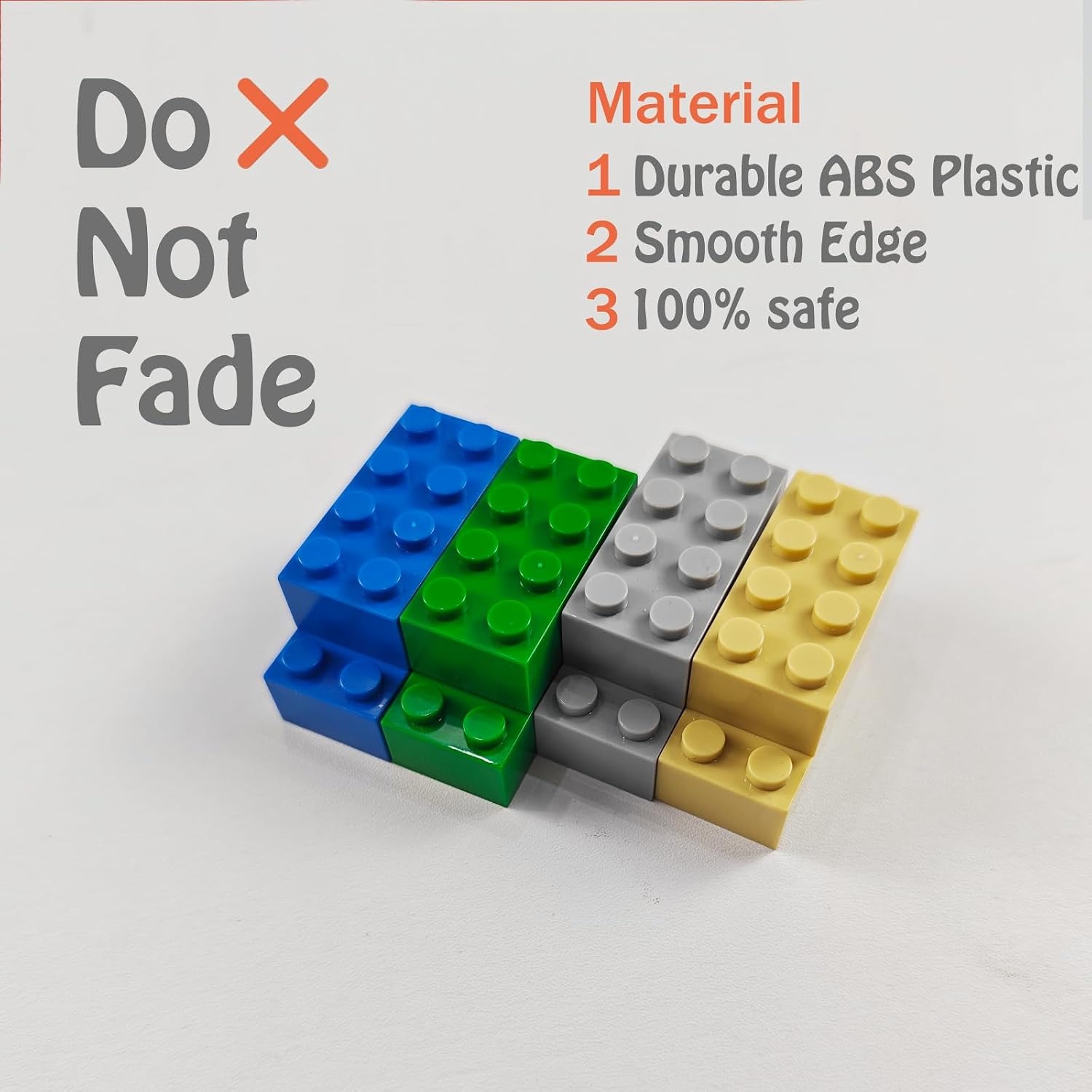
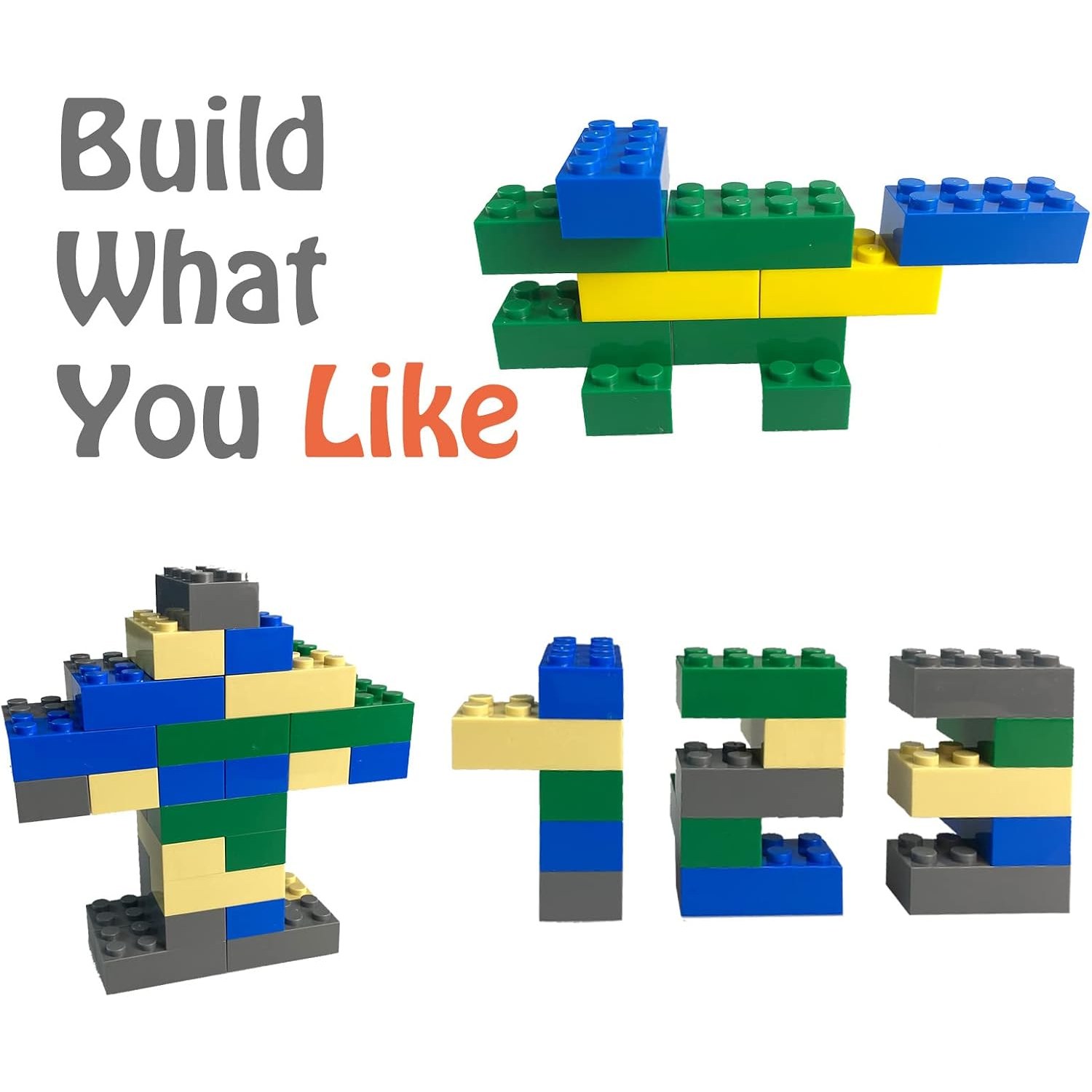
The mix here is blue, gray, green and sand. It is a deliberately muted palette, which is why the theme is listed as architecture rather than something louder.
This suits a particular kind of builder. Gray and sand look like stone and concrete, so walls and towers come out looking like actual buildings instead of a rainbow. Green reads as grass, hedging or roofing. Blue gives you water, windows or a bit of contrast on a facade. Children who enjoy making houses, castles, bridges and towns usually prefer this spread to a box of primary colors.
If your child is building spaceships and racing cars, bright themed sets will serve them better for detail. Even then, plain bricks in neutral tones are what holds the fun parts together.
Who the set suits
The manufacturer's recommended age is 6 years and up. That lines up with what the toy actually asks of a child. At six, hands are strong enough for small bricks, patience stretches to a build that takes half an hour, and imagination has reached the point where a child wants to design rather than follow instructions.
It also works well for mixed-age play. Because every piece is identical in shape, a younger sibling can join in without needing the special part someone else is using. Nobody has to wait their turn for the one hinge in the box.
Adults get something out of it too. The easy-grip sizing helps if hand strength is not what it used to be, and repetitive stacking has a calming quality that a lot of people find genuinely useful at the end of a day. Plain brick sets have a real following among adult builders who design their own models and need material rather than kits.
For classrooms, a plain brick supply is far more useful than a themed model. Tower-height challenges, bridge-loading tests and symmetry exercises all work better when everyone has the same pieces to start from.
How to choose between this and the alternatives
A few honest comparisons.
Against a branded bulk tub, the trade-off is price per brick versus brand assurance. A set like this gives you a large quantity of the single most useful shape for less money, which is why it is frequently bought as a top-up rather than a complete replacement.
Against a themed set, it is a different product altogether. A themed kit gives a child a finished thing to be proud of on day one. A plain brick set gives them material for a hundred things they have not thought of yet. Most homes want both.
Against a cheaper no-name bag, the thing to watch is fit. Poorly molded bricks either slide off or jam so tightly that a child cannot separate them. Stated compatibility with the major brands is the claim worth looking for, and it is the claim made here.
If you are starting a collection from zero, consider adding a baseplate. It gives builds a flat foundation and stops a town from sliding apart across a carpet. It is not included in this set.
Looking after them
Plastic bricks are close to indestructible if you treat them sensibly. Wipe them with a damp cloth and a little mild soap when they get grubby, then let them dry fully before storing. Do not put them in the dishwasher or washing machine, and keep them well away from ovens, radiators and microwaves. Heat is the one thing that genuinely ruins bricks, because a slightly warped brick never clutches properly again.
Sunlight is the other slow enemy. Bricks left on a bright windowsill for months will fade, and it shows most on the mid-tones like sand and gray. Store builds somewhere shaded.
For storage, shallow and wide beats deep and narrow. A child can see what they have in a flat tray and will actually use the colors at the bottom. Deep buckets mean tipping everything out on the floor, which is how pieces get lost down the side of the sofa.
The short version
This is 200 standard 2x4 bricks in blue, gray, green and sand, made to fit tightly with the major brands, sized at 1.25 x 0.62 x 0.47 inches each and recommended for ages six and up. There is no model to build and no booklet to follow, which is the point.
Buy it if your child already builds and keeps running out of plain bricks. Buy it if you want a neutral, architectural palette for houses and towers. Buy two if the ambitions are large. Buy a themed set instead if what they want is a specific vehicle or character on day one.
It is not an exciting present to unwrap. It is the one that still gets used three years later.