
The complete guide
How to Choose a Kids Craft Box That Actually Gets Used
The problem with most craft kits
Craft kits have a reputation in a lot of houses. You buy one, it looks great on the box, and then someone has to spend forty minutes cutting shapes out of a sheet while the child hovers and loses interest. Or the pieces all tip into the bottom of the box on day one, and by the third project there is no way to tell which square of felt belongs to which activity.
The result is the same either way. The kit ends up on a shelf, half used, and nobody goes back to it.
A kids craft box only earns its place if a child can open it and start making something within a minute or two. That means the cutting is already done, the instructions are with the right pieces, and nothing important has gone missing. Everything else, the theme, the number of projects, the look of the packaging, is secondary to that one practical test.
What this box does differently
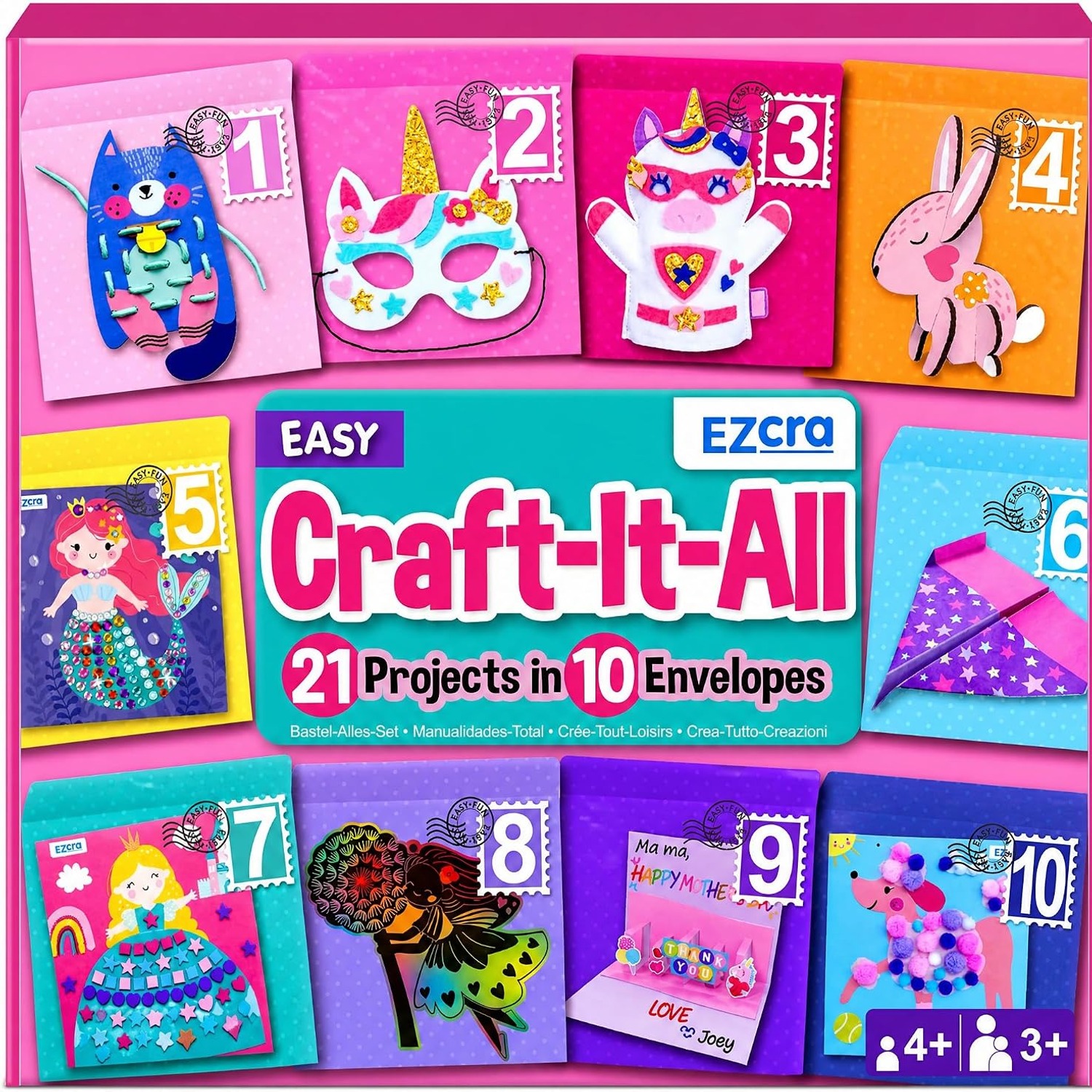
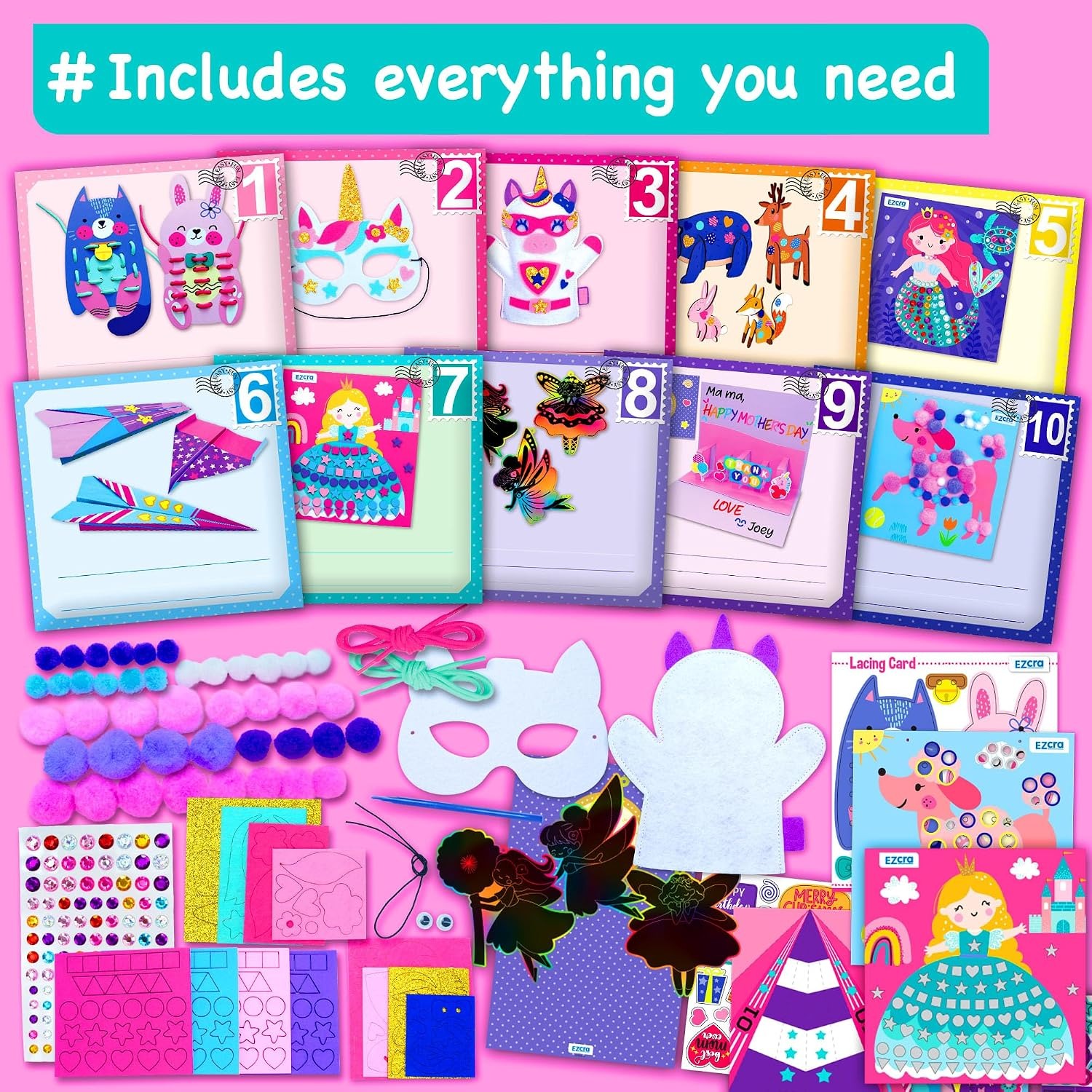
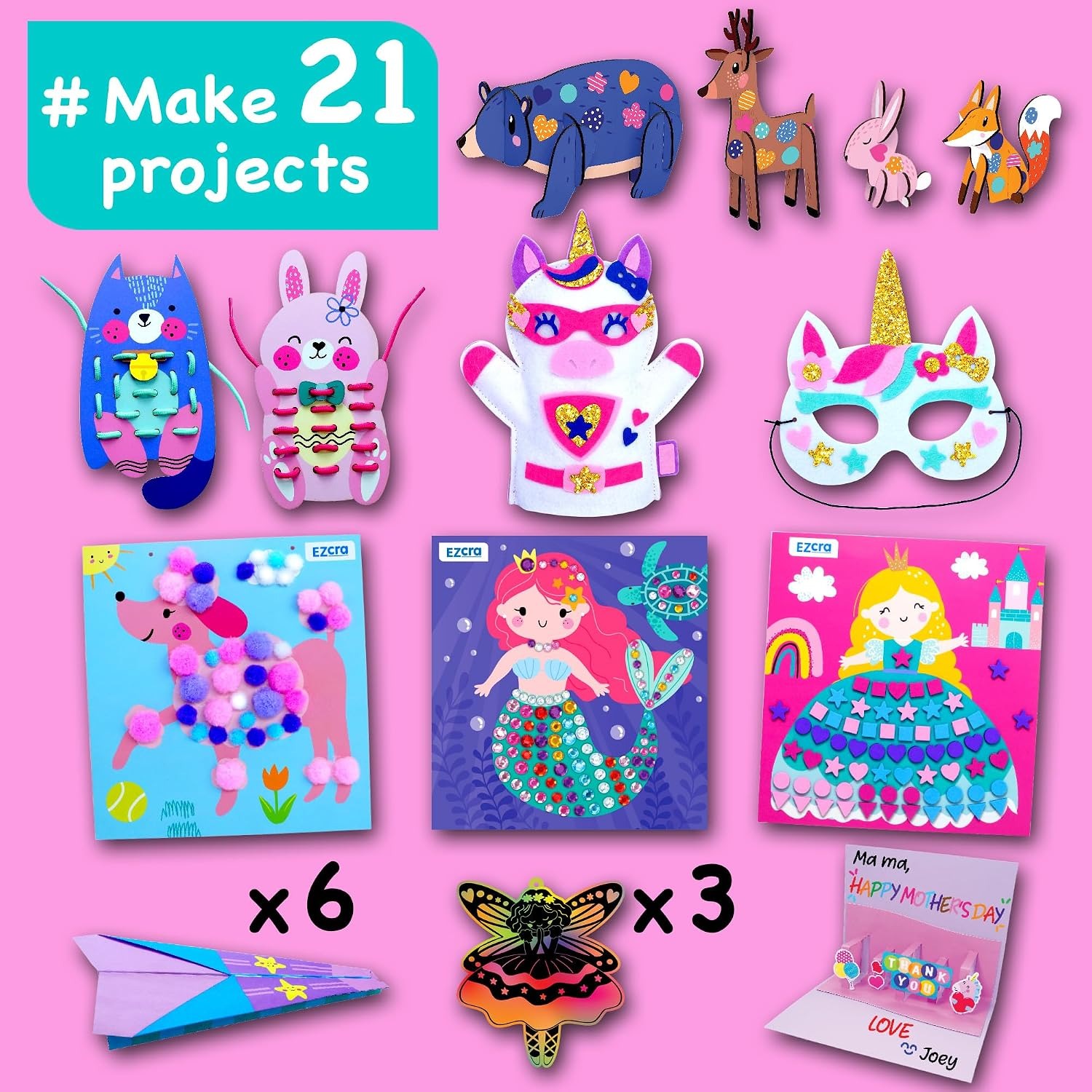
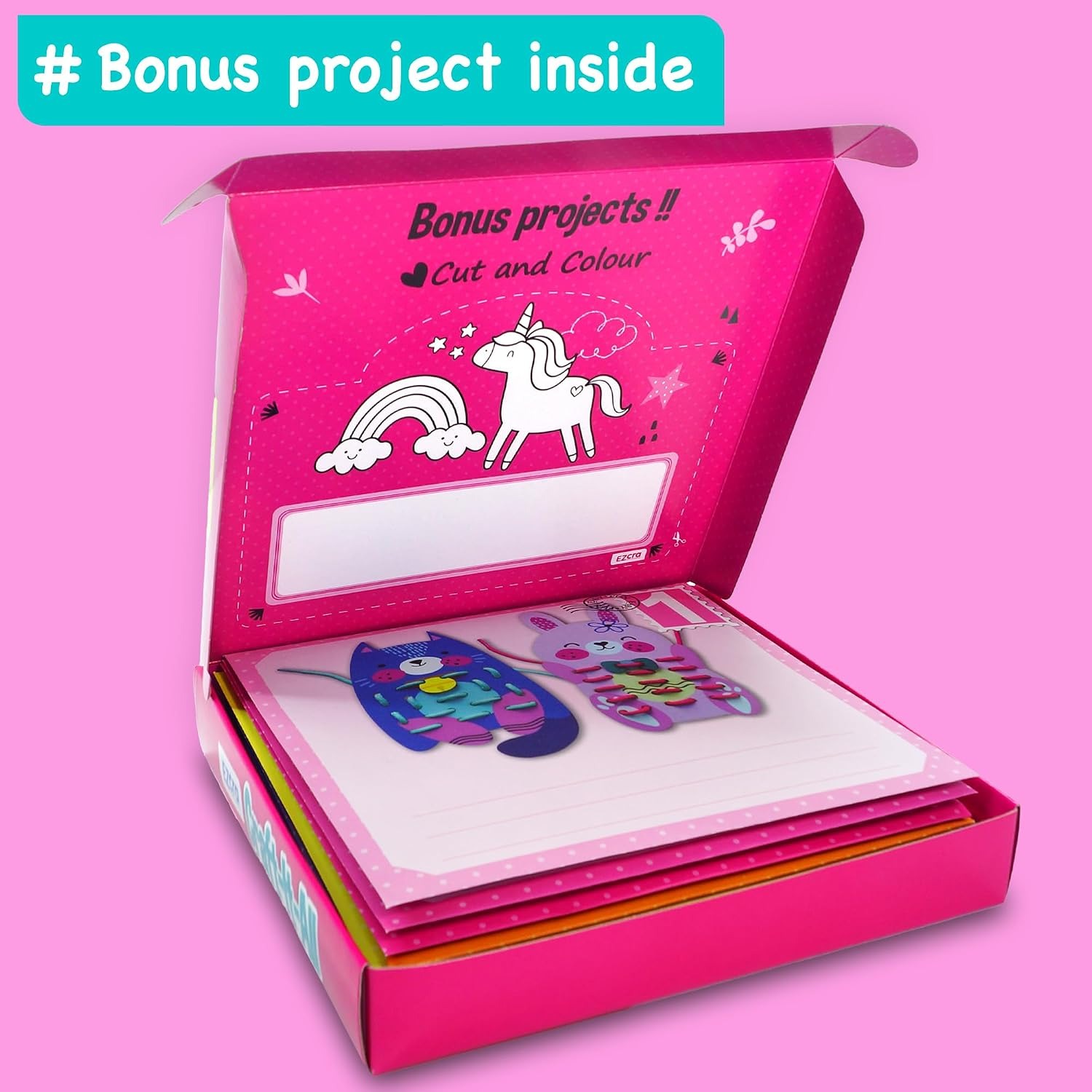
The Craft-It-All set is built around 21 projects, all on a unicorn and fantasy theme. They cover lacing cards, a felt mask, a felt hand puppet, a 3D puzzle, gem art, paper airplanes, foam art, scratch art, card making and pom pom art.
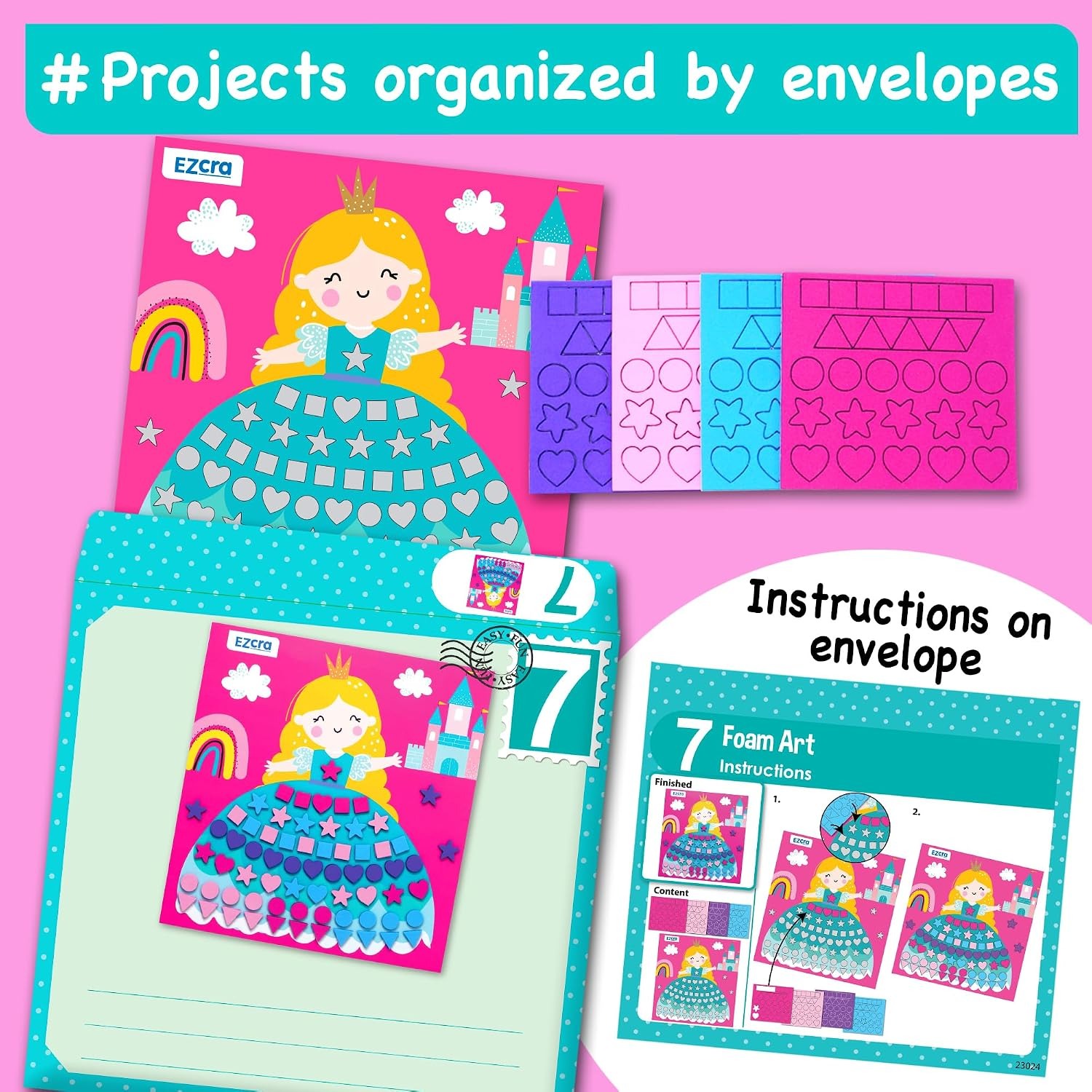
The materials are pre-cut. The lacing cards already have their holes punched. And each project lives in one of ten numbered, color-coded envelopes along with its own instructions.
That last point is the quiet hero of the whole design. When a project is contained in a sleeve, a child can stop halfway through dinner and pick it up the next day without losing anything. A parent can hand over a single envelope in the car and keep the rest at home. A teacher can see at a glance which envelopes have been opened. It sounds minor. In practice it is the difference between a box that gets finished and a box that gets abandoned.
Matching the kit to your child's age
The suggested range is four to eight years, and that is a wide span in terms of what a child can manage alone.
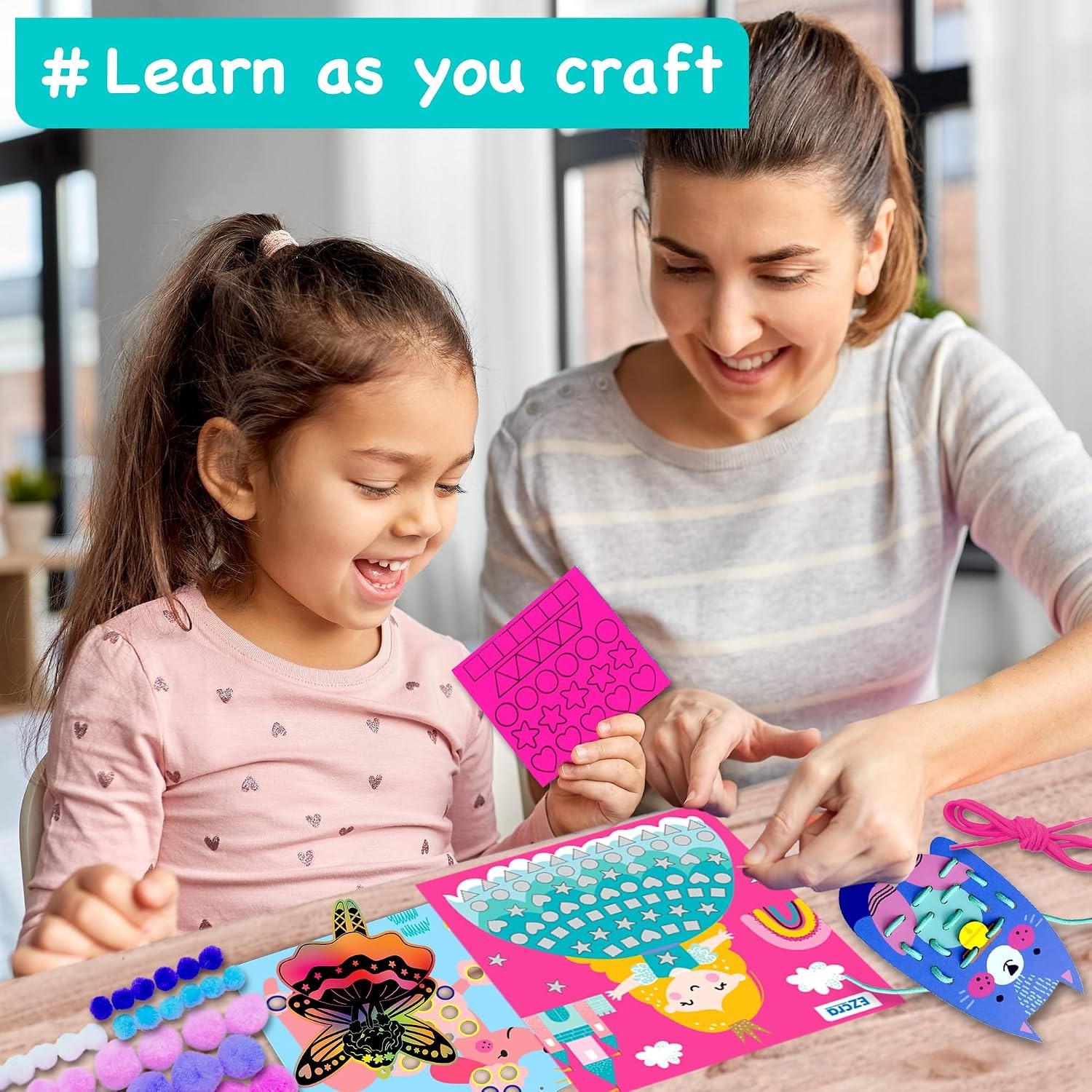
At four and five, the sticking projects land best. Gem art, felt stickers, foam art and pom pom work all involve peeling, placing and pressing, which small hands handle well. Scratch art is also popular at this age because the result appears immediately. Threading the lacing cards is doable but often needs an adult to start the first few holes and show the in-and-out motion.
From six upward, most children work through the instructions on their own. The 3D puzzle and the hand puppet suit this age because there is a sequence to follow and a finished object to play with afterwards. This is roughly where a kit like this stops being an activity you supervise and starts being an activity you can get an hour of quiet from.
By eight, a confident crafter will move fast and may finish several projects in one sitting. That is worth knowing if you are buying for an older child, because the box will not stretch as far.
How to judge any craft set before you buy
A few things separate a craft set for kids that works from one that disappoints.
Look at whether the materials are pre-cut. If the box lists sheets of card and expects scissors, an adult is going to be involved whether you planned it or not.
Check how the pieces are stored. Loose contents in one tray almost always end in a jumble. Separate envelopes, trays or bags for each project keep things workable over weeks rather than days.
Count the real projects, not the pieces. Some kits advertise a big number that turns out to be the count of individual stickers. Twenty-one projects means twenty-one finished things.
Think about mess tolerance. Dry materials like felt, foam, gems and lacing thread will not stain a carpet. If you want crafting to happen on a kitchen table without a full clean-up afterwards, that matters more than almost anything else.
Finally, consider whether the theme will hold. A child who loves unicorns at five may feel differently at seven, so a box that gets used soon after it arrives gives better value than one saved for a future birthday.
Safety and the plastic needle
Lacing is one of the better fine motor activities for this age group, and it is also the one parents worry about. The needle supplied here is plastic and blunt rather than a metal darning needle, and it is shaped to sit comfortably in a small grip. It is meant to pass through holes that are already punched, so there is no piercing involved.
The paint included is washable, and the materials are described as non-toxic. Together that makes the box suitable for independent play once a child understands the basics, although you know your own child best. Four year olds generally benefit from an adult within arm's reach.
Where a kit like this earns its keep
Travel is the obvious one. The box is 26 by 28 by 3.5 cm and weighs 0.67 kg, so it packs flat. Pulling two envelopes out for a flight or a long drive gives you an hour of quiet without screens, and the dry materials will not end up smeared on a seat.
Homeschool is another. Each envelope is effectively a ready-made lesson with a clear beginning and end, which saves planning time on a day when planning time is short.
Then there is the ordinary stuff. Wet weekends. The hour between school and dinner. A sleepover where four children need something to do. Grandparents' houses, where having one reliable box in the closet saves a lot of improvising.
As a birthday gift for girls who like unicorns, it has a practical advantage too. It looks like a real present when wrapped, and the child can open it and start immediately rather than needing an adult to prepare anything.
Looking after it
There is not much to it, but a couple of habits make a real difference.
Return leftover pieces to their matching envelope at the end of each session. This takes about thirty seconds and keeps the whole system working. Put the plastic needle back in its envelope rather than leaving it on the table, because it is the single easiest piece to lose.
Store the box flat, somewhere dry and out of direct sunlight. Felt and card do not like damp, and strong sun will fade the printed pieces over time.
Let anything with glue dry flat before you stack it or hang it. Finished cards, foam pieces and gem art all keep well once dry, and a lot of children like seeing their work on a wall or fridge.
The short version
This is a kids craft box with 21 unicorn and fantasy projects, pre-cut and sorted into ten numbered envelopes, with a soft plastic needle and washable paint. It suits roughly four to eight year olds, works for independent or supervised play, and packs flat enough for travel, homeschool or the classroom.
Buy it if you want crafting to happen without a set-up job first. Think twice if your child is older than eight or has never shown interest in making things, since the theme and the project length are pitched squarely at the younger end.
For most families looking for a screen-free activity kit that does not create a mess or a mountain of prep, it covers the ground well.