
The complete guide
Choosing a Marble Run That Actually Gets Played With
The toy that solves the rainy Sunday problem
Every house with young children has the same gap. It is eleven in the morning, the weather has cancelled the park, and the screen time budget is already half gone. What you want is something that absorbs attention without needing an adult sitting on the floor the whole time.
Marble runs do that unusually well. The reason is feedback. A child builds a section, drops a marble in, and finds out immediately whether it worked. There is no waiting for a grown-up to judge it and no instruction manual policing the right answer. The marble either rolls or it does not, and fixing it is the game.
That is a different kind of play from a jigsaw or a coloring book. It rewards tinkering. Children who claim to hate puzzles will happily spend forty minutes adjusting one bend until the marble stops flying off the edge.
What makes this set different from a cheap one
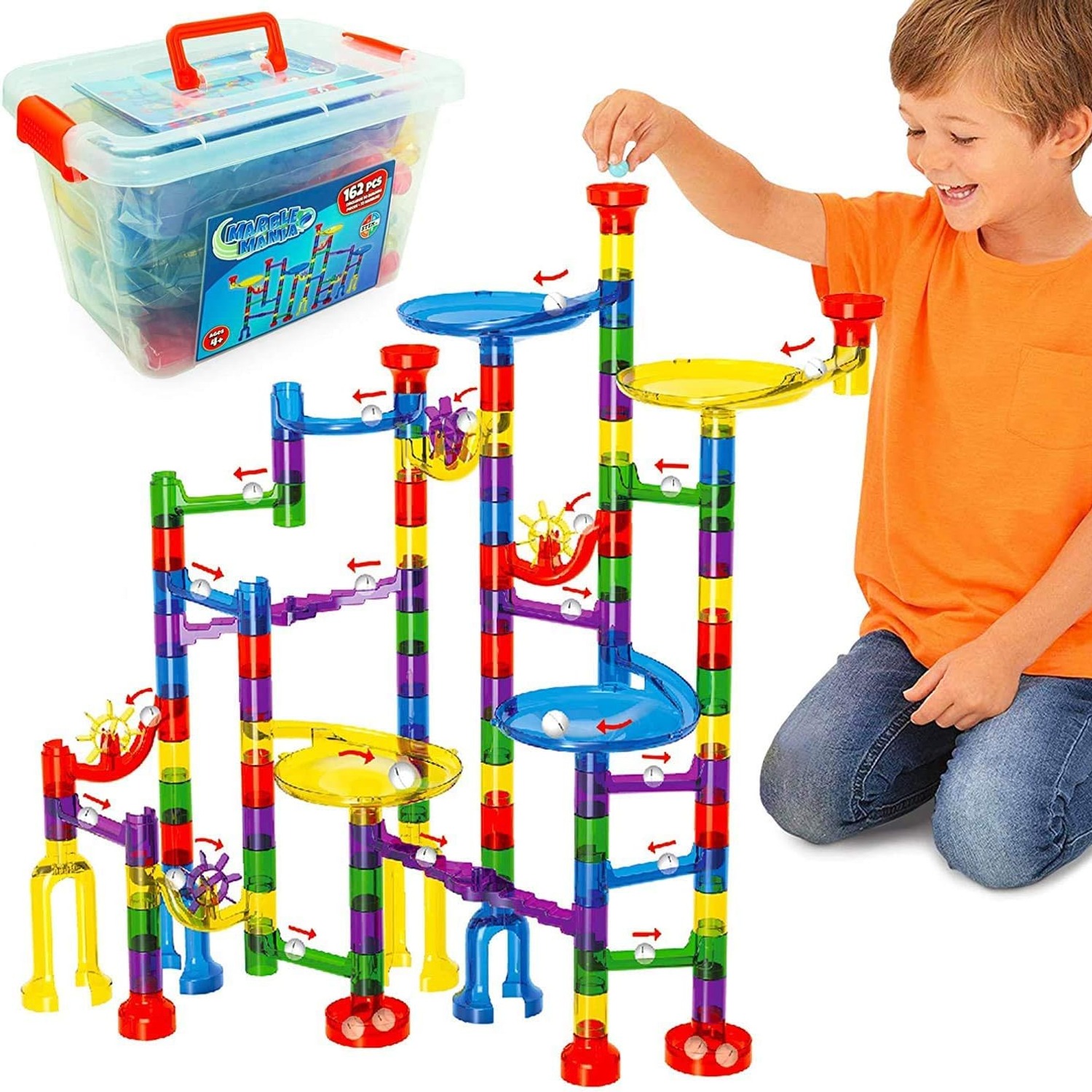
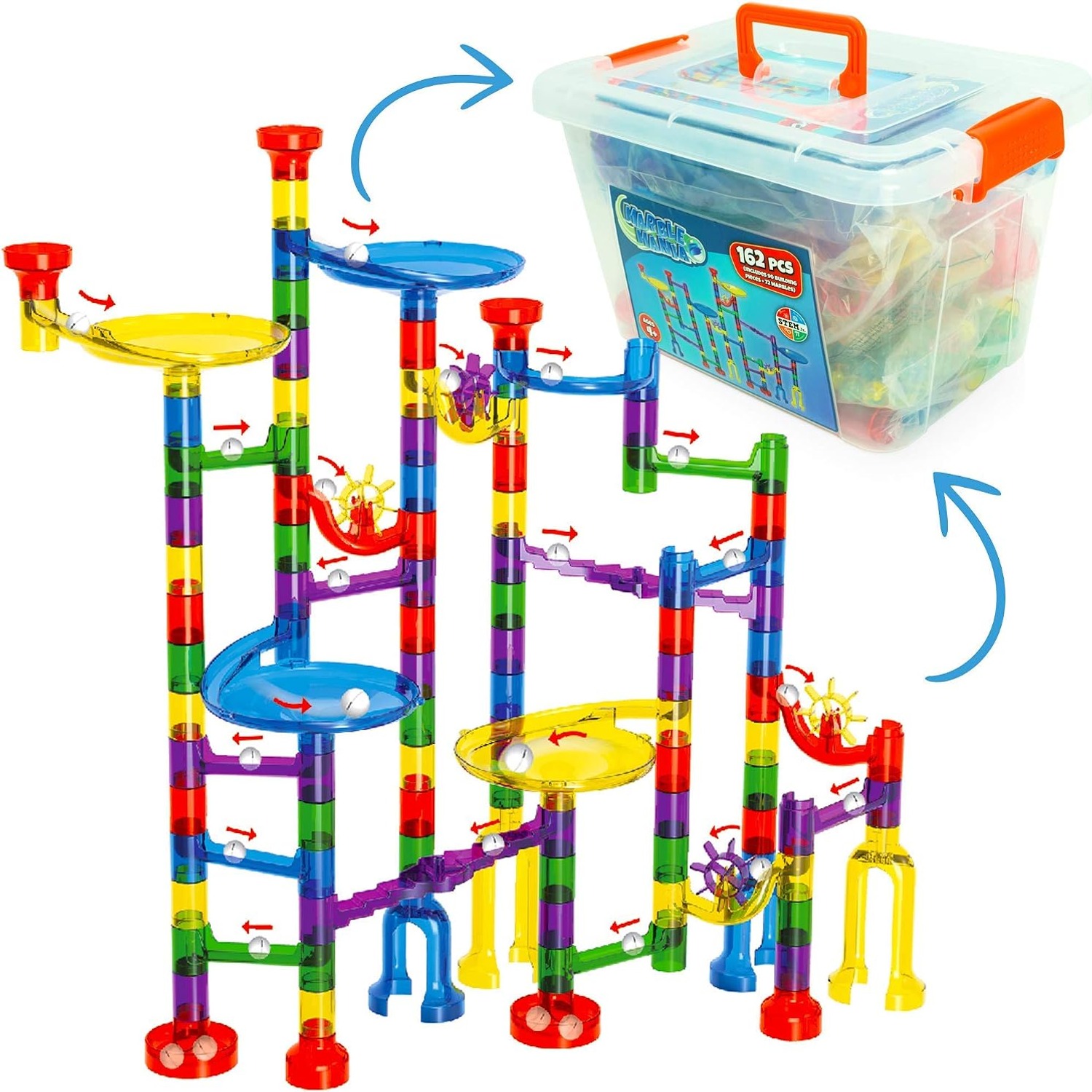
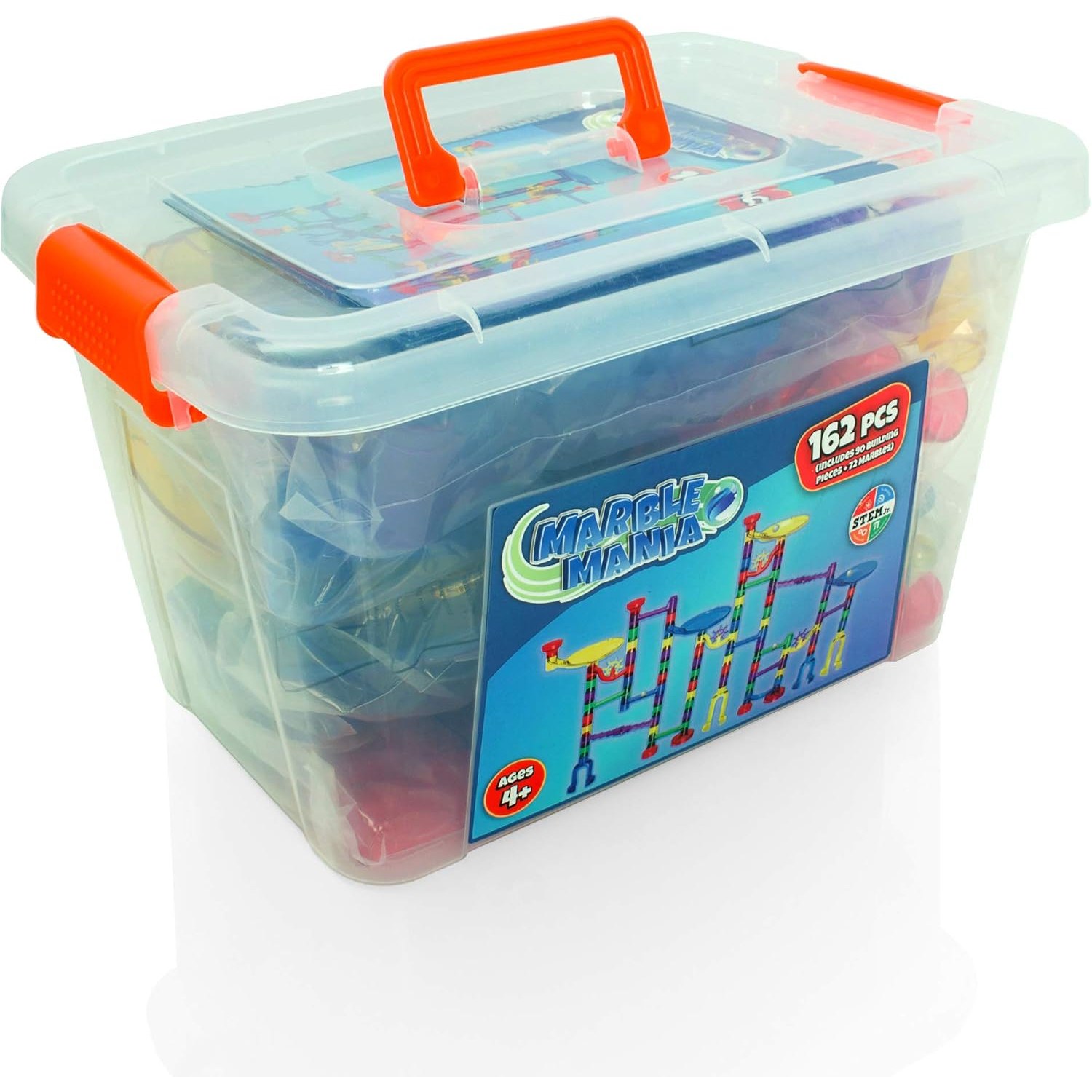
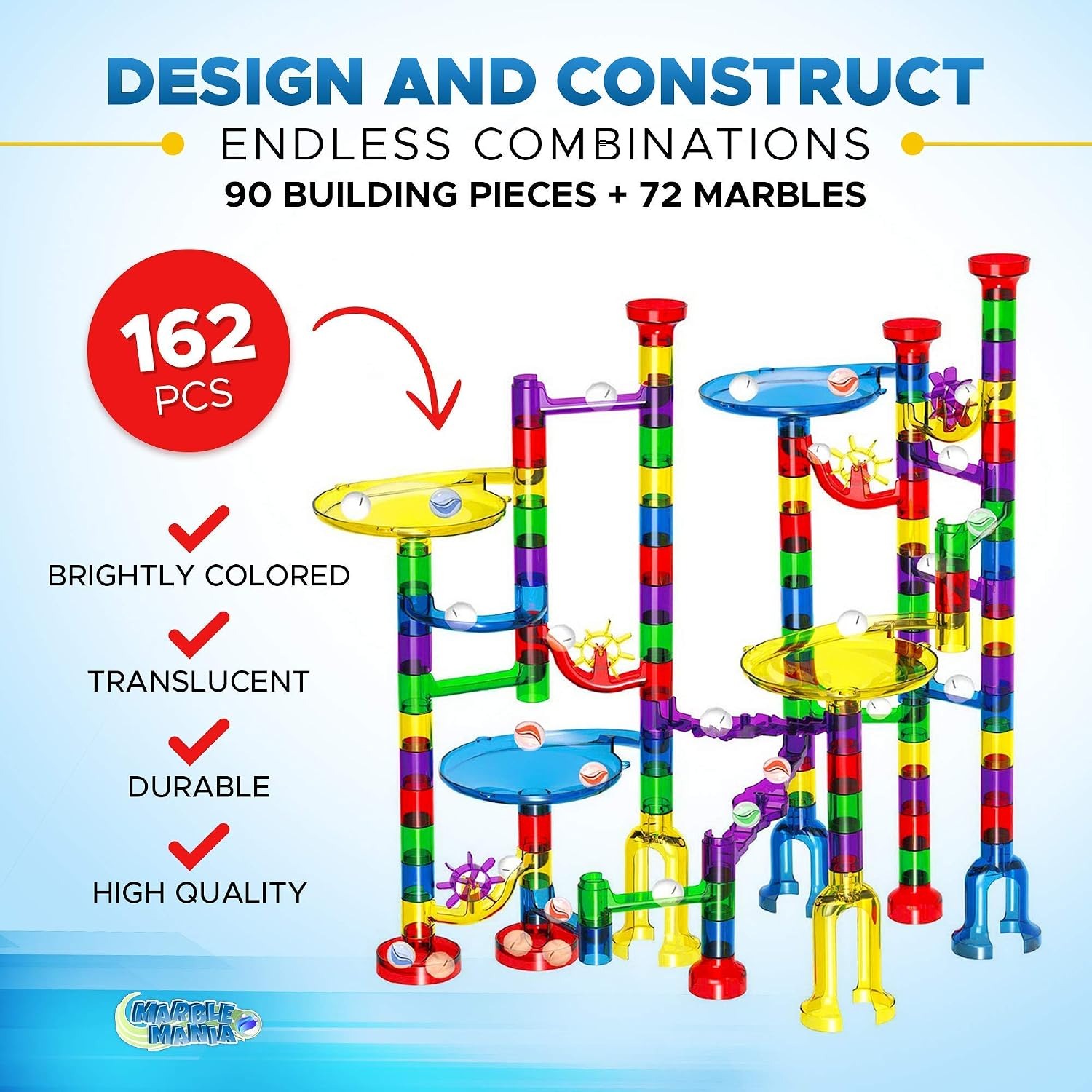
The headline number is 162 pieces, but the split matters more than the total. Ninety of those are construction pieces. Seventy-two are marbles, half glass and half plastic.
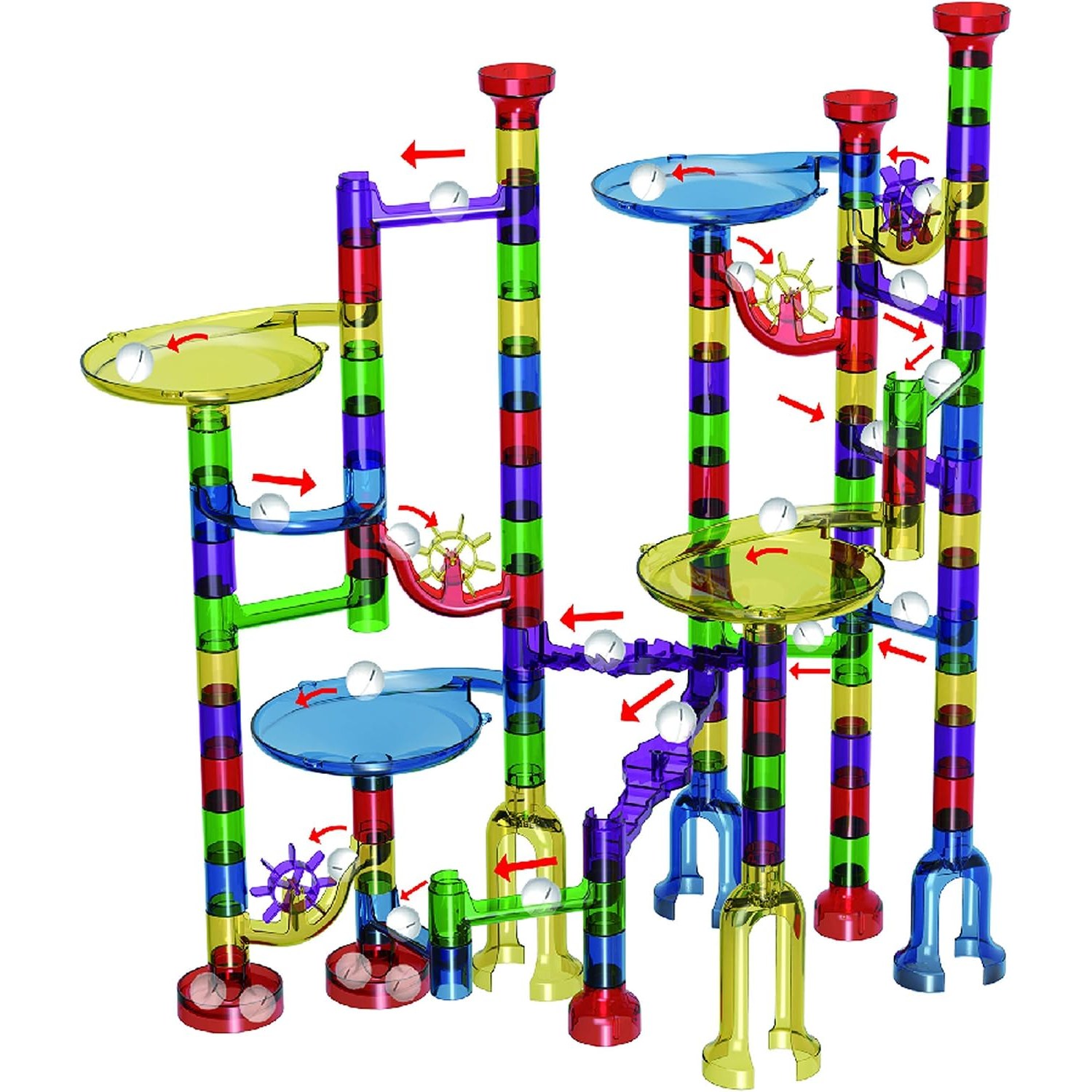
A lot of budget marble runs pad the piece count with marbles. You end up with thirty track parts and a sad little run that stands knee-high and offers maybe two possible layouts. Ninety construction pieces gives you real building room. You can go tall, you can go long, and you can rebuild it differently the next weekend without feeling like you are repeating yourself.
The marble count is generous too. Children love sending a stream of marbles down at once and watching them line behind a corner. With only six or eight marbles that moment never happens.
Why see-through pieces are worth having
The construction pieces are translucent. This sounds like a cosmetic detail and it is partly that, because watching a marble flash through the tower is genuinely satisfying. But there is a practical side.
When a run jams, an opaque set turns into a guessing game. The child pulls the whole thing apart looking for the blockage, gets frustrated, and often gives up. With see-through parts, the stuck marble is visible. The fix becomes a ten second job instead of a demolition.
That one difference changes how long a session lasts. Toys that are easy to diagnose get played with again.
Age, hands and patience
The age range description is 4 to 8 years, and the manufacturer lists a recommended age of 3 years and up.
In practice, a four year old needs a bit of company for the first build. Not because the pieces are difficult, they push together and pull apart by hand without tools, but because deciding what to build is harder than making it. Sit down, do one guidebook design together, and most children take over before you reach the end of it.
Five and six is the sweet spot. They can follow the color guide alone, and they start modifying it halfway through. By seven or eight the guide gets ignored entirely and the goals get self-imposed. The longest possible run. The slowest marble. A run that works with the glass marbles but not the plastic ones.
A note on the marbles. The set contains glass and plastic marbles, both small. Any household with a preschooler or a determined chewer should supervise or keep the marbles separate until that stage passes. That is standard for marble toys rather than a flaw in this one.
How to choose between marble runs generally
If you are comparing a few sets, four things decide whether a marble run gets used more than twice.
Piece count that is mostly track. Check the construction piece number, not just the total. Ninety is a good working number for sustained play.
Hand assembly. If the connectors need force, an adult becomes a permanent part of the activity. Pieces that press together by hand keep the child in charge, which is really the point.
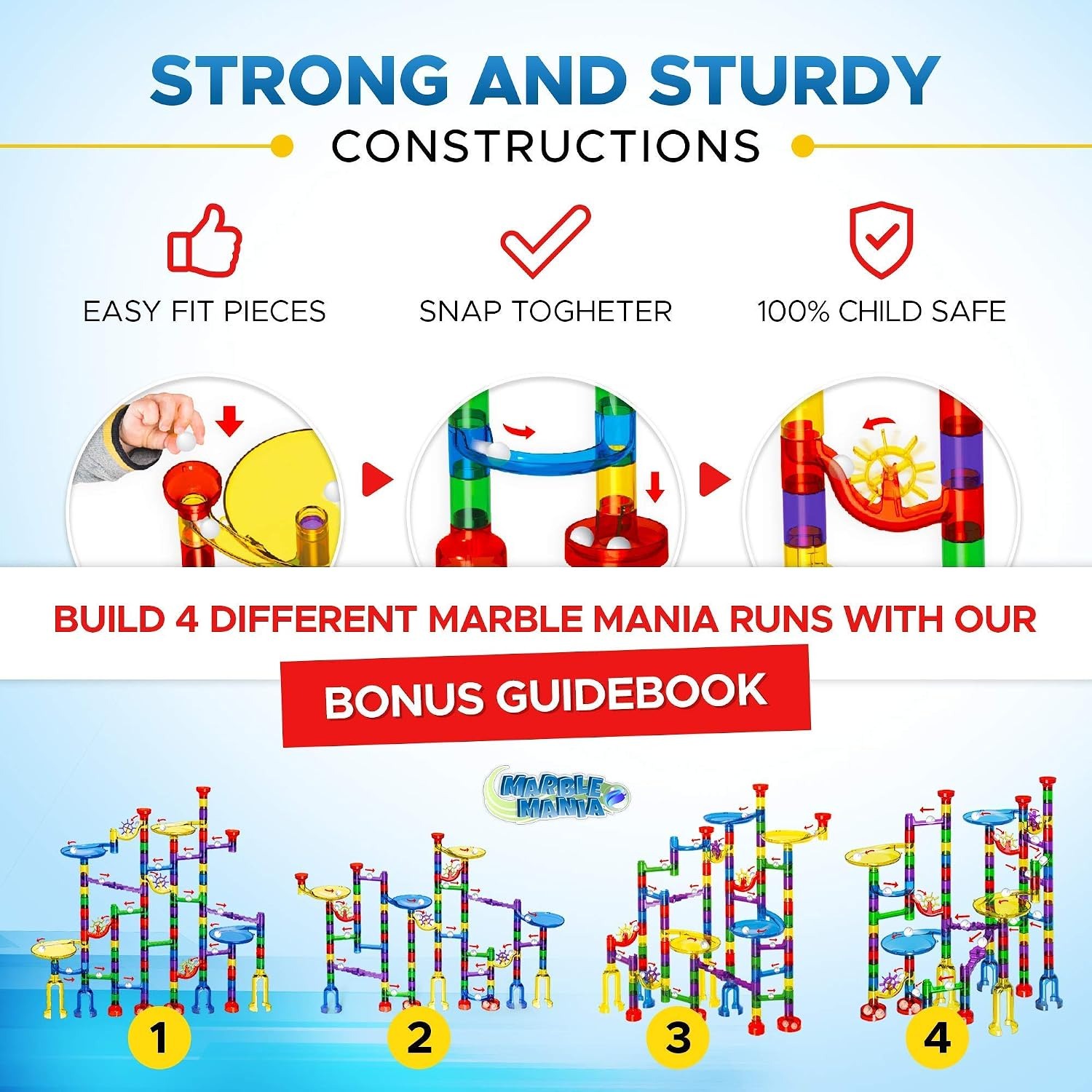
A build guide. Open-ended toys can stall on day one because a blank start is intimidating. Four worked designs in a color guidebook gives a beginner a win straight away, and after that they build their own.
Storage. This is the one parents underestimate. Loose marbles migrate under sofas and into vacuum cleaners. A set without a container is usually half-lost in six weeks. The storage tub here takes every piece and every marble, which is why the set still goes back on the shelf complete.
Setting up for a good session
Build on a hard, flat surface. A wooden floor, a low table or a large tray all work. Thick carpet lets a tall structure lean as it gets higher, and a collapse at the twenty minute mark is a mood-ender for a five year old.
Keep the marbles in a bowl or the tub lid while building. Marbles on the floor roll under furniture and get stepped on, and the hunt eats into play time.
Expect some noise. Glass marbles through plastic track make a steady clatter. It is not loud, but a tiled hallway amplifies it more than a rug does, so consider where you set up if someone is working nearby.
Looking after it
Care is simple. Wipe pieces and marbles with a damp cloth and a little mild soap when they get grubby, then dry them fully before packing away. Skip the dishwasher and hot water, because heat warps plastic and can loosen the fit of the connectors over time.
Store the tub somewhere dry and away from direct sunlight. Prolonged sun can make plastic brittle, and a brittle connector is a connector that snaps.
One small habit pays off for years. Count the marbles back into the tub at the end of each session. It takes thirty seconds and it is the difference between a set that lasts through two children and one that quietly disappears.
Who it suits, and who it does not
This is a good fit for a child who likes making things and is happy to redo them. It also works well where siblings play together, since 90 pieces can be shared or split between two small projects.
It suits families who want a screen free option that genuinely competes for attention. Gravity does the work, so there is nothing to charge and nothing to go flat midway through.
It is less suited to households where a baby or preschooler shares the floor, at least until the small marbles can be stored safely out of reach. And if you want a toy that works perfectly the first time with no fiddling, a marble run is not it. The fiddling is the activity.
The short version
One hundred and sixty two pieces, of which 90 are construction parts and 72 are marbles. Translucent tracks so you can watch the marble and find the jam. Hand-fit connectors a four year old can manage. A color guidebook with four designs for the first build, and a storage tub so the whole thing survives past Christmas.
Listed for ages 4 to 8, recommended by the manufacturer from 3 years and up. It teaches a bit of physics and a lot of patience without ever mentioning either.