

The complete guide
How To Choose A First Ukulele For A Child
The instrument that actually gets played
Ask a music teacher which beginner instrument has the highest quit rate and they will usually say guitar. Not because guitar is a bad instrument, but because the gap between buying one and making a pleasant sound on one is wide. The neck is broad, the strings are steel, and six of them have to be learned before a single chord sounds right. A seven year old presses down, the string buzzes, their fingertip hurts, and the thing goes under the bed.
A soprano ukulele removes most of those barriers at once. It is small enough to hold properly, light enough to carry, and strung with nylon instead of steel. There are four strings instead of six. Some well known songs need only two chords. That is why this body size has quietly become the standard first instrument in primary schools across a lot of the world.
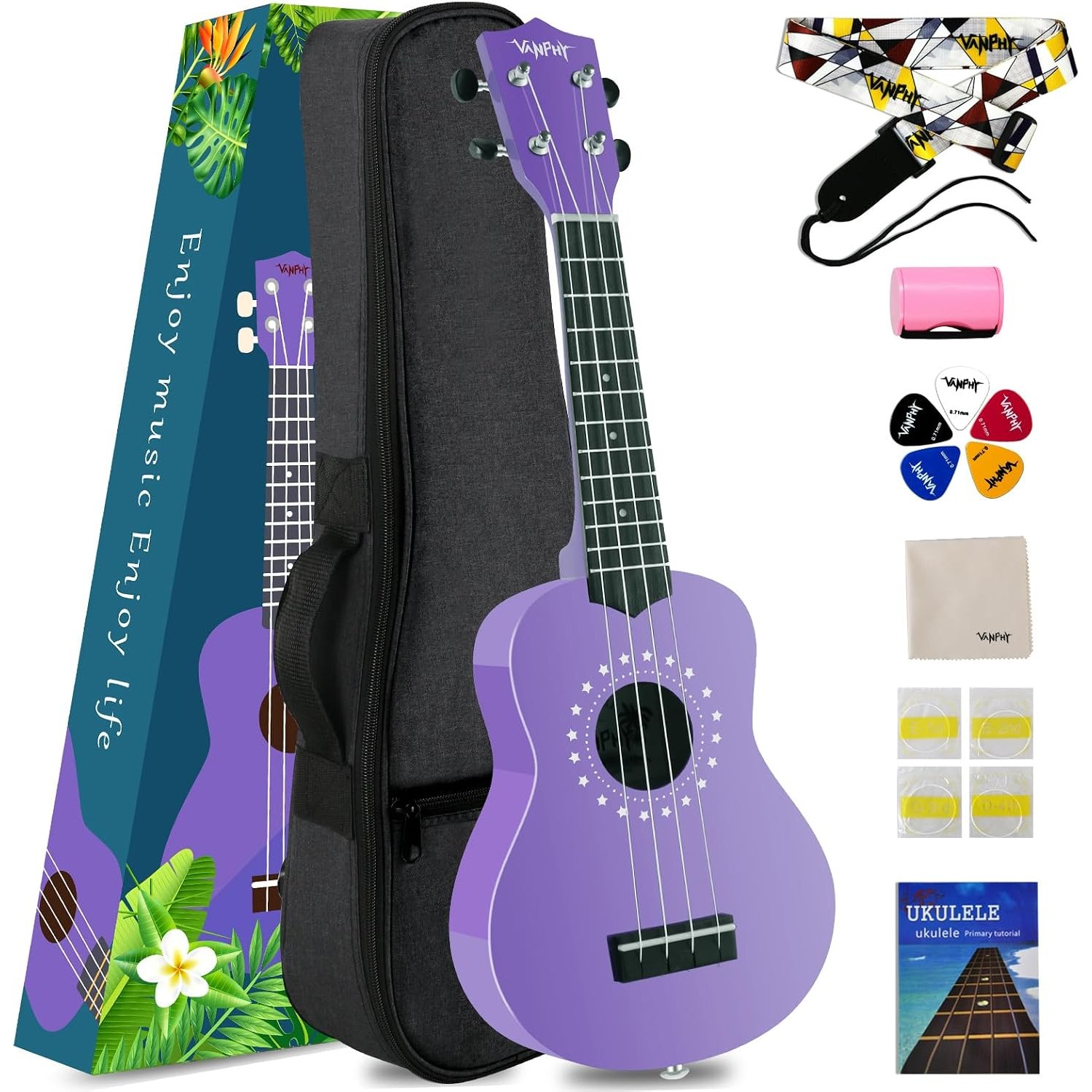
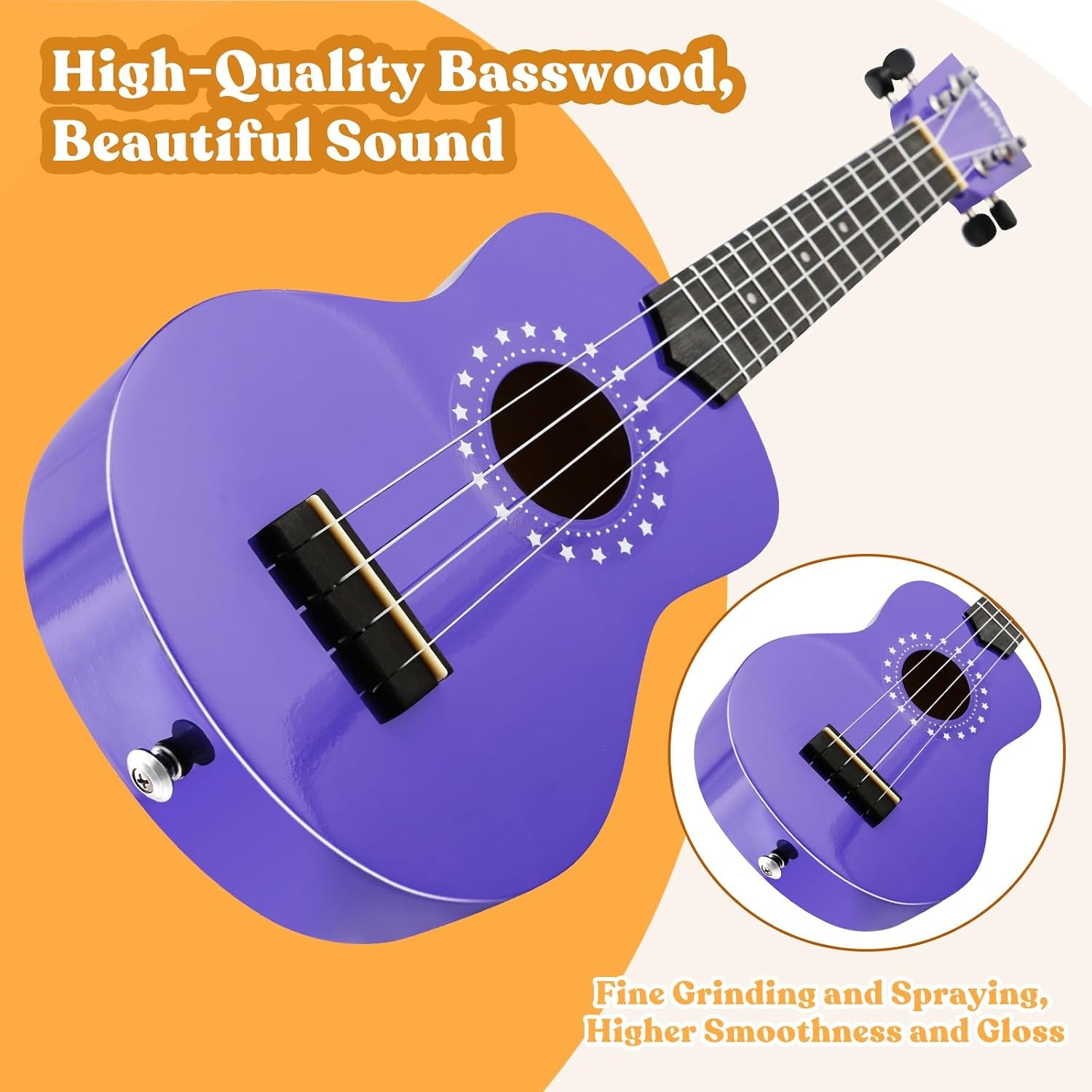
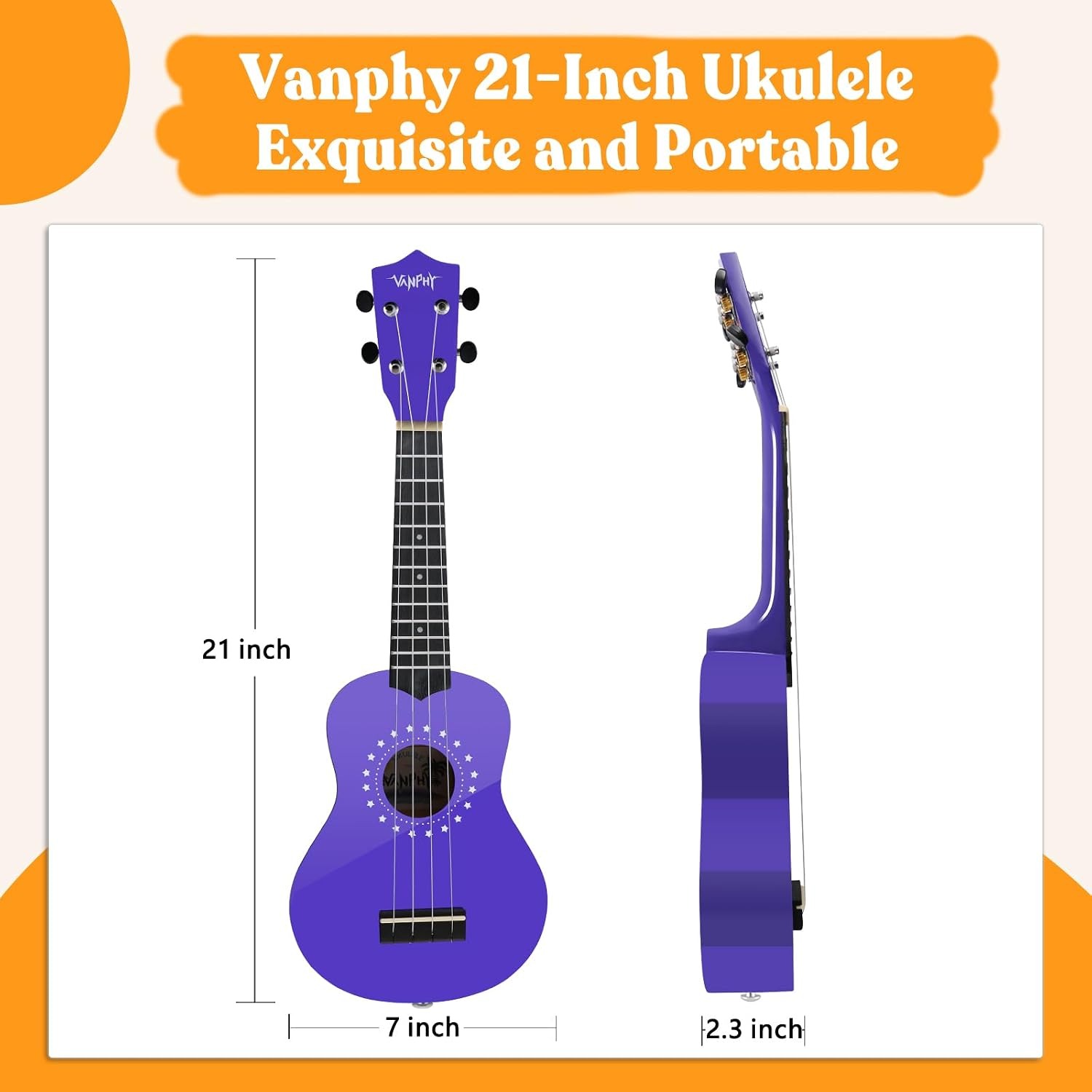
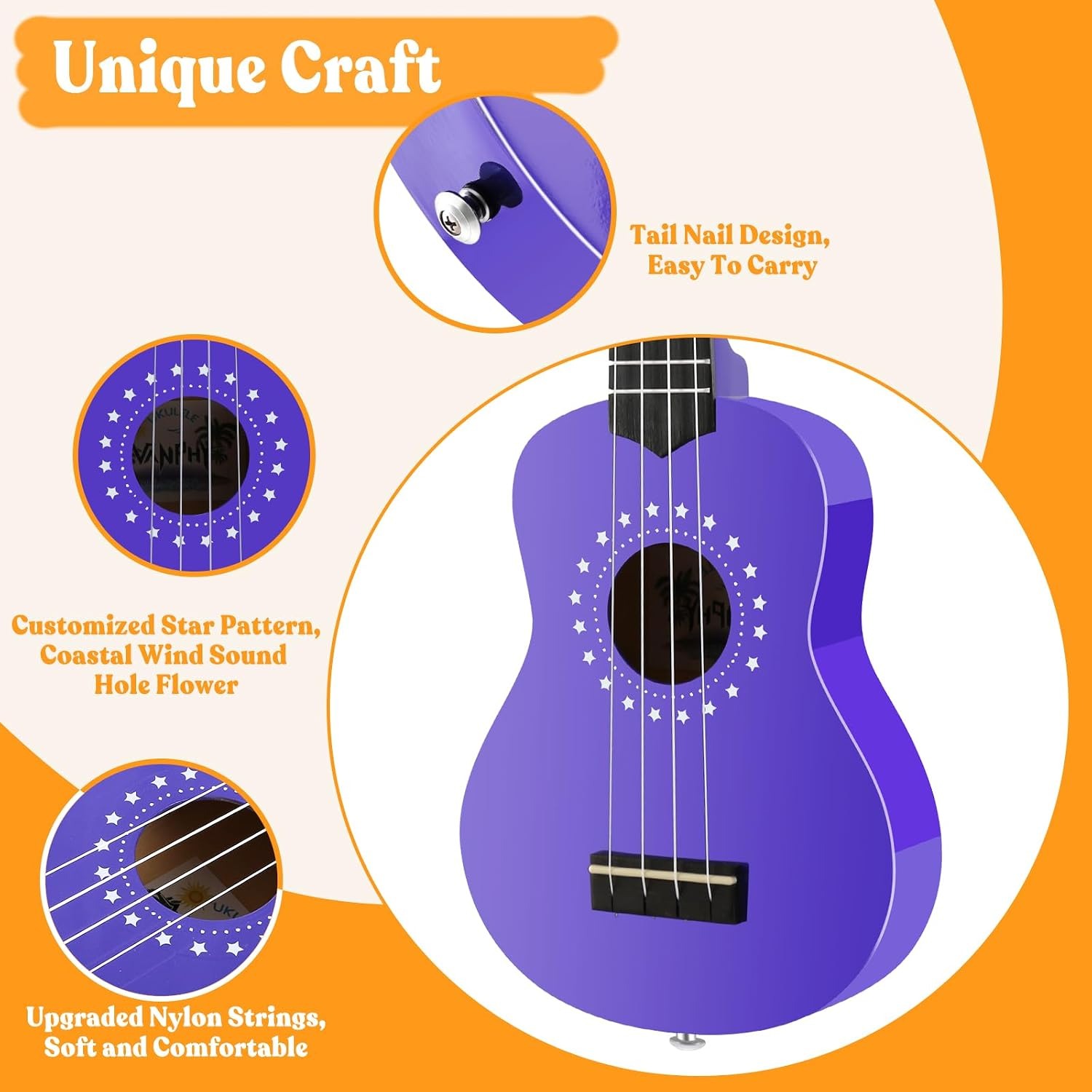
This VANPHY model is a 21 inch soprano, described by the maker as half size, with a basswood top, back and body, four nylon strings and cupronickel frets. It weighs 0.91 kg. It arrives with a bag, straps, picks, spare strings, finger maracas and a cleaning cloth, which means the box can be opened and the instrument played the same hour.
What the sizes actually mean
Ukuleles come in four main sizes. Soprano is the smallest at roughly 21 inches overall. Concert is next, then tenor, then baritone, which is close to a small guitar in both size and tuning.
Soprano is the original and the one most people picture. The shorter scale means the frets sit close together, so a small hand can reach a chord shape without stretching. The trade-off is that the same closeness can feel cramped for an adult with large fingers, and the body produces less volume than a tenor. For a child, neither of those matters much. Reachable beats loud every time when you are learning.
If you are buying for a child under roughly twelve, soprano is almost always the right call. If you are buying for a teenager or an adult who wants something portable, soprano still works, but a concert body gives a bit more breathing room between frets. The best small ukulele for small hands is the one they can actually hold in a relaxed grip, not the one with the biggest sound.
Why nylon strings matter more than anything else
If one spec decides whether a child keeps playing, it is the string material. Steel strings on a cheap small guitar need real finger pressure, and they bite. Nylon needs far less force and spreads the pressure over a softer surface.
In practice this means a beginner can press a chord on day one without the fingertip pain that ends so many attempts. Some tenderness is still normal in the first week, which is why short daily sessions beat one long weekend push. After a week or two the skin firms up and it stops being a factor.
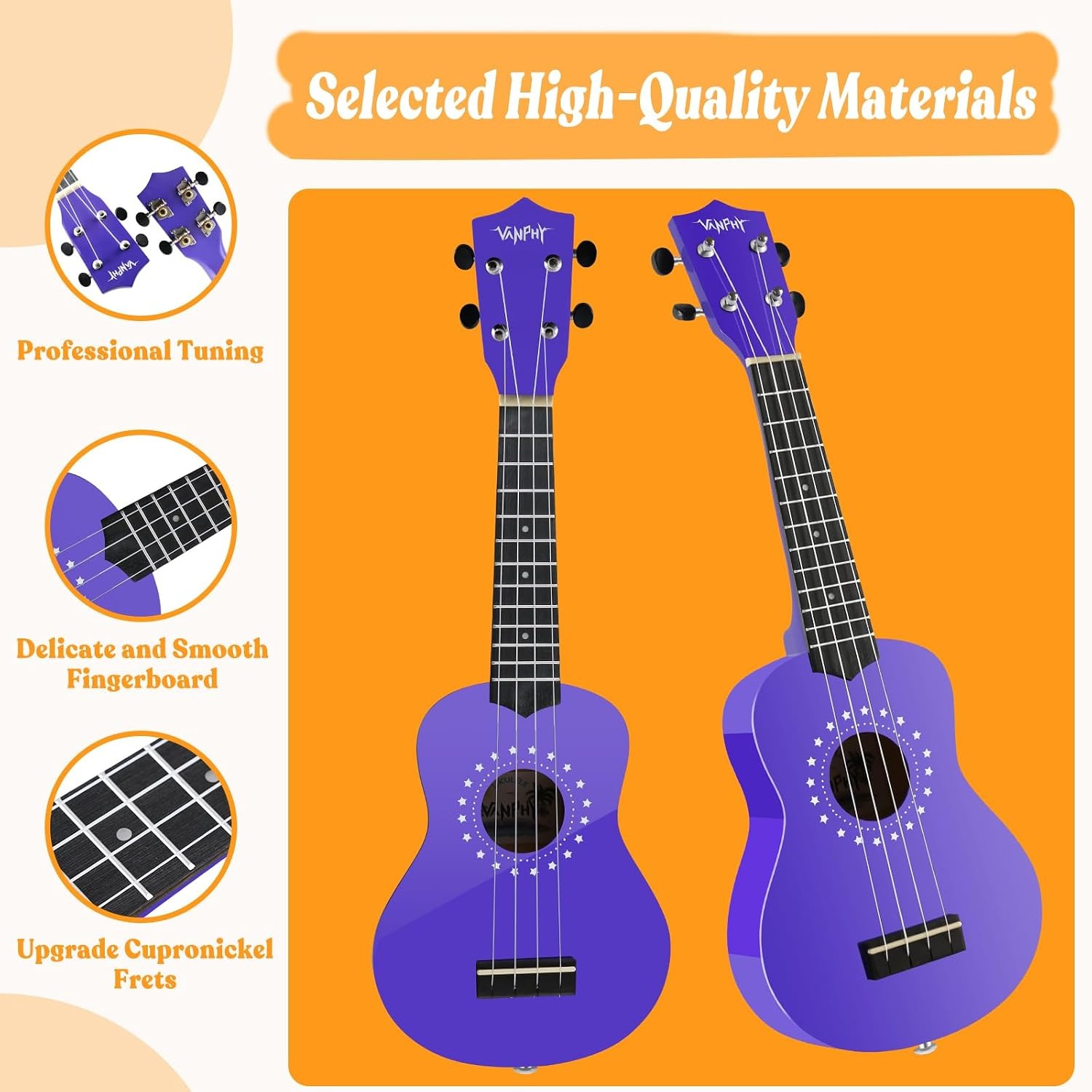
The other half of the equation is the fret and fingerboard. Rough fret ends catch on a sliding hand and can even scratch. This instrument uses cupronickel frets on a smooth fingerboard, which keeps the hand moving freely between shapes. That matters when a beginner is changing from C to F and back over and over.
Reading a spec sheet without getting lost
Here is what is actually worth checking when you compare a beginner ukulele to the next one on the page.
Body material tells you about tone and weight. This one is basswood right through, top, back and body. Basswood is light with an even grain, which is why the maker describes the sound as clear and soft rather than bright or boomy. It is the standard choice at this level for good reason, and the best basswood ukulele models are consistent in a way that cheaper laminates are not.
Finish affects both looks and resonance. A polished, sprayed surface sits flat, which helps the top vibrate evenly and keeps the instrument easy to wipe clean.
Tuning pegs decide how much tuning frustration you are in for. Geared pegs, adjusted at the factory as these are, let you make small accurate changes. Friction pegs on very cheap instruments slip, and nothing kills enthusiasm faster than an instrument that will not stay in tune for a whole song.
Weight tells you about holding comfort. At 0.91 kg this one is light. A strap, which is included, takes the remaining weight off the arms entirely.
What the accessories are really for
Bundles can be padding, but this one is useful. The spare string set is the item that matters most. A beginner will break a string eventually, often by over-tightening during tuning, and if there is no spare the instrument sits silent for weeks until someone remembers to order one. Having replacements in the bag turns a crisis into a ten minute job.
The bag protects the finish and makes the instrument portable for lessons or a school music group. The straps and the tail pin design let a child stand and play without gripping the neck for support, which frees the left hand to form chords properly. The picks are optional, since many ukulele players strum with fingers, but they are there if a child prefers them. The cleaning cloth should get used after every session, because finger oils dull strings faster than anything else.
The finger maracas are a bonus rather than a core item. They are genuinely handy if there is a younger sibling who wants to join in, or in a group setting where someone needs a part while the ukulele is being passed around.
Keeping it in good shape
Wood instruments dislike extremes. Heat dries them out, damp swells them, and sudden swings between the two are worse than either. The practical version of this advice is simple. Keep it in the bag when it is not being played, keep it away from radiators and sunny windowsills, and do not store it in a garage or a shed.
Wipe the strings and body with the cloth after playing. Retune before each session, especially in the first few weeks while new nylon settles. If it is going to be stored for months, slacken the strings a little so there is less constant tension on the neck.
The most common damage to a child's ukulele is not wear, it is a knock. Instruments stood in a corner get kicked. Give it a hook on the wall or a dedicated spot on a shelf and it will survive far longer.
Who this suits, and who it does not
This is a good fit for a child starting out, for a school or community music group, and for anyone who wants a compact instrument to take on holiday. It also works as a gift, because the set is complete and the polished purple finish looks the part under wrapping paper.
It is less suited to an adult with large hands who wants a main instrument, or to a player who already knows their way around chords and wants more volume and sustain. Those players will be happier on a concert or tenor body.
The short version
A 21 inch soprano is the sensible first stringed instrument for most children, and this one covers the basics properly. Basswood body with a polished finish, four nylon strings that do not punish fingertips, cupronickel frets on a smooth board, geared pegs, and 0.91 kg of weight that a child can carry themselves.
Add the bag, straps, picks, spare strings, finger maracas and cloth, and there is nothing standing between the box arriving and the first chord. Tune it, show them two chords, and let them get on with it.