
The complete guide
Choosing a Fairy Potion Craft Kit, A Buyer's Guide
The problem with most craft gifts
You buy a craft kit. The child opens it, makes the one thing it was designed to make, and forty minutes later it is done. The result goes on a windowsill, gathers dust, and the box goes in the closet with the other boxes.
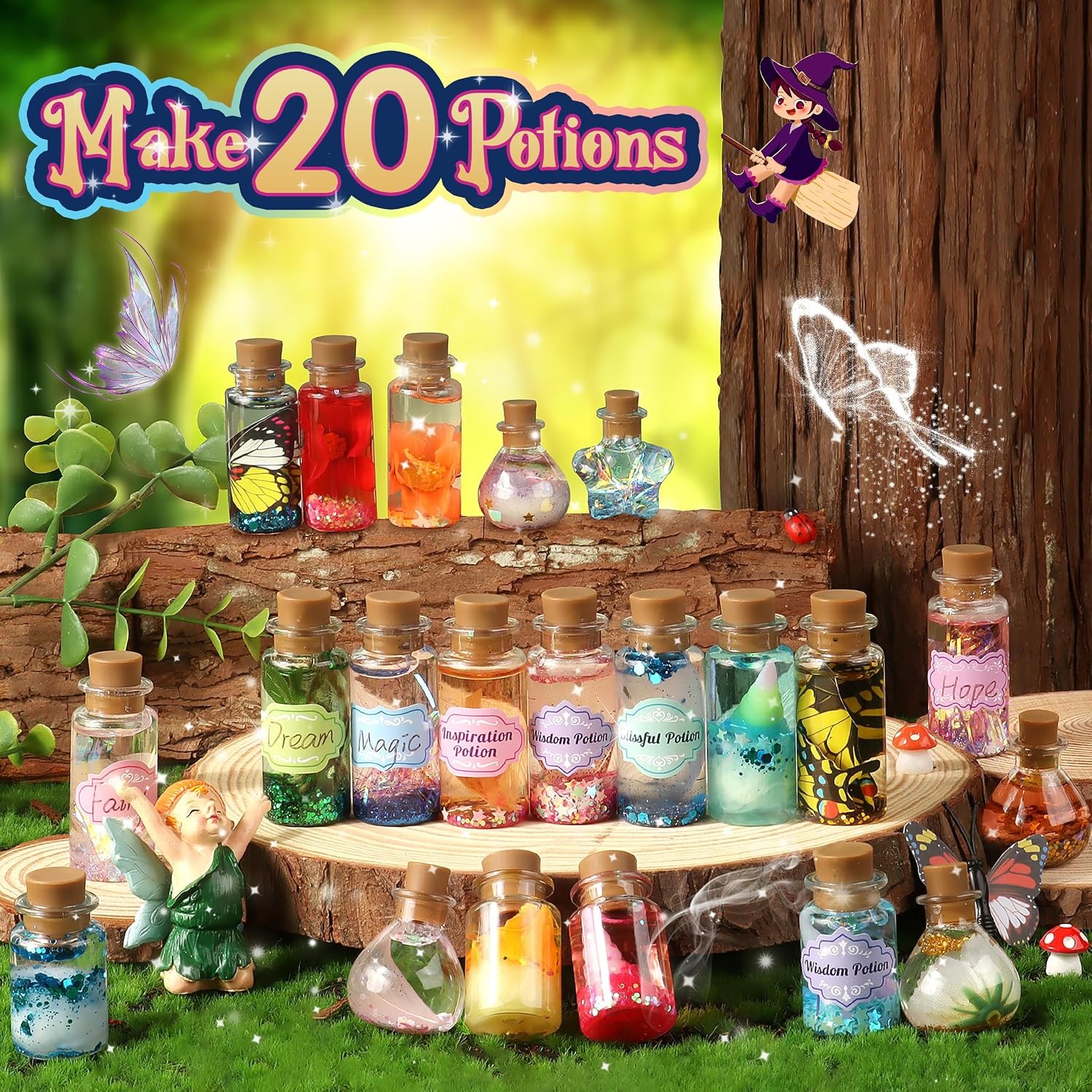
That is the gap a fairy potion craft kit fills. Instead of one project, it hands over 20 empty bottles and a reason to fill them. The activity is repeatable by design. A child can make three potions on Saturday, two more on Wednesday, and still have bottles left for the following weekend. The thing you are really buying is not a single craft session. It is a hobby that happens to arrive in a box.
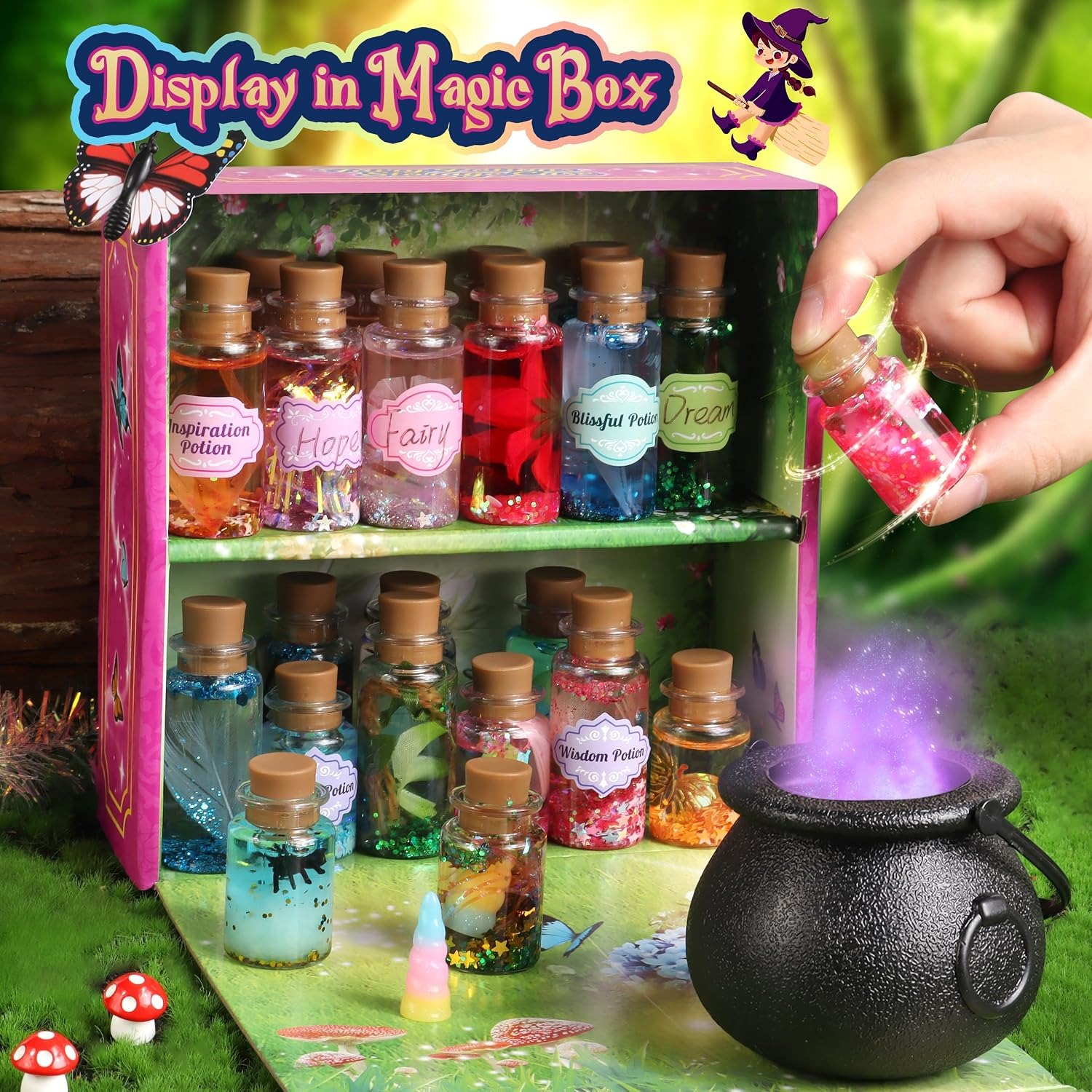
The display case matters here too. Craft kits that produce loose objects tend to lose those objects. A case that holds the bottles upright gives the finished work a home, and anything with a home gets kept.
What is actually in the box
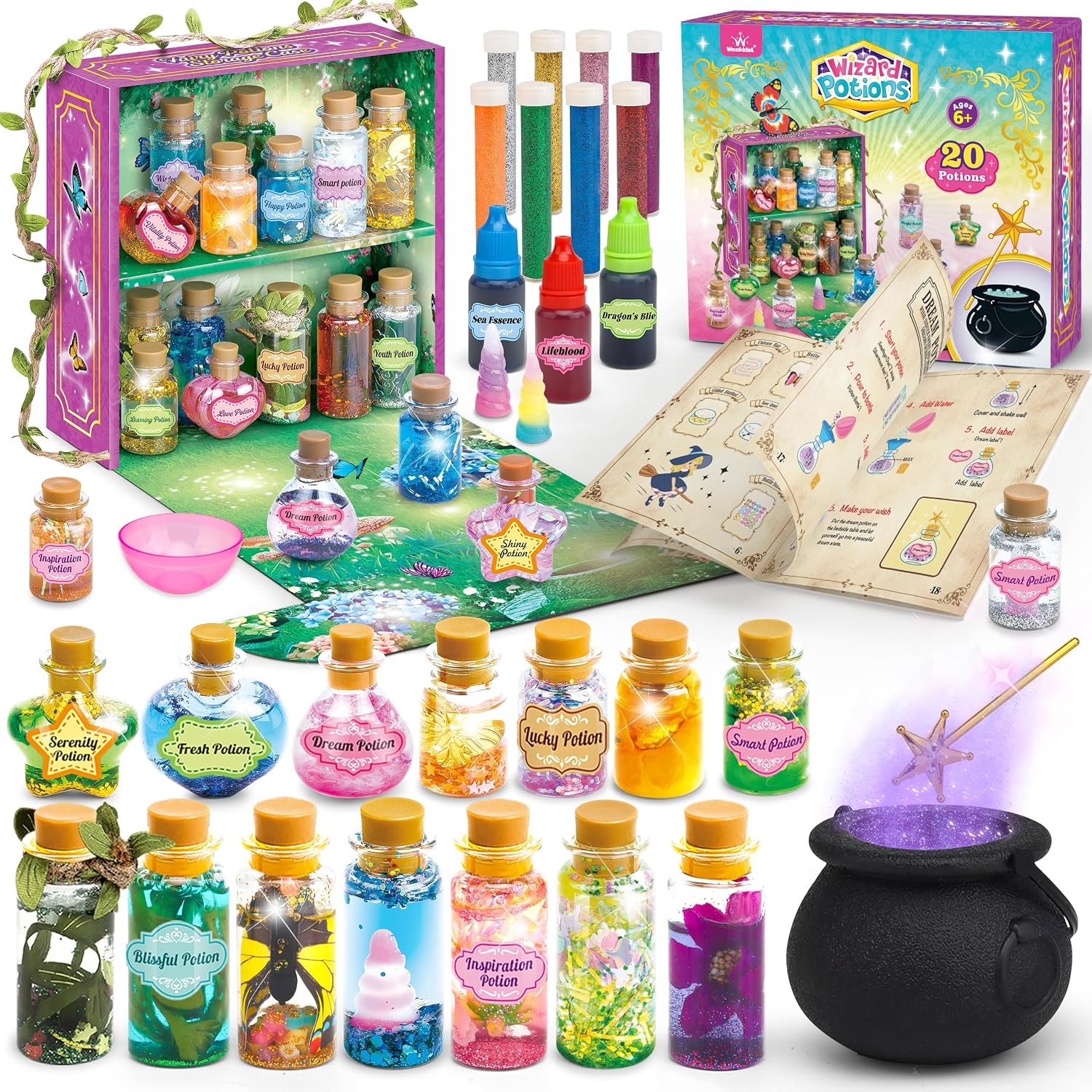
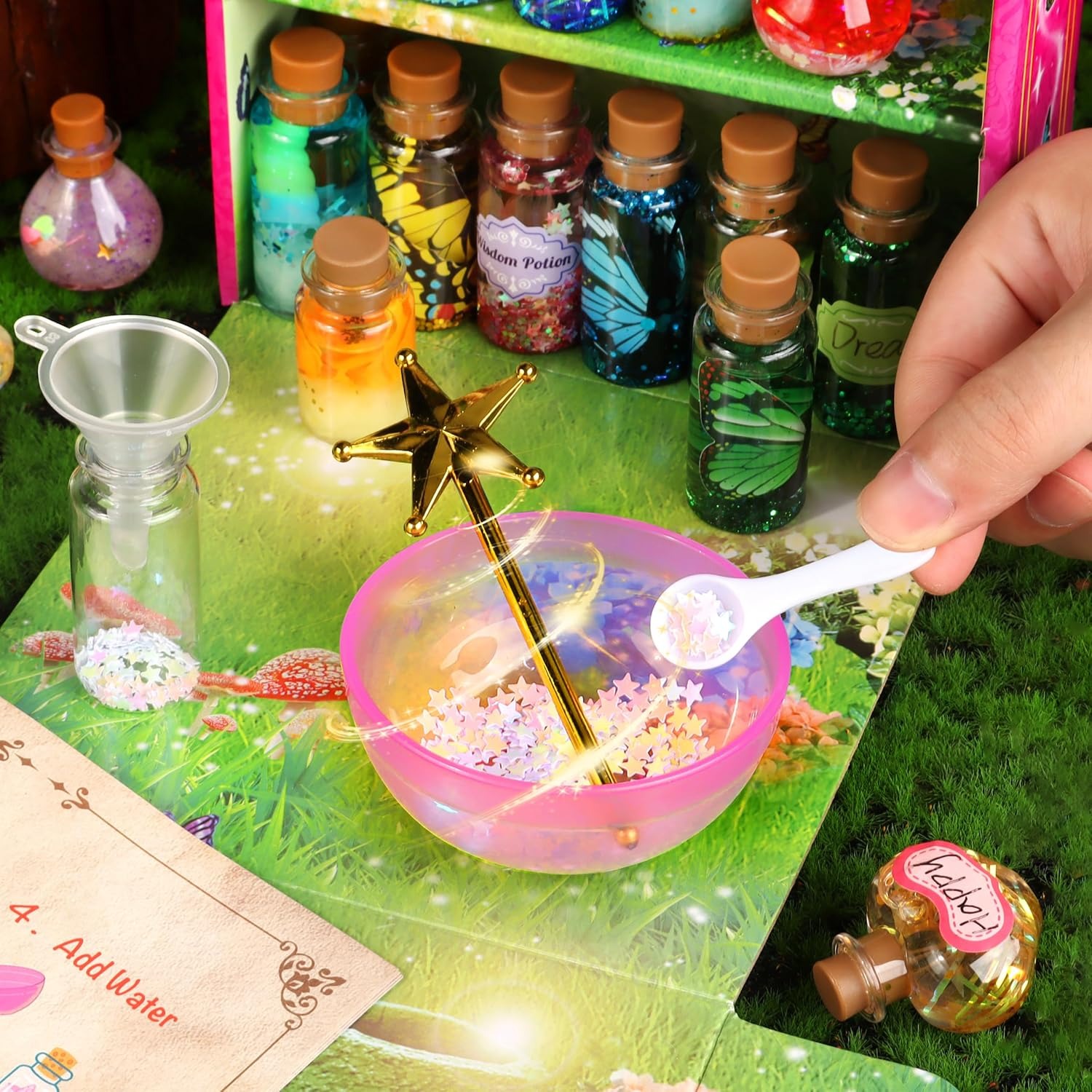
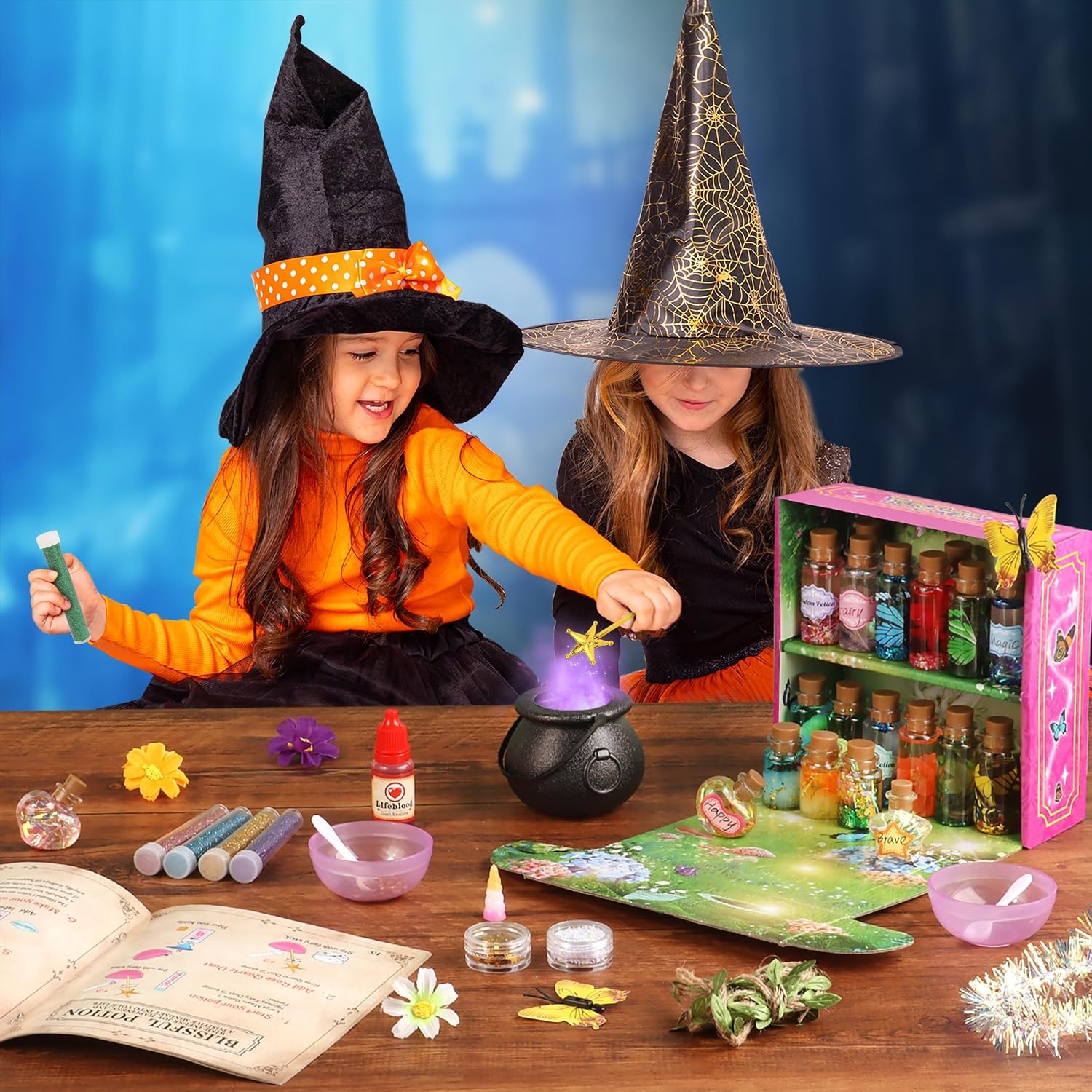
This set contains 58 pieces. The core of it is the 20 potion bottles and the potion display case. Around that sit the props that give the play its theme, a cauldron, a vine, a fairy wand, a fantasy flower, butterflies, a unicorn horn and colorful sparkles.
There is also a recipe book with seven formulas, plus blank stickers for naming the finished potions.
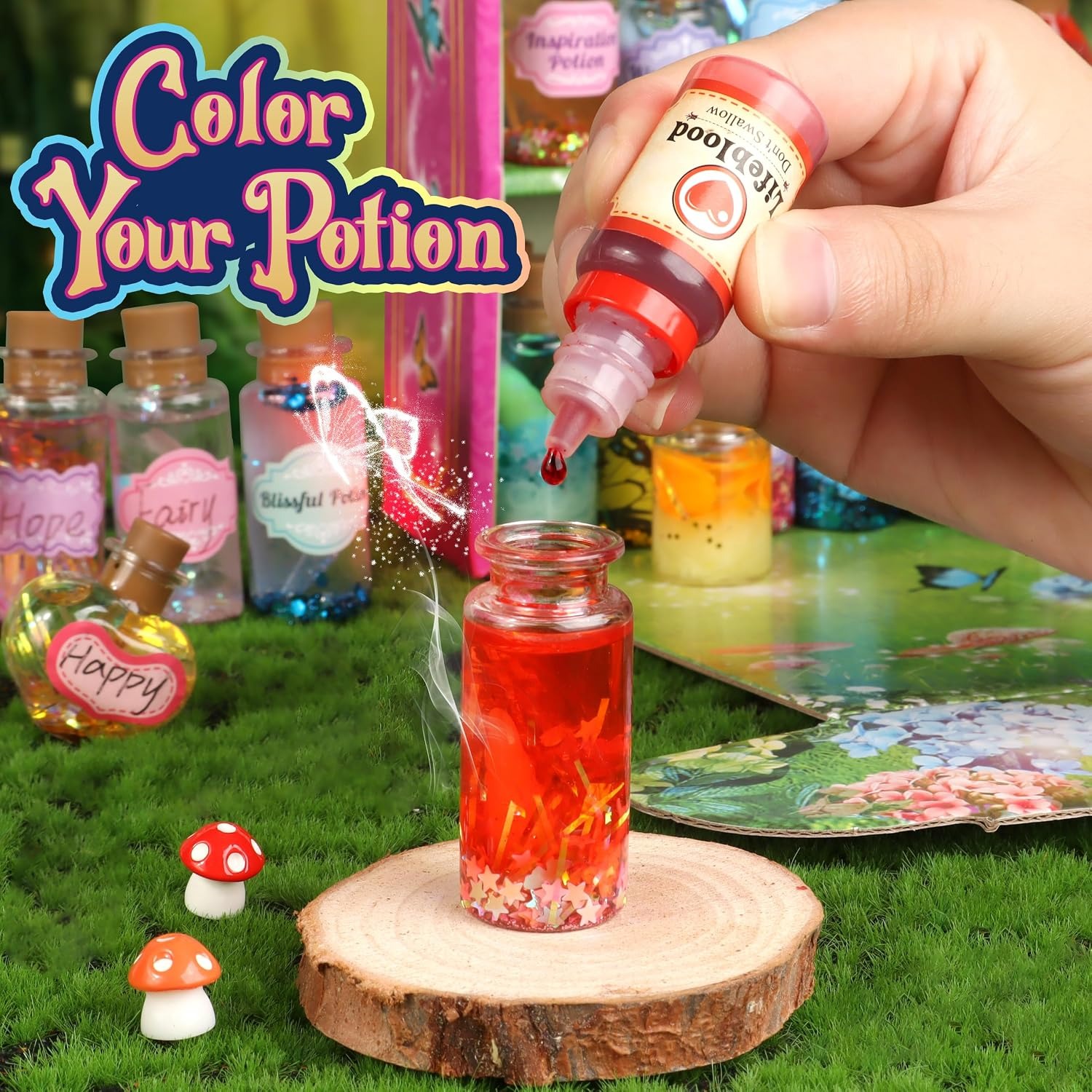
The recipe book is more important than it looks on a feature list. Give a child a pile of craft materials with no starting point and you often get a long pause followed by a request for help. A formula removes that pause. Step one, step two, done, and now there is a finished bottle sitting on the table. Confidence follows the first result, and after two or three recipes most children stop reading and start experimenting. That is the point where a craft kit turns into imaginative play.
The brand is wookidel and the model is VI-MF002. The whole set measures 7.08 x 6.1 x 2.36 inches, and the listed material type is plastic.
How the play actually works
Watch a child use one of these and the session usually runs in four stages.
First comes the mixing. This is the sensory part, pouring, swirling, adding sparkle, watching colors settle. It is immediately satisfying and needs no explanation.
Second comes the sealing. Caps go on, and suddenly there is an object rather than a mess.
Third is naming. The blank stickers get used, and this is where the kit stops being craft and starts being storytelling. A bottle labeled "Potion of Invisible Dogs" has a personality. The child has invented what it does, who uses it, and what happens if you drink too much. None of that is printed in the recipe book.
Fourth is display. The bottle goes into the case alongside the others, and the collection grows by one. That visible progress is a quiet motivator. A half-full case is an invitation to fill the rest.
Who it suits
This is aimed at children who already like fairy, unicorn and magic play. If a child builds fairy houses in the garden or has strong opinions about which unicorn is which, the theme will land straight away.
It also suits children who prefer making over following. The seven recipes are a starting ramp, not a limit, and the kit rewards kids who want to go off-script.
It is commonly bought as a gift for the 8 to 10 age range. The maker describes it as a kids' craft kit and does not state a formal manufacturer age grade in the maker's details, so use your own judgement based on how your child handles small items. There are small parts, so keep it away from children under three and supervise mixing.
For a child who struggles to settle, the structure helps. Each potion is a short, finishable task with a clear reward, so there is no long stretch of effort before anything happens.
How to choose between potion kits
A few things separate a good one from a disappointing one.
Count the bottles, not the pieces. A high piece count can be padded with decorative scraps. Bottles are what determine how many times the activity can be repeated. Twenty is a generous number.
Check whether storage is included. Kits without a case leave you hunting for somewhere to put twenty small bottles. A case keeps them upright and keeps the set together between sessions.
Look for a recipe book. Open-ended kits sound appealing but can stall a child who needs a first step. Seven formulas is enough to build momentum without being prescriptive.
Think about labeling. The blank stickers are a small inclusion that changes the activity. Without a way to name things, the bottles stay anonymous. With it, they become characters.
Be realistic about mess. Any kit involving liquid and glitter will make some mess. That is not a fault, it is the nature of the thing. Plan the surface before you plan the session.
Setting up a good session
Pick a table you do not mind wiping, and put down a tray or a wipeable mat. Keep a roll of kitchen paper within arm's reach. Have a small jug of water ready if the recipes call for it, so the child is not running back and forth to a tap.
Lay the bottles out first so the child can see how many there are. Resist the urge to do all 20 in one go. Three or four in a session leaves something for next time and keeps the kit alive for weeks instead of hours.
If two children are sharing, split the bottles between them at the start. It avoids the usual argument about who gets the last one.
Care and storage
Seal bottles firmly after each session. Store the set upright in its display case, on a flat shelf, out of direct sunlight and away from radiators or heat.
Wipe the case and the outside of the bottles with a damp cloth when they get sticky, and dry everything before packing away. Avoid soaking any labels or stickers.
If a child wants to remake a bottle, empty it, rinse it and let it dry fully before refilling. Treat the potions as display pieces rather than permanent keepsakes. Mixed craft materials can settle or shift in appearance over time, which is normal.
Keep small components in the box when not in use. Butterflies and the unicorn horn are exactly the sort of thing that vanishes under a sofa.
Gifting notes
It wraps easily. The box is compact at just over seven inches across, so it fits a gift bag without awkward folding, and it arrives new and sealed.
As a birthday present it tends to go down well because the recipient can start using it at the party itself, which is not true of every craft gift. As a Christmas present it suits the slow days afterwards when the batteries have run out of everything else.
If you are buying for a classroom friend or a niece you do not see often, the fairy and unicorn theme is a safe bet for a child who likes fantasy play, and the display case gives the gift a visible presence in their room long after the making is done.
The short version
A fairy potion craft kit earns its place because it is repeatable. Twenty bottles, seven starter recipes, blank stickers for naming, and a case to keep the results in. That combination turns one craft session into an ongoing collection.
It suits children who like fairy and unicorn play, who enjoy making things with their hands, and who respond well to short tasks with quick results. There are small parts, so supervise the mixing and keep it away from preschoolers.
Set it up on a wipeable surface, do a few bottles at a time, and let the child name their own creations. That last part is what people remember.