
The complete guide
How to Choose a Play Food Set That Actually Gets Played With
The problem with most play food
Plenty of homes have play food. Far fewer have play food that still gets used six months later. The usual story goes like this: a child gets a small handful of plastic fruit, plays with it hard for two weeks, then loses interest because there are only so many meals you can make from three apples and a carrot. The pieces drift under furniture, one ends up in the car, and the rest sit in a basket nobody touches.
Two things cause that. The first is not enough variety. Pretend cooking is storytelling, and a story needs props. A child who can only make fruit salad runs out of plot. The second is no storage. Loose pieces scatter, scattered pieces go missing, and an incomplete set feels broken even when most of it is still there.
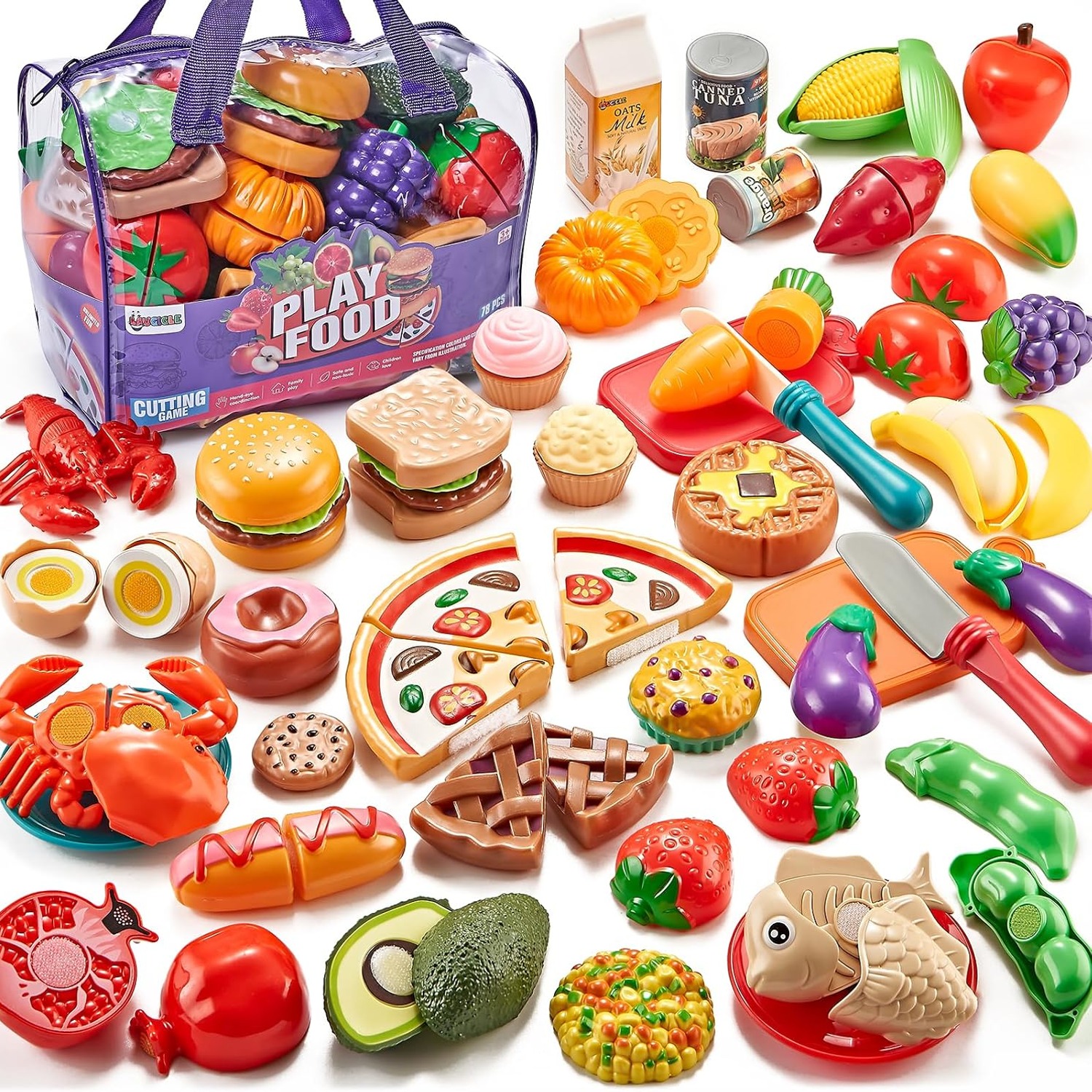
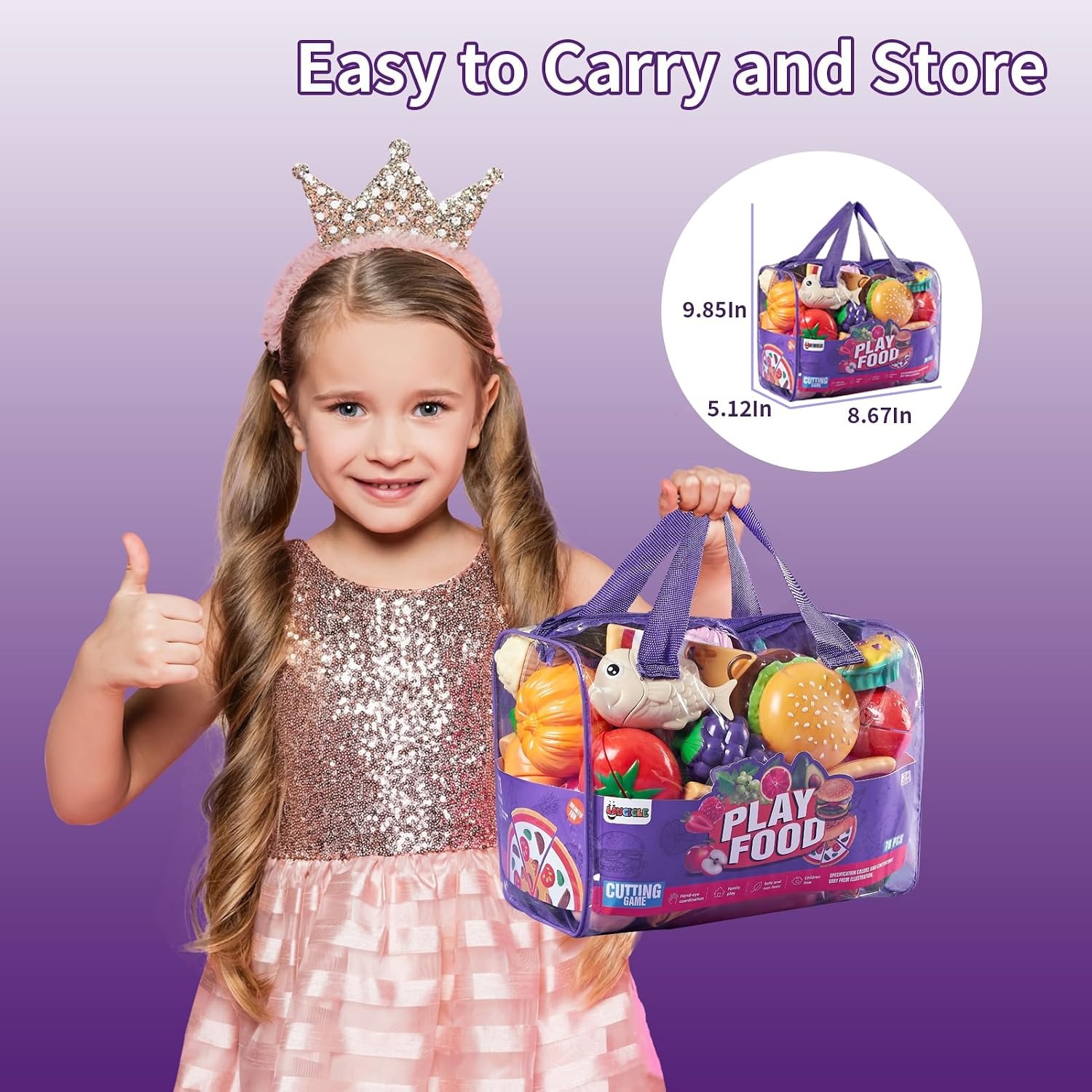
A 78 piece play food set with a bag deals with both problems at once. There is enough range to build breakfast, a birthday party, a takeaway order and a seafood dinner without repeating yourself, and there is one obvious place for it all to live.
How the cutting works
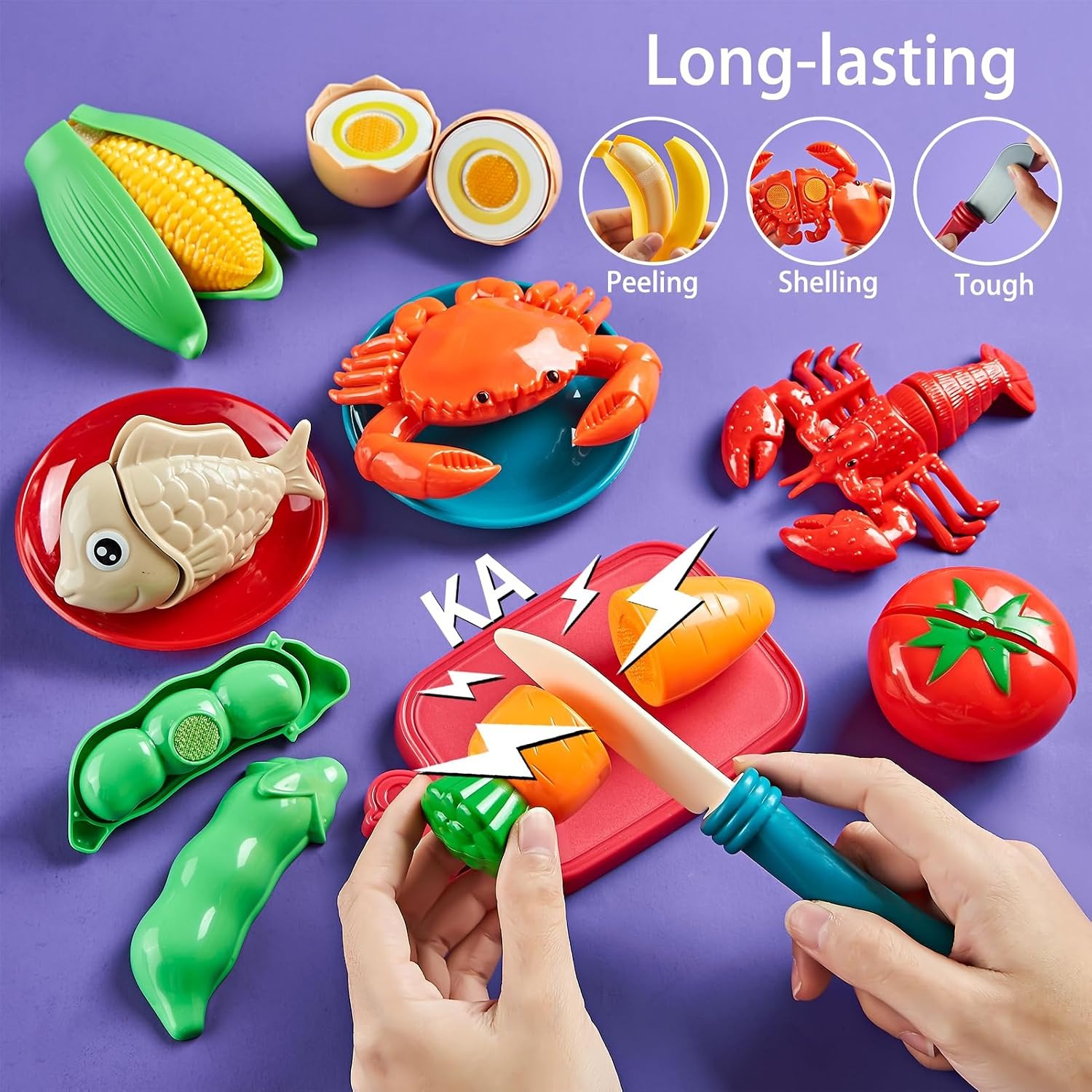
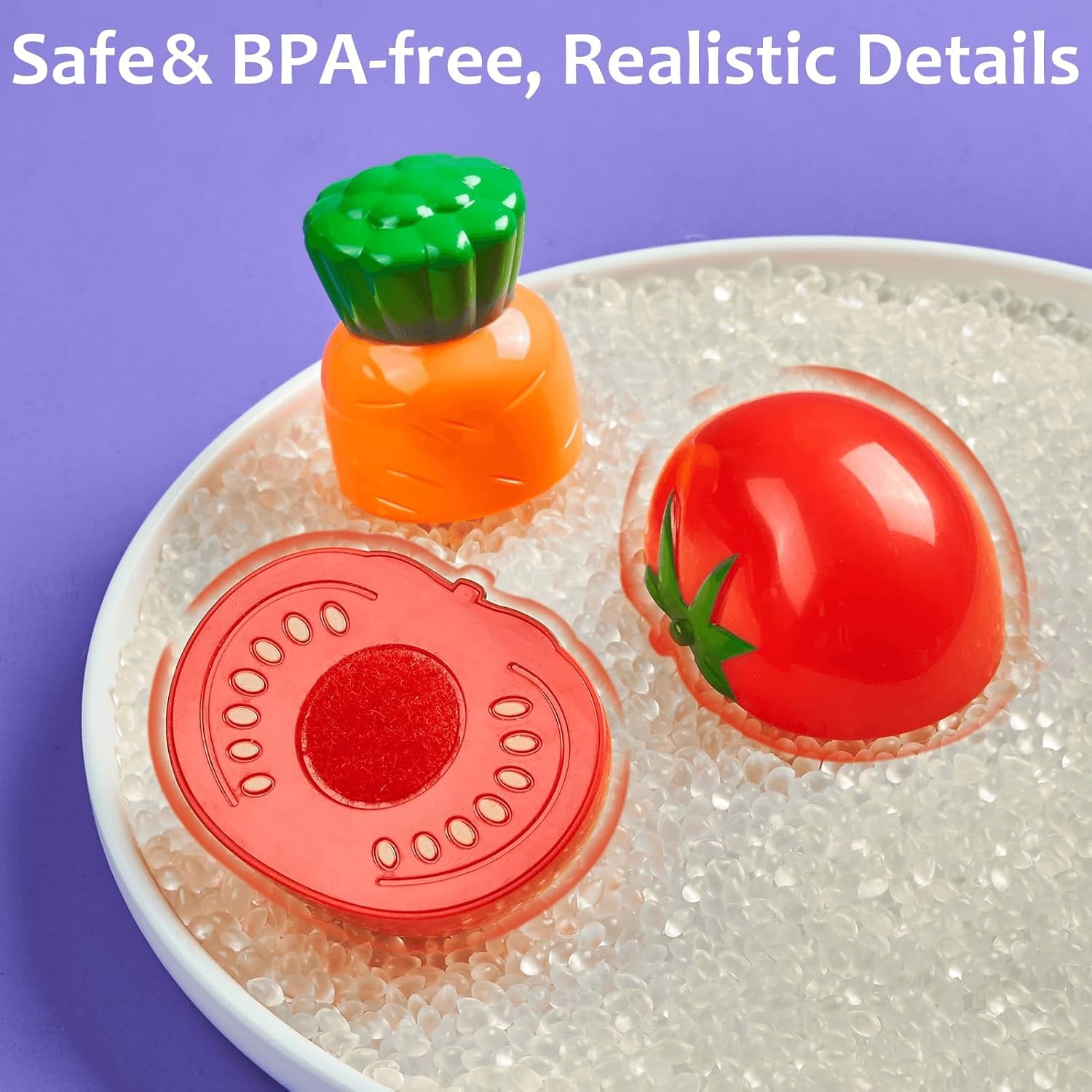
The feature that keeps children coming back is the slicing. Many pieces in this set are built as two halves joined with hook and loop fastening. Press the toy knife into the seam and the halves separate with a short tearing sound. Line them up, press, and they are whole again.
That sounds simple, and it is, which is exactly why it works for small children. The action gives instant feedback. You did a thing, something happened, you can do it again. There is no setup, no instructions and no way to get it wrong.
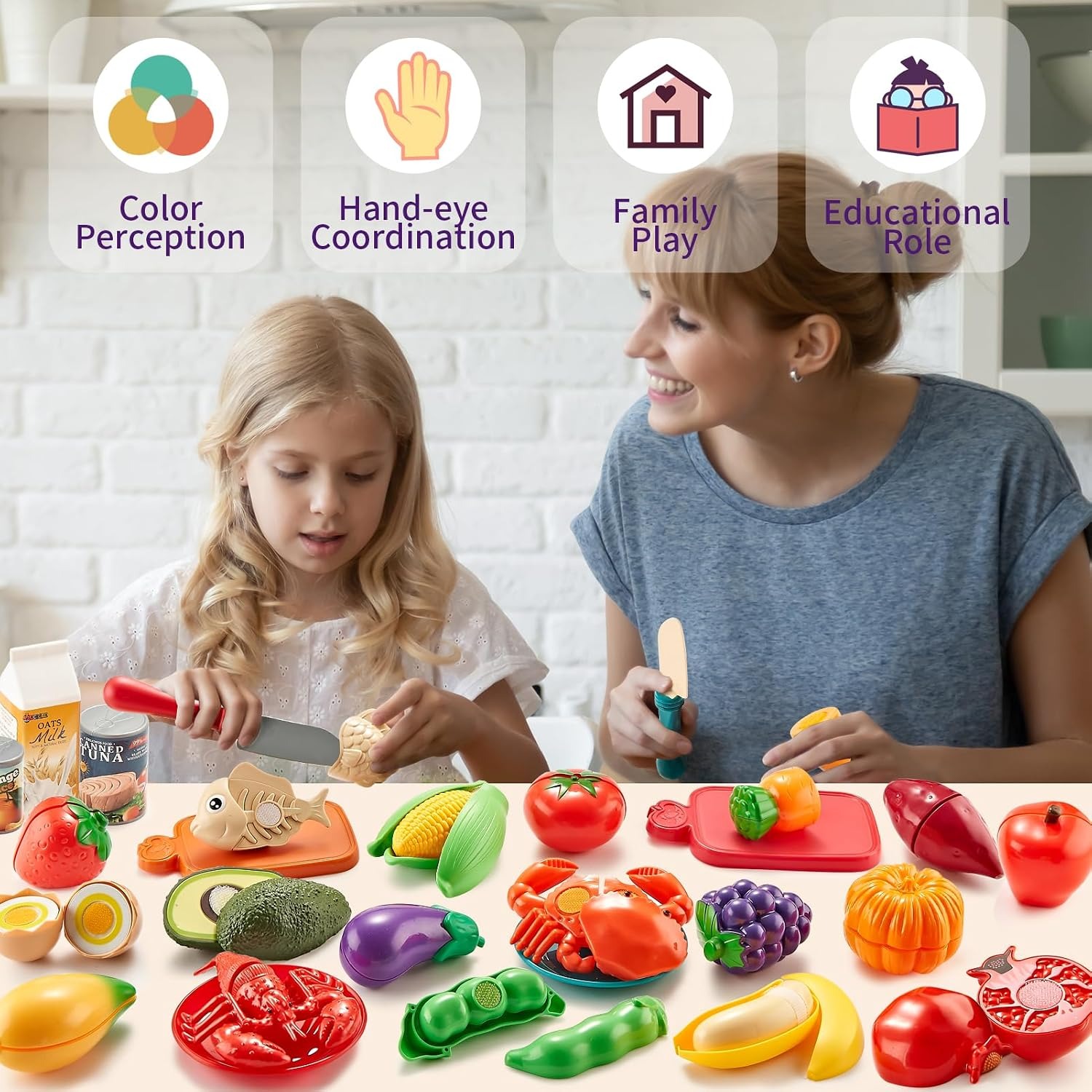
Underneath the fun, the movement is doing real work. Holding food steady with one hand while the other hand slices is bilateral coordination, which is the same skill that later shows up in cutting paper with scissors and holding a page while writing. Lining the two halves up square before pressing takes visual judgement. Peeling and de-shelling pieces takes pinch strength. LAUGIGLE lists hand-eye coordination, dexterity and fine motor skills as the aims, and the cutting mechanic is where most of that happens.
Who this set suits
The manufacturer's recommended age is 36 months to 8 years, and that spread is honest. Play changes a lot across those years.
At three, the game is mostly handling and naming. Children carry the food around, put it in and out of containers, and ask what things are called. The cutting is a novelty they will repeat endlessly. You do not need to structure anything.
At four and five, stories appear. There is a cafe. There is a customer. The pizza is for somebody. This is where the breadth of the set starts to matter, because a child making a menu wants options. Having desserts, mains, fruit and canned goods in the same box means the pretend shop has stock.
By six, seven and eight, children start playing with rules. Prices, orders, who is the chef and who is waiting tables. Some make a written menu. Some set up the food as a shop and charge their parents in buttons. The food is no longer the game, it is the material the game is made from, and that is when a big set earns its keep.
It also works for mixed-age households. Seventy-eight pieces is enough for two children to play alongside each other without one of them hoarding everything good.
What to look for when you compare sets
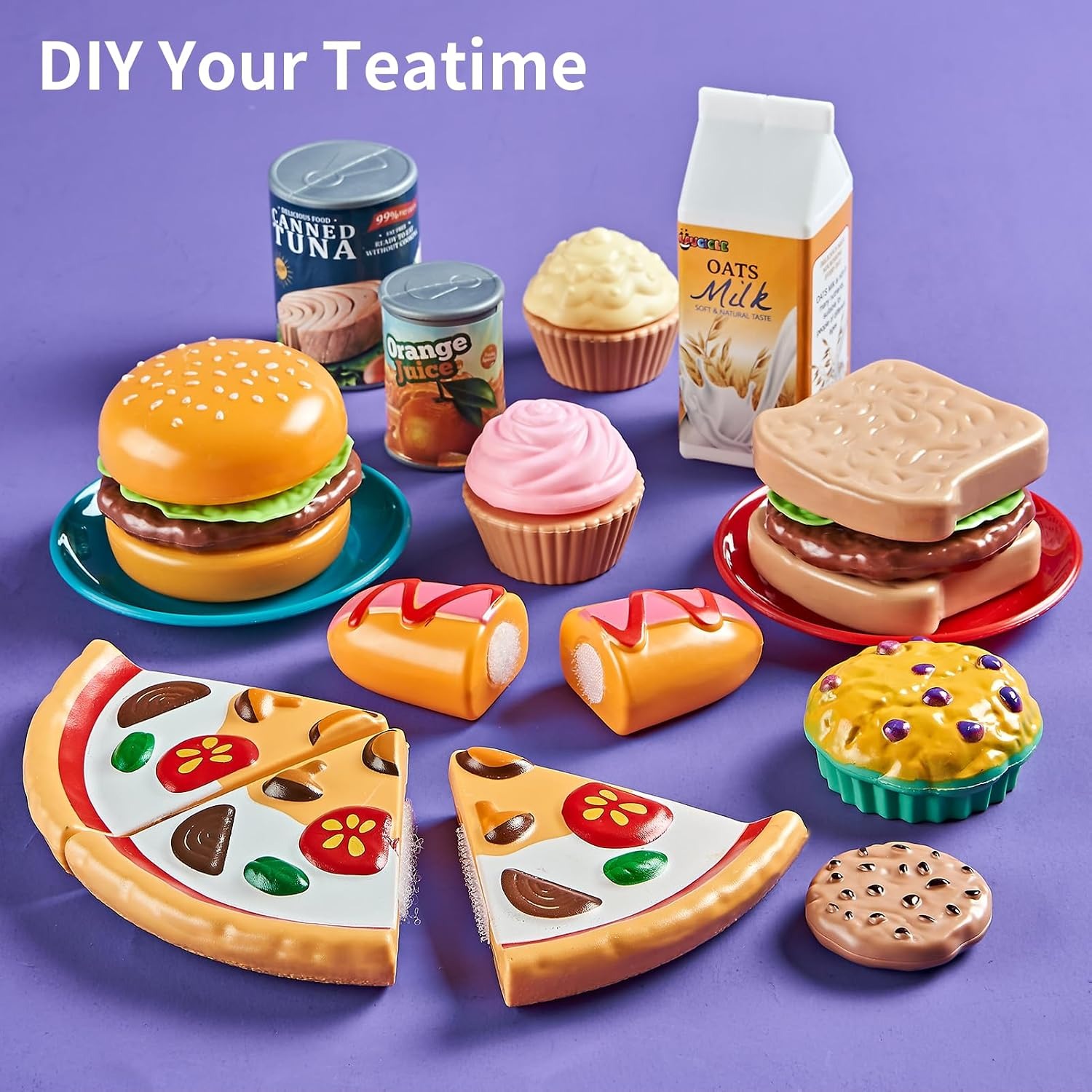
Piece count against variety. A high count only helps if the pieces are different. Twenty identical strawberries is not variety. Look at the categories covered. This set spans fruit, vegetables, pizza, fast food and burgers, desserts and cakes, canned food and seafood, which is a wide spread of pretend meals.
Whether the food cuts. Static food gets played with. Cutting food gets played with harder and for longer, because there is an action built in. If you are weighing up the best cutting toy food against a plain set at a similar price, the cutting version usually wins on time spent.
Utensils included. Food on its own is half a game. Knives and serving pieces let a child prep and serve, which doubles the number of things they can act out.
Storage. This is the one people forget. A bag or box is the difference between a set that stays complete and a set that turns into stray plastic. The included storage bag here is a genuine practical feature rather than a bonus.
Materials and age guidance. The material type listed is plastic. The recommended age is 36 months and up. Both of those are worth matching against your own household before buying, particularly if there is a baby or crawling preschooler around.
Setting it up at home
You do not need a toy kitchen. A low table, a tray or a patch of rug works. If you do have a play kitchen, keep the storage bag in one of the closets so the food and the kitchen stay together.
A couple of small things help the set last. Introduce the pieces in groups rather than tipping all 78 out on day one. A smaller selection is easier for a young child to handle and keeps some novelty in reserve. You can rotate groups weekly, which makes the set feel new again for almost no effort.
Give the pack-down a job too. Sorting fruit into one pile and desserts into another while tidying is a genuinely useful sorting exercise, and it means the bag goes away full.
Looking after the pieces
Care here is simple because there is nothing complicated to care for. Wipe pieces with a damp cloth and a little mild soap, then dry them properly before they go back in the bag. Damp plastic stored in a closed bag is how a set starts smelling odd.
Keep everything away from heat. No dishwashers, no microwaves, no radiators, no car dashboards in summer. Plastic warps, and warped halves stop lining up.
The hook and loop joins need one bit of attention. Over time the hooks collect lint, hair and carpet fibers, which weakens the grip. Pick the fluff out with your fingers or run a comb through the hooks and the grip comes back. Doing that two or three times a year keeps the slicing feeling crisp.
The short version
If you want pretend cooking that lasts more than two weeks, buy for variety and buy for storage. This 78 piece play food set covers both. The contents run from fruit and vegetables through pizza, burgers, desserts, canned goods and seafood, with utensils for serving. Hook and loop joins let children cut pieces apart with the included toy knife and stick them back together as many times as they like, which is the part that builds hand control without anyone calling it practice.
The manufacturer recommends it for ages 36 months to 8 years, lists the material as plastic, and backs it with a 90 day warranty against manufacturer defects. The whole thing weighs about 0.73 kg and packs into a bag small enough to take to grandparents' house.
For most families looking for the best pretend kitchen food to start with or to replace a thinning collection, a set this size answers the question in one purchase.