
The complete guide
How to Choose and Get the Most From a 3-in-1 Carnival Games Set
The problem with most party games
You buy a game for a birthday, it gets played for eleven minutes, and then it goes into the closet with the other half-finished things. The problem is usually the same. The game only does one thing, the rules only suit one age, and setting it up takes longer than the kids are willing to wait.
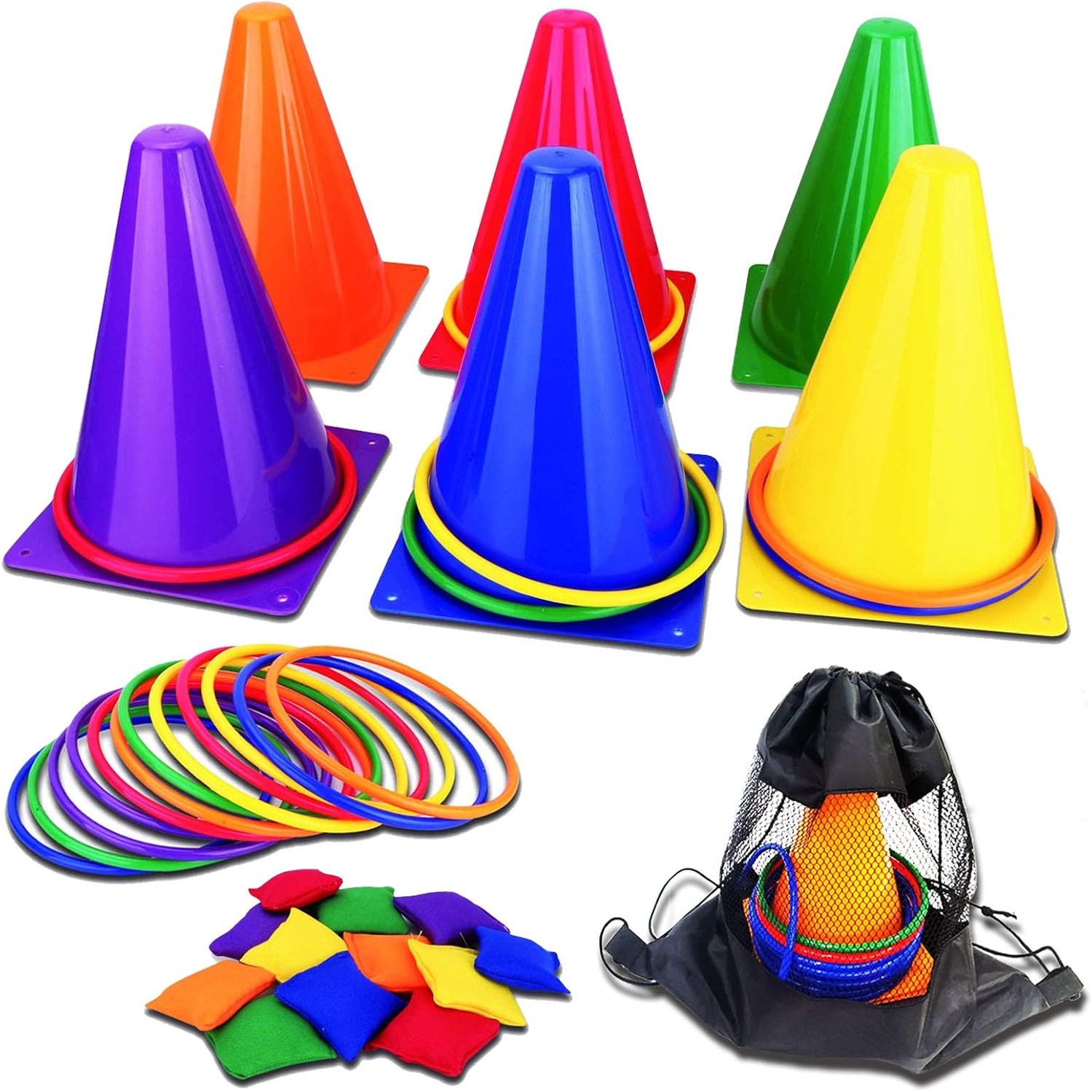
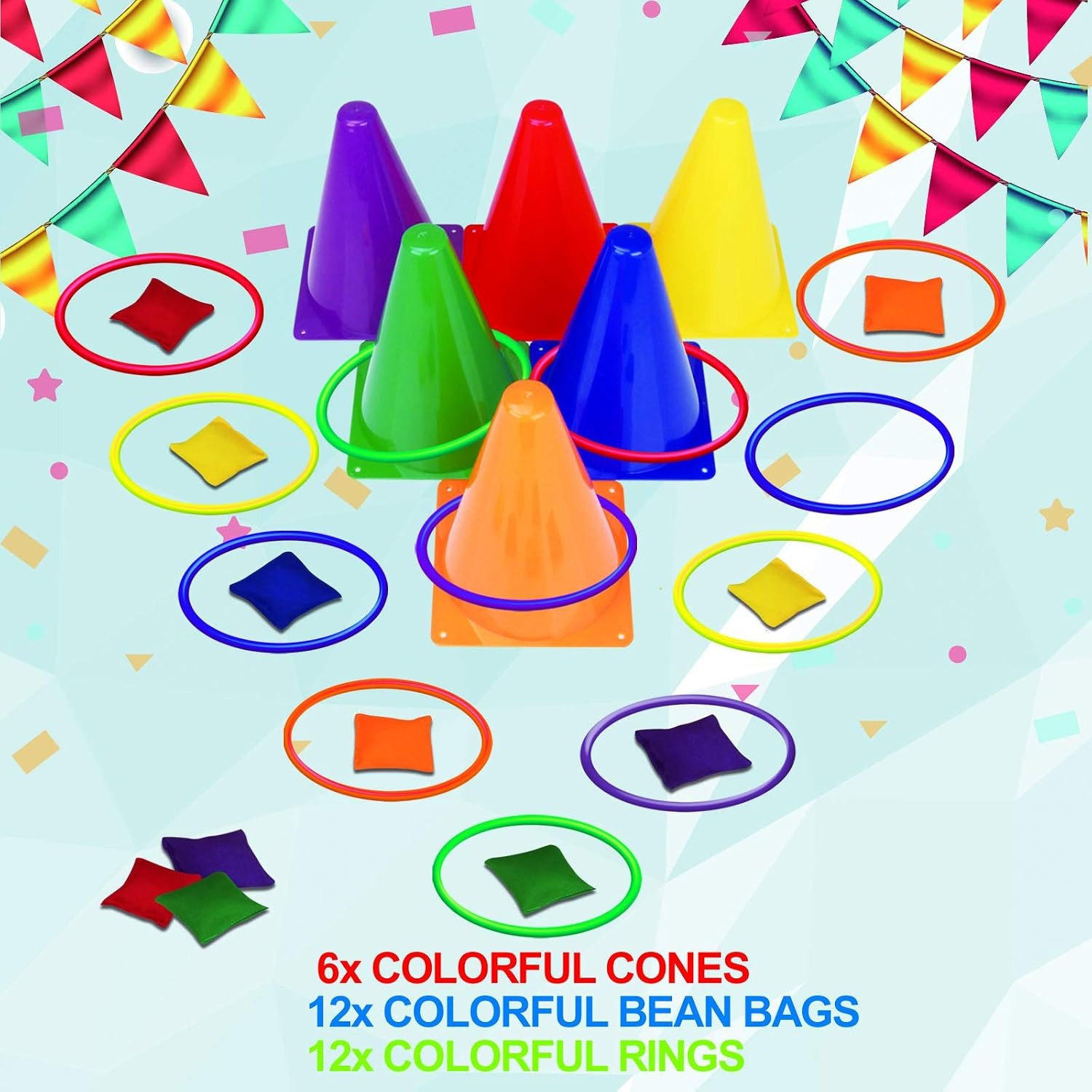
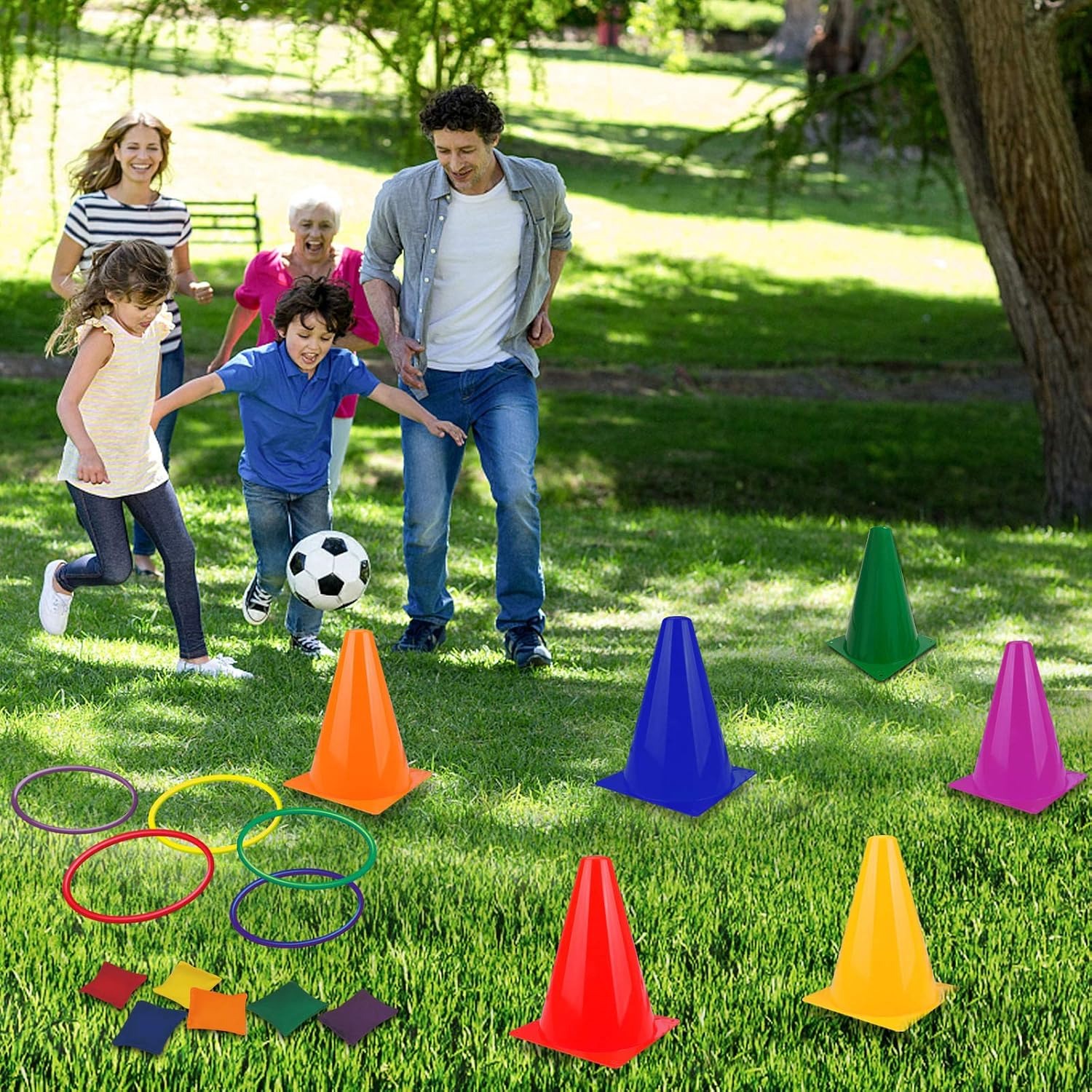
A carnival games set 3 in 1 gets around that by not being a single game at all. It is a box of parts. Twelve rings, twelve bean bags and six cones can become a ring toss game, a bean bag toss game, an obstacle course, a color sorting activity, a relay or a scoring competition between adults. When one version wears thin, you rearrange the cones and it becomes a different afternoon.
That flexibility is worth more than any single clever gimmick, because it is what keeps a toy in rotation over years instead of weeks.
How a toss game set actually works
The mechanics are simple, which is exactly why they hold up. Cones act as targets. Rings get thrown over them. Bean bags get thrown at or between them. Everything else is just rules you make up around that core idea.
The cones are small and light, which matters for two reasons. They can be knocked over without anyone getting hurt, and they can be moved in seconds. Moving the cones is how you change the difficulty. Three paces away is a preschooler game. Eight paces away is a game an adult will lose. You are not choosing a fixed difficulty level at the point of purchase, you are adjusting it every single time you play.
The bean bags are fabric with stitched seams, and they do the heavy lifting indoors. Unlike a ball, a bean bag lands where it falls. No bouncing into the kitchen, no rolling under the couch. That alone makes the difference between a game you allow inside and a game you do not.
The six colors (blue, green, orange, purple, red and yellow) are the quiet feature people underestimate. They give you a built-in scoring system without a scoreboard. Match the color for double points. Assign each player a color. Call a color and race to find it. For a three-year-old who cannot count to twelve yet, sorting rings by color is a genuine activity on its own.
Who it suits
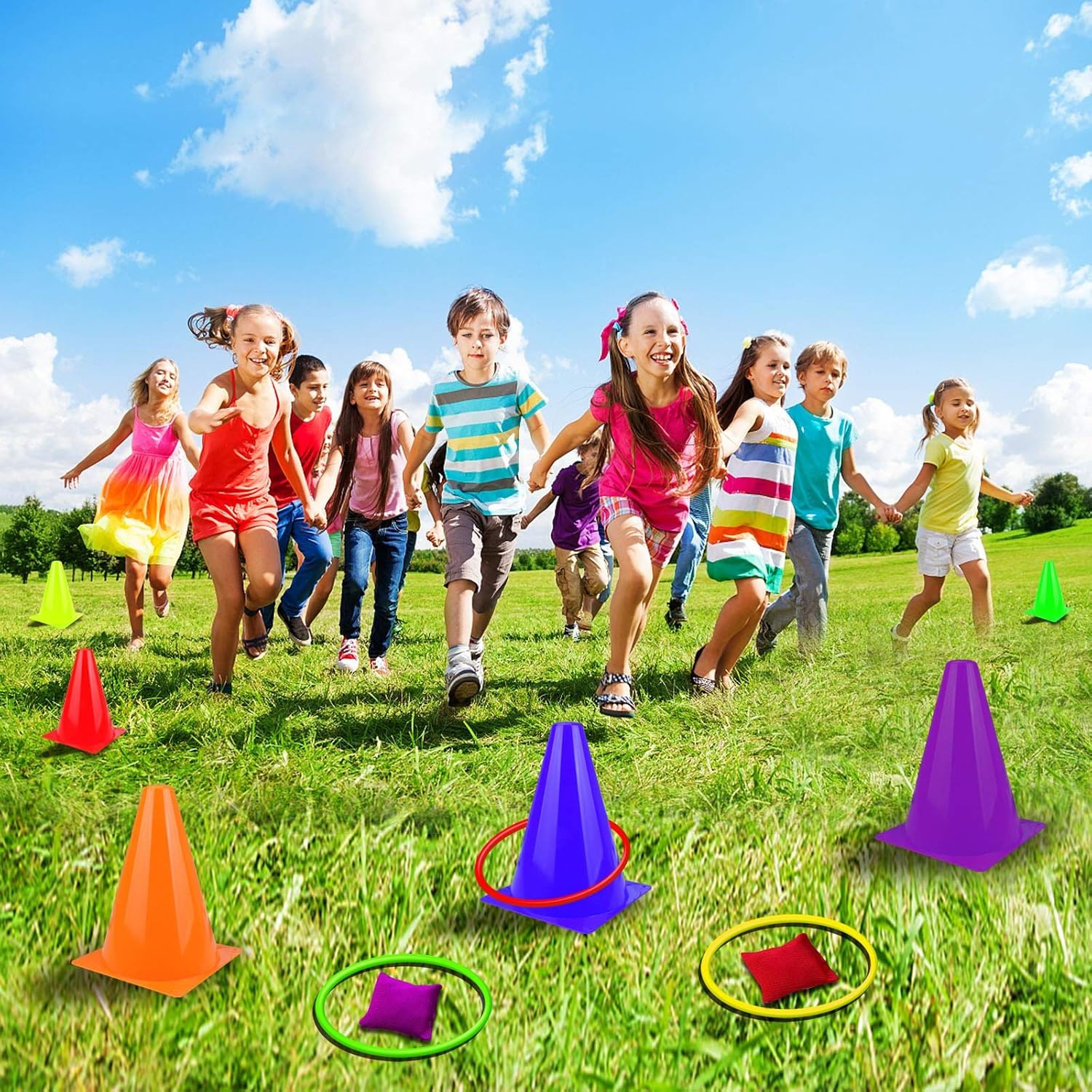
Parents hosting a birthday. This is the obvious fit. A toss game station is self-running once you explain the rules, and it absorbs a crowd of kids without needing an adult to referee every round. Set a throwing line with chalk or tape, hand over the rings, and watch.
Mixed-age families. A seven-year-old and a thirteen-year-old cannot usually share a game fairly. Here they can, because you can give one of them a shorter throwing distance without changing the game itself. Nobody has to feel patronised.
Teachers and group leaders. Sports days, fetes, holiday programs and classroom reward sessions all need activities that pack down into one bag. Being able to carry a whole station under one arm is a practical advantage, not a marketing line.
Families who travel. Camping, caravans, beach days, long stays with relatives. A toss set needs no power, no flat court and no charging. It works on grass, sand, concrete and carpet. The best camping games for families tend to be the ones that fit in the gap beside the esky, and this one does.
Anyone stuck indoors. When it rains for a week straight, a hallway turns into a lane. Soft bean bags, light cones, no broken windows.
Choosing the right set
If you are comparing toss games, a few things actually matter and a lot of things do not.
Piece count is the first. Twelve rings and twelve bean bags is a useful number. It means each player gets a decent turn before you have to walk down and collect everything, and it means losing one piece does not end the game. Sets with four or six rings run out of momentum fast.
Target count comes next. Six cones gives you enough to build a line, a triangle, a scatter pattern or two separate small targets. Fewer than that and your layout options shrink.
Material matters for where you can play. Plastic cones and fabric bags are light enough for indoor use and easy to wipe clean after a session on grass. Heavier or harder targets tend to get banished outside permanently.
Storage is the one most people forget. A set without a bag turns into pieces scattered through three rooms within two weeks. A carry bag is what makes the set portable and, more importantly, what makes pack-up a job a child can do without help.
Color variety is worth a look too. More colors means more scoring options and more ways to split teams. Six is plenty.
Setting up for a good session
Mark a throwing line. Chalk outside, painter's tape inside, a towel on the beach. Having a defined line removes about ninety percent of arguments.
Start the cones closer than you think. It is far better to move them back once kids are landing throws than to start too hard and watch confidence drain away in the first two minutes. For the youngest players, success in the first few throws is the whole game.
Give everyone the full set of rings or bags for their turn rather than taking one throw each. It keeps the pace up and cuts down on standing around.
Run short rounds. Three rounds of twelve throws beats one long round every time, because scores reset and nobody is out of it.
Vary the game after fifteen or twenty minutes. Switch from rings to bean bags, or turn the cones into a weaving course that players run before they throw. Novelty costs nothing here, since the parts are already in your hand.
Looking after it
Care is straightforward. Wipe the plastic rings and cones with a damp cloth and mild soap after any session that involved mud or sand, then dry them before they go in the bag. Trapped damp is the enemy of fabric bean bags, so let those air dry fully if they get wet, and spot clean rather than soaking them.
Keep the set out of long sun exposure when it is not in use. Bright plastic left baking on a deck for months will dull eventually. Stored in its bag in a closet or the boot of the car, it will stay bright.
Count the pieces back into the bag before you leave a park or beach. This sounds obvious and is the single thing that keeps a set complete. Make it the last game: whoever finds the most pieces wins.
Do not leave the set outdoors overnight through rain or frost. It is not built to be weatherproof storage furniture, it is built to be carried.
A few game ideas to start with
Color match toss. Only rings landed on a matching cone count. Harder than it sounds and great for older kids.
Knockdown. Set the cones in a triangle and score points for every cone a bean bag knocks over. Younger players love this one because it is loud and visible.
Relay weave. Space the cones out, have each player weave through them, then throw a ring from the far end. Burns energy, which is sometimes the real goal.
Target ladder. Place cones at increasing distances and assign them one, two and three points. Players choose their risk.
Quiet color sort. For preschoolers, just the rings and the cones, matching colors, no scoring. It is a calm activity that uses the same box of parts.
The short version
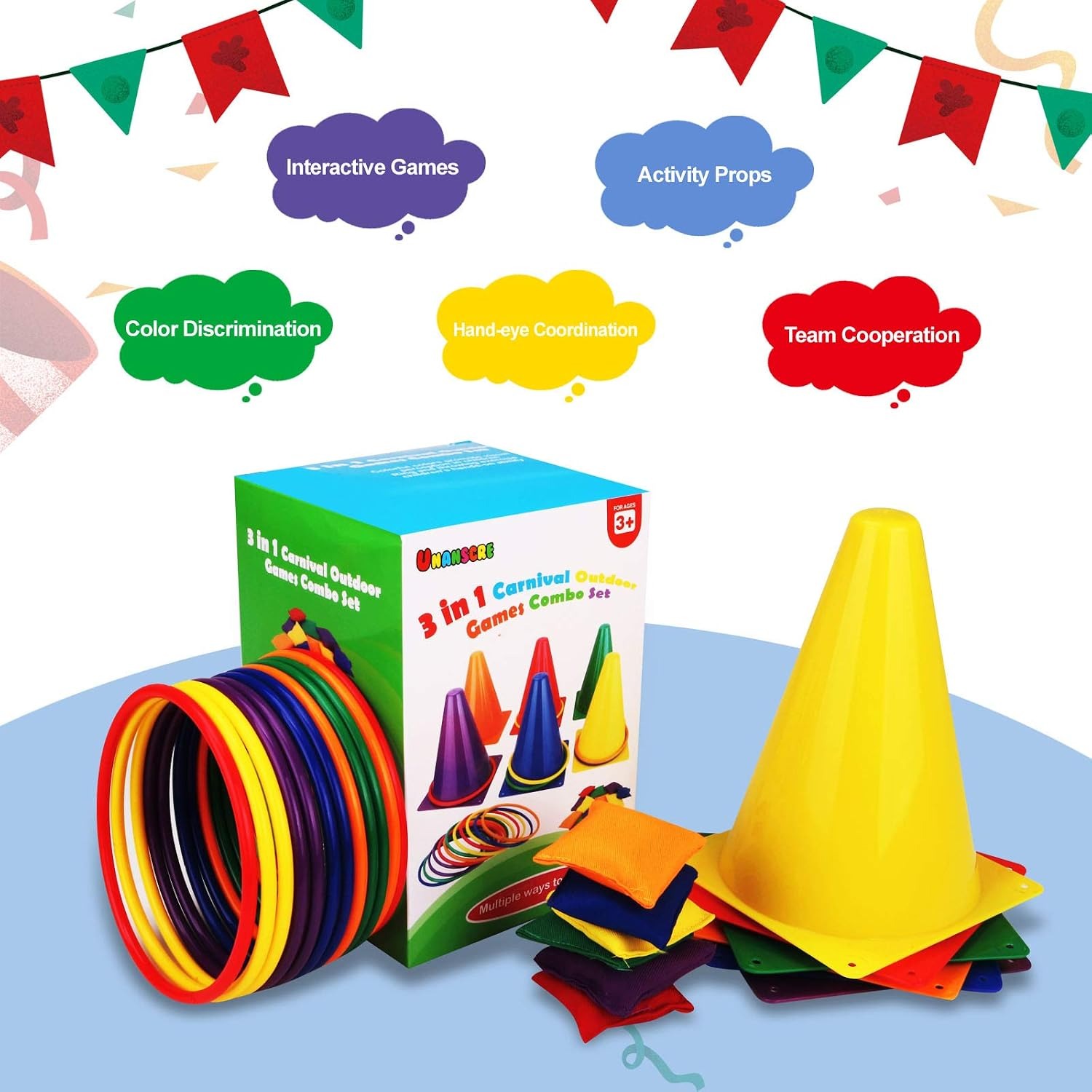
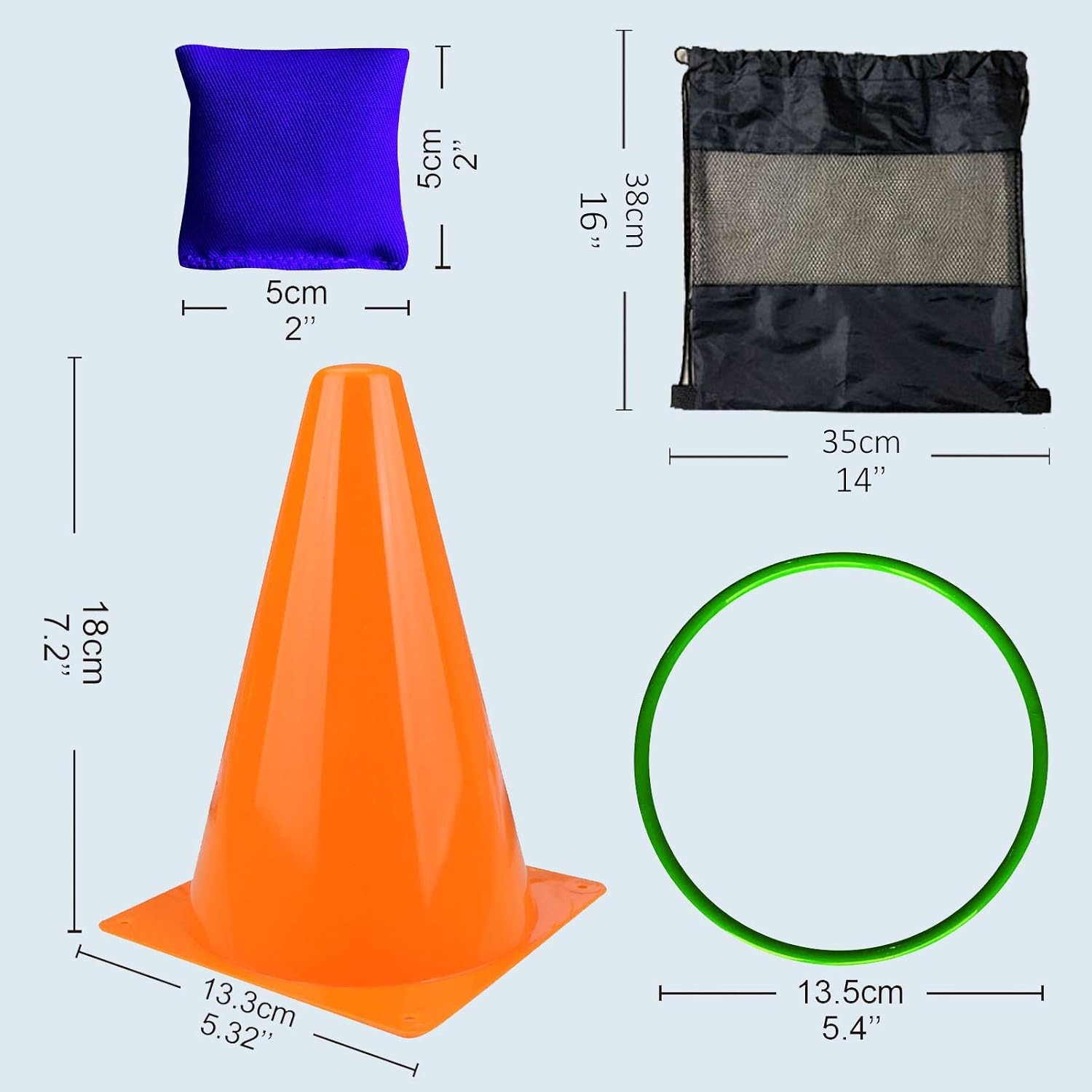
This is a 31-piece set with 12 rings, 12 bean bags, 6 cones and a carry bag, in six colors. It plays indoors and out, scales from preschoolers to adults by moving the throwing line, and packs away in a couple of minutes.
Buy it if you want a party activity that sets up fast and survives being used more than once. Skip it if you want a single structured game with fixed rules and a scoreboard, because this is deliberately the opposite of that.
Weight, packed dimensions and country of origin are not listed in our maker's details, so if those details are important to your order, ask us before you buy and we will check.