
The complete guide
Choosing a First Xylophone for a Young Child
The problem with most first instruments
Walk down the toy aisle and you will find a lot of things that make noise. Buttons that trigger a tinny recording. Drums with a plastic head. Shakers that do one thing. Children love them for about two weeks, and then the novelty wears off, because none of those toys let a child make something.
A tuned instrument is different. The moment a child works out that hitting the keys in a certain order produces a song their grandmother recognizes, something clicks. They are not pressing a button that plays a song. They are playing it. That gap between triggering sound and making sound is the whole reason tuned percussion has stayed in nursery classrooms for the best part of a century.
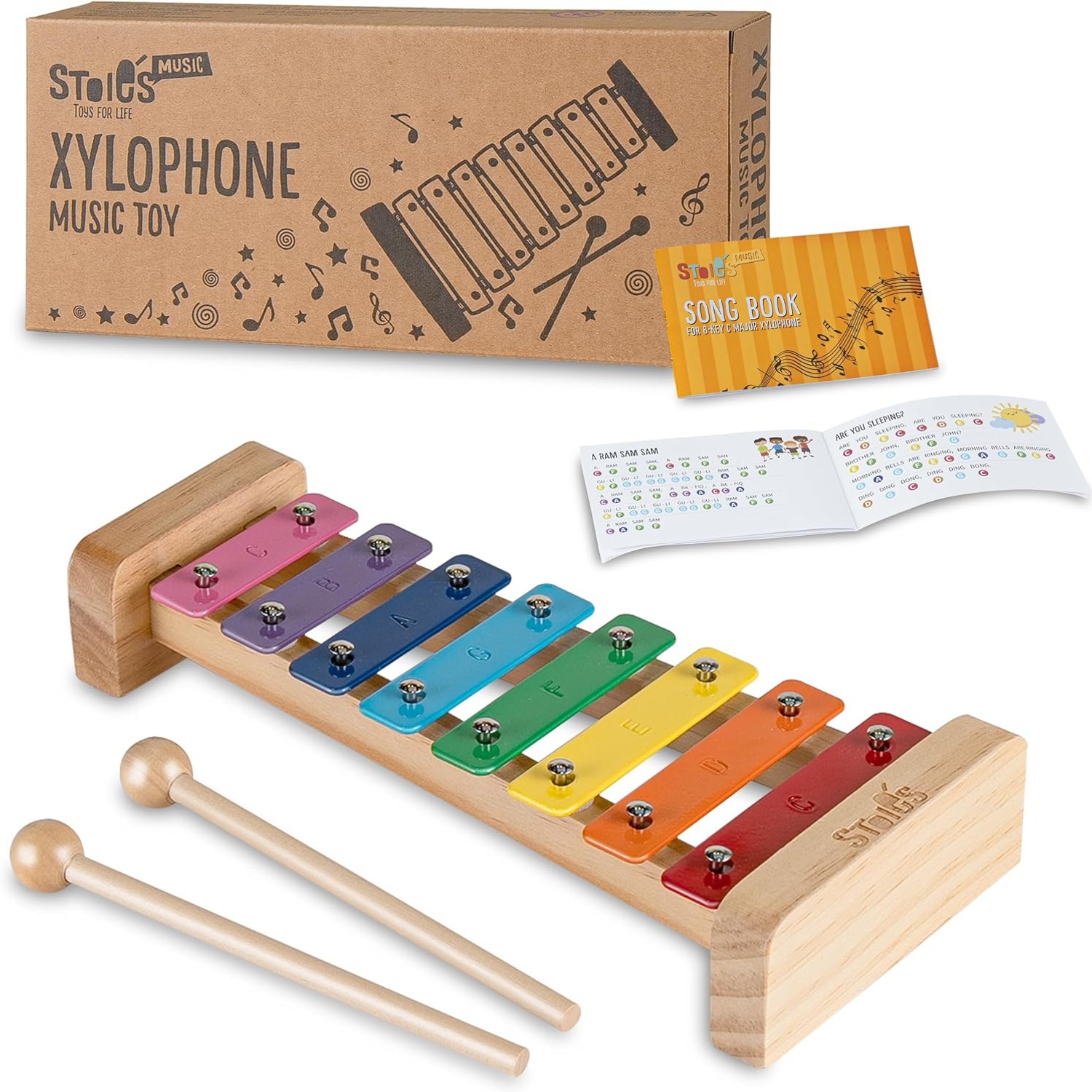
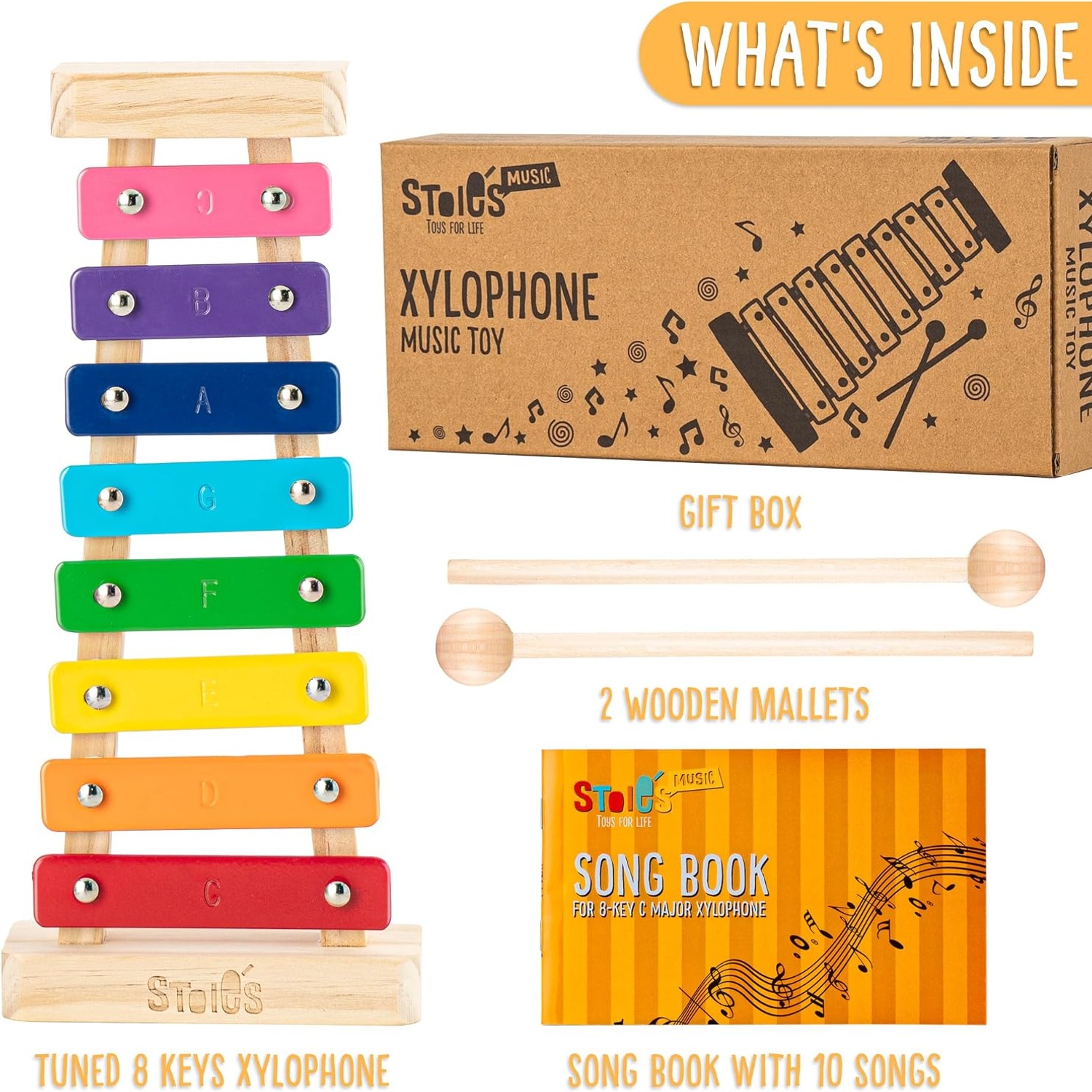
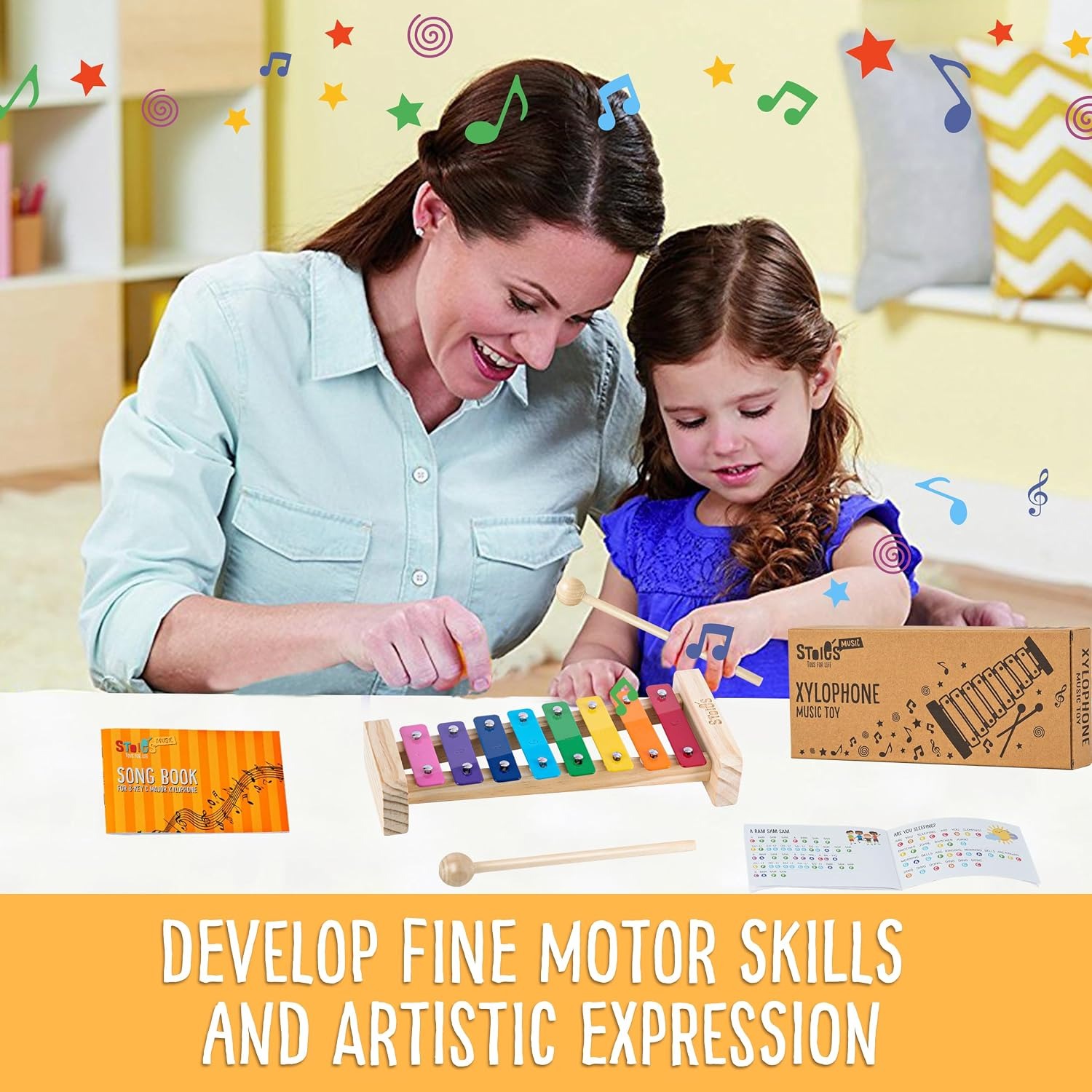
That is what this rainbow xylophone 8 note set is for. Eight wooden keys, tuned to C major, two mallets and a songbook with ten tunes in it. Nothing electronic, nothing to charge, nothing to learn before you start.
How an eight-note xylophone works
Each key is a bar of wood cut to a specific length. Longer bars vibrate slower and sound lower. Shorter bars vibrate faster and sound higher. Lay them out in order and you have a scale, which is why a xylophone always looks like a staircase.
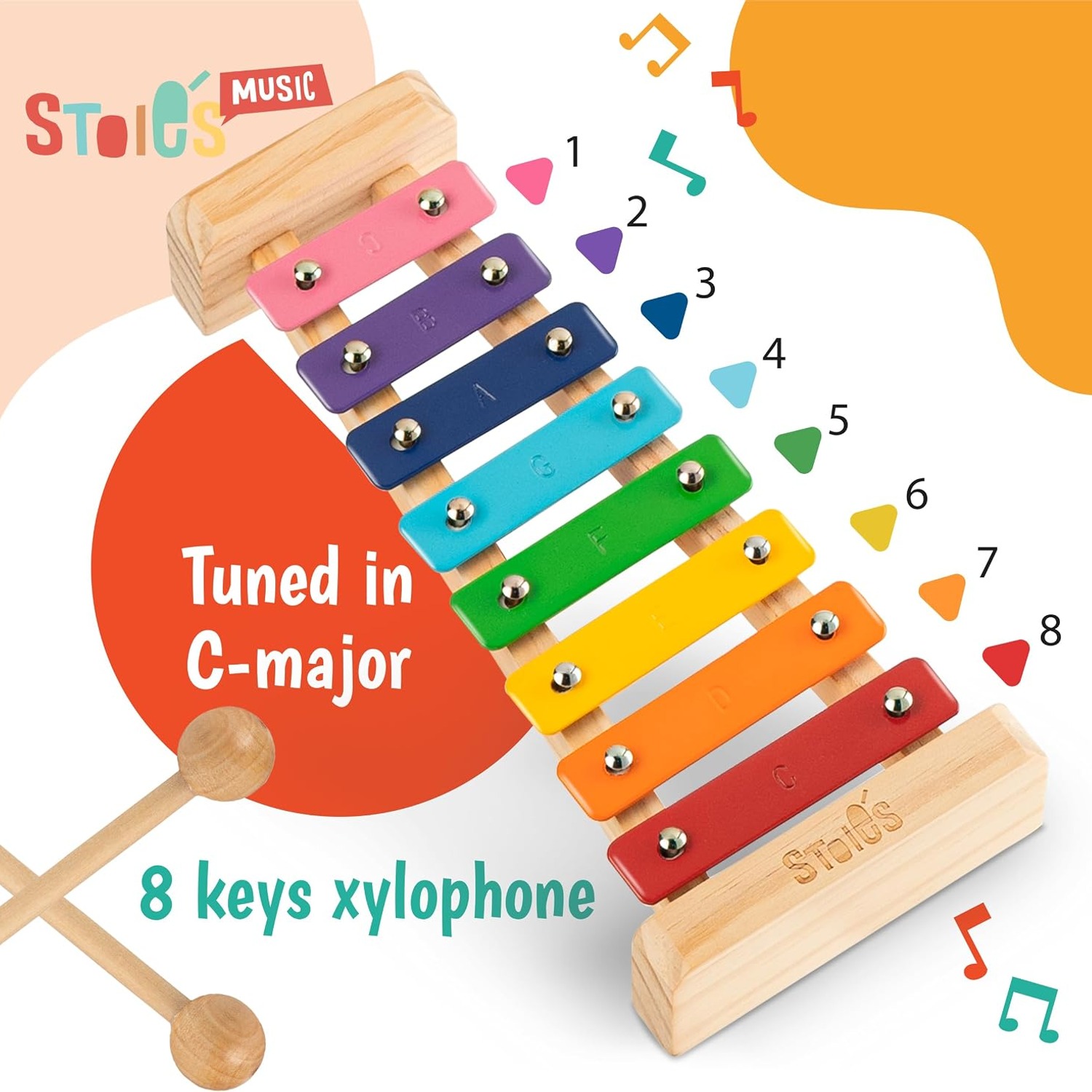
The eight keys here cover the C-major scale, running from one C up to the next. That is the scale most children's songs live in. Twinkle Twinkle, Happy Birthday, Mary Had a Little Lamb, Frère Jacques, all of them sit comfortably inside an octave of C major. It is not an accident that this is the standard layout for a best 8 note xylophone aimed at preschoolers. Eight notes is enough for real songs and few enough that a three-year-old does not feel lost.
Wooden bars give a rounder, shorter sound than metal ones. A metal kids glockenspiel rings on after the strike, which is lovely but can turn muddy when a child plays fast. Wood is drier and stops sooner, so quick playing stays clearer. It is also, frankly, easier to live with in a small flat.
What the colors are actually doing
The rainbow finish looks like decoration. It is really a teaching tool.
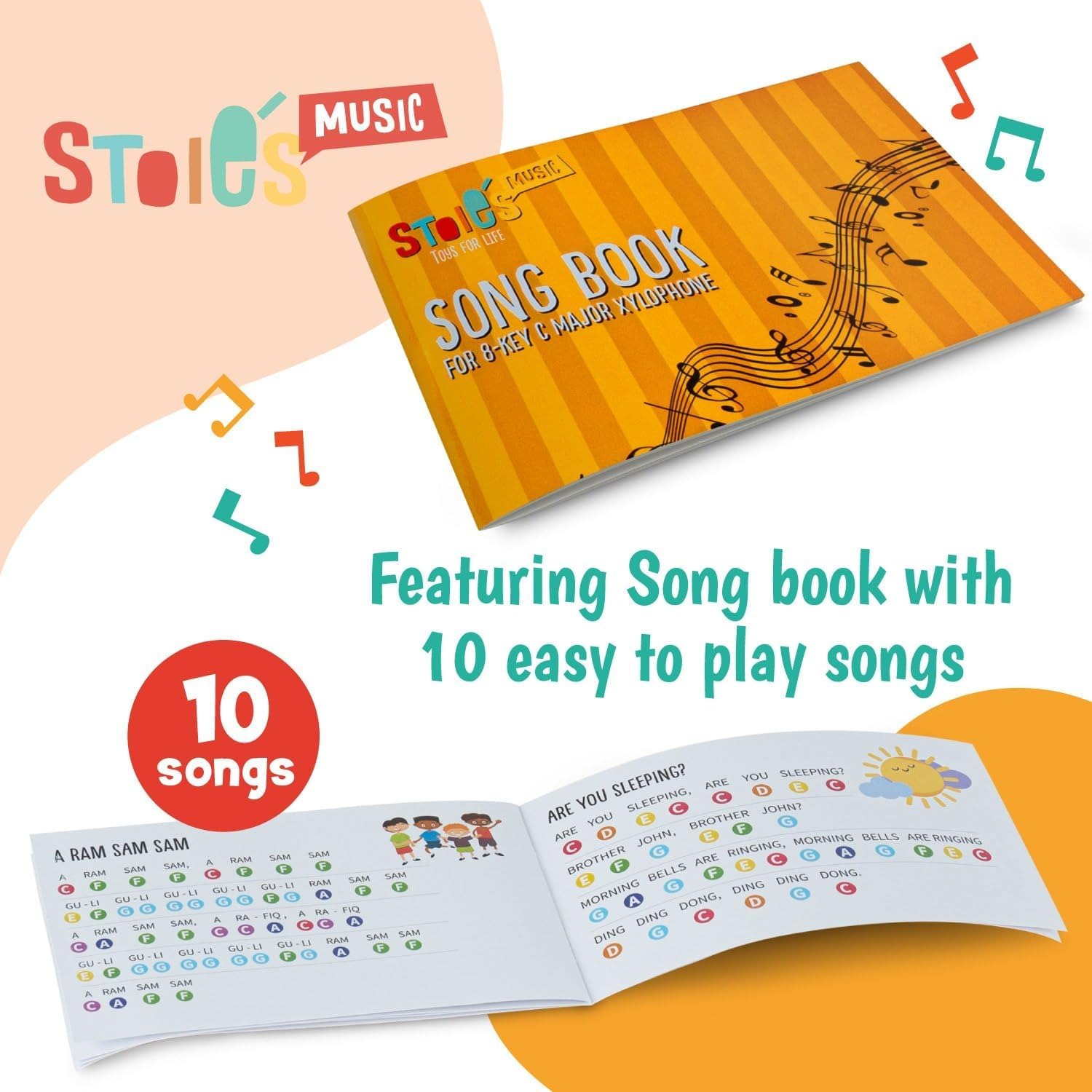
A three-year-old cannot read notation. They can, however, recognize red and green instantly. By giving each note a color, you hand a young child a way to talk about pitch before they have the vocabulary for it. The songbook builds on this, so a beginner can follow a tune by color and hear a real melody come out on the first try.
There is a longer-term benefit too. A child who has spent a year matching colors to notes already understands that notes are distinct, ordered things. When they later sit at a piano or pick up a recorder, that idea is already in place. Teachers who use a best color coded xylophone in class often say the transfer to written notation is smoother for exactly this reason.
Who it suits
The manufacturer recommends ages 3 and up, and the age range is described as preschooler. In practice the sweet spot is roughly three to seven.
A three-year-old will mostly bash. That is fine and it is the point. They are learning that their arm movement causes a sound, and that different keys sound different. Give them a few months of that before you expect any tune.
Four and five is where the songbook starts earning its place. Children at this age can follow a sequence of colors and will play the same song twenty times in a row, which is how learning works whether we like it or not. This is the age where a best musical toy for 3 year olds becomes a genuine learning object rather than a noise generator.
Six and up tends to go one of two ways. Some children start working out tunes by ear, which is a real skill worth encouraging. Others use it alongside early piano lessons to try out things they have been taught. Either way the instrument keeps earning its shelf space.
It also works well in groups. The small frame and light weight make it easy to hand round a circle, which is why a best classroom music instrument of this type shows up in so many preschool rooms.
How to choose between options
A few things actually matter when you are comparing children's xylophones.
Tuning comes first. Plenty of cheap sets are not tuned to any scale at all, so you cannot play a song on them. Check that the listing names a scale. This one specifies C major.
Number of keys is next. Fewer than eight and you cannot complete an octave, which rules out most songs. Many more than eight and a small child gets overwhelmed and the frame gets too wide for little arms.
Then look at what is included. Two mallets rather than one makes a real difference, because it means an adult or sibling can play alongside rather than hovering. A songbook matters too, since it gives a beginner a destination. Without one, most children run out of ideas after the scale.
Size and weight sound like minor details until a child wants to take the instrument to the next room. At 9.84 by 4.72 by 1.97 inches and 0.2 kg, this one travels. That is part of why it works as a best travel size xylophone for car journeys and holidays with relatives.
Finally, material. Wood feels better in the hand and generally survives enthusiastic play, which is why a best wooden xylophone for preschoolers usually outlives the plastic alternative. The exact wood type is not specified by the maker, so we are not going to make a claim about it.
Looking after it
Wooden instruments want very little from you, but they do want consistency.
Wipe the keys with a soft, slightly damp cloth when they get sticky, then dry them right away. Never soak it, never put it near a sink full of water, never anywhere near a dishwasher. Wood swells, and a swollen bar does not ring properly.
Keep it away from radiators, heated floors and sunny windowsills. Heat dries wood out over months and can affect how the bars sound. A shelf in a normal room is ideal.
Check the screws or cords holding the keys every few months, especially if the instrument gets heavy use. A loose bar buzzes instead of ringing, and tightening it usually fixes the problem in under a minute.
Store the mallets with the instrument. A xylophone with no mallets gets played with a spoon, and a spoon does not sound nearly as good.
Getting more out of it
A few simple games keep a child engaged past the first week.
Play a short pattern and ask them to copy it. Start with two notes, build to four. This is call-and-response, and it trains listening more effectively than any app.
Sing a song while they play the scale underneath. It does not need to match. The point is that they associate playing with singing, which most children find enormously satisfying.
Ask them to find a note by color while their eyes are closed, then check. Silly, but it builds the color-to-position map fast.
And then leave it out. An instrument on an open shelf gets played. An instrument in a closet does not. That one decision probably matters more than anything else in this guide.
The short version
This is a small wooden xylophone with eight keys tuned to C major, finished in rainbow colors, supplied with two mallets and a songbook of ten children's songs. It is recommended for ages 3 and up, measures about 9.84 by 4.72 by 1.97 inches and weighs around 0.2 kg.
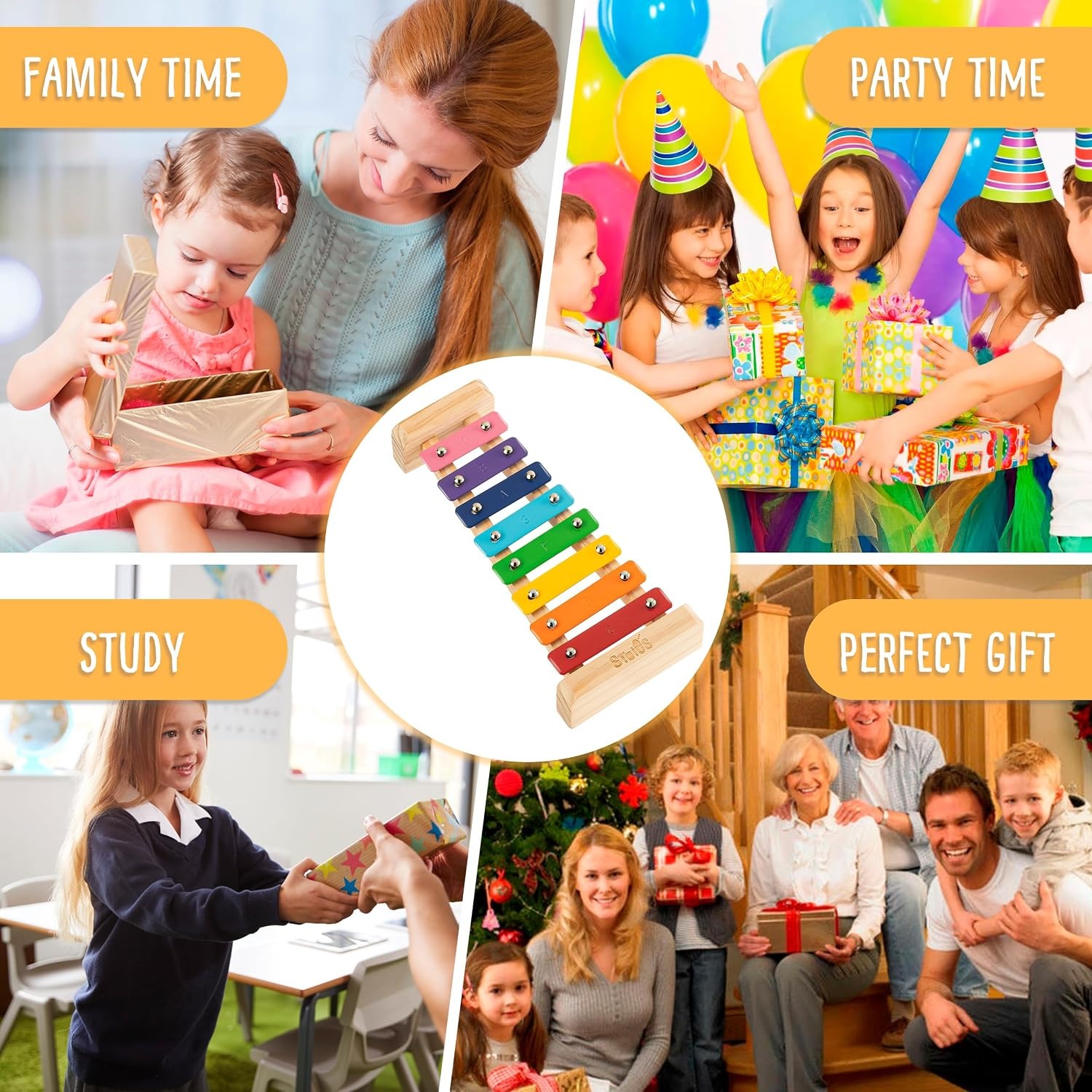
It suits a child who is ready to make music rather than just make noise. It suits a preschool room that needs something light and quick to share. And it suits anyone who wants a gift that works the second the box is open, with no batteries and no setup.
If you are unsure whether it fits your child's age or stage, ask us. We would rather point you somewhere else than sell you the wrong thing.