
The complete guide
How to Choose a Wooden Tool Set for a Three to Six Year Old
The toy that solves the "I want to help" problem
Somewhere around their third birthday, most children stop being content to watch. You are putting up a shelf and there is a small person at your elbow asking for the screwdriver. You are tightening a bike seat and a hand reaches in. The instinct is real and it is good, but a live drill and a preschooler do not mix.
A kids wooden tool set exists for exactly this gap. It gives a child their own hammer, their own wrench, their own box, and a job that is genuinely theirs. The screws turn. The blocks fit together. Something that was flat becomes something that stands up. That is the whole appeal, and for a preschooler it is enormous.
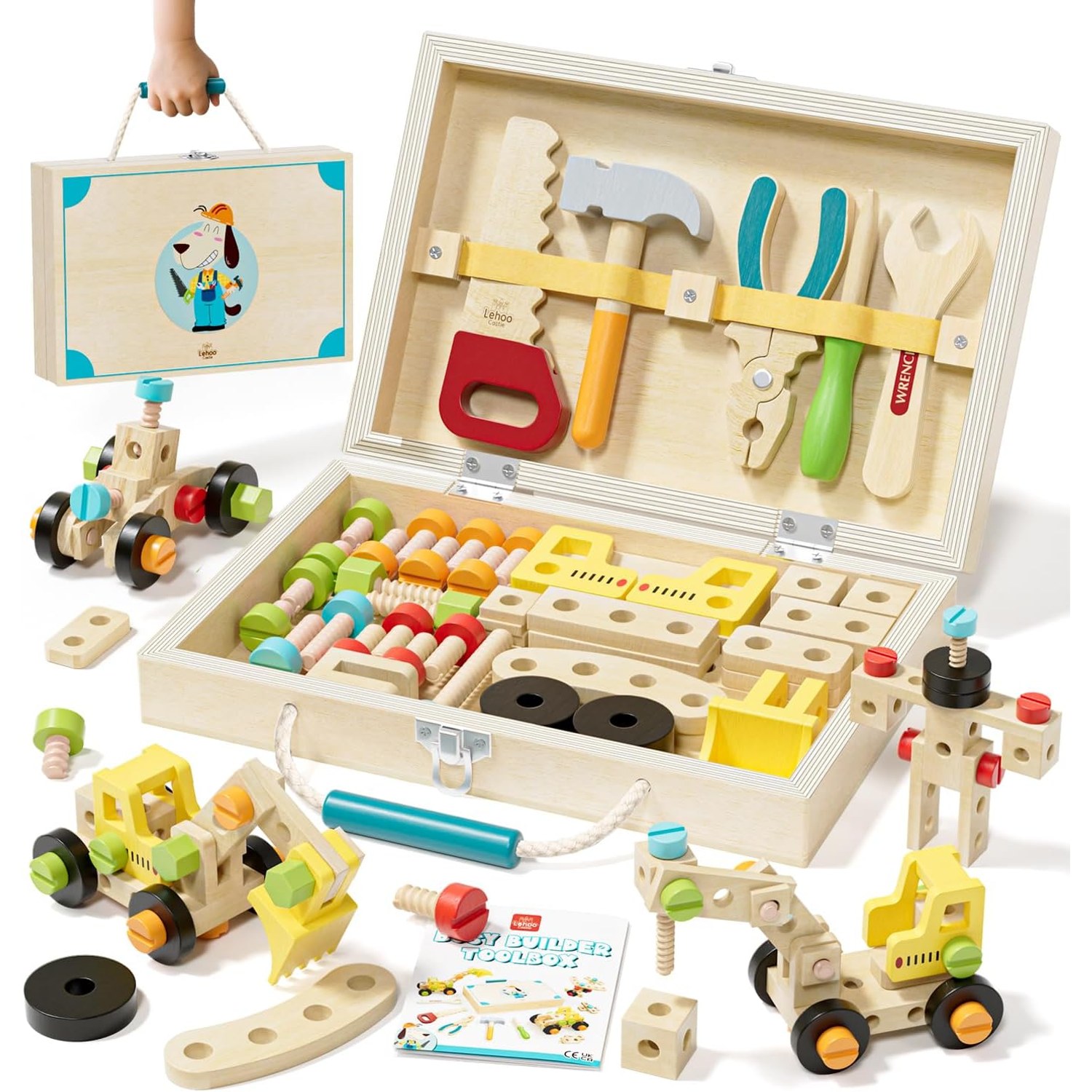
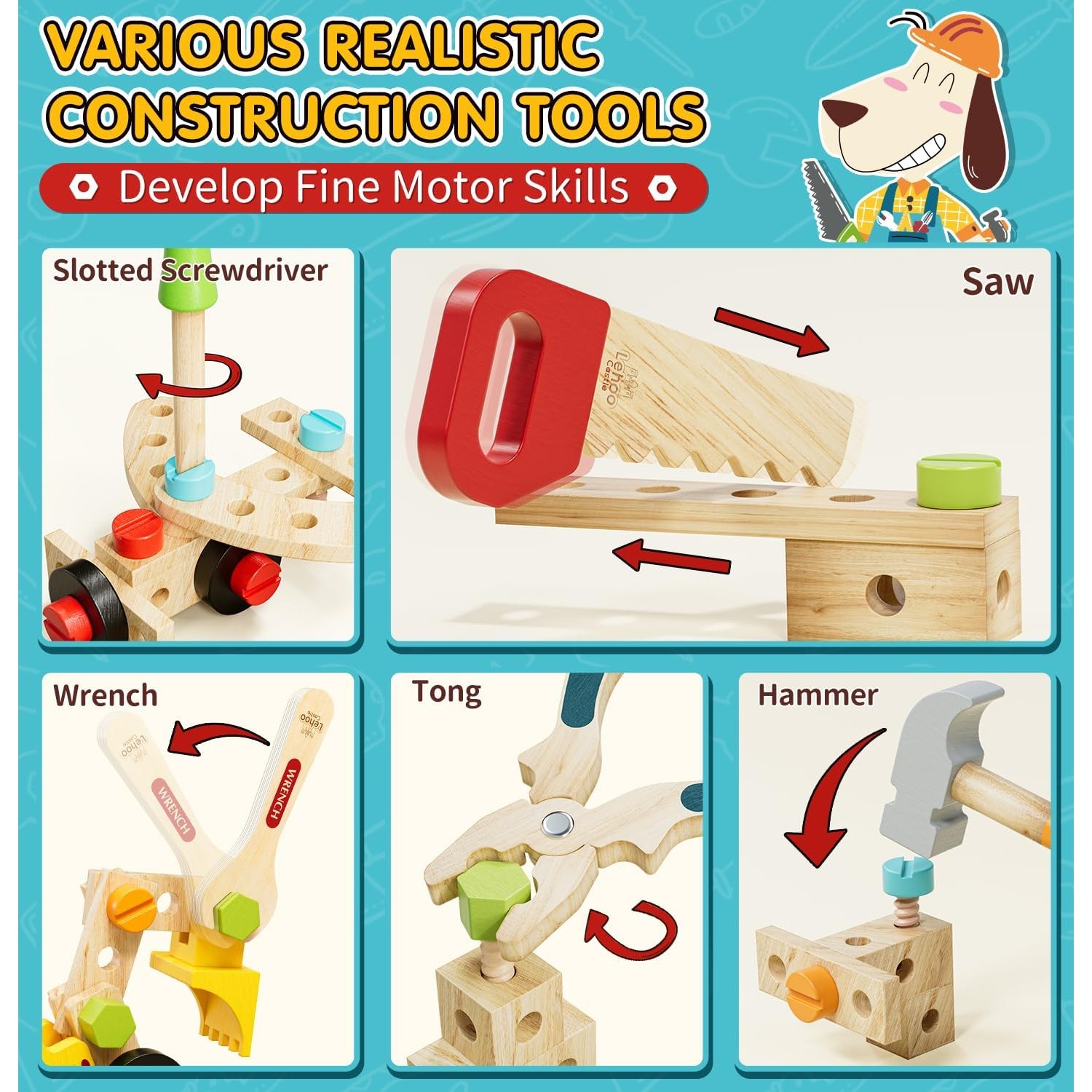
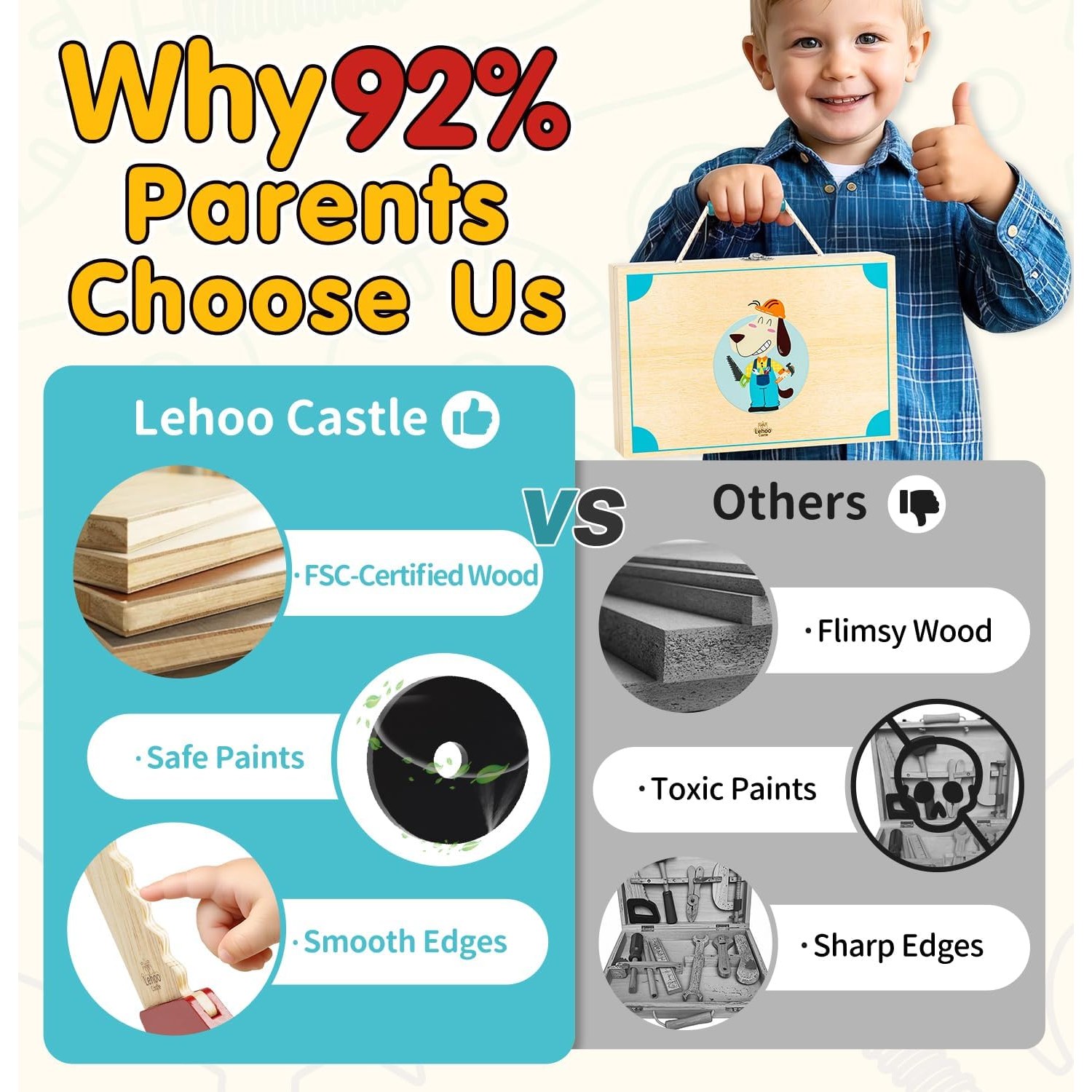
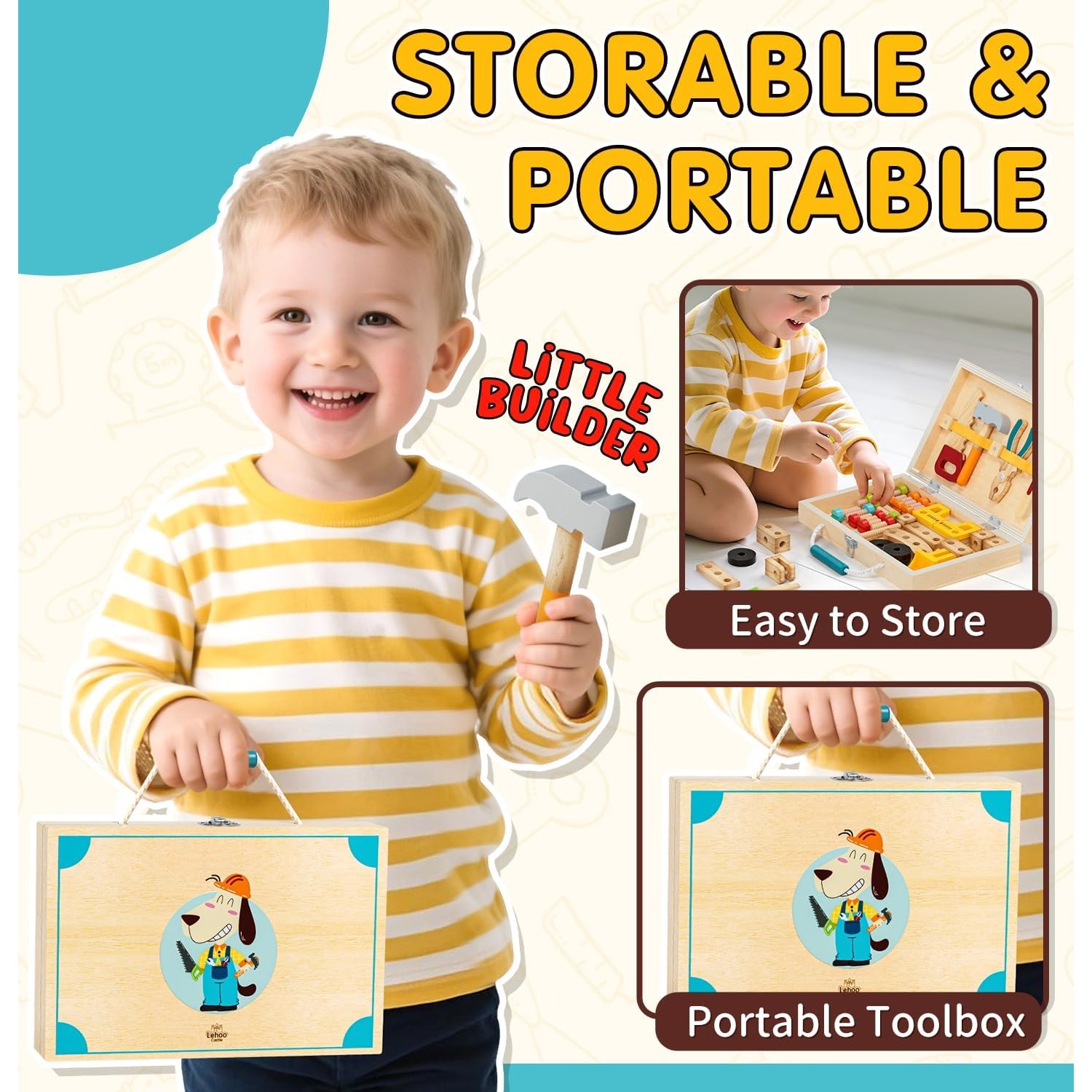
This particular set contains 49 pieces: an excavator, 19 screws, 16 wooden blocks, a hammer, wrench, screwdriver, tongs and saw, all packed into a toy tool box with a handle and a hasp. It is rated for ages three and up, with the manufacturer pointing to 36 months to 6 years as the main window.
How a wooden tool kit actually works
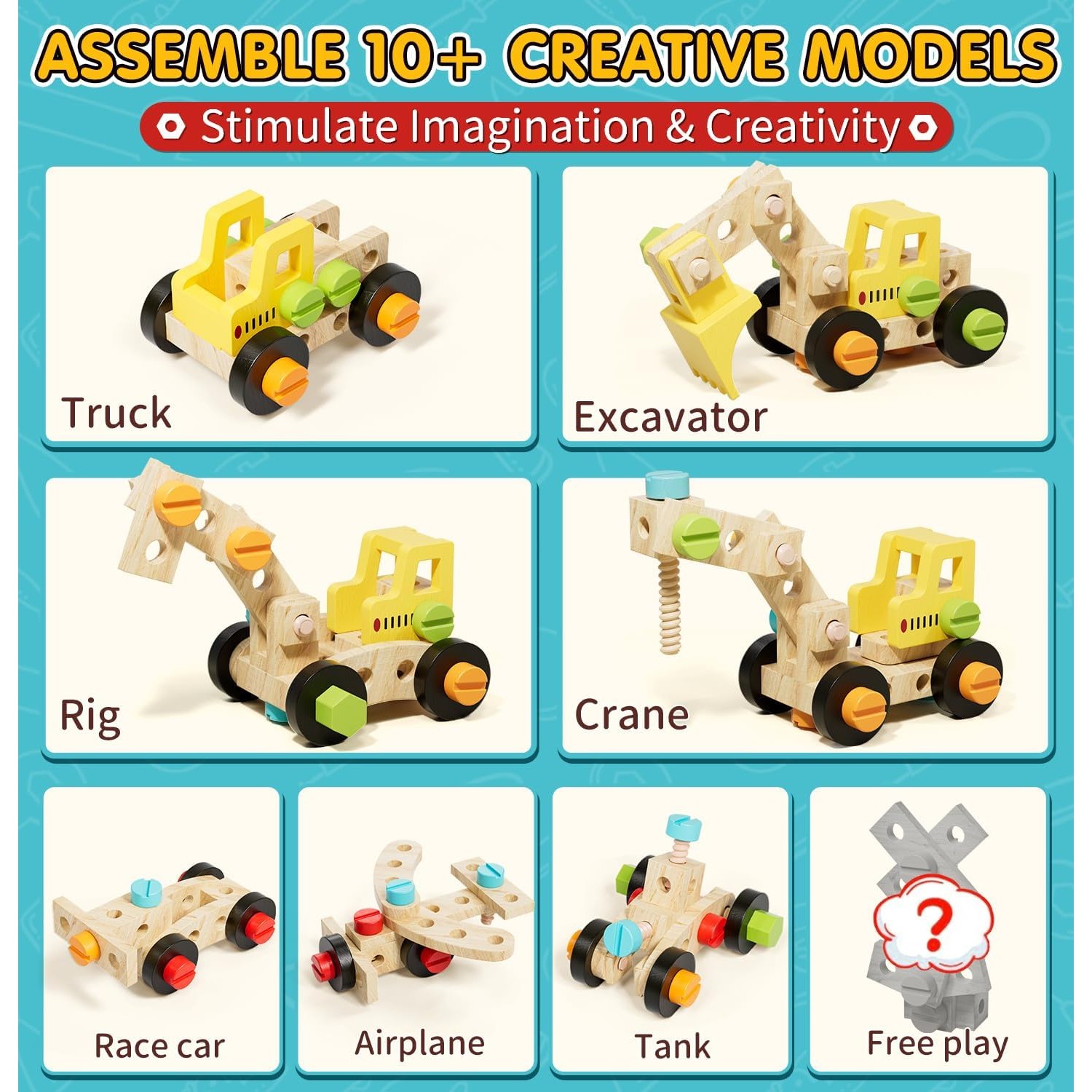
The mechanics are simple and that is deliberate. Blocks have holes. Screws go into the holes. Tools help the screws get there. Everything else, the excavator, the random tower, the vehicle that only exists in your child's head, is built on top of that one idea.
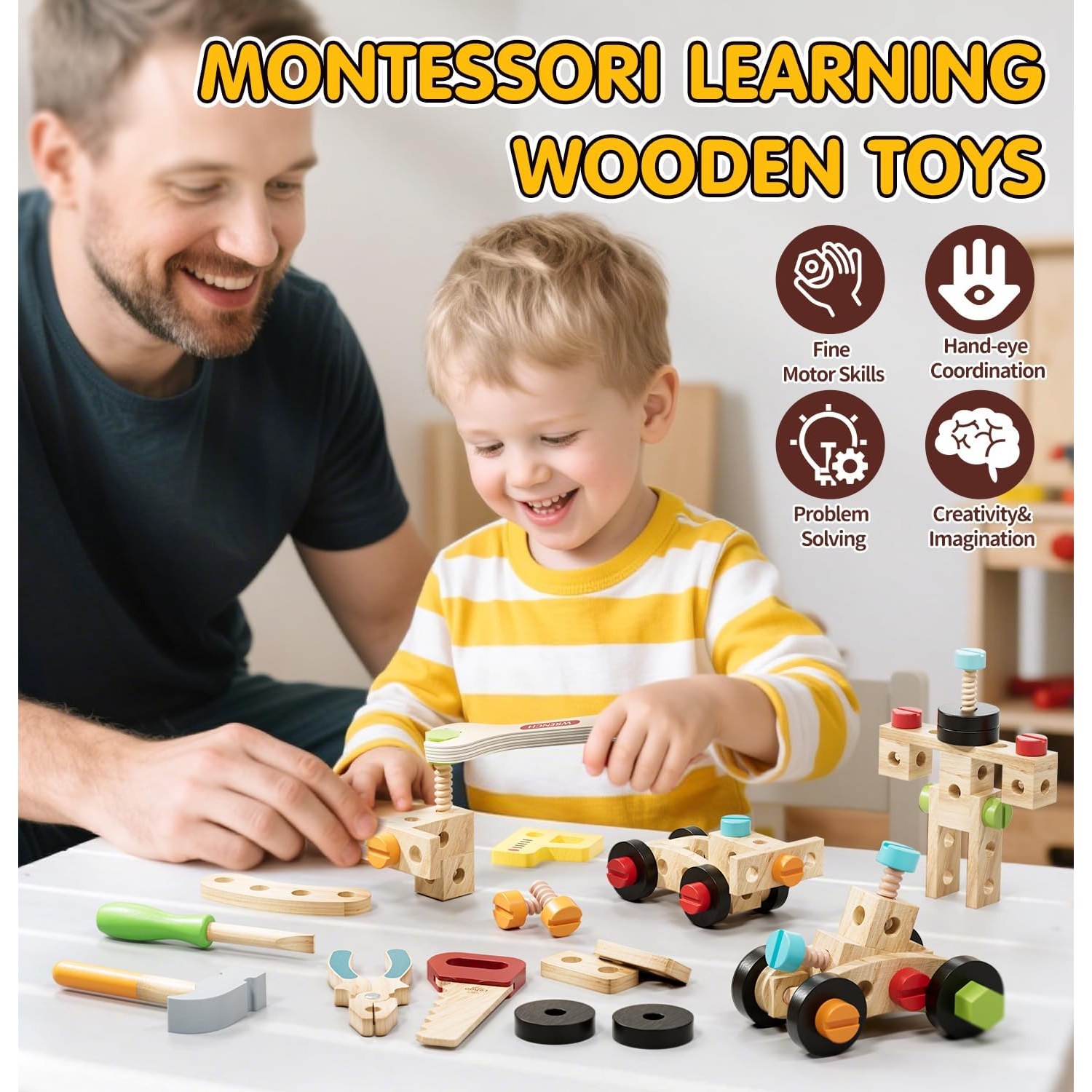
What looks easy to an adult is hard work for a three year old. Holding a block steady with one hand while twisting a screw with the other requires both hands to do separate jobs at the same time. That is called bilateral coordination, and it is one of the building blocks of later skills like cutting with scissors, doing up buttons and holding a pencil properly.
Then there is the eye-hand side of it. Lining a screw up with a hole takes aim, small adjustments and a willingness to try again when it slips. Children do this dozens of times in a session without noticing they are practicing anything. That is the quiet strength of a good montessori tool toy. The learning is baked into the activity rather than bolted on.
Tool recognition comes along for the ride. After a week or two, a child knows which one is the wrench and which one is the saw, and they will tell you so at length.
Who it suits
The strongest fit is a child between three and six who likes making things, taking things apart, or copying what the adults around them do. If your child already lines up objects, stacks, sorts or constantly asks what a tool is for, this is going to land well.
It also suits households that have had enough of noisy toys. This set is manual. No batteries, no speaker, no app. On a long car trip or in a holiday rental it is a quiet, self-contained activity.
Two groups should think carefully. Children under three should only use it with an adult sitting with them, because the screws and smaller blocks are small parts. And children who are already into complex construction kits with hundreds of tiny pieces may find this set simpler than they want, though plenty of six year olds still enjoy the role play side of it.
For a child who has never had a construction toy before, this is a sensible first step. It is one of the better options among wooden building sets for 3 year olds precisely because it does not overwhelm.
How to choose between tool sets
Piece count against age. More pieces are not automatically better. A three year old faced with 200 parts often just tips the box out and walks off. Around 50 pieces is a workable number for the preschool years, which is where this set sits.
Does it include a case? This matters more than people expect. A set without a container becomes a set spread across three rooms within two weeks. A pretend play tool box with a handle and a closure solves storage and gives packing up a clear ending.
Fixed model or open build? Some kits only make one thing. Once it is built, interest drops off. Look for sets where the pieces come apart and recombine, because the second, third and tenth build are where the value is.
Wood or plastic? Wood has weight and texture that children respond to, and it handles enthusiastic treatment well. It also looks better left out on a shelf. Plastic is lighter and more water tolerant. Both are valid, but if you are reading about an educational wooden toy, you have probably already made that call.
Tool size. Handles need to fit a small fist. Tools scaled down from adult sizes are frustrating to hold, and frustration ends play faster than anything else.
Setting it up for success
Start on the floor, not a table. Pieces roll, and chasing them under a chair is part of the deal. A rug or a mat keeps things contained and gives a clear play zone.
Resist the urge to build it for them. The strong temptation, especially with the excavator, is to assemble it yourself and present the finished article. Do that and you have taken the best part. Instead, show one screw going in, then hand the screwdriver over and let the mistakes happen.
Expect the first few sessions to be clumsy. Screws will cross-thread, blocks will fall over, and there may be some noise about it. That is the skill forming. Within a few weeks the same child will be doing it without looking.
Sorting counts as play too. Some children will spend a whole session simply putting every screw in one place and every block in another before they build a thing. Let them. Sorting is real cognitive work.
Looking after it
Wipe the pieces with a slightly damp cloth when they need it and dry them right away. Never soak wooden parts or put them in a dishwasher, since water will swell the timber and lift the finish.
Keep the set in its box between uses. The hasp is there for a reason, and a closed box means the screws stay with the blocks instead of turning up in the vacuum cleaner.
Store somewhere dry and out of direct sun. A spot by a window or next to a heater will dry wood out over time. Normal indoor conditions are fine.
Check the pieces every so often for splits, chips or rough edges, especially after a long stretch of heavy use. Anything damaged should come out of circulation.
If you take the set outdoors, and it is listed for outdoor use, bring it back in the same day. Dew overnight is enough to do damage.
The short version
This is a 49-piece wooden construction and pretend play set for children aged three to six, built around five chunky hand tools, 19 screws, 16 blocks and an excavator, all stored in a carry case with a handle and hasp. It runs on nothing but enthusiasm, it works indoors and out, and it weighs about 0.68 kg.
It earns its place because the play is active rather than passive. A child is gripping, turning, aiming, planning and rebuilding, and every one of those actions is doing something useful for their hands and their head. The tool box means it gets packed away rather than lost.
If you have a preschooler who keeps reaching for your tools, this gives them a set of their own and buys you back the use of yours.