


The complete guide
Choosing a Pirate Treasure Dig Kit, A Practical Buyer's Guide
The problem with most "educational" toys
You buy something that promises learning, your child opens it, and the whole thing is over in eleven minutes. The box goes on a shelf. Nobody mentions it again.
The reason is usually simple. There is nothing to do. The toy hands over everything at once, so there is no gap between wanting something and getting it, and that gap is where attention lives.
A dig kit works differently because it withholds. The treasure is real and it is right there, but it is locked inside a block of gypsum and the only key is patience. A child who wants the gold doubloon has to earn it with twenty minutes of careful chipping. That is not a gimmick. That is the entire mechanism.
How this kit actually works
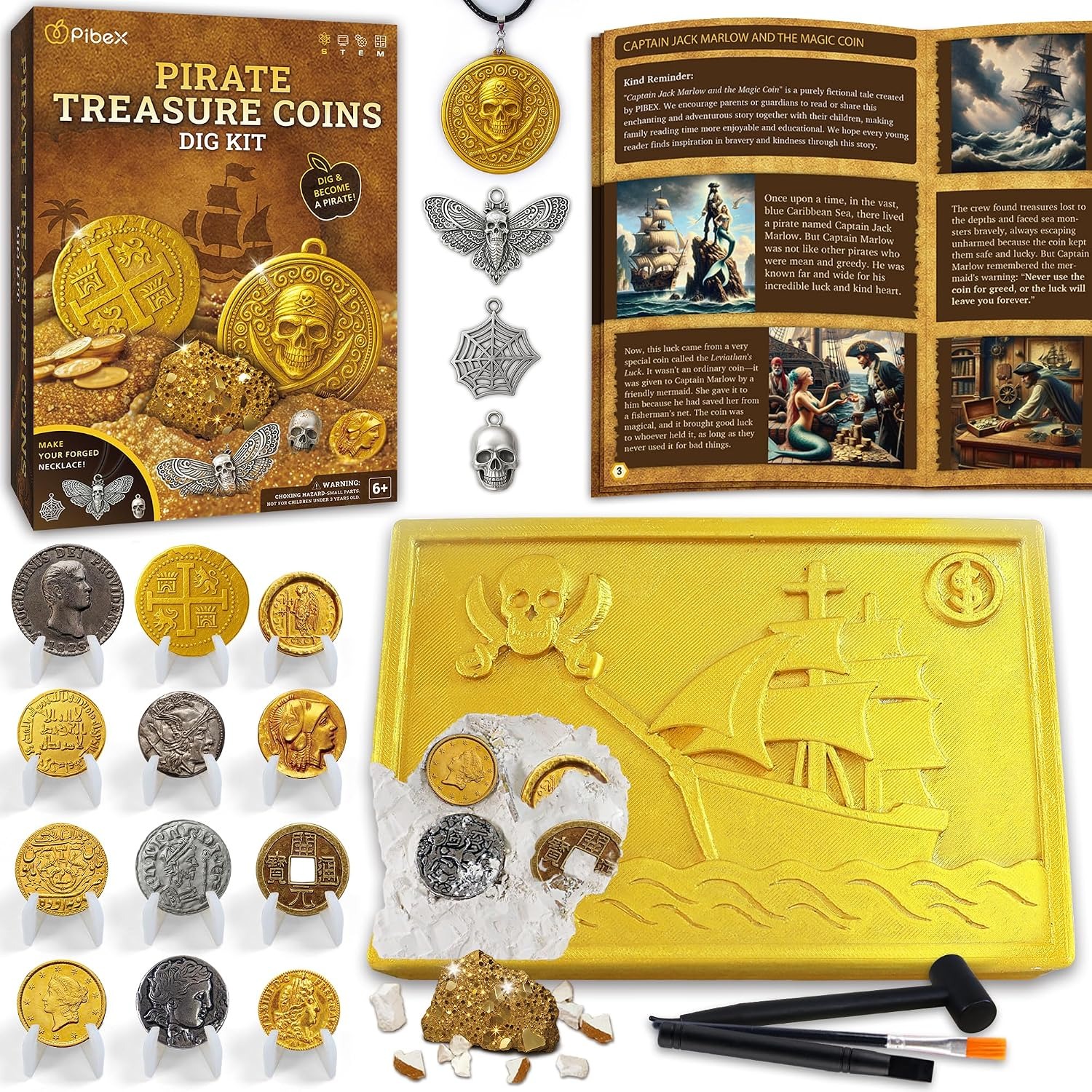
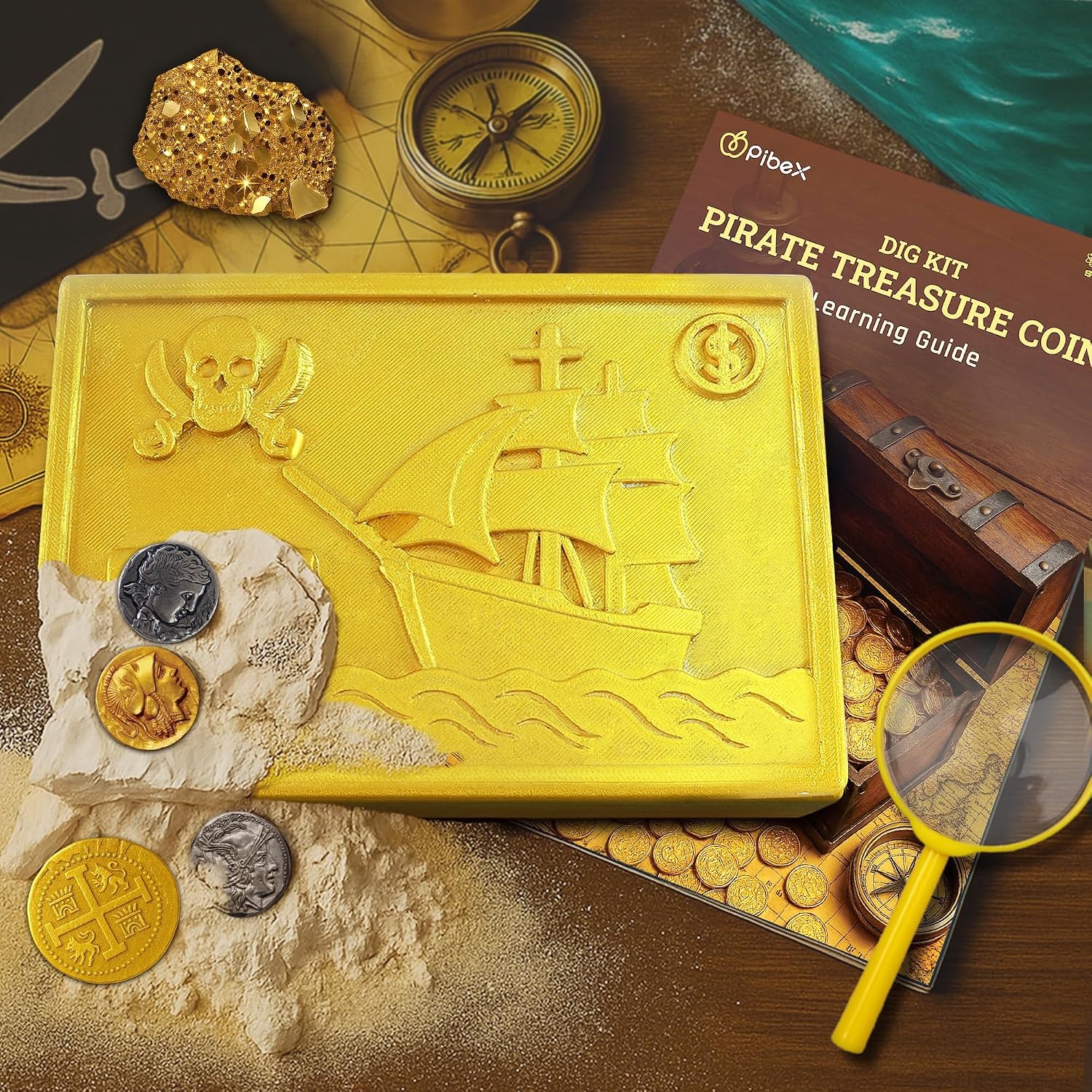
Inside the box is a golden dig block molded with a Caribbean theme. It is made of gypsum, a soft mineral that breaks down under light, steady pressure. You do not need strength. You need a chisel held at a sensible angle and the willingness to keep going.
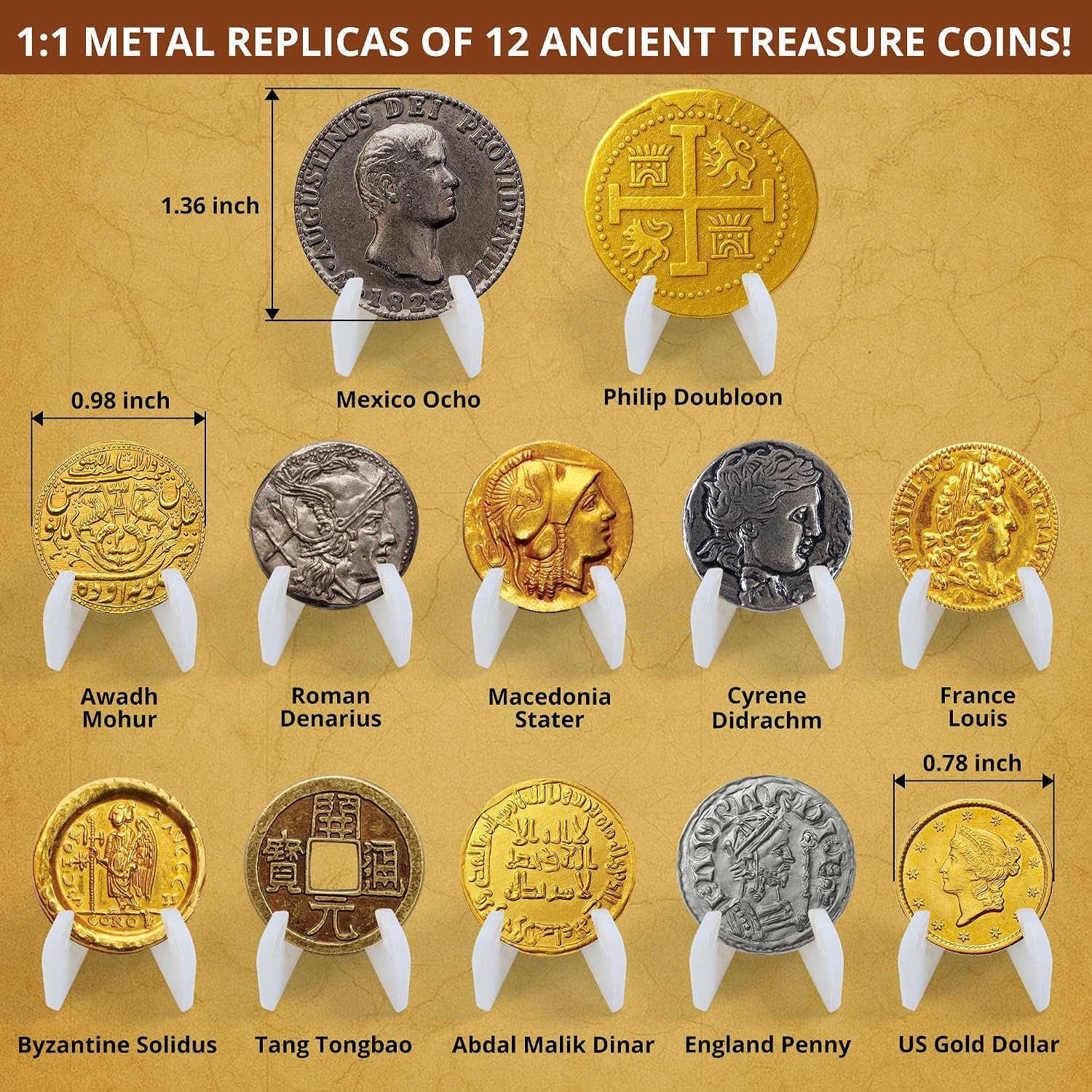
Buried inside are 12 metal coin replicas in gold, silver and bronze styles, plus Captain Jack Marlow's Magic Coin, which PIBEX makes only for this set. There are also three silver-tone charms, a skull, a spider and a butterfly, and a piece of pyrite, better known as fool's gold.
The coins are metal, not plastic. That matters more than it sounds. A metal coin has weight, it makes a sound when you set it down, and it feels like an object rather than a token. Children notice the difference immediately.
Once the coins are out, 12 coin holders turn the haul into a display. This is the part parents tend to underrate. Without stands, coins end up loose in a drawer. With stands, they get arranged, sorted and counted, and the activity quietly extends for weeks.
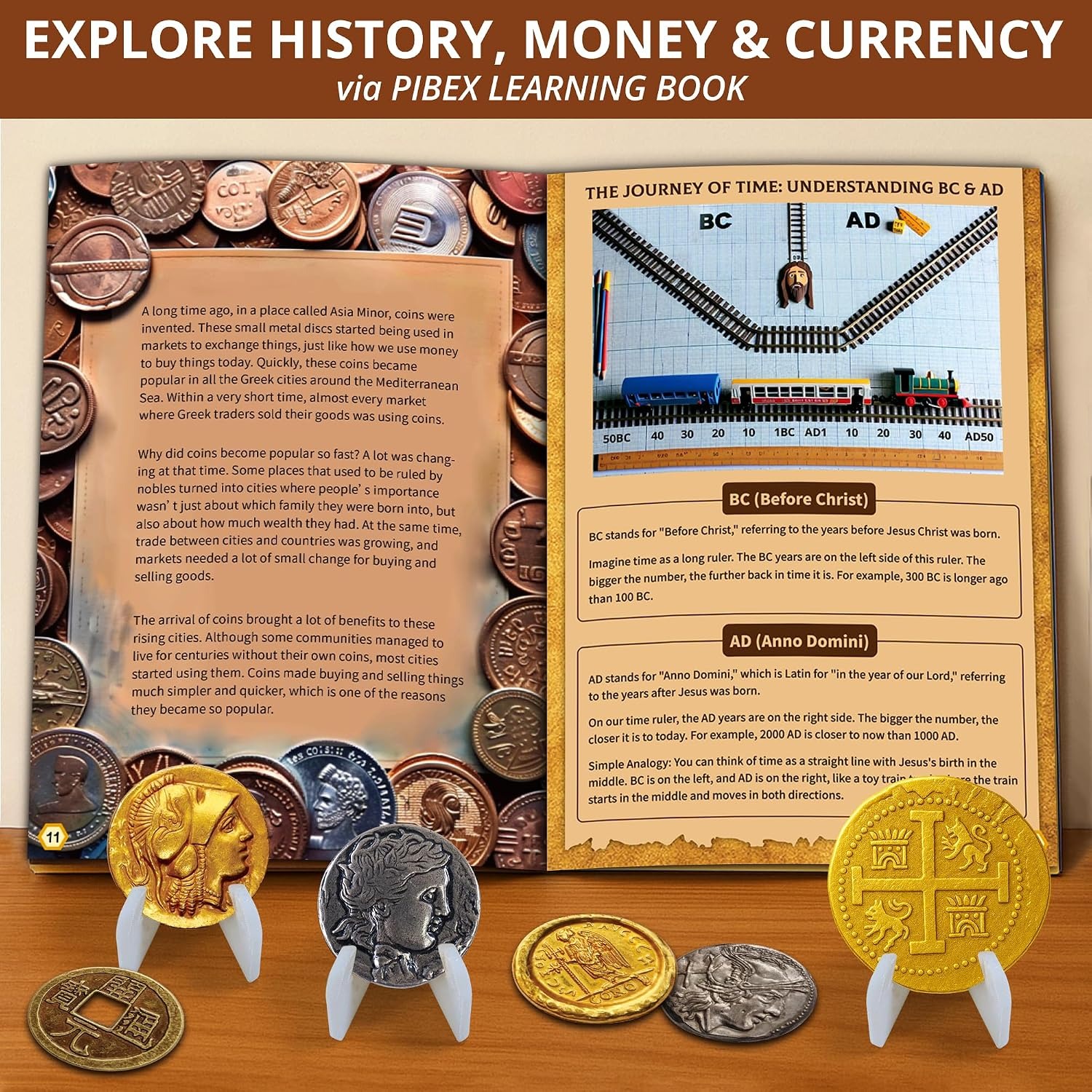
The full-color learning booklet carries historical coin facts, so there is reading attached to the finds. A child can look at a bronze-style coin in their hand, then look at the page and understand roughly what sort of coin it is imitating.
Who it suits
PIBEX recommends 6 years and up, and that feels about right. Six is where most children can hold a tool steady, understand that slow progress is still progress, and not give up when the first minute produces only dust.
It is a good fit for a child who already likes digging, collecting or sorting. If your kid lines up rocks on a windowsill or keeps every interesting bottle cap, this will land well.
It also suits homeschool and classroom settings. There is one block per kit, so it works best as a shared excavation or a rotating station rather than a whole-class simultaneous dig. Teachers hunting for the best classroom excavation activity often pair one kit with a short lesson on minerals or the history of money.
Where it suits less well is a child who wants instant results. If patience is not currently on the menu, start with very short sessions and expect to help.
Choosing between dig kits
There are a lot of excavation toys out there, and they are not equal. A few things to weigh up.
What do you actually get at the end? Many kits bury a plastic figure. When the dig ends, play ends. Here the finds are metal coins, wearable charms, a mineral specimen and a booklet, so there is a second act built in.
Is there a display element? Twelve coin holders sound minor and are not. They turn finds into a collection, and collections get revisited.
Does it teach anything specific? The listed educational objectives are concentration, exploratory skills, matching, observation and STEM. The pyrite and the coin facts give you concrete things to talk about rather than vague "learning".
How messy is it? Gypsum makes dust. Every honest dig kit for kids does. The question is whether you have a surface you do not mind covering, or a step outside.
Will it travel? At 780 g in a box of roughly 7.91 by 2.87 by 10.78 inches, this one posts and packs easily. It makes a straightforward gift to send.
Setting up for a good session
Pick your surface first. A tray, a mat, an old towel or an outdoor table all work. Doing this before the box is opened saves a lot of sweeping later.
Have a bowl of water and a cloth nearby. Lightly dampening the surface of the block softens the gypsum and makes chipping noticeably faster. Do not soak it, just mist or dab.
Set expectations out loud. Tell your child the first coin usually takes a while and the rest come quicker. This one sentence prevents most of the frustration.
Keep a small container ready for finds, because coins get swept into the dust pile if there is nowhere to put them. The coin holders can wait until the end, but a bowl helps during.
Work in sessions if attention flags. The block keeps perfectly well overnight. Splitting the dig across two afternoons often produces more enjoyment than forcing it in one go.
Care and keeping
Store an unopened block somewhere dry. Gypsum and damp do not get along, and a softened block loses the satisfying crumble.
After the dig, brush dust into a bin rather than a sink. Gypsum powder and plumbing are a bad combination.
Clean the coins with a soft dry cloth. They are metal replicas, not conservation-grade collectibles, so there is no need for anything fancy, but water and moisture should be kept away from them.
Put the coins in their holders and the holders somewhere visible. A shelf beats a toy box every time. Half the value of a coin excavation kit is in looking at the collection afterwards.
Rinse and dry the tools, keep the booklet flat, and store the charms and chain together so nothing wanders off.
A few honest limits
The block is single use. Once broken, it cannot be reset, so this is not a toy that gets dug a dozen times. What survives is the collection, and that is where the lasting value sits.
The coins are replicas. They are not legal tender, they have no resale worth, and they should not be presented to a child as valuable in money terms. They are valuable in the way any good object is, because you found it yourself.
There will be dust. Plan for it rather than being surprised by it.
And one kit means one dig. If you are buying for siblings who will both want the chisel, two kits avoid a lot of negotiation.
The short version
This is a pirate treasure dig kit that gives a child something genuinely worth working for. Thirteen metal coins including an exclusive one, three charms, a necklace chain, a piece of fool's gold, 12 display holders and a booklet of coin history, all buried in a gypsum block that only gives them up to patient hands.
It suits ages 6 and up, it works at a kitchen table with a mat down, and it leaves behind a collection rather than an empty box. If you want an hour of focused quiet and a child who afterwards knows what pyrite is, this does the job.