
The complete guide
How to Choose a Kids Tool Set That Actually Gets Played With
The toy that solves the "me too" problem
Every parent knows the moment. You pull out a screwdriver to tighten a wobbly chair, and within ten seconds there is a small person at your elbow, hand out, asking for a go. You cannot hand over a real tool. You also do not want to say no for the fifth time that week.
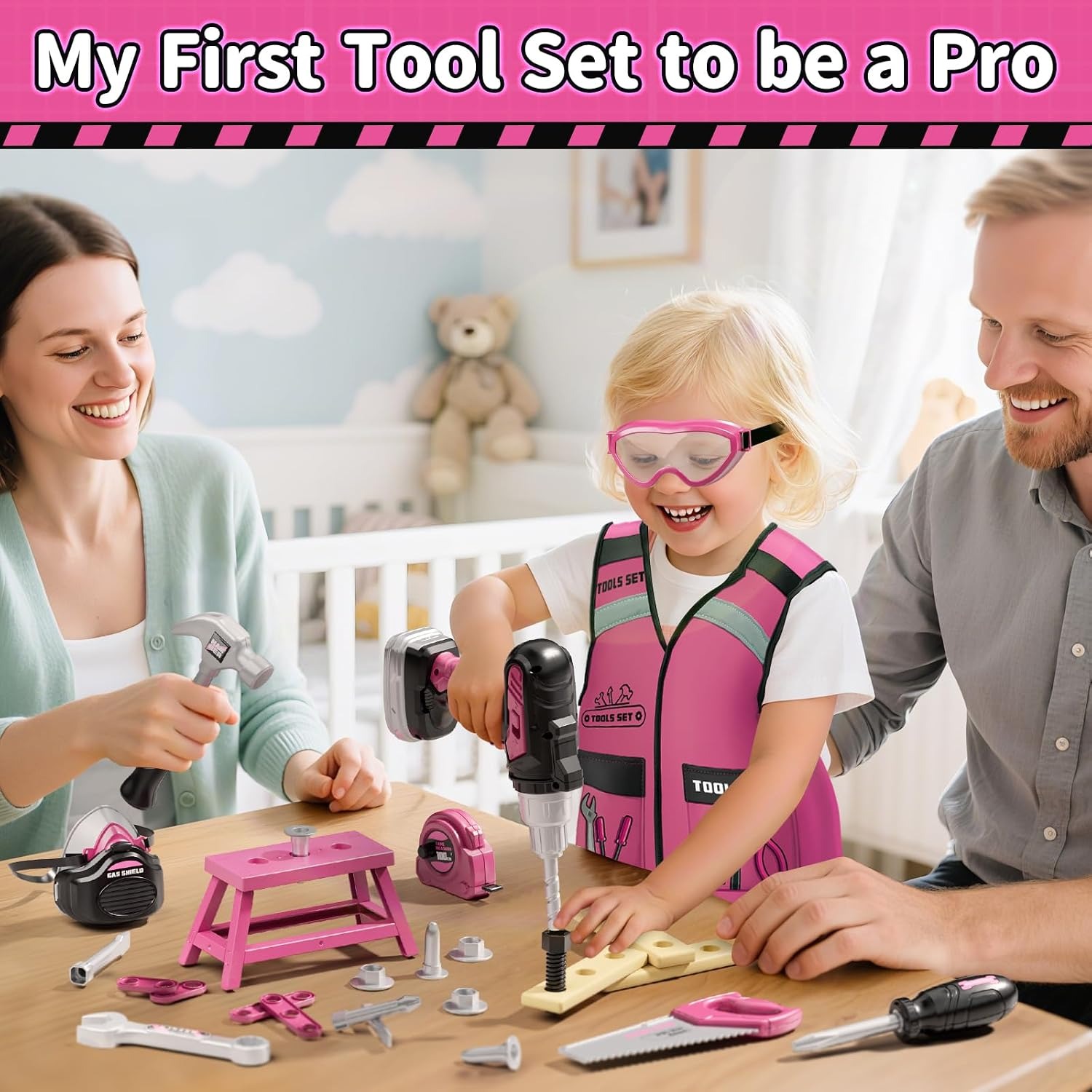
A kids tool box with vest solves this neatly. It gives a child their own version of the job, with their own kit, their own gear and their own carry case. The pretending is not a consolation prize to them. It is the main event. Hand a three year old a toy drill that actually spins and they will happily work alongside you for half an hour, which is roughly twenty-nine minutes longer than most toys manage at that age.
This guide covers what to look for in a toy tool set, why some get abandoned after a week, and how to make the one you buy last.
How a toy tool set works
The basic idea is simple. The set copies the shape and the motion of real tools without any of the risk. The best versions of this get three things right.
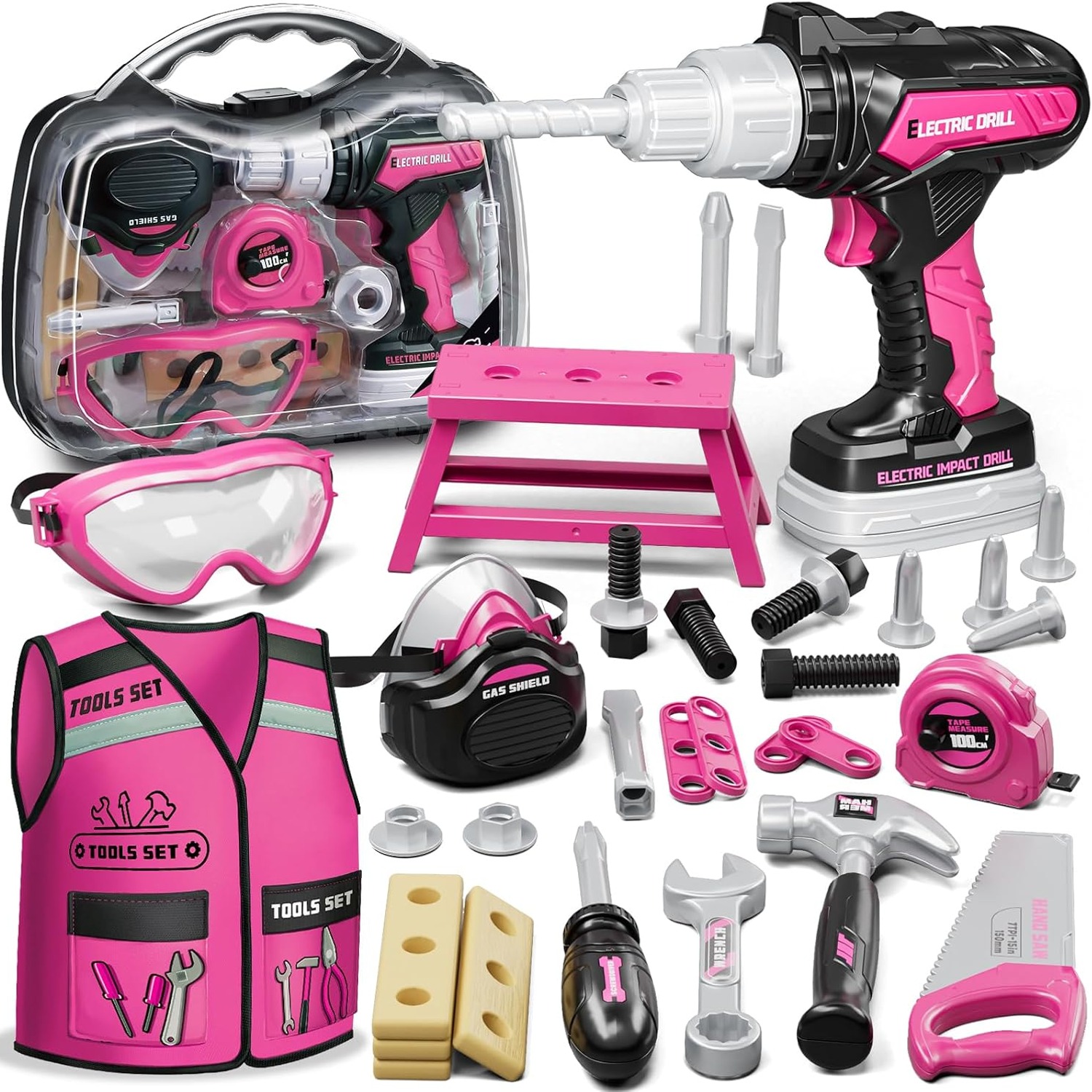
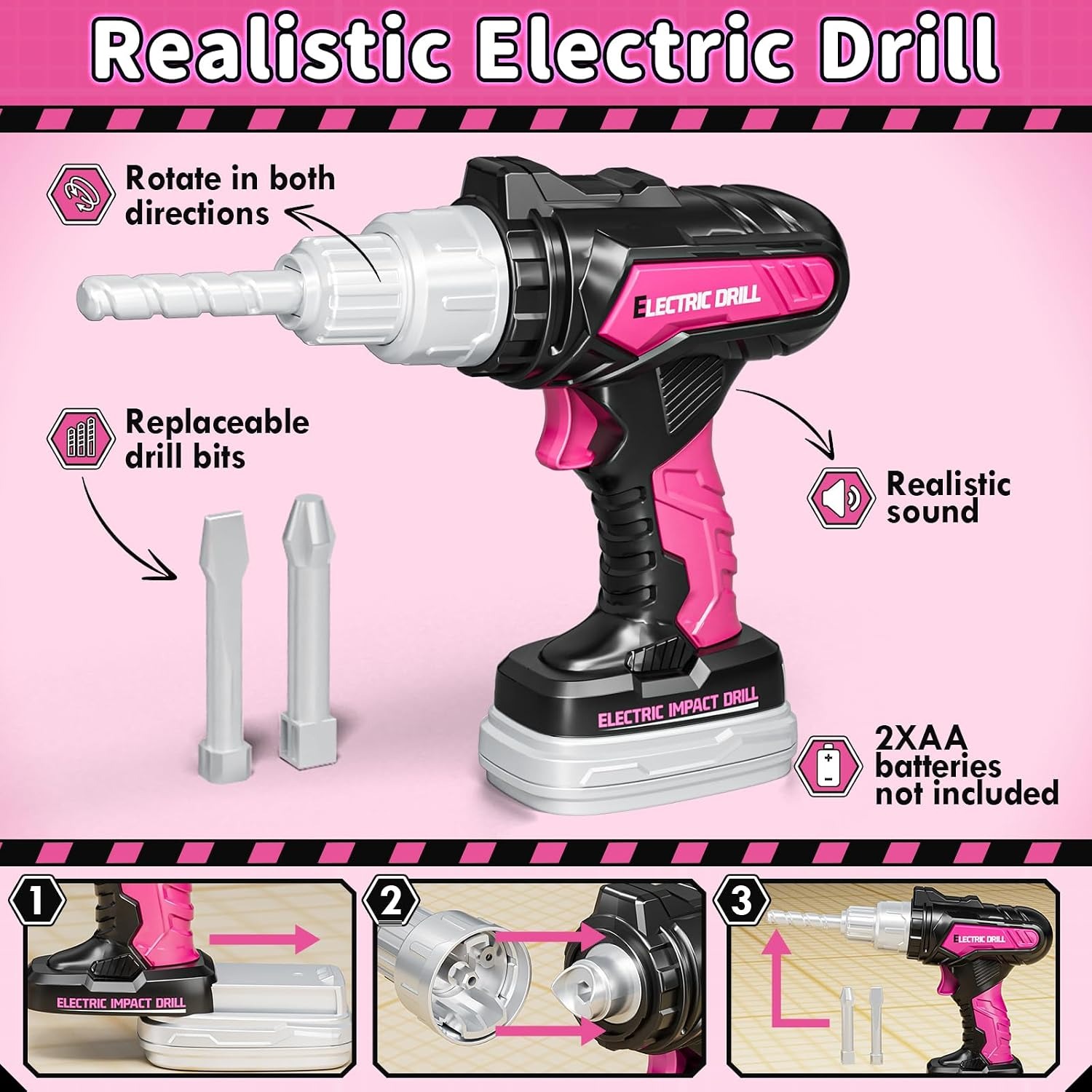
First, at least one tool should do something. A drill that spins is the obvious choice, and the KidBloom set uses a battery-operated one with bidirectional rotation. That means it turns both ways, so a child can drive a plastic screw in and then back it out. This sounds like a small detail. It is not. A tool that only goes one way turns play into a dead end. A tool that reverses creates a loop a child can repeat all afternoon.
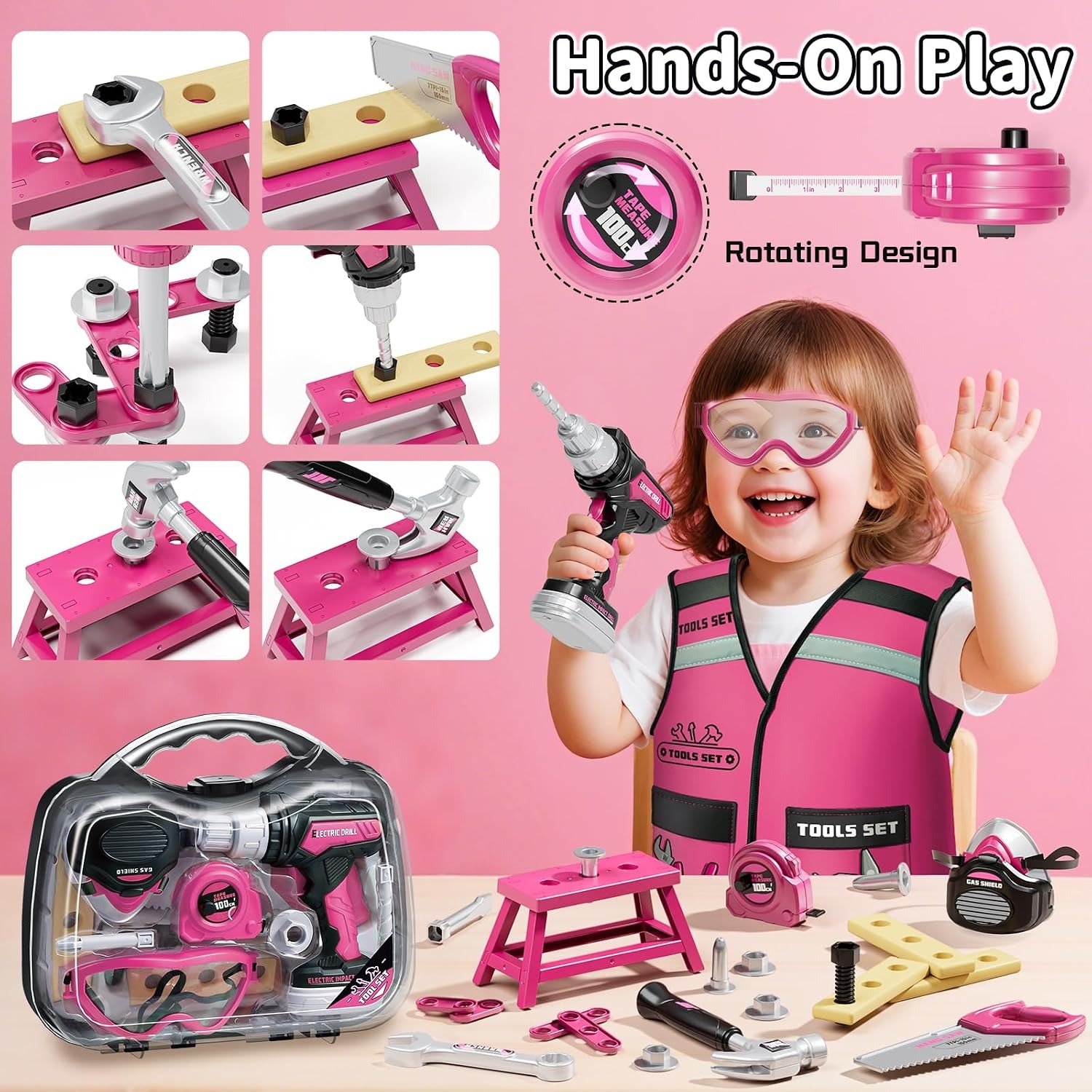
Second, the hand tools need to be recognizable. A hammer, a saw, a screwdriver, a wrench and a tape measure cover the jobs a child has watched an adult do. Add screws, bolts and nails and there is something to actually work on rather than just wave about.
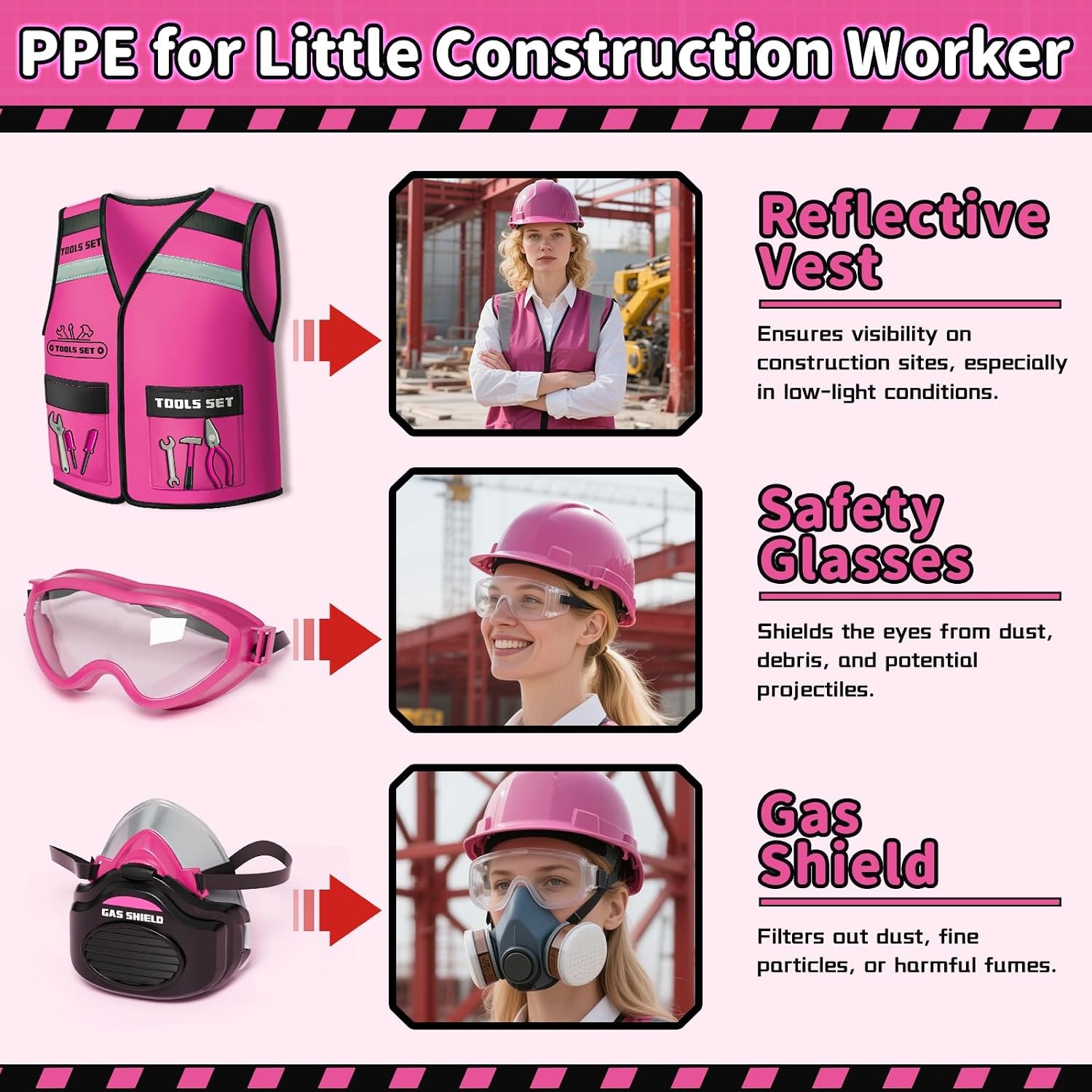
Third, there has to be a costume element. The vest, the goggles and the gas shield in this kit do a job that has nothing to do with building. They tell the child, and everyone watching, that they are now someone else. That switch is what pretend play runs on. Give a child the hat and the story writes itself.
Who it suits
The manufacturer lists this set for ages 3 and over, with a range running up to twelve. Realistically the heaviest use falls between three and seven.
At three, the appeal is mostly the drill and the dressing up. Expect a lot of noise and not much precision. That is fine. A three year old holding a drill steady enough to meet a screw head is doing serious motor skill work even if nothing gets assembled.
At four and five, children start to invent jobs. The couch needs fixing. The dog's bed has a loose screw. The tape measure comes out and everything in the room gets measured, usually incorrectly. This is the phase where the pockets in the vest earn their keep, because a child who is on a job needs somewhere to keep the bolts.
At six and up, the play gets more social. Two children with one kit will work out roles between them, one holding while the other drills. If you have an older child who has drifted away from the drill, the vest and goggles often keep them in the game as the supervisor.
It is not for babies or young preschoolers. The set contains small screws, bolts and nails, so anything under three is outside the recommendation and should stay that way.
What to check before you buy
A few things separate a kids construction toy that lasts from one that ends up in the charity bag.
Material. Look for ABS plastic with rounded edges. ABS is the standard for toys that get dropped on hard floors, and rounded edges matter when a hammer is being swung with enthusiasm. This set uses both.
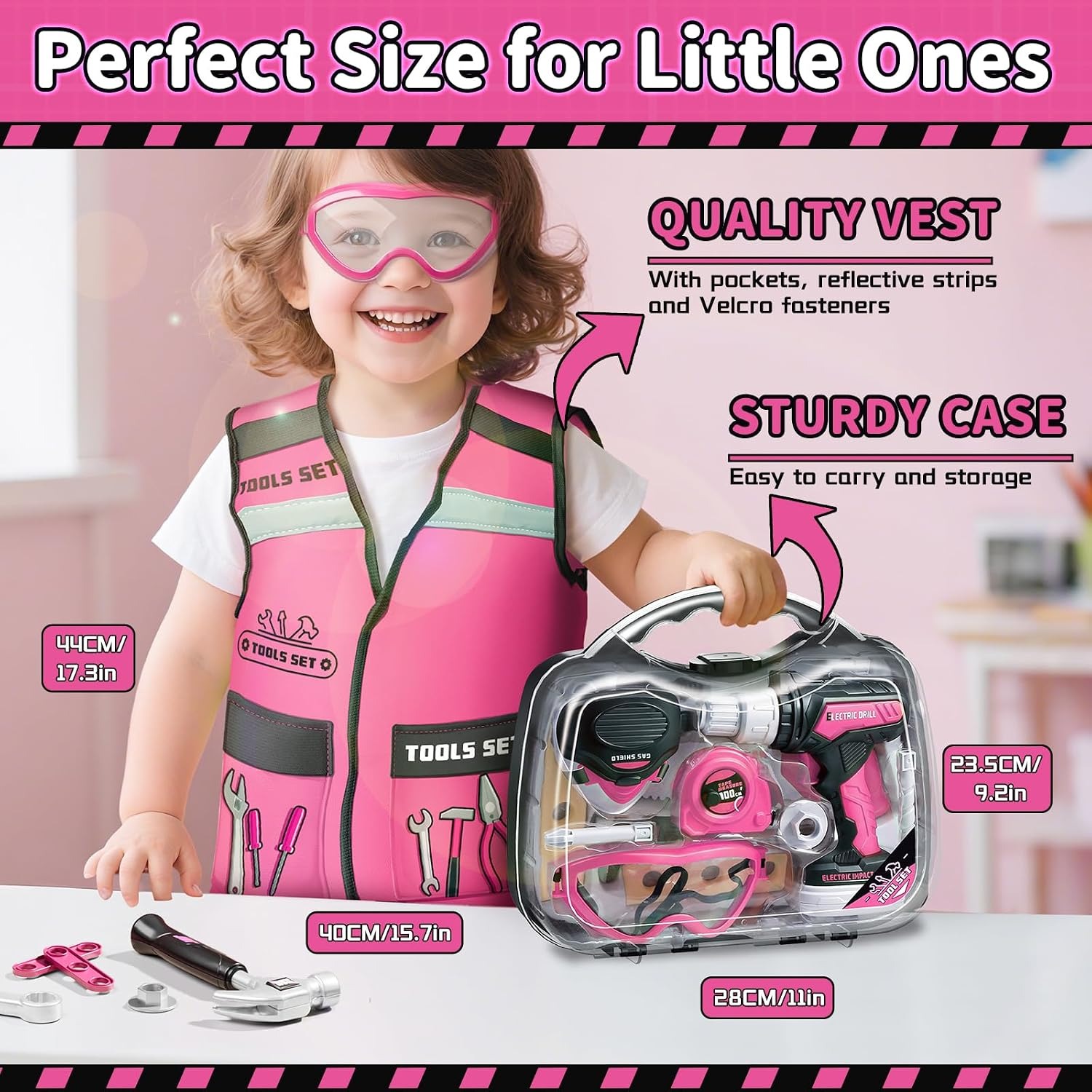
Storage. A set without a case becomes a set with missing pieces. More importantly, the latch has to be something a small child can work alone. If an adult has to open the box every time, the toy gets used half as often. The KidBloom case is made for preschooler hands to open and close.
Battery access. The drill takes two AA batteries, which are not included. Buy a pack with the toy. There is nothing worse than a birthday present that cannot be switched on.
Size and weight. At 10.83 by 3.35 by 9.25 inches and 400 g, this one is genuinely portable. A child can carry it to the car, to a grandparent's house or out to the garden. Portability is underrated. A toy that travels gets played with in more places and therefore more often.
Piece count versus piece quality. Huge sets look impressive in a photo and often disappoint. A focused kit where every tool has an obvious purpose beats a box of forty parts where half are filler.
Getting the most out of it
The single biggest factor in how long a pretend play tool kit lasts is whether an adult joins in, at least at the start.
Give the child a job. Not a vague instruction to go and play, but a specific task. The table leg needs checking. There is a shelf that might be loose. Hold the piece while they drill. Ten minutes of this on day one usually sets up weeks of independent play afterwards, because the child now has a template for what the game is.
Pair it with other things around the house. Cardboard boxes are the classic. A child with a toy saw and a box will build a car, a den or a rocket. Old offcuts of foam or thick card take plastic screws surprisingly well.
Make the tidy-up part of the job. Builders pack their tools. If you frame putting things back in the case as the last step of the work rather than a chore afterwards, children at this age will often do it without being asked. This is one of the rare toys where storage can be built into the play itself.
Looking after it
Maintenance here is light. Wipe the tools and the case with a damp cloth and a little mild soap, then dry them off. Skip the dishwasher and do not soak anything, since water sitting inside a battery compartment causes problems.
For the vest, spot clean by hand and air dry flat. Dress-up garments with high-visibility detailing do not generally like hot washes or tumble dryers.
If the drill is going to sit unused over a school term or a long stretch of winter, take the batteries out. Leaking cells are the most common cause of a battery toy dying, and it is a thirty second job to prevent.
Do a quick floor check after each session. Small screws and bolts travel. A sweep of the rug before bed keeps them in the case and out of the vacuum cleaner.
The short version
A kids tool box with vest works because it meets a child exactly where they are. They want to do what you are doing, and this gives them a safe, convincing way to do it.
This KidBloom set covers the bases. The toy drill spins both ways, which keeps the play going. The hand tools are the ones children recognize. The vest, goggles and shield turn it into a costume as well as a kit. Everything is ABS plastic with rounded edges, and the case packs it all away so the set does not scatter.
Buy a pack of AA batteries at the same time, join in for the first ten minutes, and you have a toy that will be in rotation long after the newer ones have been shelved.