


The complete guide
Fort Building Kits, A Parent's Buying Guide
The problem with most "creative" toys
Plenty of toys claim to be creative. A lot of them have exactly one correct outcome printed on the box. The child builds the thing in the picture, finishes it in forty minutes, and the parts go into a drawer with the instructions on top.
A fort building kit works differently because there is no picture to finish. You get a pile of rods and connectors and the question of what to do with them. That open ending is slightly uncomfortable for about ninety seconds, and then most children get on with it.
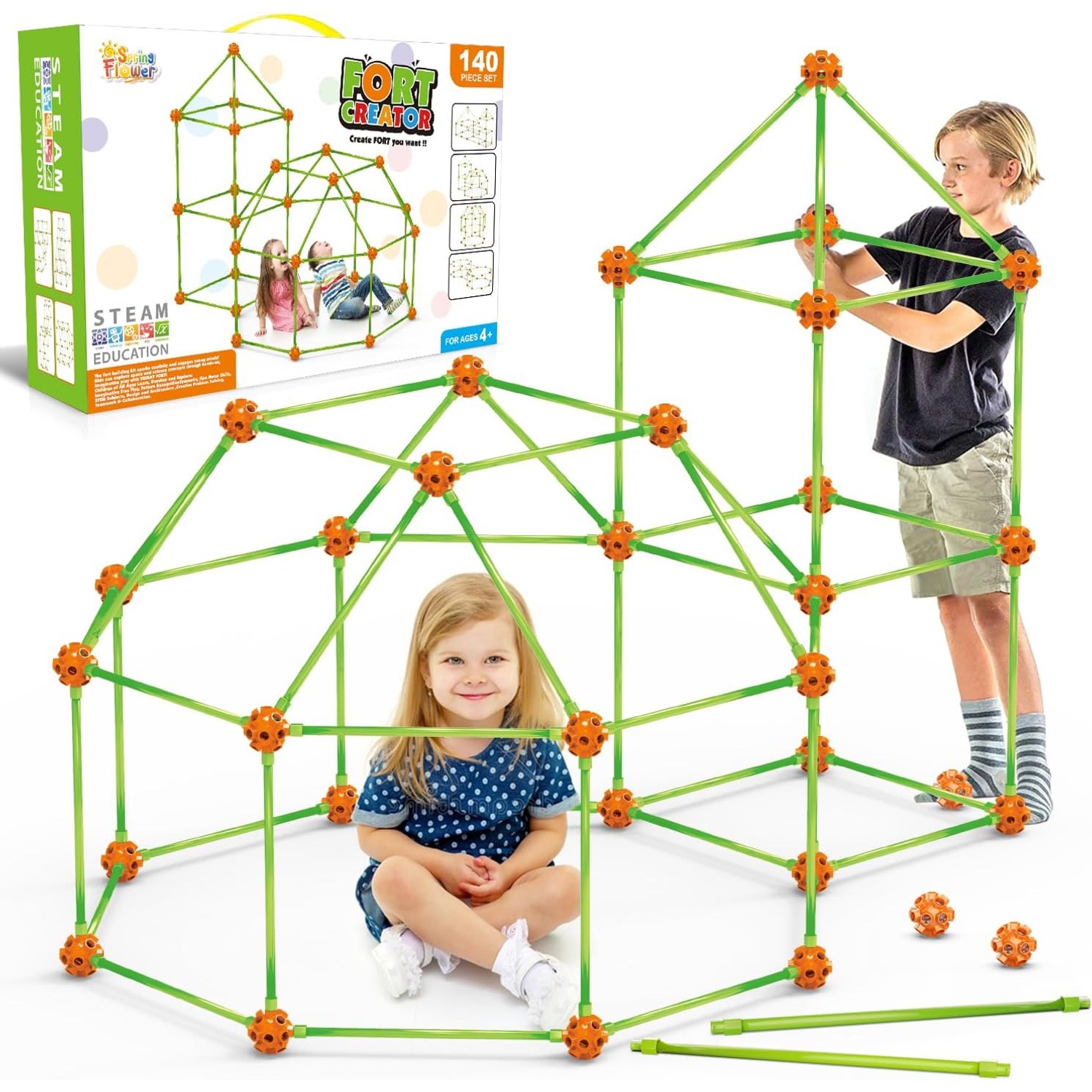
The other thing it solves is the indoor day. Rain, snow, a sick afternoon, a long weekend with nowhere to go. Children get restless and screens get used as a default. A box of 140 pieces that turns the living room into a cave is a practical answer to that problem, not just a nice idea.
How the kit actually works
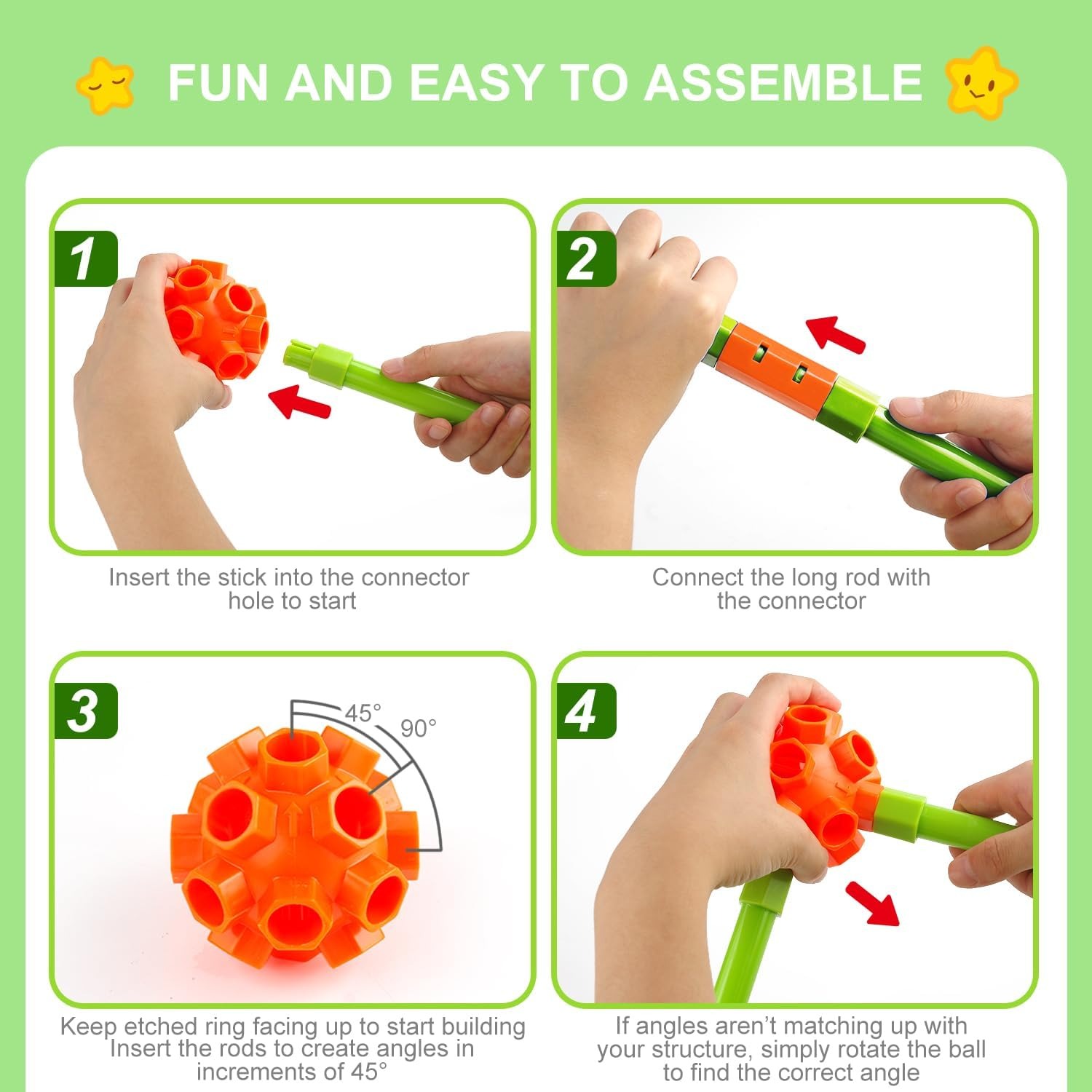
The system is rods and connectors. The rods are straight lengths of plastic. The connectors are joints that accept rods at different angles, which is what lets you turn a flat square into a cube, and a cube into something with a sloped roof.
Children push a rod into a connector until it seats. There is no screwing, clipping with a tool, or adult assembly step. Because the joints are friction fit, they also come apart by hand, which matters more than people expect. A build that is hard to dismantle never gets dismantled, and then it lives in the hallway for three weeks.
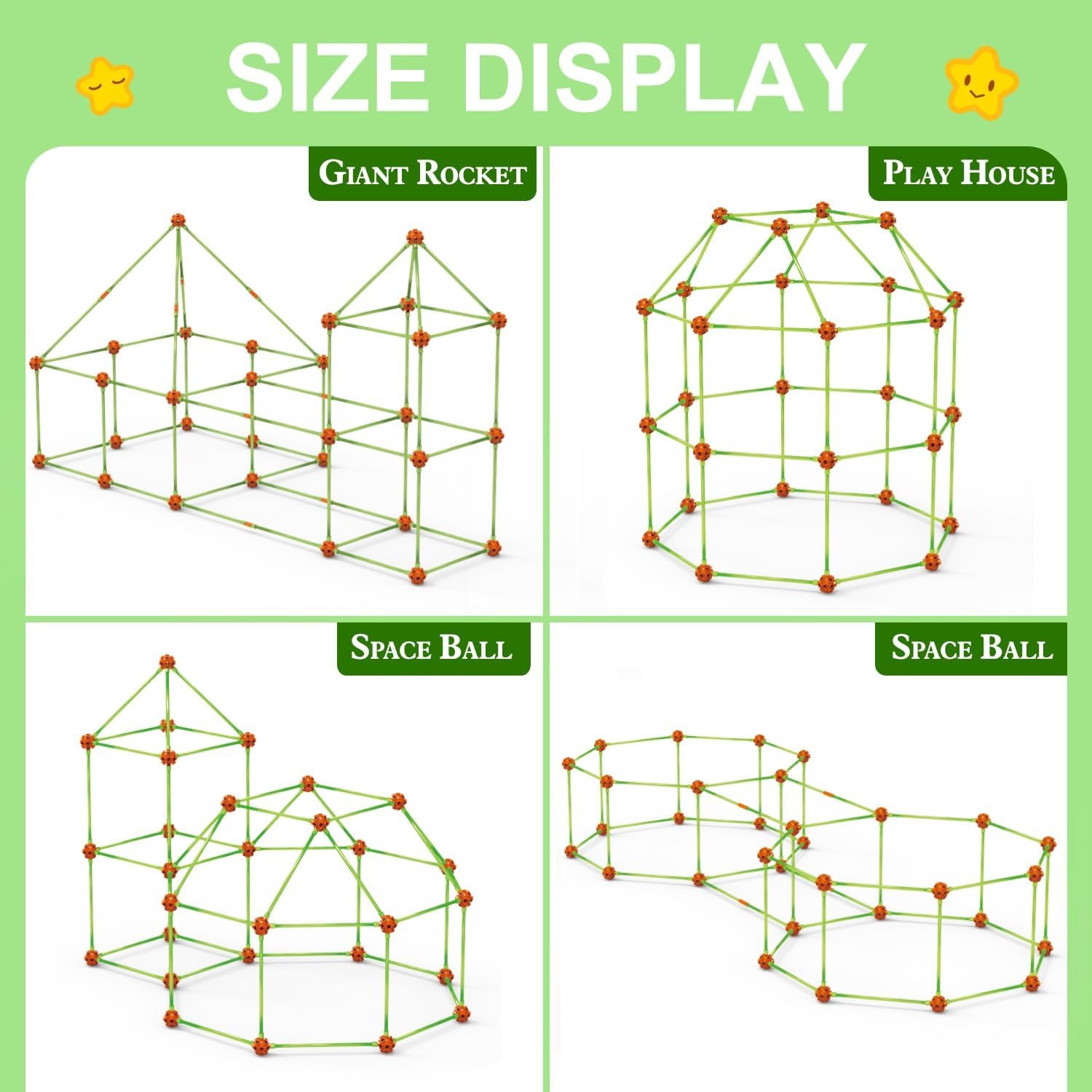
This set contains 140 pieces, which is a useful number. It is enough for one large structure that several children can sit inside, or enough to split across a few smaller projects at the same time. If three children each want their own den, that is doable.
The frame on its own is a skeleton. The magic step is covering it. A bedsheet, a couple of blankets, a beach towel in summer, pegs or clips to hold the corners. That is when it stops being a construction toy and becomes a place.
Who it suits
The manufacturer recommends ages 4 to 12. That is a wide band and it is honest, because the toy scales with the builder.
A four or five year old mostly builds simple shapes, needs a hand with the roof, and cares far more about getting inside than about the engineering. A seven or eight year old starts planning before building and will argue with you about where the door goes. A ten to twelve year old will try to push the span, build two storeys, and discover why that does not work, which is its own kind of fun.
It suits households with more than one child particularly well, because the forts are generally big enough for company. A build that two siblings can both work on and then both sit inside is rare. Most toys are one child at a time with a line behind.
It also suits a child who is not naturally a builder. The reward here is the hideaway, not the construction, so a reluctant builder will happily knock together a fast cube just to have somewhere to read. The skills arrive sideways.
What children learn without noticing
The learning here is structural and it is immediate. Build a tall narrow tower and it wobbles. Widen the base and it stops. Run a long roof with no mid support and it sags. Add a support and it holds.
That feedback loop is the valuable part. Nobody has to explain load, span or stability. The fort either stands or it does not, and the child adjusts. After a few sessions you will hear them predicting what will happen before they test it, which is the point where it has genuinely gone in.
There is counting and sharing out of pieces too, plus a lot of negotiation when more than one child is building. "You do that side, I will do this side" is a planning skill dressed up as a game.
How to choose a fort kit
A few things actually matter when you compare sets.
Piece count is the obvious one. Fewer than about a hundred pieces limits you to small dens. This set's 140 pieces puts a room sized structure within reach while still allowing several smaller builds.
Joint type matters next. Push fit rods and connectors are quick, tool free and reversible. That is the right trade for children, where speed of setup and teardown beats absolute rigidity.
Weight matters for safety and independence. Lightweight parts mean a child can lift a section alone and a collapse is a minor event rather than a drama. This set is listed as lightweight.
Age range tells you how long you will own it. A kit that works from 4 to 12 gets used for years and gets handed down between siblings rather than outgrown in a season.
Storage is the one most people forget. Loose pieces across a floor are a trip hazard and get lost. Decide where the tub lives before the box arrives.
Setting it up at home
Pick the space first. A corner of a living room, the end of a bedroom, or a cleared patch of carpet all work. Move anything breakable out of the swing radius, because frames do get knocked.
Carpet is slightly more forgiving than hard floor for stability. On a smooth floor a wide base helps. Outdoors, flat grass or a patio is fine in dry weather, and you should bring the set in afterwards rather than leaving it to sit in the weather.
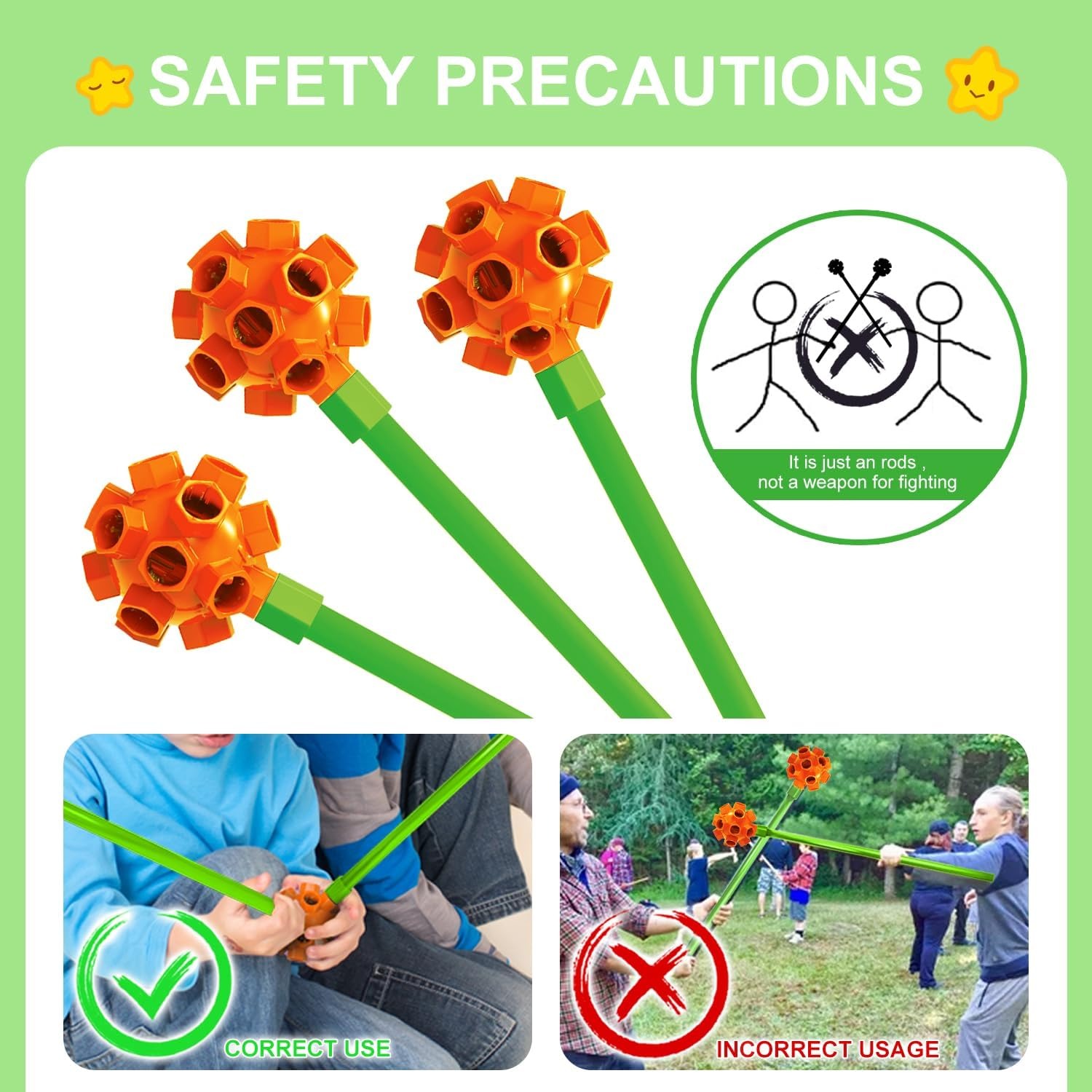
Agree two rules on day one. No climbing on the frame, and no hanging off it. This is a lightweight skeleton, not playground equipment. Children accept that easily when it is said at the start rather than shouted later.
Keep the fabric separate and handy. A dedicated fort blanket that lives with the kit saves you from the daily negotiation over whose duvet is being borrowed.
Keeping it in good condition
Care is simple. Wipe the pieces with a damp cloth and mild soap, then dry them before storing. Skip dishwashers, washing machines and strong cleaners, since heat and harsh chemicals are what crack plastic over time.
Store everything in one lidded tub. Pieces that live in a tub stay together, and a set with all its parts gets used. A set scattered across three rooms quietly stops being a toy.
Check connectors occasionally. If one has split or gone slack, take it out of circulation rather than letting a weak joint become the reason a roof drops. With 140 pieces you have plenty of margin.
Keep it out of long direct sun and away from radiators during storage. Plastic does not enjoy either.
As a gift
This is an easy gift to get right. It covers a broad age range, so you do not need to know exactly where the child is developmentally. It needs no batteries and no app. It is the sort of present that pulls parents and siblings into the play rather than removing a child from the room.
It also lands well for children who already have plenty of toys, because it does something none of their existing boxes do. Very few presents end with a child inviting you to come and sit inside the thing they made.
The short version
A fort building kit earns its place because it has no single finish line. 140 push fit pieces, a recommended age range of 4 to 12, room inside for more than one child, and a result that changes every time it is built. Throw a sheet over the top and it becomes somewhere to read, hide and talk.
If you want a toy that survives past the first weekend, does not need charging, and gets siblings working on the same thing, this is a sensible pick. Decide where the storage tub lives, agree the no climbing rule, and let them get on with it.