
The complete guide
Choosing a Kids Gardening Set with Wheelbarrow, A Practical Buyer's Guide
The problem with "helping" in the garden
Every parent who gardens knows the pattern. The child wants in. They grab the trowel, which is too heavy and too long, and they scrape at the soil for ninety seconds before giving up or hurting themselves. You take the tool back. Everybody is a bit disappointed.
The issue is almost never interest. It is scale. Adult garden tools are built for adult hands, adult reach and adult strength, and nothing about them works for a four-year-old. Give the same child a tool that fits and the whole thing changes. They dig longer, they stay out longer, and they stop asking for your trowel.
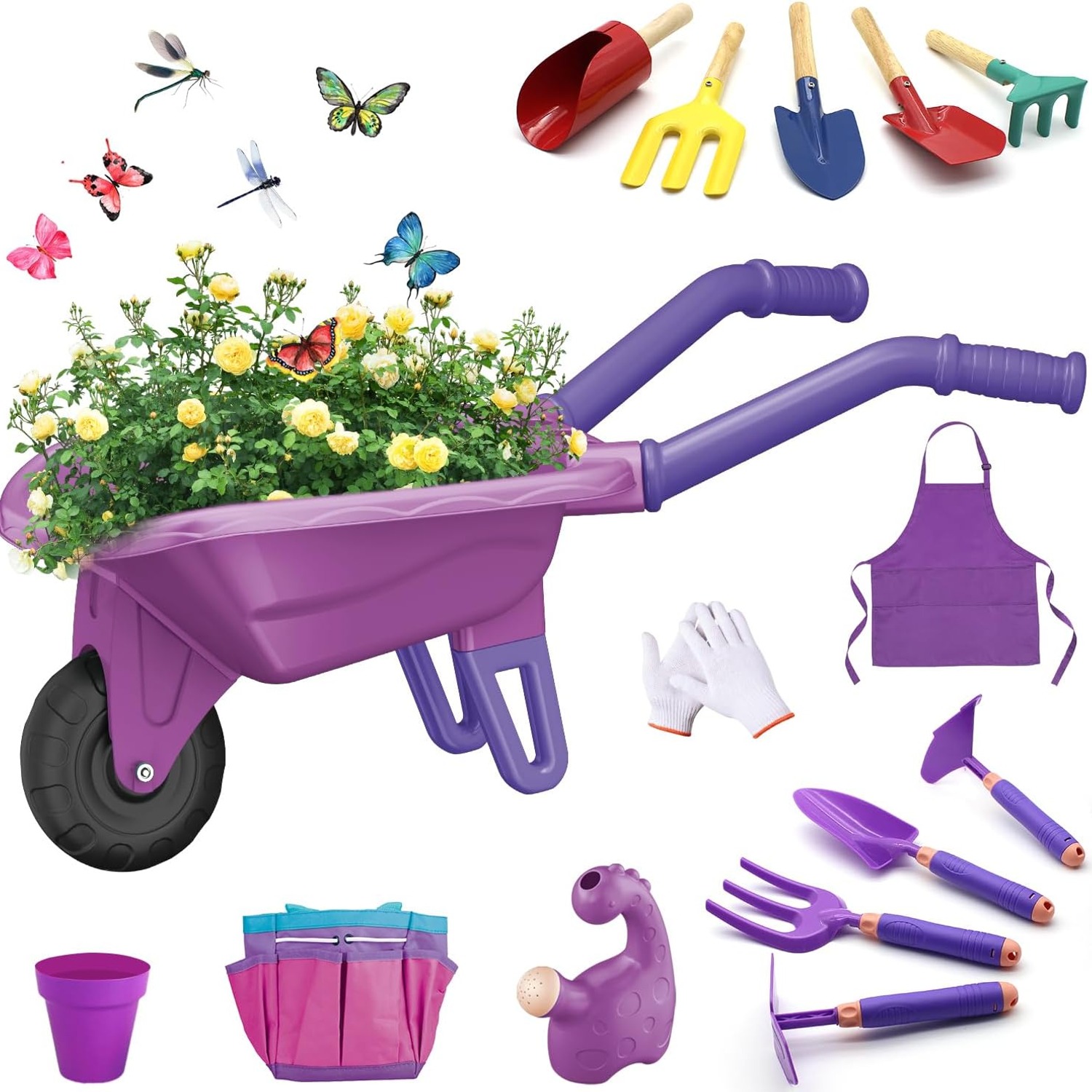
A kids gardening set with wheelbarrow solves this at the root. It is not one small trowel bought as an afterthought. It is a full kit, scaled down, with the protective gear and the hauling equipment included, so a child can do the whole job from start to finish without borrowing anything.
What is actually in this kit
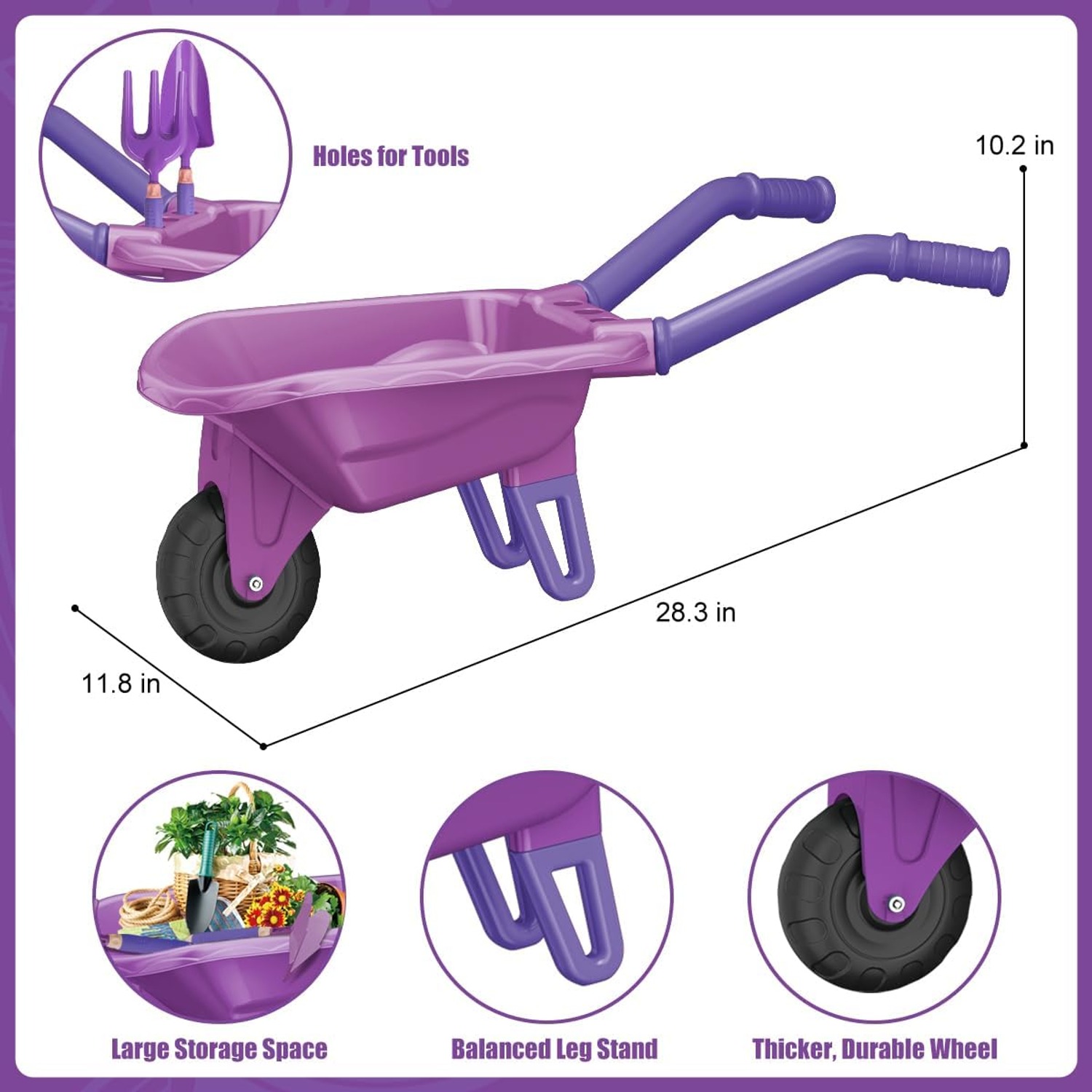
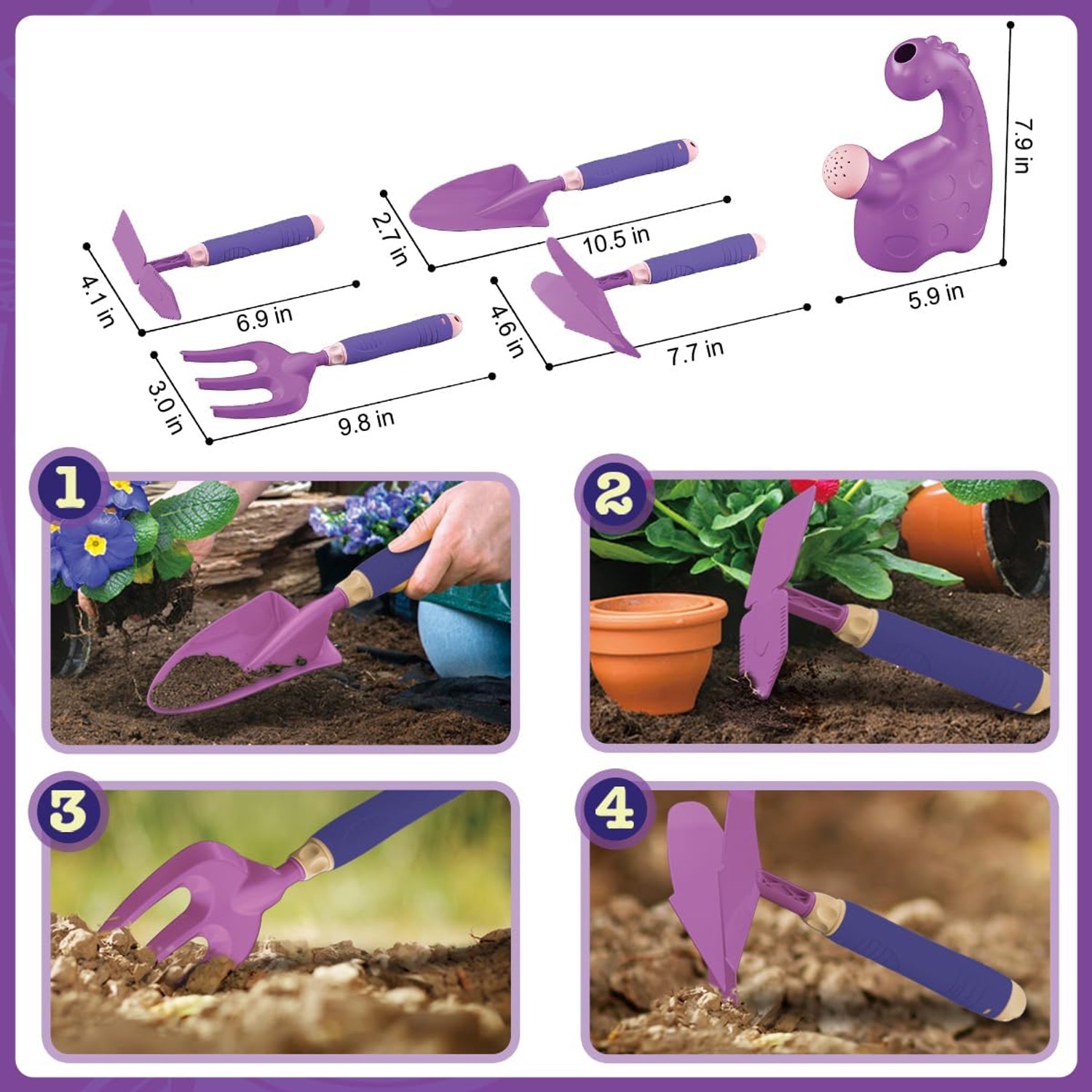
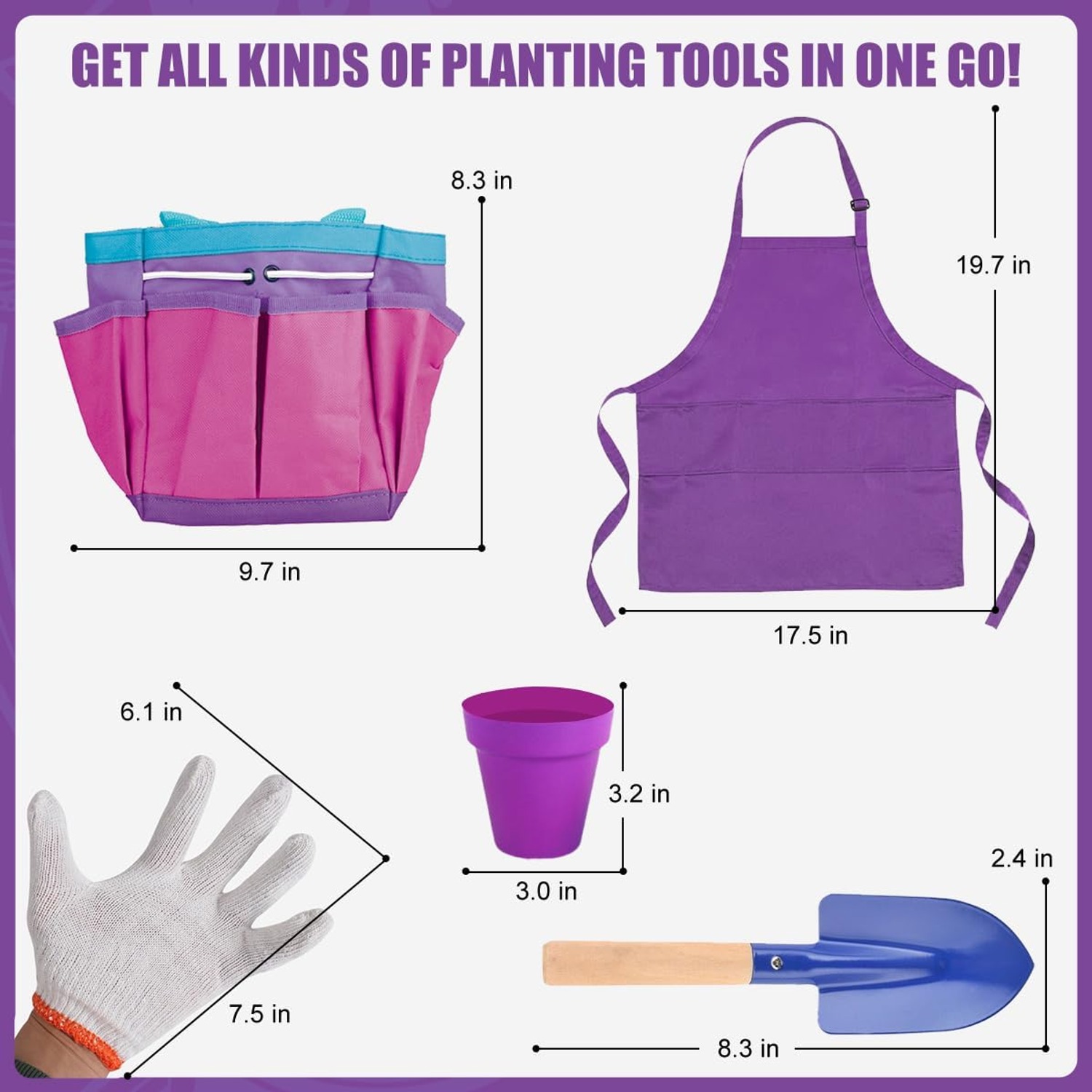
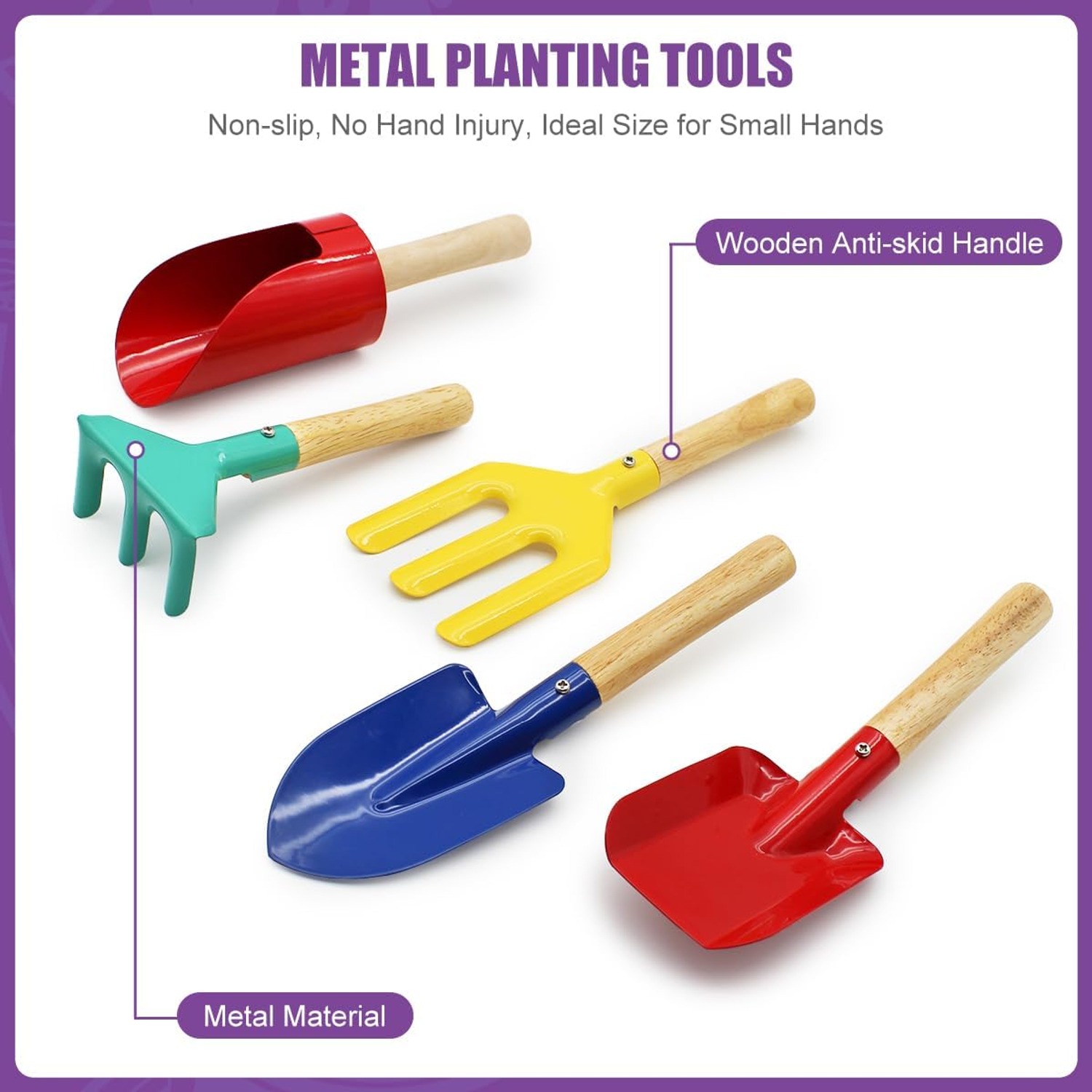
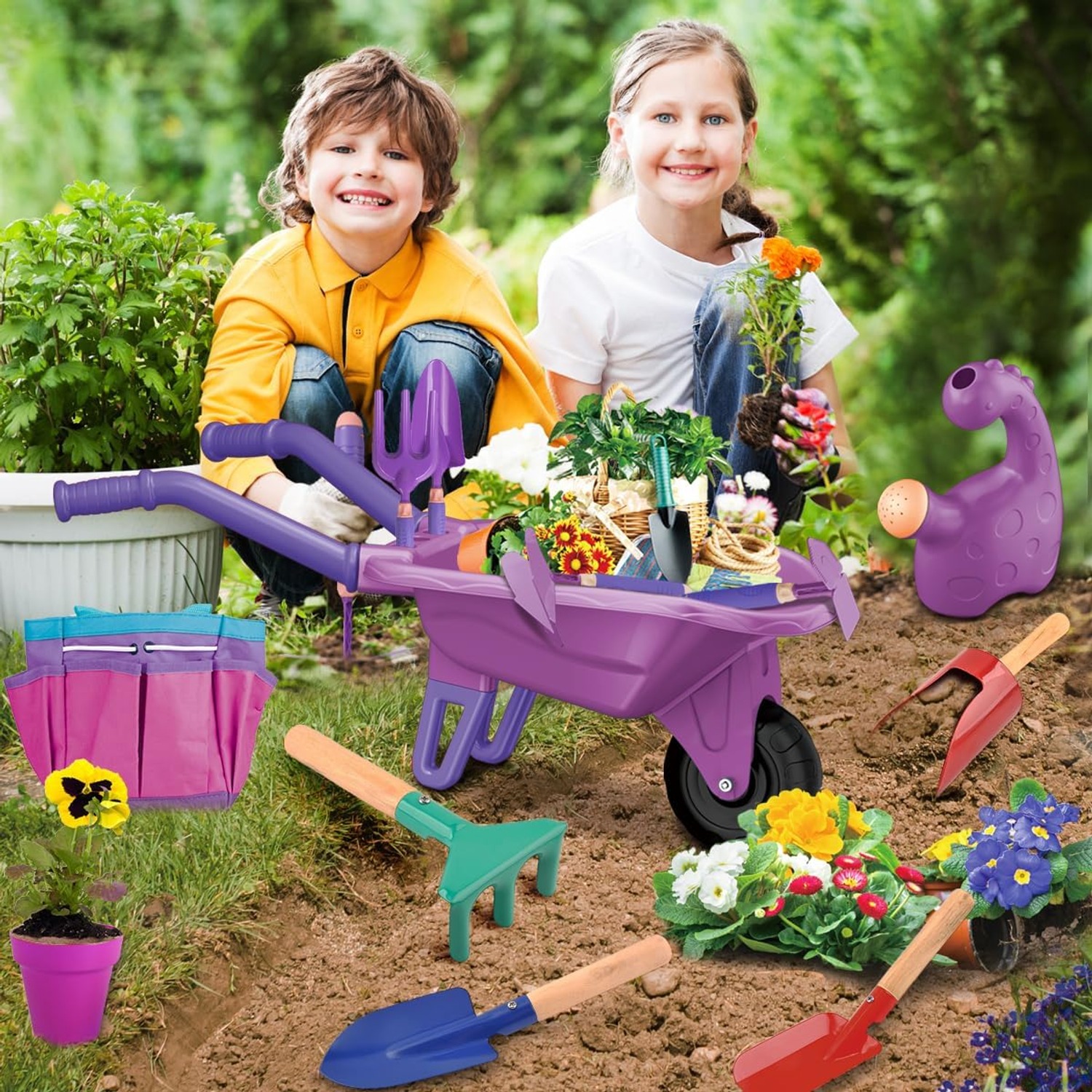
This set runs to fifteen pieces. There is one wheelbarrow, one storage bag, one apron, one pair of gloves, one flower pot and one water bottle, plus four plastic planting tools and five metal planting tools. The materials are listed as metal, plastic and wood, with wood used for the tool handles. The color is purple, the listed dimensions are 28.3 by 10.2 by 6.3 inches, and the weight is 2.9 pounds, around 1.32 kg.
The mix of metal and plastic tools is worth paying attention to. The plastic pieces are the gentler starting point for a younger child or for sandpit play. The metal pieces are the ones that will actually move soil. Having both in one kit means the set grows with the child instead of being outgrown in a season.
The wheelbarrow is the piece that makes it feel like real work. Carrying soil by the handful is tedious. Loading it into a barrow, pushing it down the path and tipping it out at the other end is a job, and children take jobs seriously in a way they do not take toys seriously.
Who this suits
Preschoolers and early primary-age children get the most out of a set like this. That is the window where role play and real work overlap, where putting on an apron genuinely changes how a child behaves, and where a small plant growing in a small pot is still genuinely exciting.
It also suits families without much outdoor space. You do not need a vegetable patch. A balcony with two pots, a strip of dirt beside a driveway or a shared community plot all work fine. The whole kit packs into one bag, which is part of why it travels well to grandparents' houses and holiday rentals.
If you have a child who is already drawn to digging in the sandpit, mixing mud or picking things up off the ground, this is an easy yes. If your child has shown no interest at all in the outdoors, a gardening kit alone probably will not flip that switch. Pair it with planting something fast-growing and visible, and your odds go up considerably.
How to choose between garden play sets
A few things separate the sets worth buying from the ones that end up in the bin by July.
The first is whether the tools do anything. Plenty of garden play sets are molded plastic shapes that flex the moment they touch packed soil. Metal planting tools with wooden handles behave more like the real thing, which is the entire point of buying child-sized tools rather than pretend ones.
The second is whether the barrow rolls properly and carries a load. A barrow that tips at the slightest imbalance or has a wheel that locks up will frustrate a child quickly. A child-scaled barrow sized around 28 inches long is in the sweet spot, long enough to hold something useful, short enough to steer.
The third is storage. This matters more than most buyers expect. Small tools vanish in grass and get run over by lawnmowers. A set that includes a bag gives every piece a home and makes packing away the natural end of the activity rather than an argument.
The fourth is completeness. Buying the gloves, apron, pot and bottle separately costs more and rarely matches. Getting it all in one kit means a child can go from nothing to fully kitted out in a single unboxing, and that moment is a big part of why they get excited.
Getting the first session right
Do not start with the hardest soil in the garden. Loosen a patch yourself first, or fill a tub with potting mix and let them work in that. Success in the first ten minutes decides whether they come back tomorrow.
Pick plants that reward impatience. Beans, sunflowers, radishes and mint all show visible progress within days. A child who plants a seed and sees nothing for three weeks will lose interest. A child who sees a green shoot on Thursday will be out there again on Friday.
Give them an actual job. "Fill the barrow with those leaves and tip them on the pile" works far better than "go play in the garden." Children respond to tasks with a clear beginning and end.
Let them get dirty. The apron and gloves are there for a reason, and the whole thing works better if nobody is worrying about the washing.
Looking after the set
Garden tools last if you do one simple thing, which is dry them before putting them away. Rinse soil off with a hose or under a tap, shake the water off and let everything sit in the sun for a few minutes before it goes in the bag.
Wooden handles are the part that suffers most from neglect. Left out in rain or dew overnight, wood swells and then dries rough. Left out in strong sun for weeks, it dries and splits. Neither happens if the set lives indoors or in a shed between sessions.
The apron, gloves and bag just need spot cleaning with mild soap and water, then full air drying. Do not pack damp fabric into the bag with metal tools, because that is how you get marks and smells.
Give the wheelbarrow wheel a quick check now and then to make sure nothing has worked loose. A barrow is one of the few pieces here with moving parts, and a minute of attention saves a wobble later.
Storing it over winter
At the end of the growing season, clean everything, dry it fully, and pack the whole kit into the storage bag. Keep it off damp concrete if you can, since cold floors draw moisture. A shelf in a garage or a closet indoors is ideal.
When spring comes around, the set comes out as one unit with nothing missing. That is a small thing, but it is the difference between a kit that gets used for four years and one that gets used for one.
The short version
This is a complete, child-scaled gardening kit built around a barrow that actually rolls. Fifteen pieces, metal and plastic tools, wooden handles, apron, gloves, pot, bottle and a bag to hold it all. It gives a child the equipment to do a real job instead of watching you do one.
It suits preschool and early primary ages, works with as little as a single pot of soil, and packs away small enough to take anywhere. If your child has been eyeing your trowel, this is the straightforward fix. Hand them their own set, give them a patch of loose soil and a bean seed, and step back.