

The complete guide
Take Apart Dinosaur Sets, A Parent's Buying Guide
The problem with most dinosaur toys
Walk into any child's bedroom and you will find dinosaurs. Hard plastic ones, soft ones, ones that light up. They arrive, they get a few days of roaring, then they migrate to the bottom of a toy box and stay there.
The reason is simple. A finished toy only gives a child one job, which is to imagine with it. That is a good job, but it runs out. There is nothing left to discover about a T-Rex you have been holding for two weeks.
A take apart dinosaur set changes the deal. The toy is not finished when it arrives. It is a pile of parts, a handful of screws and a small electric screwdriver, and the child has to do something before they get the dinosaur. That one shift turns a passive object into an activity, and activities last.
How a screw-together dinosaur set works
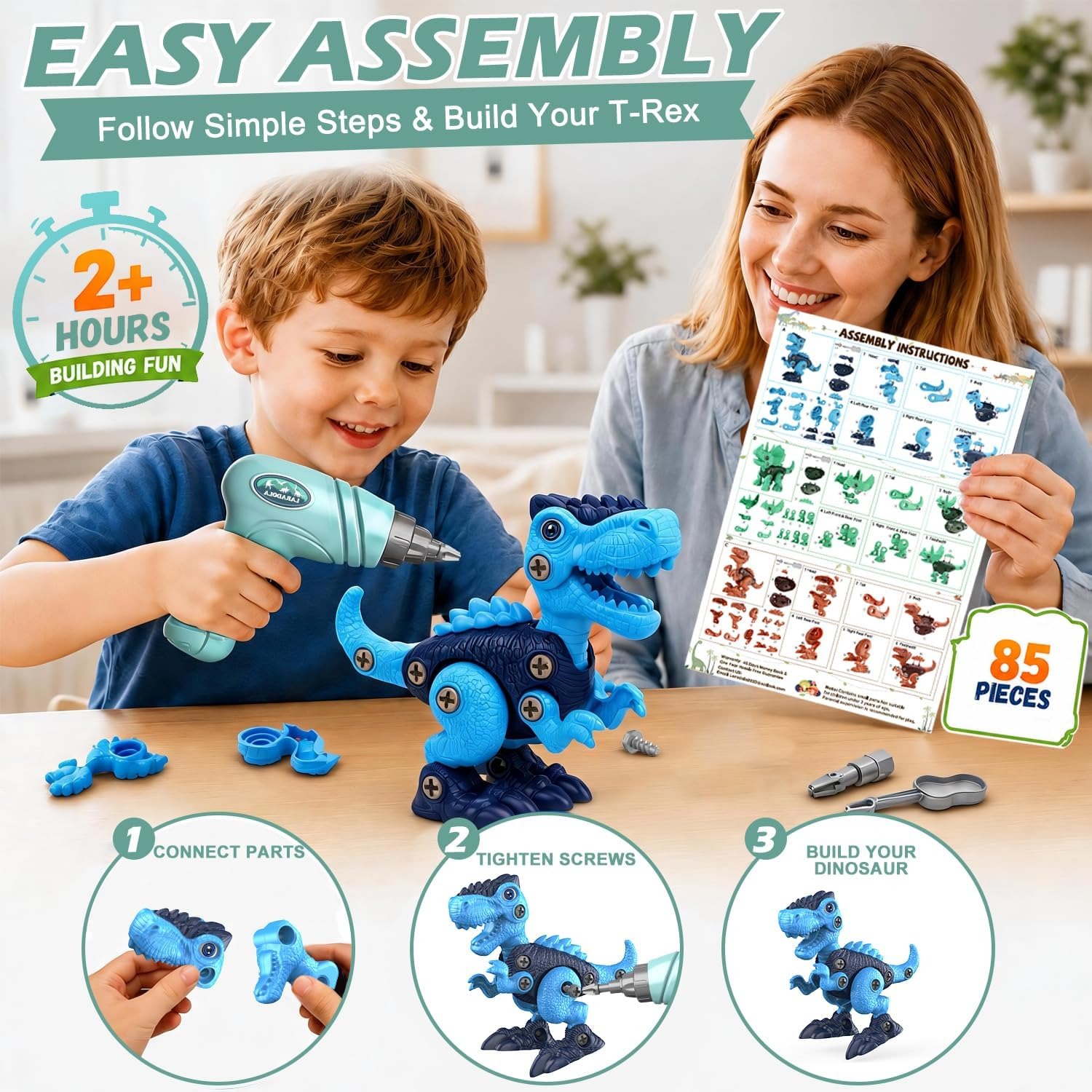
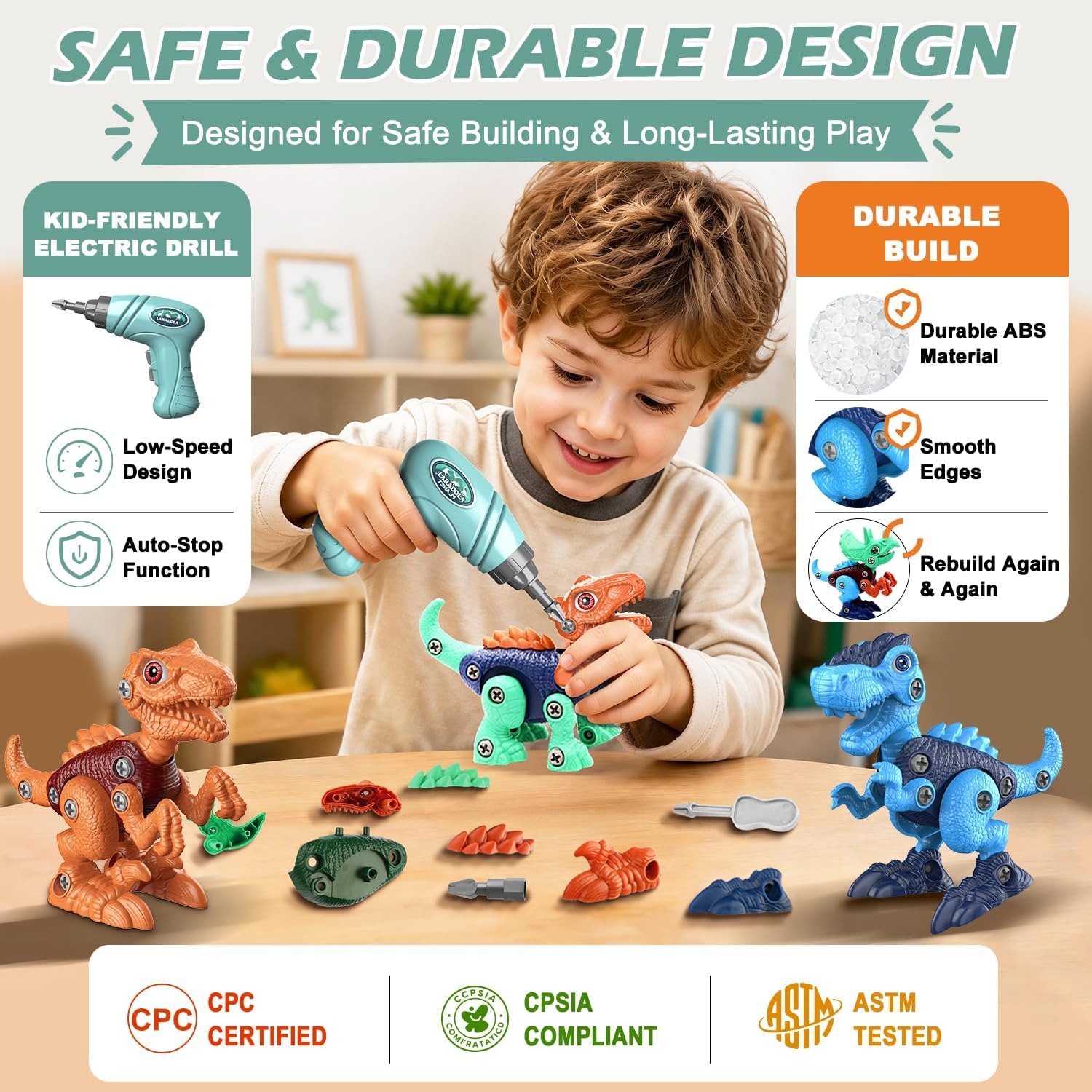
Each dinosaur in this set is made of separate body pieces that lock together. Heads, bodies, legs, tails and spines all have their own place. The pieces line up, and a screw holds them.
The screwdriver is the part that makes it workable for young kids. Asking a four-year-old to grip a small metal driver and twist it thirty or forty times is a recipe for a thrown toy. A battery-powered driver removes the strength problem entirely. The child positions the screw, presses the button, and the screw goes in. Their job becomes aiming and steadying, which is exactly the skill worth practicing.
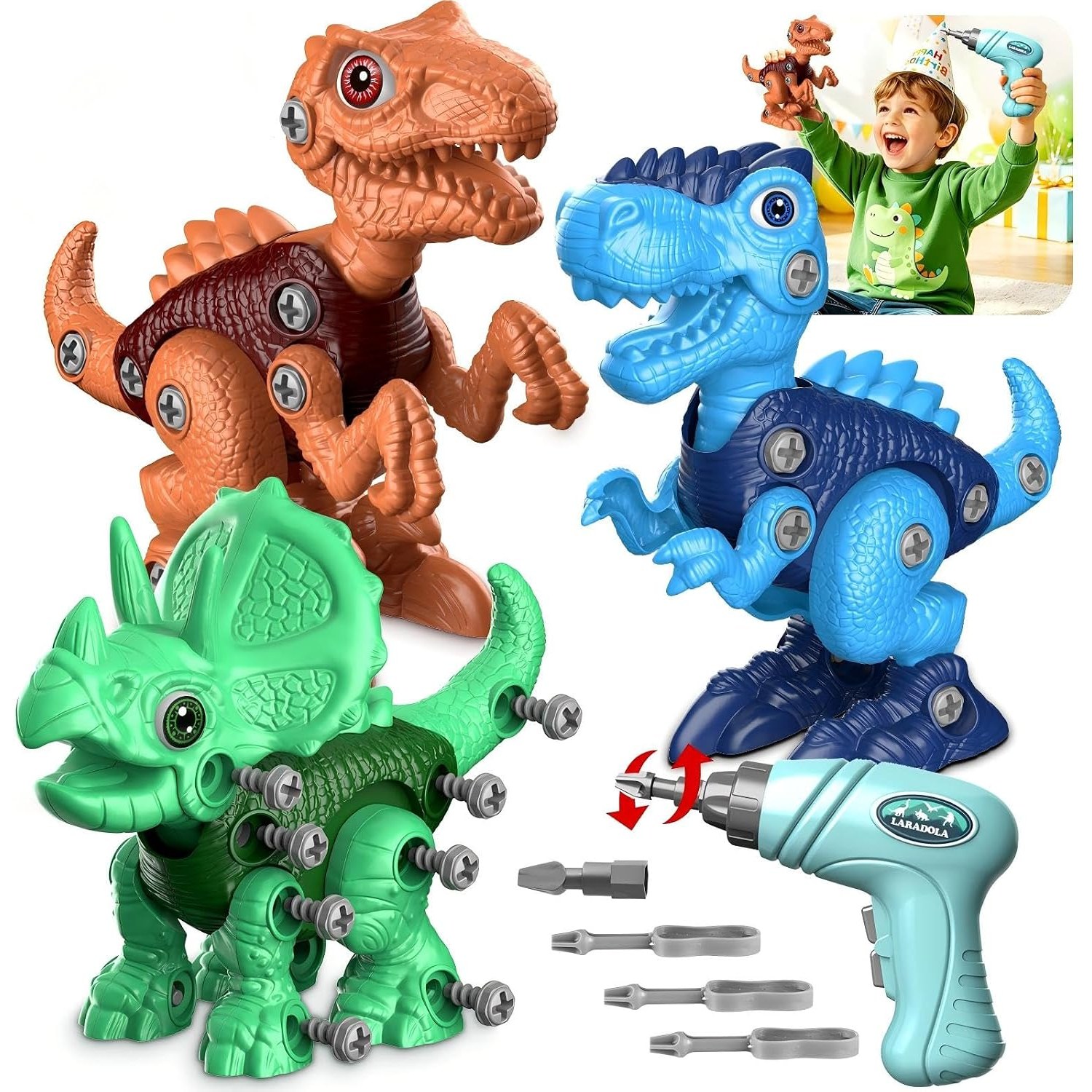
This particular set includes three dinosaurs, a blue Tyrannosaurus Rex, a brown Velociraptor and a green Triceratops. The screwdriver has both automatic and manual modes, so if the batteries run out mid-build the work can still continue by hand. Two AAA batteries run the motor, and they are not in the box, so pick some up before gift day.
When the dinosaurs are built, they can be unbuilt. That is the second half of the value. The same box becomes a fresh project any weekend a child feels like starting over.
Who it suits
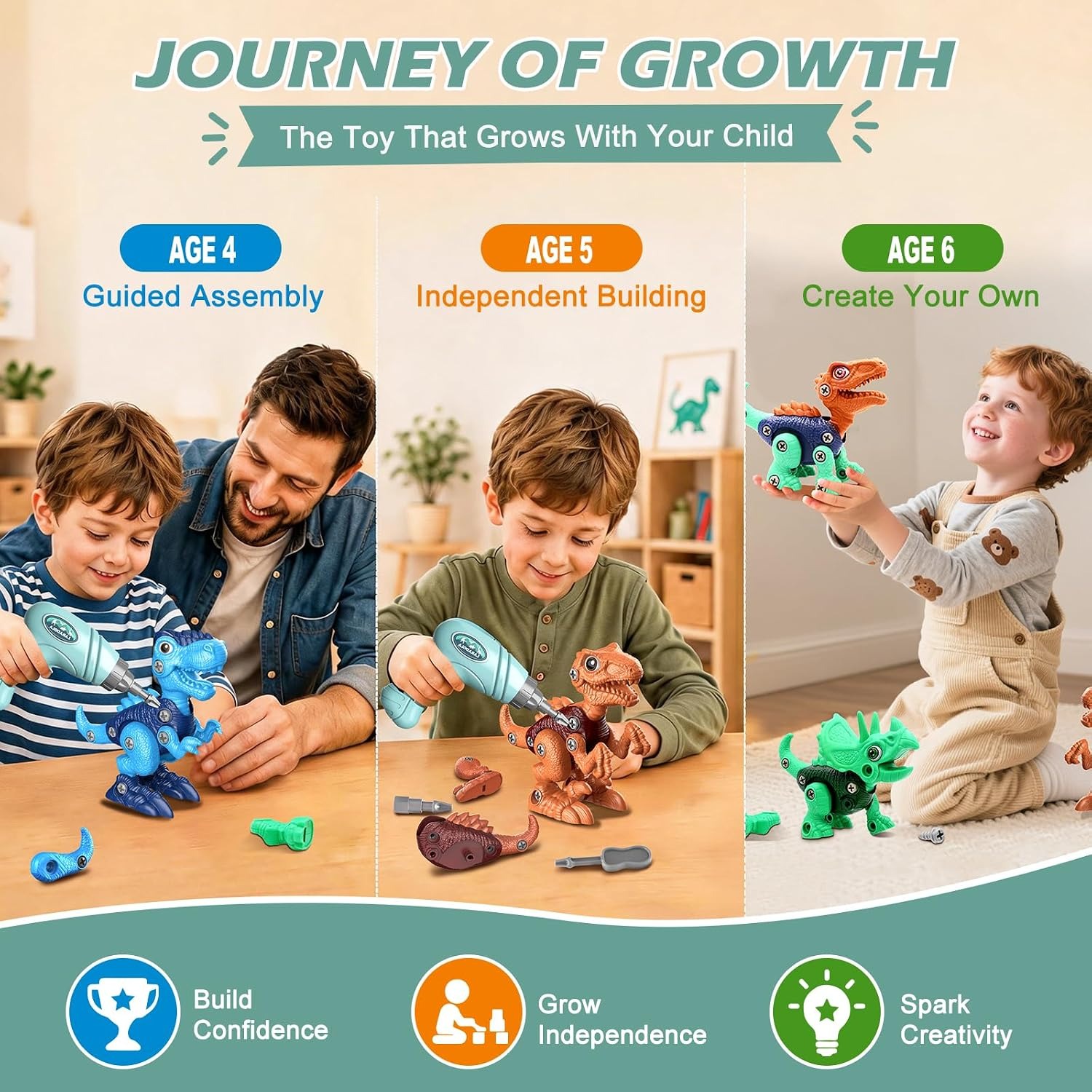
The listed age range is 4 to 6 years, with the manufacturer recommending 36 months to 8 years overall. Those numbers tell you something useful about how the set is used at different stages.
At three or four, this is a shared activity. An adult sits alongside, holds pieces steady, helps line up the first few screws and takes charge of the loose hardware. The child does the drilling, which is the bit they care about anyway.
At five, most children can run the whole build with occasional help. They will still ask which part goes where, but they will push back if you try to take over.
At six, seven and eight, the standard build gets easy and the interest moves to mixing. A Triceratops frill on a raptor body. Three heads on one creature. This is the stage where a set like this earns its keep, because the child stops following instructions and starts designing. If you are shopping for the best building toys for kids in that bracket, open-ended parts matter more than part count.
It also suits children who already take things apart. Every family has one. The kid who unscrews the back of the remote control to see what is inside. Giving them something they are allowed to dismantle is a relief for everyone.
What to look for when choosing
A few things separate a set that gets used from one that gets abandoned.
The tool. A toy electric screwdriver makes or breaks the experience. If it spins too fast or does not stop when it meets resistance, young children struggle and give up. A low-speed driver with manual backup is the sensible setup.
Interchangeable parts. If parts only fit one way on one dinosaur, the set ends after the first build. Cross-compatible pieces multiply the play time by a large factor, because the child can invent instead of just assemble.
Number of models. One dinosaur is a short afternoon. Three gives a child a choice about what to build first, which matters more than it sounds. Choice is what makes a toy feel like theirs.
Part size. Screws are always going to be small. What you want is body pieces chunky enough for a child to grip with a whole hand, not fingertips.
Storage. A set with thirty loose parts and no plan ends up scattered. Decide where it lives before the first build. A shoebox with a lid is plenty.
This set covers the first four reasonably well. Three dinosaurs, interchangeable parts, an included driver with manual and automatic modes, and a total weight of 16 ounces across all the pieces. Storage is on you.
Getting the first build right
The first session sets the tone, so it is worth slowing down.
Clear a table. Not the floor, because screws roll and carpet eats them. Tip the parts out and sort them into rough piles by dinosaur before you start. Put the screws in a cup.
Fit the batteries in the screwdriver first, then let your child test it on a single screw before any real building. They need to feel how it behaves, how long to hold the button, what it sounds like. Thirty seconds of playing with the tool prevents ten minutes of frustration later.
Build one dinosaur together, then stop. Do not push through all three in one sitting with a young child. Leave two in the box as a reason to come back tomorrow. Toys that get rationed slightly tend to last longer than toys that get consumed in one go.
When they finish, let them name it. It sounds minor. It is not. A dinosaur with a name gets played with.
Looking after it
There is very little maintenance here, which is part of the appeal.
Wipe the plastic parts with a slightly damp cloth when they get grubby and dry them off. Keep the screwdriver away from water completely, including damp cloths pushed into the battery compartment. If the set is going into storage for a season, take the batteries out so they cannot leak.
The screws are the only thing that genuinely goes missing. Containing them is the whole strategy. A small jar, a zip bag, a pill box, anything with a lid. Build that habit on day one and the set will still be complete in two years.
The product is listed for indoor use, which is sound advice. Grass and sand swallow small hardware without mercy.
The short version
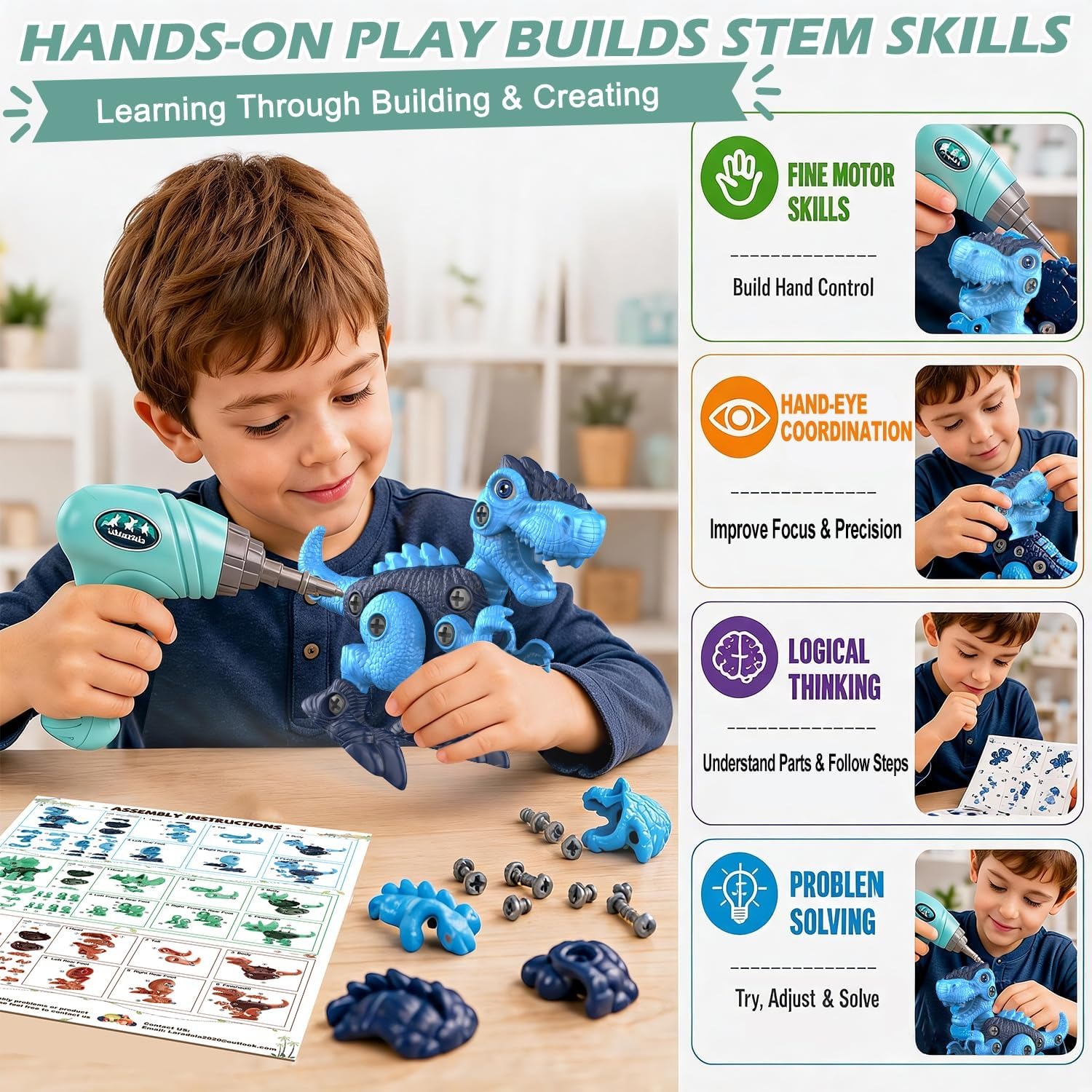
A take apart dinosaur set gives a child two toys in one. There is the building, which is quiet, focused and genuinely good for fine motor control and sequencing. Then there is the dinosaur, which is loud and imaginative and nothing to do with instructions at all.
This set brings a T-Rex, a Triceratops and a Velociraptor, parts that swap between them, and a battery-powered screwdriver that lets small hands do real work. It suits roughly ages four to six at the core, with sensible use from three up to eight. It needs 2 AAA batteries and a flat indoor surface, and it comes with a 12-month warranty.
If you want a present that does not need a screen, does not need batteries for the dinosaurs themselves, and gets rebuilt rather than retired, this is a strong pick. Buy the batteries at the same time. Thank yourself on the morning.