
The complete guide
How to Choose an RC Stunt Car That Survives Real Play
The problem with most remote control cars
Buy a cheap remote control car and you can usually predict what happens. The child drives it fast, because that is the point. It hits a chair leg or takes a corner too hard, and it rolls. Now it is upside down with its wheels spinning in the air, and the only fix is to walk over and pick it up. Do that eight times in ten minutes and the fun drains out of it.
The second common problem is control. Older or cheaper cars use a single channel, which means if two kids have the same car, one controller will drive both. That is funny for about thirty seconds and annoying after that.
The third problem is simpler. The car is boring to look at while it is moving. A plain plastic body rolling across a carpet is not much of a show, especially indoors where a child cannot build any real speed.
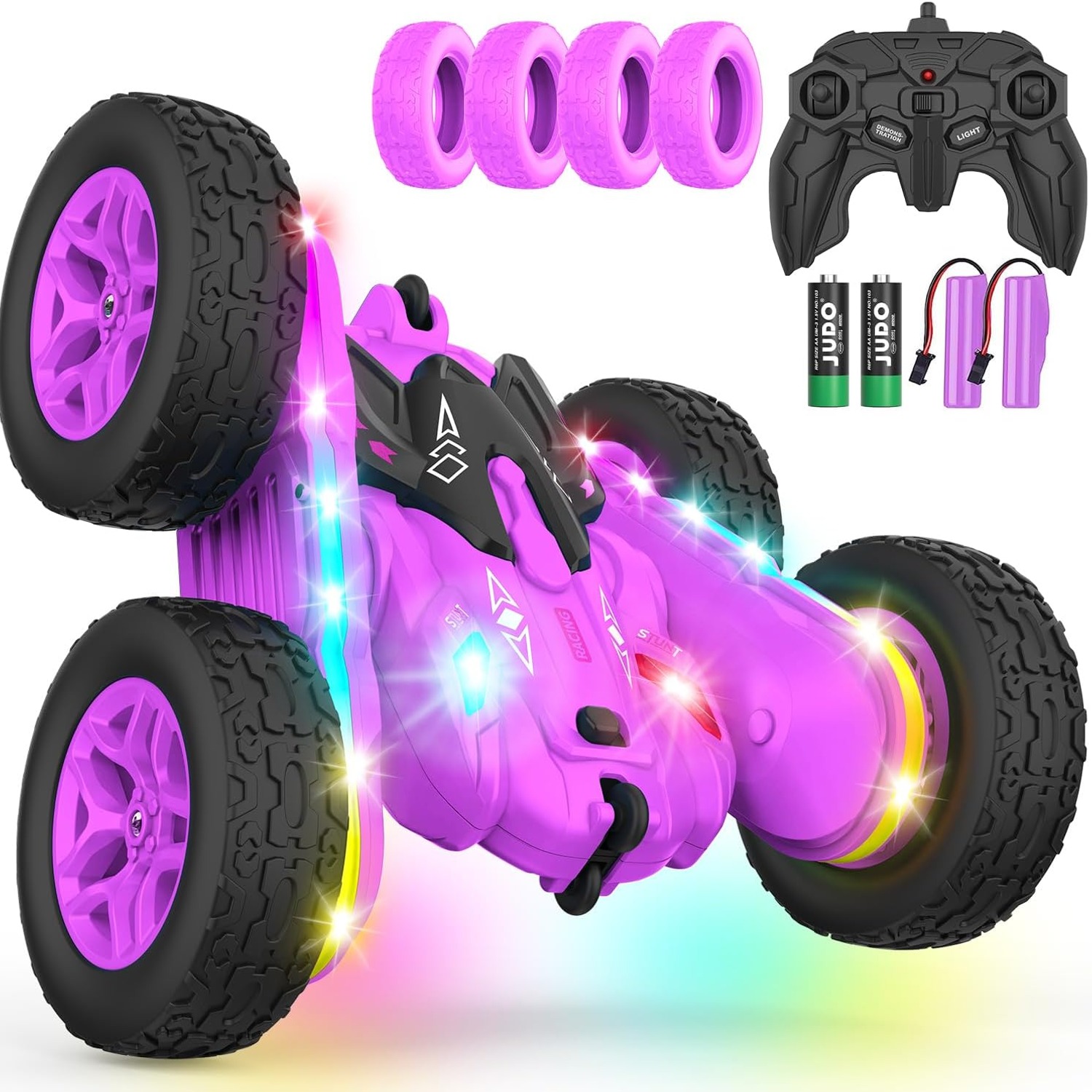
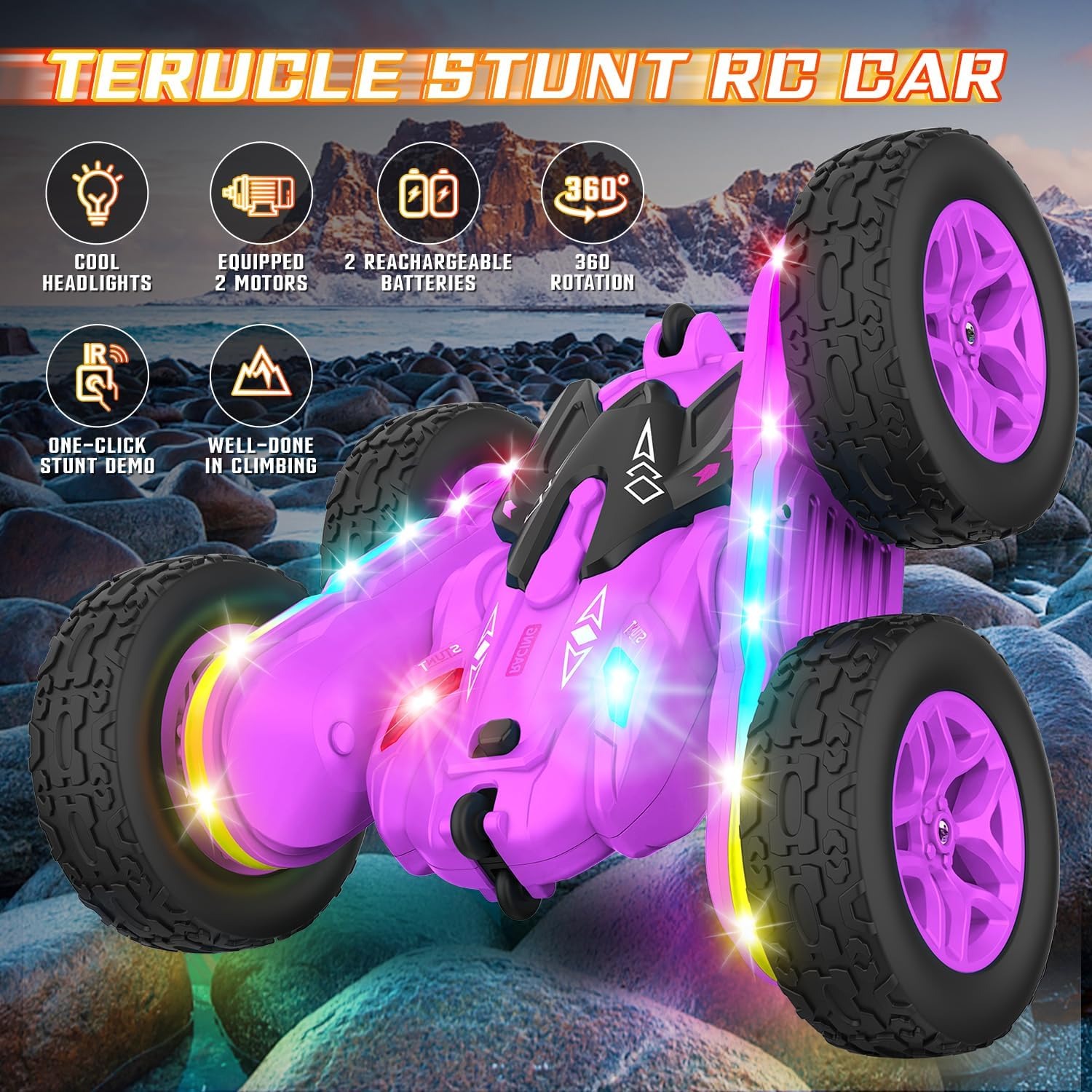
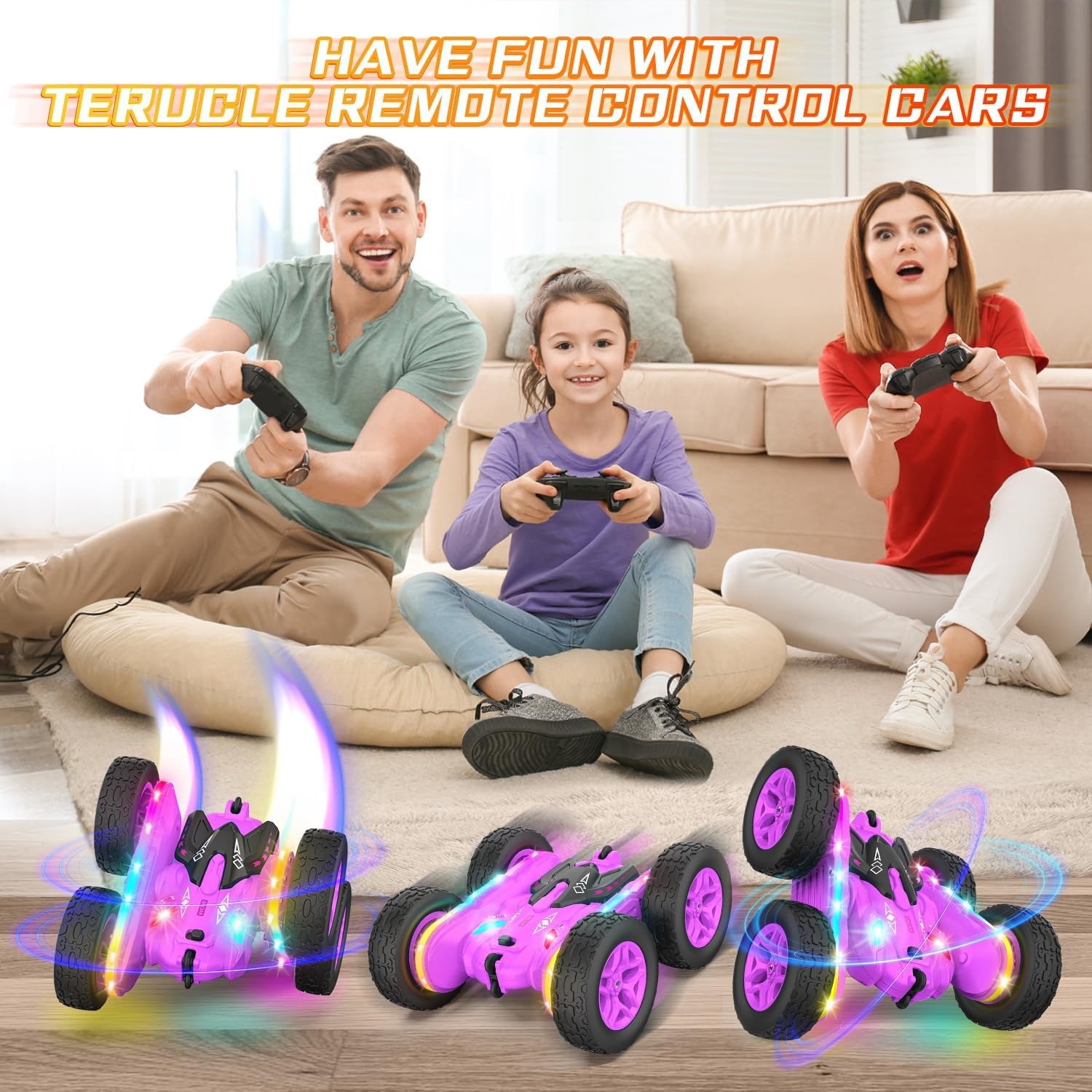
A double sided stunt car with light strips is designed around all three of those complaints. It cannot land wrong, it uses a proper 2.4GHz radio, and it puts on a light display while it works. That combination is why this style of car has become the default recommendation for parents looking for the best rc stunt car for kids rather than a scale model.
How a double sided stunt car works
The engineering is straightforward once you see it. Instead of a car with a roof and a floor, you get a car with two identical driving faces. Big wheels sit at each corner and extend past both surfaces. Flip it over and the wheels still touch the ground, the motors still drive, and the steering still works. The car does not know or care which way up it is.
That changes how children play. They stop driving carefully. They start aiming at ramps, curbs and door frames on purpose, because crashing is no longer a punishment. Most kids figure this out within about two minutes and the play gets a lot more adventurous after that.
The spin function uses the drive motors working against each other. One side goes forward, the other goes back, and the car rotates on the spot through a full 360 degrees. Hold it on a smooth floor and you get a drift that looks far more skilful than the single button press it actually takes. For a child who has never driven an RC car, being able to do something that looks hard on their first attempt is a big deal.
The light strips run along the body and are controlled electronically, so they flash at different speeds and cycle through seven colors rather than sitting on one static setting. In bright daylight you notice them a little. At dusk, in a garage or in a dim hallway, they do most of the work in making the car fun. They also stop it getting lost under the sofa.
Who this suits
This car suits children who want action rather than realism. If a child is asking for a scale replica of a particular rally car with working suspension, this is not that. If a child wants something that spins, flips, glows and survives being thrown around, this is exactly it.
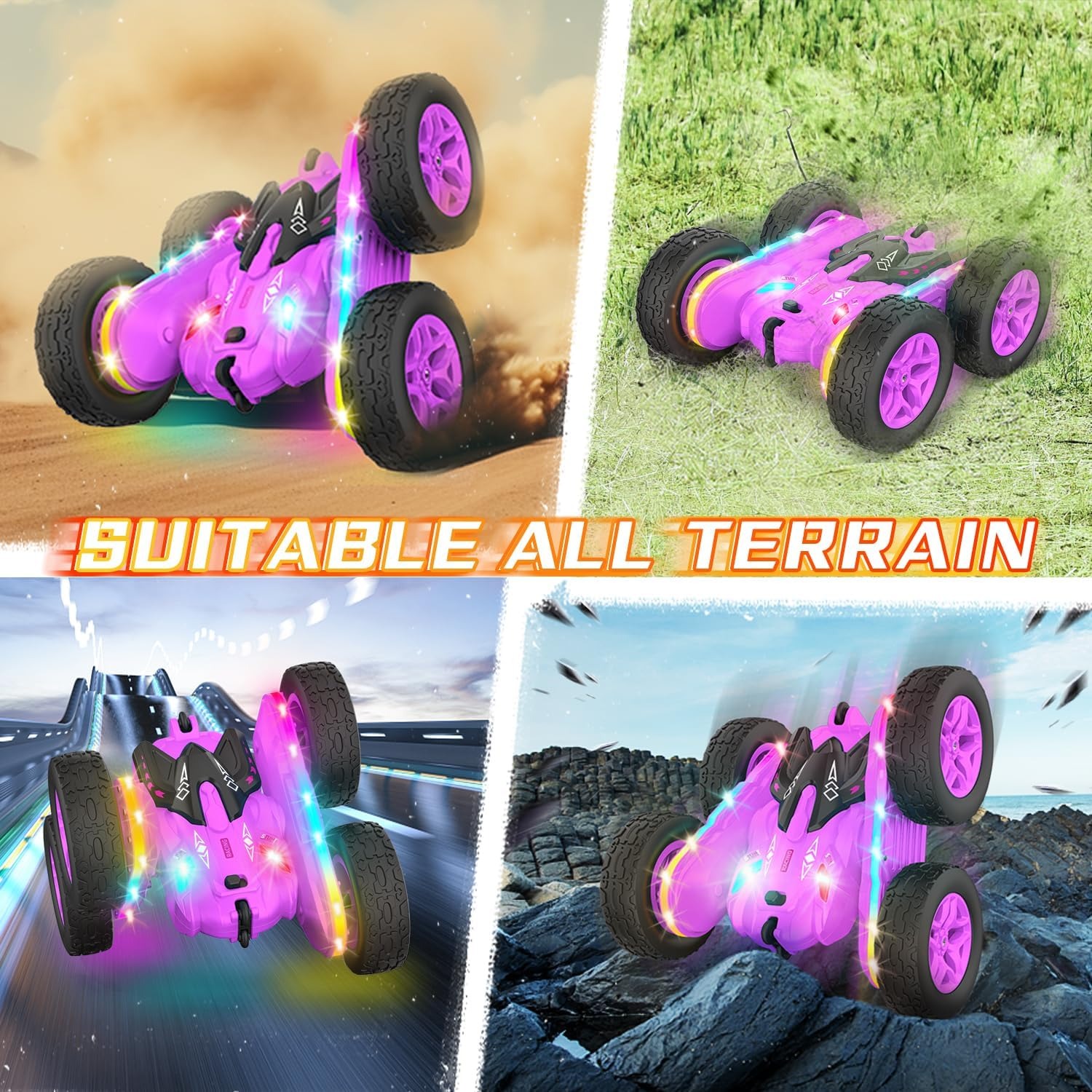
It suits houses with hard floors and a bit of open space, and it suits gardens, driveways and parks. The tires handle sand, grass, dirt, pavement and indoor floors, so it is not fussy about where it runs.
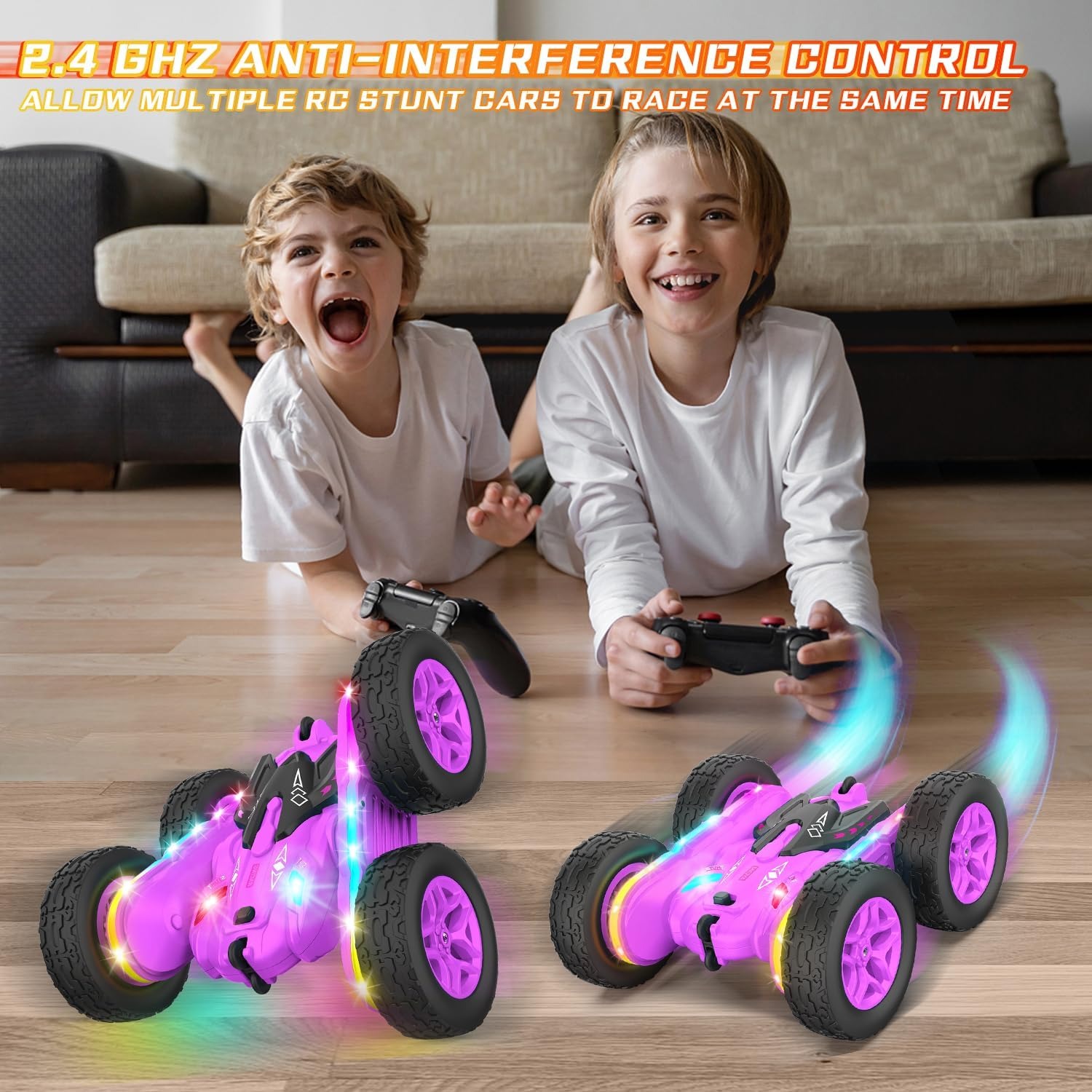
It suits families with more than one child particularly well. Because the control is 2.4GHz, two cars can run in the same room without crossed signals. Buying a pair and letting siblings race is a far better outcome than one shared car and a timer.
It is also a sensible pick for a first remote control car. There is no setup, no kit to build, and no technique to master before anything interesting happens. Compare that to a hobby-grade car where the first hour is spent learning throttle control, and the appeal is obvious.
Choosing the right size and spec
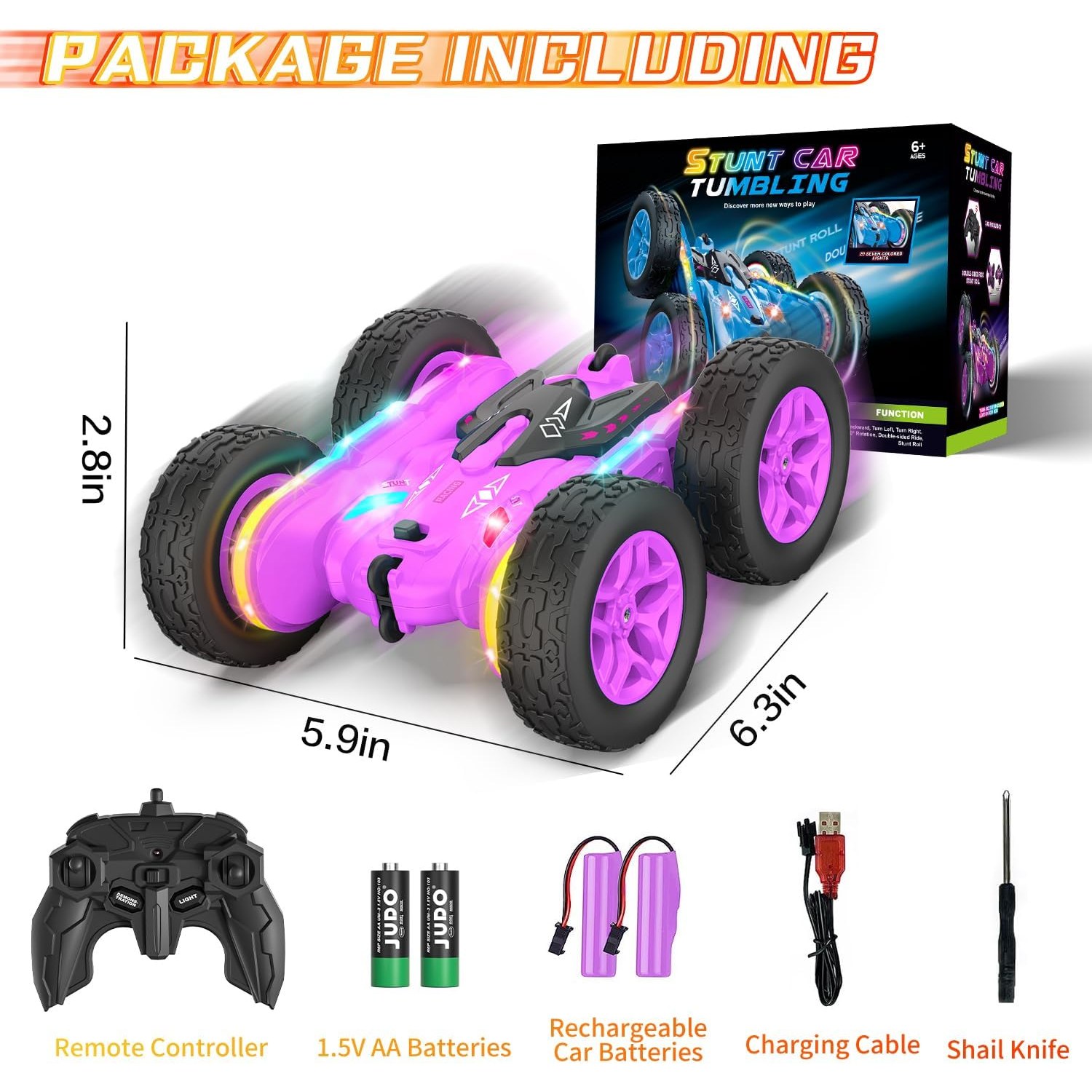
Size matters more than people expect. This car is 7.5 inches long, 4 inches wide and 5.5 inches high, and it weighs 0.62 kg. That is a good middle ground. Smaller cars get stuck on carpet pile and vanish under furniture. Much bigger cars are heavy enough to damage skirting boards and too awkward for a small child to carry outside.
Battery type is the next thing to check. This one uses a rechargeable lithium-ion battery, included in the box. That is better than a car that eats AA batteries, both for cost and for the environment, though it does mean you need to plan charging time into play. A useful habit is to put it on charge as soon as play finishes rather than the moment it is wanted.
Radio frequency is worth understanding even if it sounds technical. 2.4GHz is the current standard and is what lets multiple cars run together. If you ever see a listing that does not mention the frequency, assume it is an older system and factor that in.
Finally, look at how the car handles being upside down. Not every car marketed as a stunt car is genuinely double sided. Some just have a self-righting arm that flips them back over, which works but adds a pause. A true double sided body, like this one, has no pause at all.
Looking after it
Care is simple but it does make a difference to how long the car lasts. Wipe the body and wheels down with a dry or barely damp cloth after each outdoor session. Sand and fine grit are the main enemies here, because they work into the wheel axles and slowly stiffen them up. Clearing hair and grass from around the wheels every few weeks takes thirty seconds and keeps the steering sharp.
Never rinse the car or the controller under a tap. Water and a lithium battery are a bad mix, and the charging port needs to stay dry.
Charge with the cable supplied, unplug once the charge is complete, and avoid leaving the car plugged in overnight on a regular basis. Store it indoors with some charge still in the battery rather than completely flat, and keep it away from radiators and out of direct sun. A car left in a hot trunk over summer will not thank you for it.
If the car starts behaving oddly, losing range or responding slowly, the first thing to check is the controller batteries. That fixes the problem far more often than anything wrong with the car itself.
The short version
This is a double sided remote control car that drives on either face, spins a full 360 degrees, drifts on the spot and lights up in seven colors while it does it. It runs on 2.4GHz so several cars can race together, it comes with a rechargeable lithium-ion battery, and it measures 7.5 by 4 by 5.5 inches at 0.62 kg in purple.
It is a good buy if you want a toy a child can use immediately, outdoors or in, without constant adult help. It is a weaker buy if the child specifically wants a realistic scale model or a hobby-grade car they can modify.
For most families buying a present for a child who likes speed and noise, this hits the mark. The flip-proof design is the feature that quietly earns its keep, because it is the one that keeps the car moving instead of sitting on its roof waiting for a rescue.