

The complete guide
How To Choose Your First Concert Ukulele
The instrument people actually finish learning
There is a graveyard of half-learned instruments in spare rooms everywhere. Guitars with dusty cases. A keyboard under a bed. The reason is rarely laziness. It is friction. A guitar asks you to press six strings with sore fingertips across a wide neck, and then asks you to practice for weeks before anything sounds like music.
A ukulele asks for much less. Four nylon strings, soft on the fingers, a short neck, and chords that often need only one or two fingers. The instrument is small enough to leave on the arm of a sofa, which matters more than most people expect. Instruments that live in cases get played once a month. Instruments within arm's reach get played every day.
That is the real argument for a concert ukulele 23 inch as a first instrument. It is not a toy, and it is not a compromise. It is simply the version of a stringed instrument with the lowest barrier between wanting to play and actually playing.
What the 23 inch concert size means
Ukuleles come in a few standard sizes, and the number refers to the overall length of the instrument.
Soprano is the smallest at roughly 21 inches. It is the classic ukulele sound, bright and plinky, and it works well for children. The problem for adults is fret spacing. The frets sit close together near the top of the neck, so bigger fingers end up muting neighboring strings.
Concert, at 23 inches, is the next step up. The body is slightly larger, the neck slightly longer, and the gap between frets noticeably more generous. You keep the portability but gain comfort. Tone fills out a little too, since there is more air inside the body.
Tenor is larger again, at around 26 inches, with a deeper voice that many performers prefer. It is a fine instrument but it is less casual, less throwable into a bag.
For a single household instrument that an adult, a teenager and a curious ten year old might all pick up, concert is the practical answer. That is why the best concert ukulele for beginners is the size most teachers recommend when someone asks what to buy.
The woods and what they do
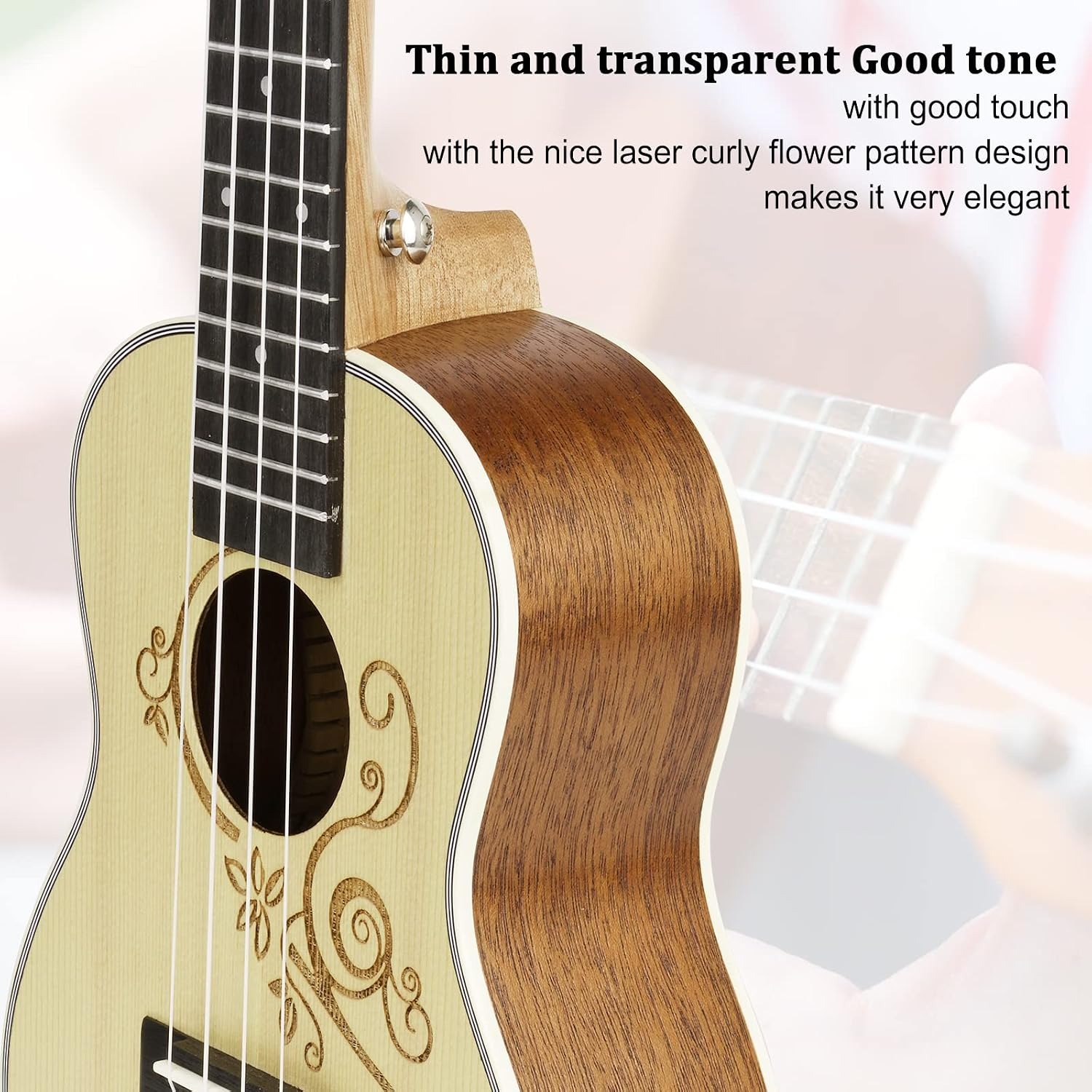
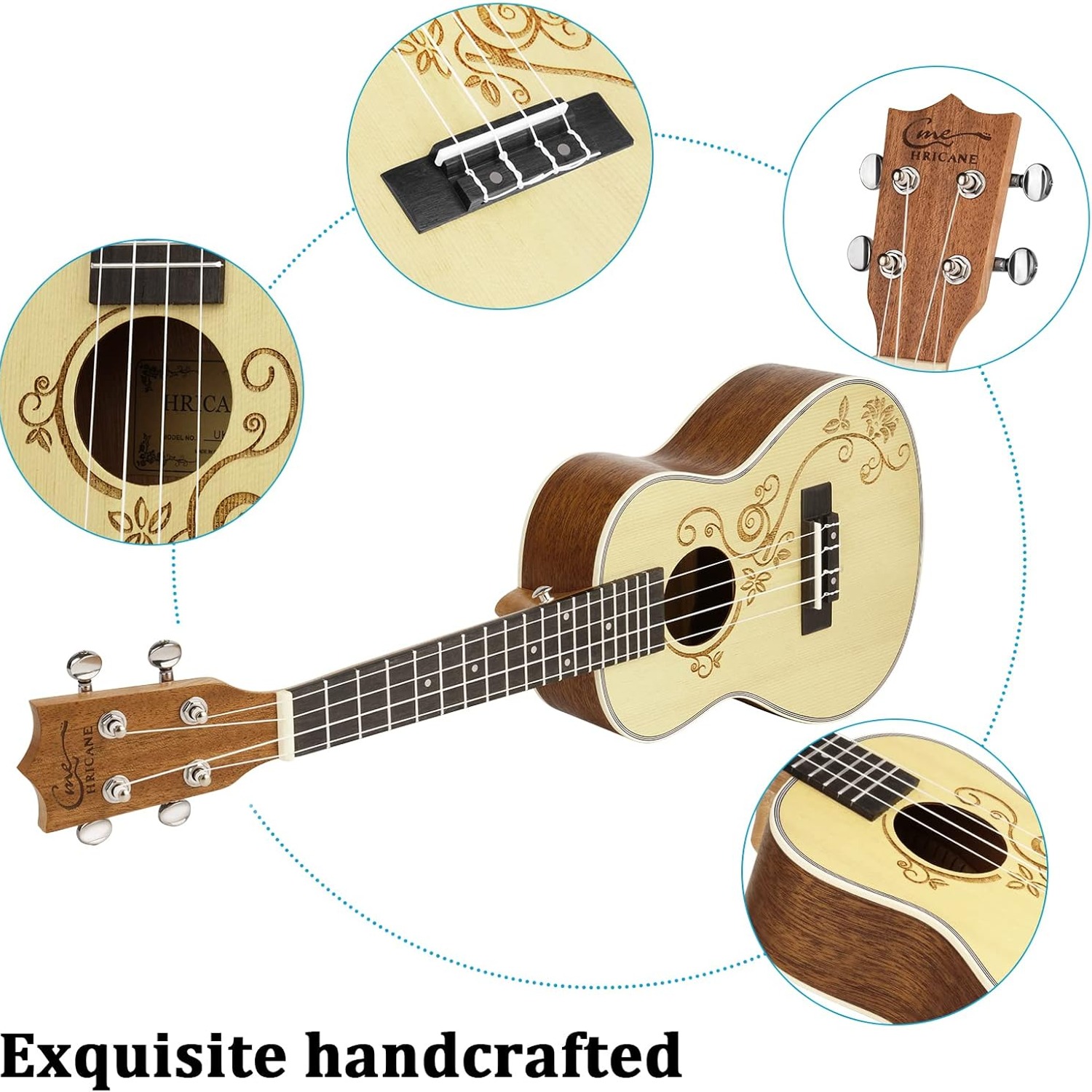
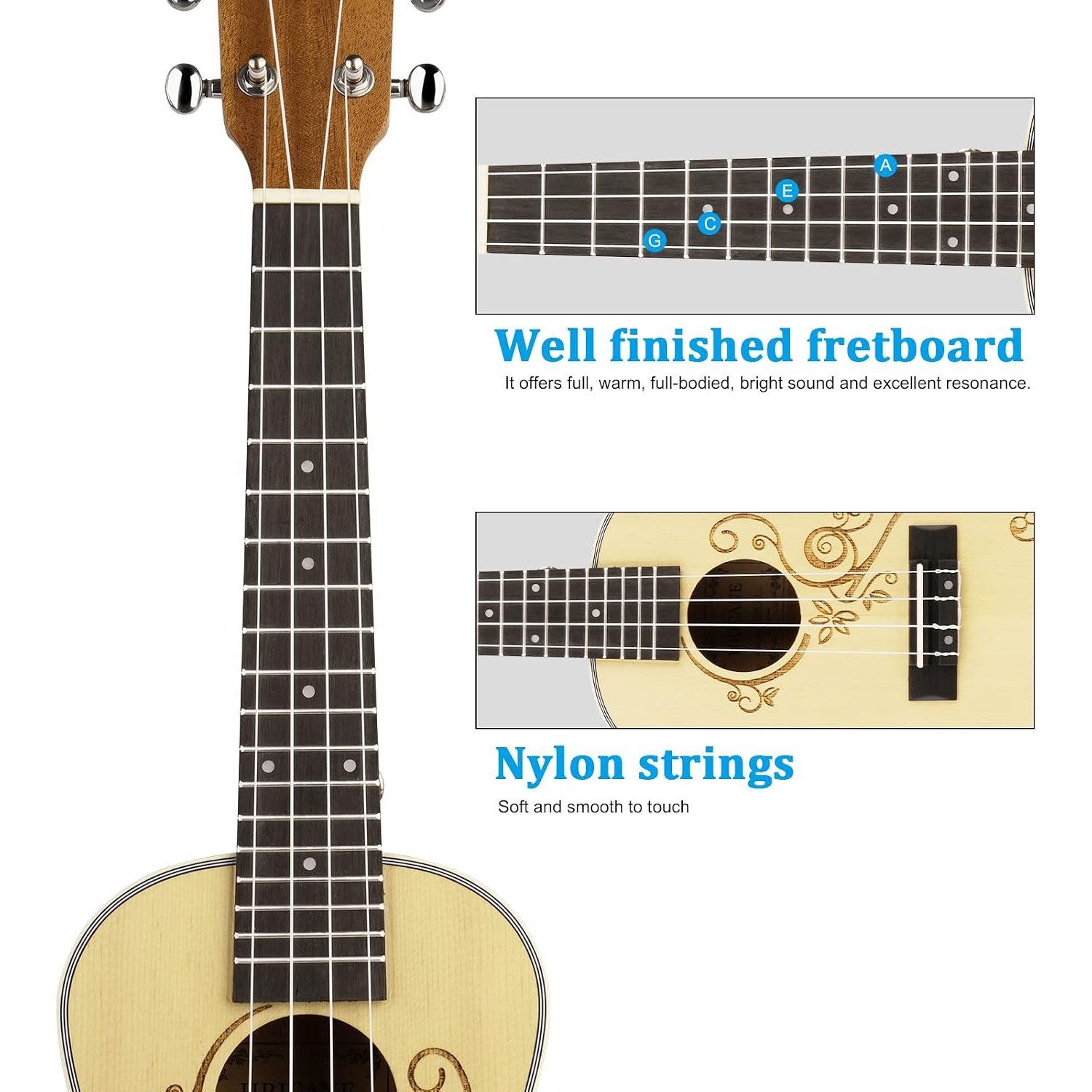
This instrument uses a spruce top. The top is the part that does most of the work in any acoustic instrument. It vibrates, it moves air, and it shapes what you hear. Spruce is widely used on acoustic instruments because it is light and stiff, which gives a clear, bright projection. The listed sound profile here is bright, full-bodied and woody, which matches what spruce usually delivers.
The back material is listed as spruce wood, and the body material as sapele and spruce wood. Sapele is a common tonewood on mid-range instruments, with a warm character that balances a bright top.
The finish is polished rather than matt, so the body catches light and wipes clean easily. Strings are nylon, which is the standard for ukuleles. Nylon is gentler on untoughened fingertips than steel, and it is the reason beginners can practice for half an hour without wincing.
Why the accessory kit actually matters
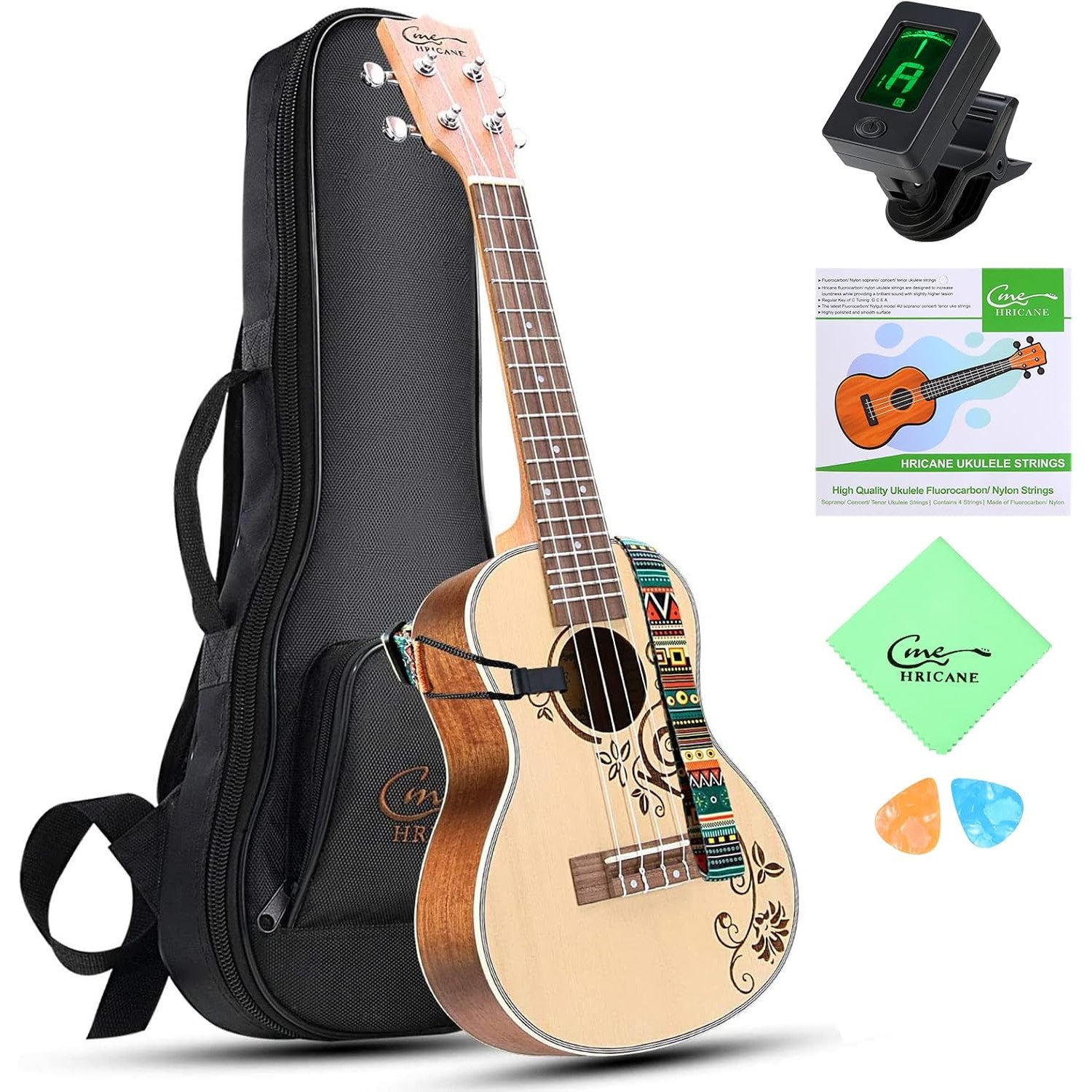
A lot of starter sets pad the box with items you will never use. This one is more sensible. Four of the six extras solve a genuine first-week problem.
The digital tuner is the most important. New nylon strings stretch for days, sometimes a couple of weeks, before they settle. During that period the instrument drifts out of tune constantly. A beginner without a tuner concludes the instrument is faulty, or worse, that they have no ear for music. A tuner turns that whole problem into a twenty second task.
The spare strings cover the other common early setback. Strings break, often while a beginner is overtightening during tuning. Without spares, that is a week of waiting. With spares, it is ten minutes and a lesson learned.
The bag protects the instrument and, just as usefully, makes it portable. The strap helps if you want to stand or if you find yourself clamping the body too hard while fumbling a chord shape. The cleaning cloth keeps finger oil off the polished finish. The pickup gives you the option of plugging in later, which saves buying one separately if you ever play for a room full of people.
Buying a ukulele with bag and tuner together is almost always cheaper than assembling the same pieces one at a time, and it removes the decision paralysis of choosing accessories before you know what you need.
Who this suits
Adults starting from zero. The concert scale is the main reason. If you have ever tried a soprano and felt your fingers were too clumsy for it, that was the instrument, not you.
Teenagers and older children. Hands have usually grown enough by the early teens that concert feels natural rather than large.
Teachers and classrooms. The set format means each instrument arrives complete, and the concert size serves a wide range of ages in one group.
Returning players. If you played years ago and want something low commitment to get back into, a 23 inch ukulele is easy to pick up for ten minutes at a time.
Travelers and campers. Light, bagged, and happy to be played around a table or outdoors.
How to look after it
The routine is short. Wipe the strings and body with the cloth after you play, because finger oil dulls strings faster than anything else. Put the instrument back in its bag when you are done, which protects it from dust, knocks and sunlight.
Keep it somewhere with steady conditions. Wood responds to humidity and temperature, and the enemies are extremes. A hot car, a radiator, a damp garage, a sunny windowsill. Normal living room conditions are fine.
Tune before each session. Even a well-settled instrument shifts slightly with the weather. The tuner is in the bag, so this takes less time than finding your song lyrics.
Change the strings when they sound dull or feel grooved under your fingers. For light home playing, that might be once or twice a year. You already have one spare set.
Getting to your first song faster
A practical suggestion. Learn C, then F, then G7, then Am. Those four chords, in various combinations, cover a genuinely large number of songs. C is one finger. Am is one finger. F is two. G7 is three.
Practice changing between two chords in rhythm before worrying about strumming patterns. Five minutes a day beats an hour on Sunday. Most people who stick with it say the breakthrough came in week two, when chord changes stopped needing conscious thought.
The short version
A concert ukulele 23 inch is the sweet spot for most people who want to learn an instrument without a long run-up. This one has a spruce top, a sapele and spruce body, nylon strings and a polished finish, with a bright, woody voice. It weighs 1.18 kg and measures 27.36 by 4.72 by 4.72 inches.
The set arrives with the bag, strap, digital tuner, cleaning cloth, spare strings and pickup, which means nothing stands between opening the box and playing. There is a six month manufacturer warranty on the instrument.
If you want one instrument that an adult can learn on, a teenager can borrow, and nobody has to hide in a closet, this is a sensible choice.