
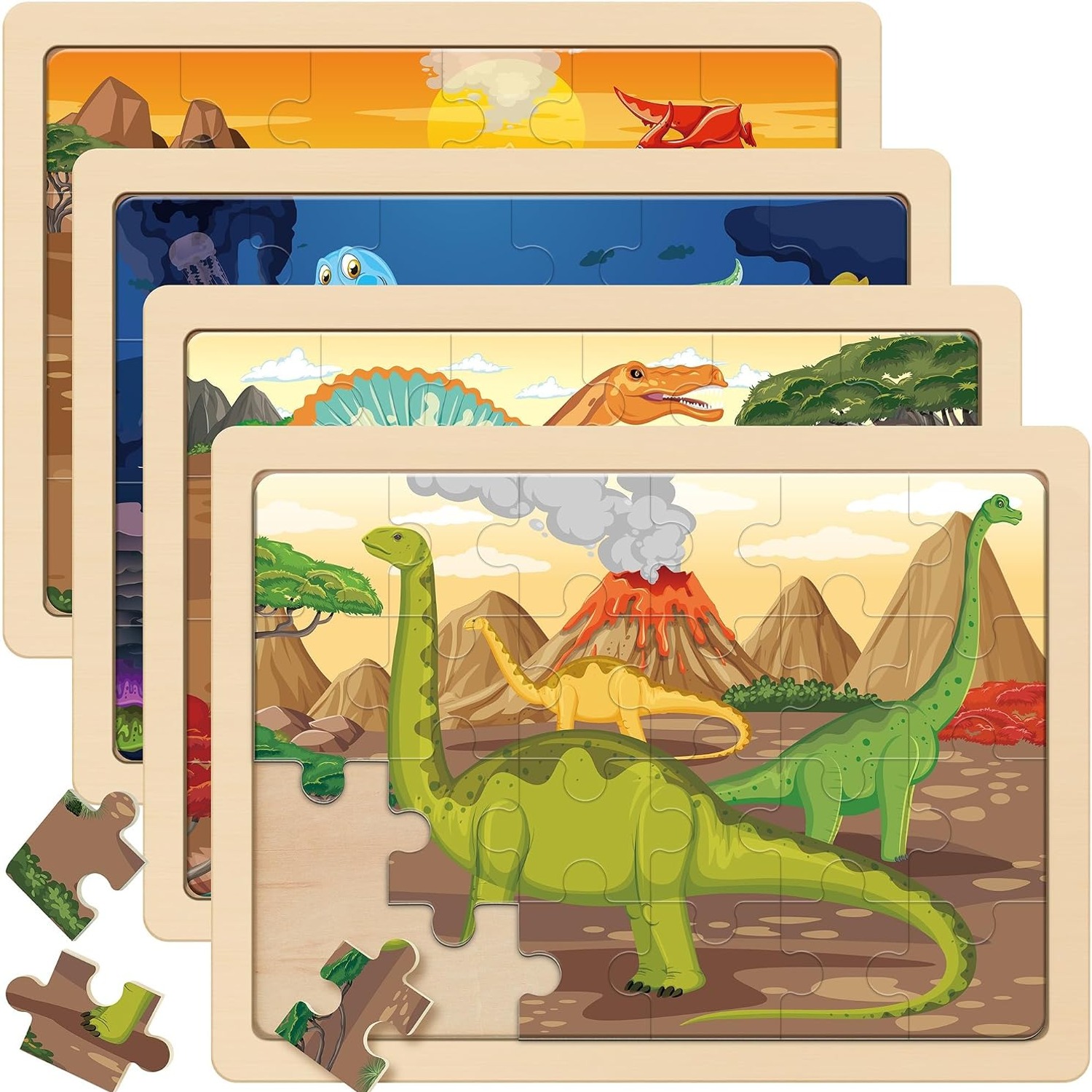
The complete guide
The Parent's Guide to Buying Wooden Dinosaur Puzzles
The problem with most kids' puzzles
Walk down the toy aisle and you will find a hundred jigsaw puzzles aimed at preschoolers. Most of them have the same two faults. The pieces are printed cardboard that bends the moment a child presses too hard, and the picture is a single scene the child solves twice before losing interest.
Then there is the piece count problem. Buy something with 100 pieces for a four year old and you have bought yourself a meltdown. Buy a 6-piece chunky puzzle for a confident five year old and it is finished before you have sat down. Getting the difficulty right is most of the battle.
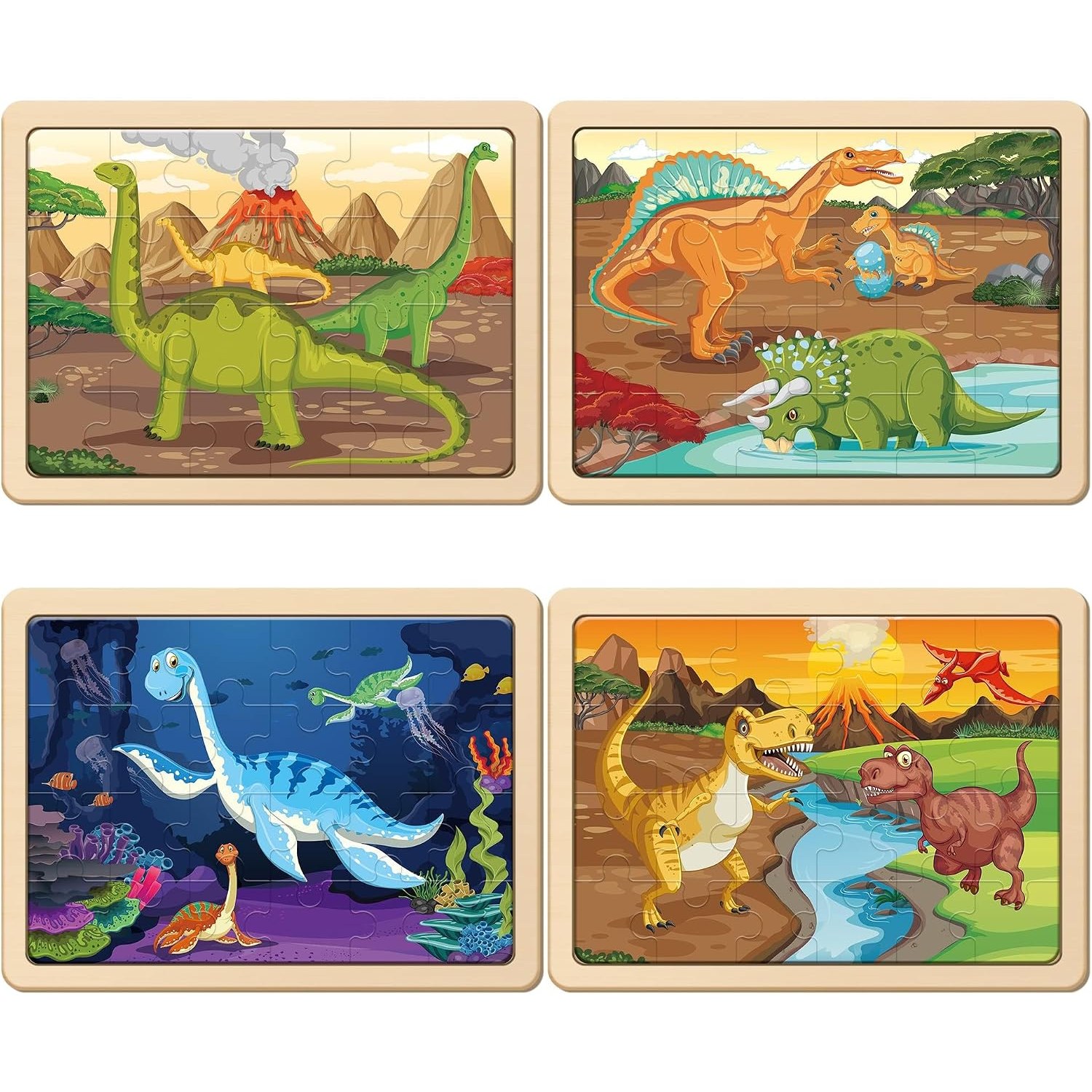
A set of wooden dinosaur puzzles solves both issues at once. Four different scenes means four fresh challenges, and wood survives the kind of handling that destroys card within a month. The 24-piece count sits in the zone where a child has to think, but not so long that they give up.
How these puzzles actually work
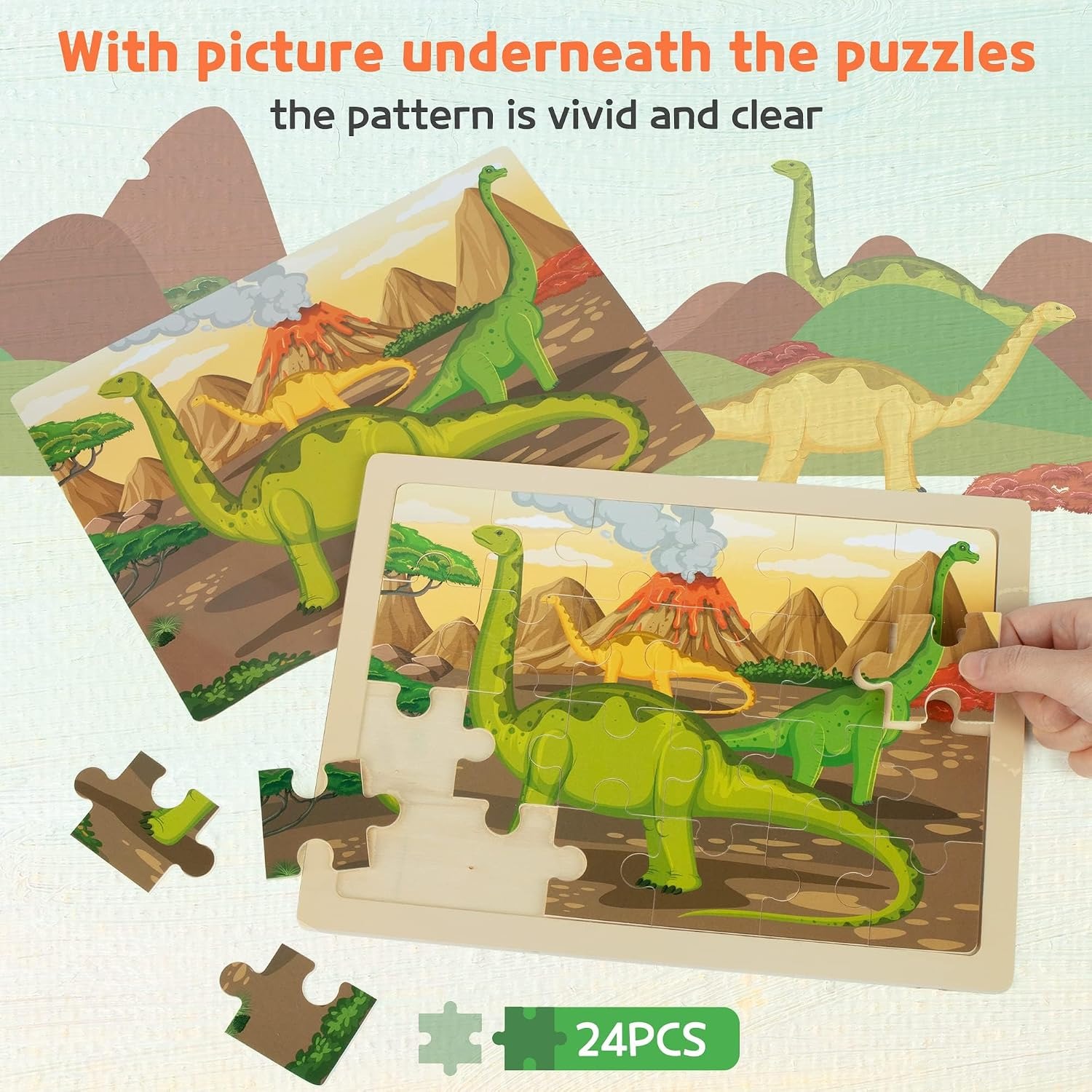
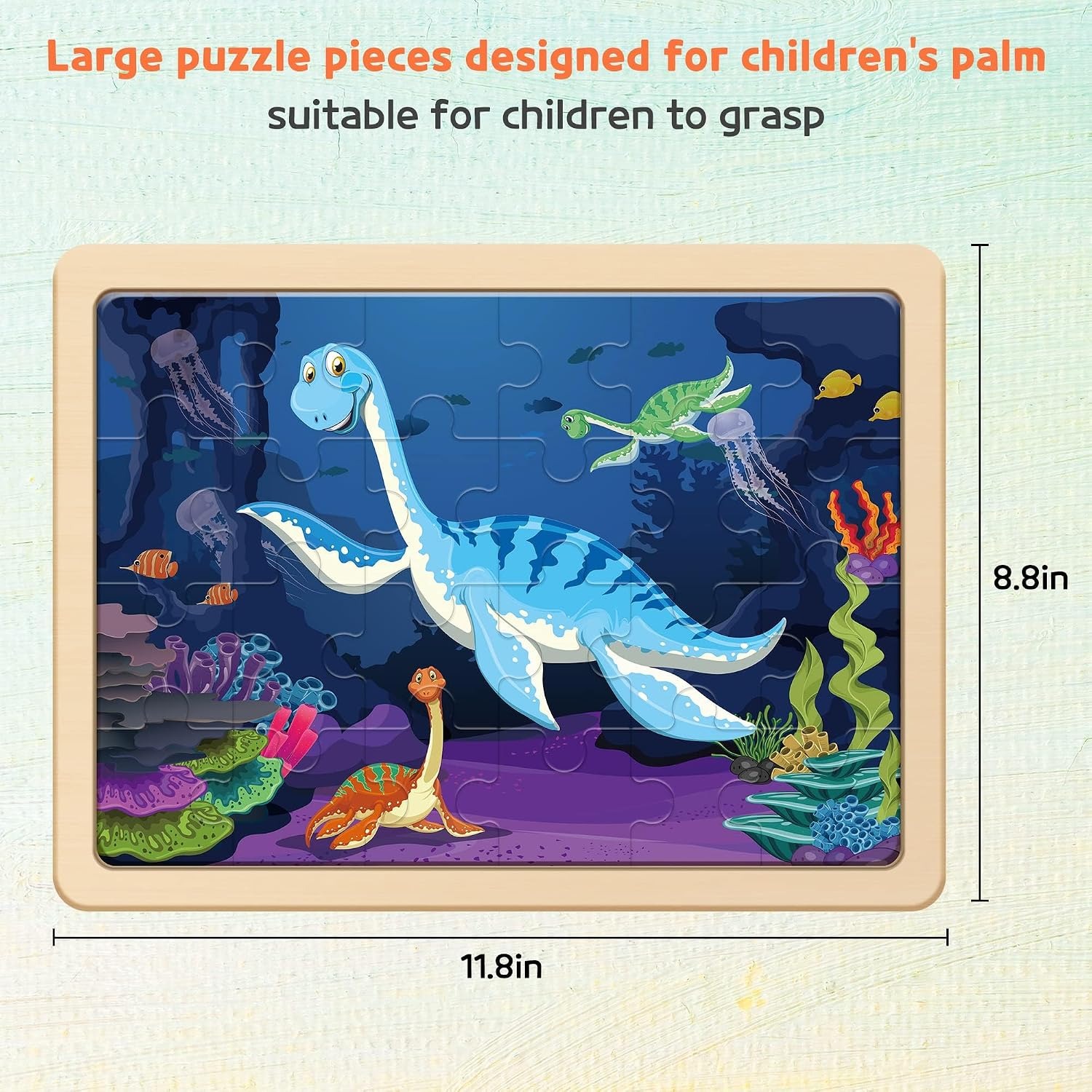
Each of the four puzzles has 24 wooden pieces and sits inside its own wooden frame. The frame is doing more work than it looks. For a beginner, an open jigsaw on a bare table is intimidating because there is no obvious place to start. A frame draws the border for them, so the first move is always the same: find the edge pieces and fill the outline.
The frame also keeps things tidy during play. Pieces that get nudged stay inside the tray instead of sliding onto the floor. When the puzzle is finished, a knocked table does not undo twenty minutes of work.
Under each puzzle there is a removable paper illustration of the completed picture. This is the quiet hero of the set. When a child gets stuck and starts getting frustrated, you do not have to solve it for them. You can point at the reference sheet and let them work out the answer themselves. That distinction matters more than it sounds, because children who solve a puzzle themselves want to do another one.
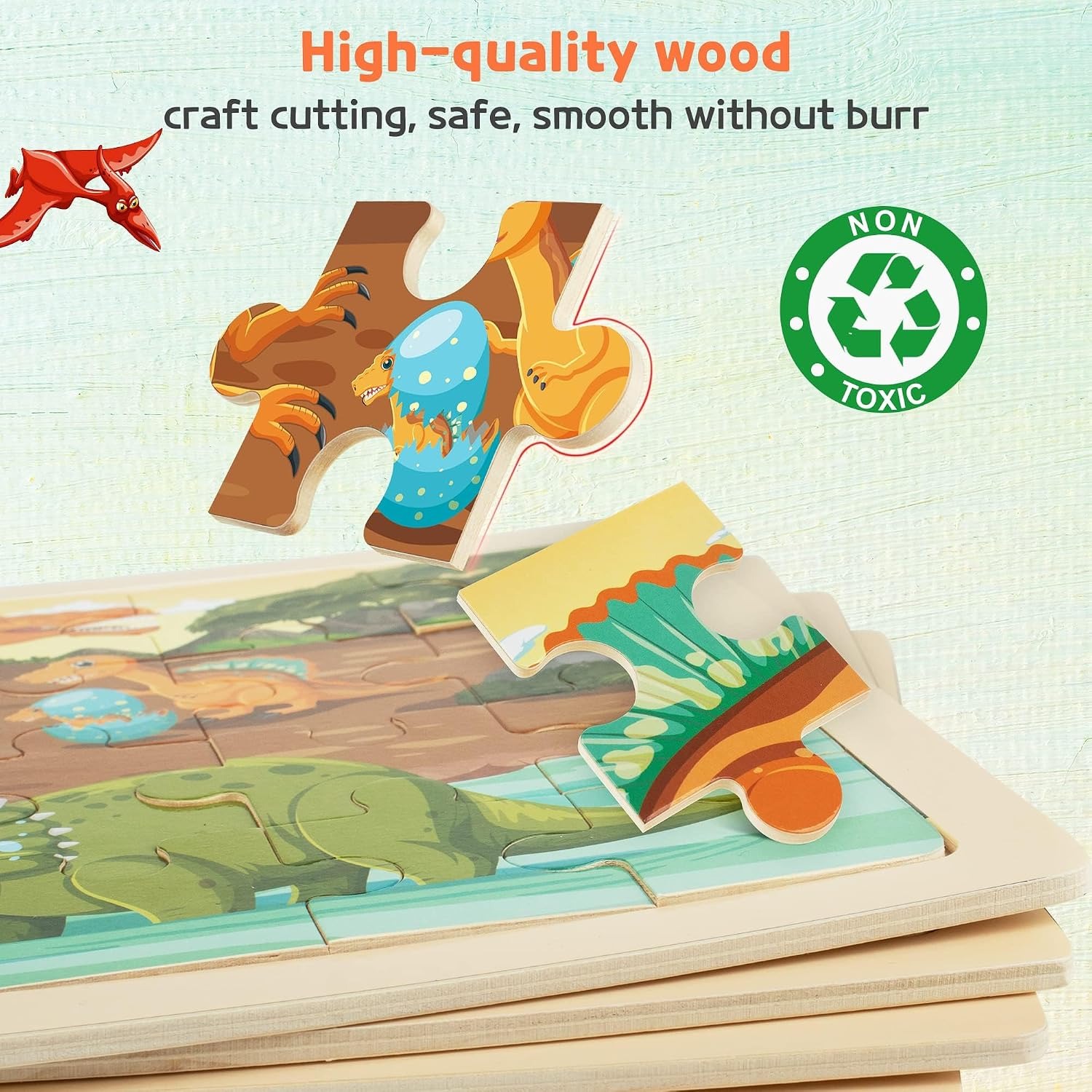
The pieces are cut thicker than standard card and the edges are polished before packing. For small hands that have not quite mastered a pincer grip, thickness is what makes a piece pickup-able. Thin card pieces get scratched at and flipped rather than lifted.
Who this set suits
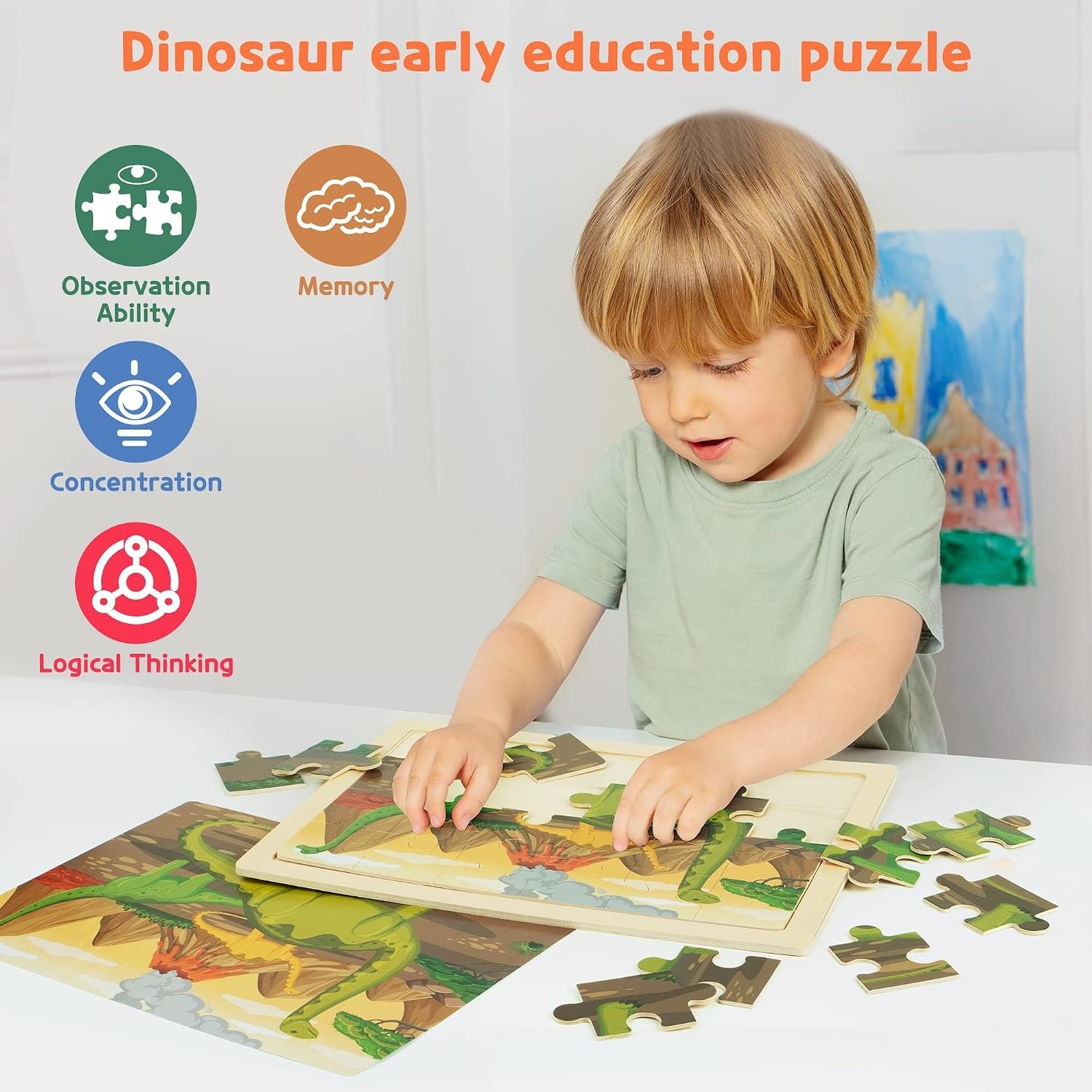
The manufacturer recommends 36 months to 6 years, and that is an honest range. A three year old will need some company and a fair bit of encouragement on their first few attempts. By four, most children can work through a 24-piece framed puzzle on their own, slowly. By five or six, they will finish in a few minutes and then start timing themselves, which is its own kind of fun.
It is a good fit for a dinosaur-obsessed child, obviously, but the theme does more than decorate. Children who already know their stegosaurus from their triceratops are more motivated to finish a picture they can name. If the dinosaur phase has hit your house, lean into it.
The set works for one child or two. With four puzzles, siblings can take one each and work in parallel rather than fighting over the same tray. That is often the difference between a peaceful half hour and a referee job.
It is also worth considering if you are specifically trying to cut screen time. There are no batteries, no sounds and no app. It is a quiet tabletop activity, which makes it useful in situations where noise is a problem: a waiting room, a plane tray table, a grandparent's living room on a Sunday afternoon.
How to choose the right puzzle for your child
Start with piece count, not age labels. Age ranges on boxes are rough guides, and children vary hugely. The better test is what your child can already do. If they can finish a 12-piece puzzle without help, 24 pieces is the right next step. If 12 pieces is still a struggle, wait a few months.
Next, look at the material. Wooden pieces cost more upfront and last far longer. If the puzzle is going to be handed down to a younger sibling, or used by a child who is rough with toys, wood pays for itself. Card is fine for a one-off, less so for daily play.
Check whether there is a frame or tray. For beginners, framed puzzles are noticeably easier to start and much easier to keep intact between sessions. Loose-piece jigsaws are a better challenge later on.
Think about how many puzzles you are getting. One puzzle, however nice, gets solved and shelved. Four puzzles in a set means the novelty lasts, and you can rotate them so each one feels fresh again after a few weeks away.
Finally, consider size and storage. A finished puzzle here measures 8.8 by 11.8 inches, which fits on most tables without clearing the whole surface. The packed set is 12.2 by 9.37 by 0.98 inches and weighs 0.74 kg, so it slides onto a shelf or into a bag easily.
Getting the most out of it
Introduce one puzzle at a time. Dumping all four on the table at once mixes the pieces and overwhelms a young child. Start with one, let them get comfortable, then bring out the next.
Sort before you solve. Turning every piece picture-side up before starting is a small habit that makes the whole thing less frustrating. Some parents sort by color too, which gives a three year old a workable entry point.
Resist the urge to place pieces for them. If the child is stuck, narrow the search instead. Point at a general region and say the piece belongs somewhere over there. Hand them two pieces and ask which one looks right. They get the win, you keep the peace.
Let them repeat. Adults get bored doing the same puzzle twice. Children do not. Repetition is how the spatial memory forms, and the fifth attempt is where confidence really shows up.
Care and storage
Wood and water do not get on. Wipe pieces with a barely damp cloth and dry them immediately. Never soak them, never put them in a dishwasher and never leave the set outside overnight. Moisture swells wood, and swollen pieces stop fitting.
Store the set flat and dry. Keeping each puzzle inside its own frame between sessions is the single best way to avoid lost pieces and mixed sets. A shelf is better than the bottom of a toy box, where pieces get crushed under heavier things.
Give the set a quick look over every few months. If a piece has chipped or splintered from a hard knock, take it out of circulation rather than letting a child handle a rough edge.
The short version
You are getting four wooden jigsaw puzzles, 24 pieces each, framed, with dinosaur artwork across ocean, land and air scenes. Finished size is 8.8 by 11.8 inches. The whole set weighs 0.74 kg and packs under an inch thick, so it travels well. Recommended age is 36 months to 6 years and the skill level is beginner.
If you want a gift that lasts longer than a single afternoon, works without batteries, and survives a preschooler's enthusiasm, a wooden dinosaur puzzle set is hard to beat. The frames keep it tidy, the reference pictures keep it fair, and four puzzles means it does not get solved and forgotten by the weekend.